Every 80s hit you know by heart has a second life: the story of how it got made, told and retold by the people who wrote it. A voicemail from Sylvester Stallone that nobody believed. A demo that ended up in a movie because the director refused to let anyone polish it. A note on a bedroom door that became a number one. This page is the doorway to all of them, 120 stories and counting.
These are the stories behind the biggest songs of the 1980s, assembled from the writers' own words across four decades of interviews, with every quote attributed to its outlet and year and every source listed at the bottom of every story. Where the tellings changed over the years, we show that too, because the drift is part of the story.
How these stories are built
Most "story behind the song" posts paraphrase one interview. Ours are assembled from the writers' own repeated tellings across decades, quoted verbatim, dated, and sourced on the page. Each story ends with a timeline showing how the telling has grown, because a story someone has told for forty years never stays exactly the same, and the changes are as revealing as the facts. When the writers contradict each other, we print the contradiction.
The movie songs
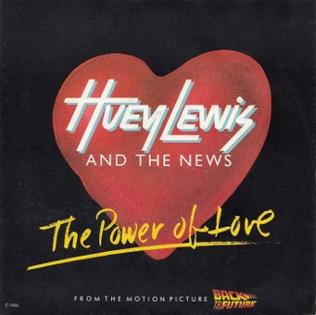
The Power of Love · Huey Lewis told Spielberg he would not write a song called "Back to the Future," so the band sent the next song they wrote. The version in the movie's audition scene is the demo, the band sold the song for a flat fee, and Huey played the teacher who calls it "just too darn loud."
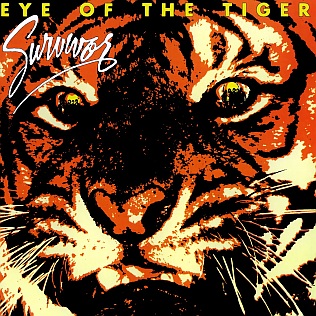
Eye of the Tiger · Stallone could not license Queen's "Another One Bites the Dust" for Rocky III, so he left a voicemail Jim Peterik assumed was a prank. Survivor wrote the riff to land on the punches, and the take in the film is a demo cut on a guitar glued back together.
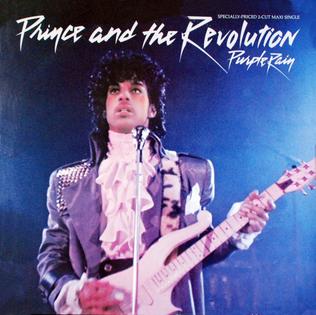
Purple Rain · Stevie Nicks turned it down because the ten-minute cassette scared her. Prince brought it to The Revolution as a little country tune played in piano triads, Wendy Melvoin stretched the chords into the opening everyone knows, and the record is the song's very first public performance, taped live at First Avenue in August 1983.
When Doves Cry · Prince wrote it overnight on assignment from his own director to match a scene in Purple Rain, played every instrument himself, then stripped the bassline out of the finished track while his engineer watched. The stark result was his first number one.
Ghostbusters · Columbia spent a year failing to find a theme song, then gave Ray Parker Jr a couple of days. He got "who you gonna call" from a late-night TV commercial, and Huey Lewis sued, claiming it copied "I Want a New Drug." The filmmakers had been cutting the movie to Lewis's song all along.
Footloose · Kenny Loggins had cracked his ribs falling off a stage, so he and Dean Pitchford wrote most of it in a Tahoe hotel room while both were ill and medicated, each hiding from the other how sick he was. It hit number one for three weeks, the only number one of Loggins' career.
Maniac · It began as a darkly comic song about a serial killer. The demo reached Flashdance producer Phil Ramone by accident, and he heard a hit on one condition: the horror lyrics had to go.
9 to 5 · Stuck on set without her guitar, Dolly Parton clacked her acrylic nails together, decided they sounded like a typewriter, and built the song on that rhythm. Her nails are credited as an instrument on the album.
Born in the U.S.A. · The title came off a Paul Schrader film script sitting in Springsteen's pile, and Springsteen thanked him in the liner notes. He has spent the decades since explaining the misread Vietnam anthem, writing that records are auditory Rorschach tests: we hear what we want to hear.
If You Leave · OMD's first song for Pretty in Pink no longer fit after John Hughes reshot the ending, so they wrote this one in under 24 hours, to Hughes' spec of 120 BPM so it would match "Don't You (Forget About Me)," the song the cast had danced to while filming the prom scene. It became OMD's biggest US hit.
St. Elmo's Fire (Man in Motion) · John Parr and David Foster wrote the movie's theme about someone who is not in the movie: Rick Hansen, then wheeling around the world for spinal cord research. Parr disguised the lyric so the studio thought it fit the film.
Take My Breath Away · The lyricist got the job by fixing the brakes on Giorgio Moroder's Ferrari, and Top Gun was considered done when the demo arrived, so the filmmakers brought Cruise and McGillis back to shoot new love scenes to fit it. Berlin's founder says he first heard his own band's number one at the movie's premiere.
Danger Zone · Giorgio Moroder wrote it for Top Gun's opening after Jerry Bruckheimer asked, and Columbia wanted one of its own artists on it before Kenny Loggins took it. It climbed the chart alongside "Sledgehammer" for two and a half months, and the week it reached number two was the exact week "Sledgehammer" reached number one.
Accidents, placeholders, and notes on doors
Wake Me Up Before You Go-Go · Andrew Ridgeley left a note for his parents on a bedroom door. George Michael saw it, built a song around the phrase after scrapping a single called "Whamshake," and predicted flatly that it would go to number one. It did, for three weeks.
Father Figure · George Michael was building a mid-tempo dance track when he cut the snare out of the mix to hear something else. The song went slow and dreamy on the spot, and he rewrote the rest of it around the accident.
Honesty · Billy Joel had the melody and no words, so his drummer filled the three-syllable hook with "sodomy." Joel wrote the real lyric fast, in the studio, specifically to kill the joke, and has spent decades saying he was in no position to preach the sermon he wrote.
Sweet Child o' Mine · Slash was goofing on a "circus" melody at the Guns N' Roses house. Izzy Stradlin added chords, Duff McKagan a bassline, and Axl Rose turned a poem about Erin Everly into the band's only number one.
Africa · David Paich had never been to Africa when he blurted out "Bless the rains down in Africa" at the chorus. The band nearly cut it from Toto IV, and it went to number one anyway, for exactly one week.
Time After Time · Asked for one more song at the end of her debut album sessions, Cyndi Lauper grabbed a title from a TV Guide movie listing as a placeholder. She and Rob Hyman poured their real breakups into it, and the placeholder became her first number one.
Welcome to the Jungle · A stranger shouted a warning at Axl Rose as he stepped off a bus: you're in the jungle, baby. Slash already had the riff, and the band arranged the whole song in roughly three hours. Which city the stranger was in depends on which telling you read, and we track all three.
Walk Like an Egyptian · Liam Sternberg got the idea watching passengers stagger across a rough Channel ferry crossing. Toni Basil passed on it, and the Bangles' producer found the demo on a mislabeled tape.
Money for Nothing · Mark Knopfler heard an appliance-store worker mocking the musicians on a wall of MTVs and wrote the lines down verbatim in the store. Sting sang "I want my MTV" to one of his own Police melodies, which is why he shares the credit.
Sunglasses at Night · The last song written for Corey Hart's debut was a rejected demo called "My Cigarette Got Wet," until he sang "I wear my sunglasses at night" over its melody.
You Can Call Me Al · The composer Pierre Boulez called Paul Simon "Al" and Simon's wife Peggy "Betty" at a 1970 party, and sixteen years later the mistake became the chorus. The single stalled at number 44, then the Chevy Chase video took off and carried it to number 23 in its twenty-third week on the chart.
Our House · Cathal "Chas Smash" Smyth challenged each member of Madness to write about their own childhood, and guitarist Chris Foreman answered with a version he admits was slow and dirgy. The band rebuilt it around a Motown rhythm, and it became their biggest American hit at number 7.
Invisible Touch · It came out of a jam, Mike Rutherford playing a riff while Phil Collins improvised the title line out of nowhere. The record that knocked it off number one was Sledgehammer, sung by the man Collins had replaced in Genesis.
Sister Christian · Night Ranger drummer Kelly Keagy wrote it about his 16-year-old sister Kristy and sang "Sister Christy" as a placeholder. His bandmates misheard it as "Christian," the band kept the mistake, and radio pushed it uphill for three months to number 5.
Love Shack · It grew out of a 15 minute improvisation that producer Don Was turned into a song on a spare studio day. Fred Schneider had the title, Kate Pierson pictured her own Georgia cabin, Cindy Wilson pictured a country bar, and Wilson's "tin roof, rusted" was an unplanned ad-lib kept from the first take.
Little Red Corvette · Prince half-dreamed it while dozing in Lisa Coleman's car after an all-night session, the lyrics arriving across three or four catnaps. The car was not a Corvette but a pink Mercury, and he cut the track within hours of a new console being installed in his home studio.
Don't Dream It's Over · Neil Finn wrote it in a single day on his brother's piano, in a mood he has described as antisocial, and demoed it with a matchbox for a snare. It peaked at number 2, held off the top by Aretha Franklin and George Michael.
Need You Tonight · Andrew Farriss caught the riff as his airport taxi arrived and ran back inside to record it on a cassette, then flew to Hong Kong, where Michael Hutchence wrote the lyrics over the demo. It became INXS's only US number one.
I Want to Know What Love Is · Mick Jones wrote it alone in the small hours of a 1984 night, at a keyboard in his London apartment, out of a period of divorce and band turmoil, then brought in the New Jersey Mass Choir for the gospel backing. It remains Foreigner's only US number one.
Heartbreak, divorce, and real names
Every Breath You Take · Sting woke in the night at Ian Fleming's Goldeneye estate in Jamaica, mid-divorce, and finished the song at the piano in about half an hour. Andy Summers added the guitar figure that defines it, and the world mistook a surveillance song for a love song.
In the Air Tonight · Phil Collins built it from a drum machine pattern and improvised the words in a single take, out of the anger of his divorce. The drowning legend attached to it is false, and Collins has spent forty years saying so.
Sweet Dreams (Are Made of This) · Annie Lennox and Dave Stewart had just broken up as a couple and kept working together anyway, cutting it in a tiny attic studio on second-hand gear bought with a bank loan. Their label did not even think it was a single.
Jessie's Girl · The girl was real, the class was stained glass, and the guy's actual name was Gary. Rick Springfield changed it to Jessie because Gary would not sing, and the woman herself has never come forward.
Just Like Heaven · Robert Smith wrote it under a self-imposed regimen of fifteen writing days a month, from a memory of a seaside trip with his future wife Mary. She is the one dancing with him in the video.
True · Gary Kemp was 22 and hopelessly stuck on Altered Images singer Clare Grogan, so he laced the lyric with coded references to her, including a line adapted from the Lolita novel she had given him. The story of the song is entirely his side, and the draft says so plainly.
Every Rose Has Its Thorn · A late-night payphone call from a Winnebago tour turned up another man's voice behind Bret Michaels' girlfriend. He filled a yellow legal pad in a Dallas laundromat, and the power ballad his label doubted went to number one for three weeks.
Eternal Flame · On a private Bangles tour of Graceland, the eternal flame at Elvis' grave sat unlit in the rain. Susanna Hoffs, Billy Steinberg and Tom Kelly folded that image into Steinberg's memory of the flame at his childhood synagogue.
Luka · Suzanne Vega wrote it from the point of view of an abused child who cannot say what is happening, named for a real boy in her building, and set it in a major key so it would not sink into gloom. In 2021 she revealed the song also drew on abuse in her own childhood.
Don't Stop Believin' · The title is advice Jonathan Cain's father gave him over the phone when he was broke and selling stereos. Cain found the phrase in an old notebook when Journey needed one last song for Escape, and wrote the chorus in minutes.
Rosanna · David Paich borrowed the name of Rosanna Arquette, then dating the band's keyboardist, and has spent decades explaining the song was about an earlier love. Jeff Porcaro's half-time shuffle, fused from Led Zeppelin and the Purdie Shuffle, is the other half of the story.
Edge of Seventeen · The title is a mishearing: Tom Petty's wife Jane said they met "at the age of seventeen" and her accent turned it into "edge." Stevie Nicks has closed her shows with it ever since. "I've never changed it," in her words.
867-5309/Jenny · Alex Call says flatly that he made up the name and the number alone in his backyard and there was no Jenny. His own singer maintains she was real, and the co-writer has told it both ways. We line all three up.
Voices Carry · Four different origin claims are on the record, from Aimee Mann's male friend to the producer's account that the label forced a gender change to Al Jourgensen claiming the song is about him. The conflict is the story, and every teller gets quoted.
Jack & Diane · In the first draft Jack was not a football star, he was an African-American, and Mellencamp has said the label made him change it. He held that piece of the story back for thirty years.
Keep On Loving You · Kevin Cronin wrote it after learning his wife had been unfaithful, waking in the night with the piano intro in his head. His own band rejected it as not an REO song, until Gary Richrath plugged into a Marshall stack over it, and America's favorite first-dance song is about catching your partner cheating.
Faithfully · Jonathan Cain wrote it alone on a tour bus stuck in a snowstorm, scrawling the opening lines on a napkin, while his own marriage was coming apart. It stalled at number 12 and became a wedding standard anyway.
Oh Sherrie · Sherrie was real: Steve Perry's then girlfriend Sherrie Swafford. Craig Krampf came up with the chorus hook during a break in the first writing session at Perry's house, and Randy Goodrum wrote the lyrics after Perry decided he did not like his own.
Hold Me Now · Tom Bailey and Alannah Currie of the Thompson Twins were a real-life couple, and Bailey wrote it right after they resolved a bitter argument. The band rush-recorded it without their producer, who was in Australia finishing a Duran Duran album.
The Living Years · Mike Rutherford and B.A. Robertson both lost their fathers in 1986, and the song is about the things a son never manages to say while his father is alive. Paul Carrack, whose own father died when he was eleven, sang it to number one.
Heat of the Moment · John Wetton wrote the lyric as an apology to his girlfriend Jill, who later became his wife, having started the song in 1980 while still in Wishbone Ash. Geoff Downes has said it was the last song written for Asia's debut, an afterthought the label prompted.
Songs their writers gave away, or never meant to sing
Man in the Mirror · Michael Jackson had rejected every outside song for two years of Bad sessions. Then Siedah Garrett and Glen Ballard wrote one fast, off a title Garrett had kept in a notebook for a year, and Jackson made it his own.
I Wanna Dance with Somebody · George Merrill and Shannon Rubicam, who had already written "How Will I Know," built it from a restless dusk walk near their Venice home. The demo was hand-delivered to Clive Davis at an airport.
The Boys of Summer · Mike Campbell built the track on a LinnDrum and a borrowed synth, and Tom Petty passed on it as too jazzy. Don Henley wrote the lyric, insisted on a key change, and won a Grammy with the riff Petty rejected.
Manic Monday · Prince wrote it, credited it to a pseudonym from his own movie, recorded it with Apollonia 6, pulled it, then handed the Bangles a cassette. It peaked at number two, kept off the top by Prince's own "Kiss."
Girls Just Want to Have Fun · Robert Hazard wrote it in 1979 from a young man's point of view. Cyndi Lauper flipped it into a women's anthem and made it hers so completely that most people have never heard of the man who wrote it.
Bette Davis Eyes · Jackie DeShannon and Donna Weiss wrote it in 1974 and DeShannon's rock and roll version flopped. Kim Carnes' 1981 synthesizer rebuild spent nine weeks at number one, and Bette Davis wrote them thank-you letters.
Red Red Wine · UB40 recorded it believing it was a reggae song by Tony Tribe, having read "N Diamond" on the label and guessed at a Jamaican artist. It was Neil Diamond, and they learned the truth only after recording.
Mickey · It began as "Kitty," a 1979 song by British band Racey. Toni Basil flipped the subject from female to male, renamed it, and added the cheerleader chant Racey never had.
I Love Rock 'n' Roll · Alan Merrill of the Arrows wrote it as a knee-jerk answer to the Rolling Stones, and his band buried it as a B-side. Joan Jett saw them play it on British TV, waited years, and took it to number one for seven weeks. The story of who else claimed credit, and how, is told in full.
Never Gonna Give You Up · Rick Astley was the studio tea boy at Stock Aitken Waterman when the men who employed him wrote it. The title was Waterman's, the bass rhythm was borrowed from Colonel Abrams, and the tea boy's record went to number one on two continents.
Walk This Way · Run-DMC had been spinning the beat for years without knowing it was Aerosmith, and called the lyrics "hillbilly gibberish" when Rick Rubin proposed the remake. Tyler and Perry showed up anyway, and the record revived Aerosmith's career.
Kiss on My List · It was mostly written by Janna Allen, the 20-year-old sister of Daryl Hall's girlfriend, on the Wurlitzer in her apartment, and Hall's vocal was a guide track on a demo meant for her. Everyone insisted the demo be released as it stood.
Physical · Steve Kipner and Terry Shaddick wrote it for a macho male voice like Rod Stewart. Tina Turner passed on it as too racy, Olivia Newton-John panicked after cutting it, and the comic gym video was the plan that saved it.
Like a Virgin · Billy Steinberg wrote the lyric about his own battered love life while driving his father's vineyards, and Tom Kelly cracked the music clowning in a Smokey Robinson falsetto. Nobody would take the song for a year, until a new singer named Madonna held it at number one for six weeks.
Thriller · Rod Temperton brought it to America as "Starlight," rewrote it around a single word that arrived one morning, and wrote Vincent Price's closing verses in a taxi on the way to the session.
Tainted Love · Ed Cobb wrote it in the 1960s and Gloria Jones's original flopped. Northern Soul dance floors in England kept it alive until Soft Cell rebuilt it as electronic pop and kept Marc Almond's first run-through vocal.
Don't You (Forget About Me) · Keith Forsey and Steve Schiff wrote it for The Breakfast Club, and Simple Minds turned their own future signature song down repeatedly. Billy Idol denies the legend that he did too, and this story carries his denial in his own words.
These Dreams · Bernie Taupin wrote the lyric as "Boys in the Mist" for Stevie Nicks, who passed, as did Kim Carnes, so Martin Page moved the bridge into the chorus and renamed it. Nancy Wilson fought her own band to sing it and cut the guide vocal with a cold, and the rasp on Heart's first number one is the cold.
Take Me Home Tonight · Mick Leeson and Peter Vale wrote it, and its chorus quotes "Be My Baby," so Eddie Money pushed past the Martha Davis plan and phoned Ronnie Spector, who was doing the dishes and had not had a charting single since 1971. She sang her own line, and it became the biggest hit of Money's career.
Human · Jimmy Jam and Terry Lewis wrote and produced it in Minneapolis, deliberately building a song that would pull an emotional vocal out of Philip Oakey, which is where the title comes from. The first Human League hit Oakey had no hand in writing became the band's second American number one.
Islands in the Stream · The Bee Gees wrote it as an R&B song named after the Hemingway novel: for Diana Ross in Barry Gibb's forty-year telling, for Marvin Gaye in Robin's, a version the calendar contradicts. Kenny Rogers struggled with it for four days until Dolly Parton was fetched from down the hall, and the leftover topped three charts at once.
What's Love Got to Do with It · Terry Britten and Graham Lyle had to be bored into writing it, Cliff Richard's people rejected it, Bucks Fizz cut it and shelved it, and Tina Turner told Britten she thought it was throwaway pop. Then four weeks of finished production got thrown out for a rough cassette, and it gave Turner the rest of her career.
Fights, vetoes, and songs nobody believed in
Come On Eileen · The band was broke, the manager was threatening to walk, and the rehearsal that introduced the song ended with Kevin Rowland snapping and two members walking out. Rowland has since admitted he lied about the girl for years, and that the sound came from a friend he had fallen out with.
Under Pressure · Queen and David Bowie fell into an unplanned jam in Montreux and walked out with a number one. Who actually wrote the bassline depends entirely on which member you ask, and we quote them disagreeing.
Summer of '69 · Bryan Adams and Jim Vallance wrote it as "Best Days of My Life," and to this day they publicly disagree about what the title means. Vallance says the year. Adams says it was never about a year at all.
Billie Jean · Quincy Jones wanted the long intro cut, disliked the bassline, and pushed to rename it "Not My Lover." Michael Jackson refused on every count, the mix went through 91 passes, and they shipped mix two.
Jump · Eddie Van Halen wrote it on a synthesizer around 1981 and his own band rejected it, on the grounds that a guitar hero should not play keyboards. David Lee Roth finally wrote the lyric off a TV news report about a man threatening to jump off a building.
Everybody Wants to Rule the World · Roland Orzabal did not like it and nearly left it off the album. His producer pushed to record it anyway, chasing American success, and it gave Tears for Fears two weeks at number one.
Don't You Want Me · Philip Oakey based it on a photo-strip in a teen magazine, hated the finished version, called it filler, and buried it as the album's last track. Virgin released it over his objections, and it became the Christmas number one.
Blue Monday · New Order built it on a home-made sequencer and a drum pattern from a Donna Summer B-side, and its famous die-cut floppy-disk sleeve cost so much that early copies lost money. How much money, and for how long, depends on who is telling it, and we line the tellers up.
Should I Stay or Should I Go · Mick Jones has always refused to pin the lyric to one meaning, and the Spanish backing vocals were a loosely translated on-the-spot echo by Joe Ely and Joe Strummer. It flopped in 1982 and hit number one in the UK nine years later off a jeans commercial.
Rock the Casbah · Drummer Topper Headon recorded the drums, piano and bass largely alone, then Joe Strummer threw out Headon's lyrics and wrote a new set inspired by Iran's ban on Western music. It became The Clash's only American top 10 hit.
Pour Some Sugar on Me · Joe Elliott was strumming the chorus on an acoustic during a break when Mutt Lange overheard it. The label did not want one more song added to the over-budget Hysteria, and the afterthought became the band's signature hit.
Here I Go Again · It flopped in 1982 and was re-recorded in 1987 at David Geffen's insistence, over David Coverdale's reluctance, with one famous word changed: the hobo became a drifter. The remake was Whitesnake's only American number one, and why the word changed is part of the story.
Dancing in the Dark · Jon Landau told Springsteen the finished album still lacked a single. Springsteen snarled that if Landau wanted another song he could write it himself, then went back to his room and wrote this one the same night.
Hungry Heart · Springsteen wrote it the night Joey Ramone asked him for a song, intending to give it away. Jon Landau, "earning his money" in Springsteen's words, advised him to keep it, and the song he meant to hand off went to number five.
With or Without You · By the Joshua Tree sessions the rest of U2 had tired of it and the arrangement was nearly abandoned, until Bono and his friend Gavin Friday rescued it, with the Edge playing a prototype Infinite Guitar.
Shout · Roland Orzabal built it from one repeated chorus in his home setup and filed it as filler. Ian Stanley and the producer insisted it was a global smash, and it spent three weeks at number one.
Owner of a Lonely Heart · Trevor Rabin conceived the riff and title in his bathroom and did not hear it as a Yes song. Producer Trevor Horn caught the demo playing while Rabin was out of the room and begged the band to cut it.
Take On Me · The riff was written by a fifteen-year-old whose own bandmate called it an advertising jingle. The song flopped twice in two different recordings before the third version, cut in five days of a producer's downtime, went to number one, and the band celebrated with a hamburger.
99 Luftballons · Carlo Karges watched the Rolling Stones release balloons over West Berlin and imagined Soviet radar mistaking them for missiles. The label begged the band not to release a single with no chorus, and America sent the German version to number 2.
You Spin Me Round (Like a Record) · The label called it awful, Pete Burns borrowed money to record it, and Stock Aitken Waterman cut it in secret during sessions booked for other songs. Seventeen weeks after entering the UK chart it was number one, the Hit Factory's first.
Kokomo · Every current Beach Boy sang on the band's first number one in twenty-two years except Brian Wilson, and why he is absent depends on the teller: Brian's memoir says the band hid the session date, Mike Love says therapist Eugene Landy demanded a credit, and biographer Mark Dillon checked the session dates and found Brian's version unsupported.
Love Is a Battlefield · Holly Knight and Mike Chapman wrote it as a slow song, minutes after Pat Benatar called asking for one. Neil Giraldo made it uptempo over Chapman's objections, Chapman told him he hated what he had done, and then it went to number 5 and Chapman changed his mind.
Hit Me with Your Best Shot · Eddie Schwartz got the title after a pillow-punching therapy session, his publisher called the demo pathetic and erased the master, and the studio engineer kept a secret cassette. Pat Benatar took the song her publisher destroyed into the top ten.
Mr. Roboto · Dennis DeYoung wrote it as a transition between the short film that opened Styx's 1983 concerts and the live show, and has said repeatedly he never thought it would be a single. His wife did, it went to No. 3, and the fight over it and the concept behind it split Styx apart after the tour.
Sailing · Christopher Cross wrote it alone at the table of a cheap apartment, in an open tuning picked up from listening to Joni Mitchell, and the bridge took about two years because the tuning kept trapping him in one mood. Warner Bros. released it as a single over his objection that it was too introspective, and it went to No. 1.
Addicted to Love · It was cut as a duet after Robert Palmer and Chaka Khan met by chance at a club, then her record company refused to release her and the vocal was erased. Palmer sang her parts himself, Khan kept the vocal-arrangement credit, and the duet nobody can play back went to No. 1.
How Soon Is Now? · Johnny Marr demoed it as "Swamp," and he and producer John Porter built the shuddering tremolo by hand, in bursts of about ten seconds, with a method its own makers have never been able to reconstruct. Rough Trade threw it away as a B-side, and the belated A-side peaked at just 24 in Britain.
The Reflex · It sat on Seven and the Ragged Tiger at 5:29, too long to be a single, until Nile Rodgers looped the hook and invented the stuttering "Fle-fle-fle" sample. Capitol executives hated the remix, and it became Duran Duran's first American number one.
The strange ones
Total Eclipse of the Heart · Jim Steinman wrote it as "Vampires in Love" for an unfinished Nosferatu musical. Bonnie Tyler went looking for the man behind Bat Out of Hell, and got the biggest hit of her life out of his abandoned vampire show.
The Safety Dance · Ivan Doroschuk kept getting thrown out of clubs for pogo dancing to new wave records, so he wrote a protest about the freedom to dance how you want. It was not even the band's first-choice single.
I Melt with You · Robbie Grey wrote it quickly in his London flat, imagining a couple making love as a nuclear bomb falls, with the chorus carrying the double meaning on purpose. It never cracked the US top 40 and became one of the most enduring songs of the decade anyway.
Whip It · Gerald Casale wrote the lyric in one night as a parody of all-American self-help talk, straight out of Thomas Pynchon's Gravity's Rainbow. It is not about what everyone thinks it is about, and Devo has spent four decades explaining that everybody heard it exactly wrong.
Hungry Like the Wolf · Duran Duran wrote and recorded it in a single day at EMI's demo studio, building it up as each member arrived, with a lyric loosely inspired by Little Red Riding Hood. Five members, five accounts of that day, assembled here.
The Final Countdown · Joey Tempest built it on a keyboard riff he had composed years earlier on a borrowed Korg Polysix, as a grand opener for the live show, never intending a single. It went to number one in 25 countries.
Sledgehammer · Peter Gabriel wrote it as a deliberate homage to the Stax soul revue he saw in London in 1967, and hired the Memphis Horns to make the point. It knocked his own former band Genesis off number one.
Once in a Lifetime · David Byrne wrote the verses in a radio-preacher cadence after listening to evangelists, Brian Eno wrote the wordless chorus, and the band nearly abandoned it. It never cracked the Hot 100, and became one of the most enduring songs of the decade anyway.
Relax · Holly Johnson worked out the hook in his head, running late along a Liverpool dual carriageway. Trevor Horn scrapped three finished versions before building the fourth mostly with session musicians, and a BBC ban did what no amount of production could.
Like a Prayer · Patrick Leonard wrote the music at the piano in the morning, Madonna wrote the lyric in about an hour, and the demo vocal she sang that day is the vocal on the record. Prince plays the opening guitar.
West End Girls · Neil Tennant sketched the opening lines watching a James Cagney gangster film at his cousin's house in Nottingham, and has said the song is about class and inner-city London, not prostitution. The first recording flopped in 1984; the Stephen Hague re-record went to number one in both Britain and America.
Broken Wings · Lyricist John Lang took the central image from Kahlil Gibran's 1912 novel, and the line that carries it sits almost word for word inside the Beatles' "Blackbird," an echo Richard Page calls unintentional. The band also lied about the song's running time to get it on the radio.
Personal Jesus · Martin Gore wrote it in the summer of 1989 after reading Priscilla Presley's memoir Elvis and Me, about the way a partner becomes a god in a love relationship. Depeche Mode cut it in Milan on a bluesy single-note riff, and its number 28 American peak moved the band out of the specialist racks for good.
Waiting for a Girl Like You · The ambient synth that opens it was played by a nineteen-year-old Thomas Dolby, flown in off a demo tape thinking The Clash had finally called. Lou Gramm sang it to a stunning stranger in the control room nobody could identify, and the record spent ten straight weeks stuck at number two.
In Your Eyes · Peter Gabriel rebuilt it repeatedly across six reels of tape, transplanting the melody of an abandoned song called "Sagrada," and Youssou N'Dour improvised the Wolof ending. It peaked at 26, then a boombox over John Cusack's head sent it back up the chart three years later.
Fast Car · Tracy Chapman wrote it at around 22 in a single late-night session, then revised it over a week. It sat at number 95 until a technical failure at somebody else's set pushed her back onstage, unplanned, at the Nelson Mandela birthday concert at Wembley, and it climbed to number six.
(You Gotta) Fight for Your Right (To Party!) · Adam Yauch and band friend Tom Cushman wrote it as a goof on party-and-attitude rock songs, and the audience took the parody straight. It became the Beastie Boys' only top-ten hit, in the same week Licensed to Ill became the first rap album ever to top the American album chart.
The honest bottom line
Origin stories are told by professionals who have polished them across hundreds of interviews, and a story that has been told five hundred times is a performance as much as a memory. That is exactly why we quote multiple tellings across decades instead of retelling one: you get the story AND the polish, visible side by side. What survives every retelling is usually true. What drifts is usually interesting.
FAQ
What is the story behind a song, exactly? How it came to be written and recorded: who wrote it, what sparked it, what changed on the way to the record, and what happened when it hit. On this site the story is told in the writers' own interview quotes, not our summary of them.
Which 80s songs have the best origin stories? The ones where something went sideways: "Eye of the Tiger" exists because Queen would not license a song, "Purple Rain" because Stevie Nicks said no, "Total Eclipse of the Heart" because a vampire musical died. There are 120 stories on this page, and the list grows as new stories are added.
Are these stories true? Every quote is verbatim from a named interview with the outlet and year attached, and every story lists its sources at the bottom. Where the writers' tellings conflict, we print the conflict instead of smoothing it over.
Why do the stories change over the years? Because the writers have told them hundreds of times, and repetition polishes memory into performance. Each story here ends with a timeline of the tellings so you can watch that happen. The spine of a true story holds; the decorations move.
Start with The Power of Love or Purple Rain.
Every telling on this shelf passed the bubble check.