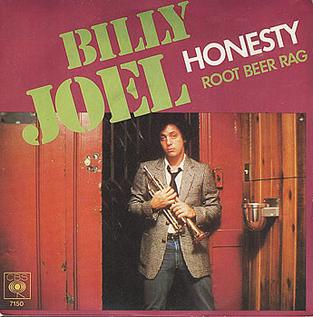
The most earnest ballad Billy Joel ever wrote exists because his drummer sang a filthy joke over the melody and Joel could not get it out of his head. The studio was booked. The band liked the tune. There were no words. And the three-syllable placeholder sitting in the chorus was a word that could never be printed on a record sleeve. Joel has told this story for over a decade, and he has never once tried to make himself look good in it.
"Honesty" came out of the 1978 sessions for Billy Joel's album 52nd Street. Joel had the melody and no lyrics, and drummer Liberty DeVitto filled the three-syllable hook with the word "sodomy." Joel wrote the real lyric fast, in the studio, specifically to kill the joke. The single entered the Billboard Hot 100 on April 21, 1979 at number 71 and peaked at number 24 on the chart dated May 26, 1979.
The placeholder that forced the song
Joel's method was always music first. He built the tune, sang nonsense over it to hold the meter, and wrote the actual words later. On "Honesty," the nonsense got out of hand.
"I didn't have a lyric for it, so my drummer started to sing 'sodomy'... 'sodomy... such a lonely word.' So I had to come up with some lyrics fast," Joel told Howard Stern at a 2014 town hall appearance, in a telling quoted by Songfacts.
He gave Stern a longer version a decade later. "I need something to make me do it fast, or make me do it at all," Joel said in a 2024 Stern interview reported by American Songwriter that March. "I knew it couldn't be 'Sodomy.' I liked the melody, the band liked the melody. The studio time was booked. What are we going to call this thing? So I said, 'You know what fits? 'Honesty.' And then I wrote the lyrics, right there and then."
That is the whole mechanism of the song in four sentences. A melody worth keeping, a commercial deadline, and a joke lyric so bad it functioned as a threat. In an interview with Rick Beato published in July 2026, Joel said it outright: "I [had] to come up with lyrics right away, because otherwise it'll forever be 'Sodomy'."
What the placeholder was actually doing
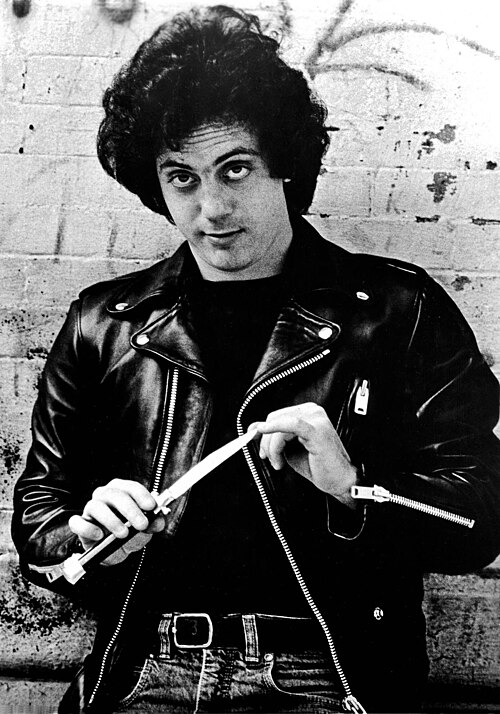
The two accounts of why "sodomy" fit differ slightly, and the difference is technical rather than contradictory. American Songwriter's telling stresses syllable count: the hook needed three syllables, and "sodomy" had three. Wikipedia's account of the Beato interview stresses the vowel: Joel needed an "ee" sound landing on the end of the phrase, which is why "honesty," "sodomy" and very little else would sit right on that melody.
Both constraints are real, and together they explain why the replacement word was so hard to find. The song is trapped inside its own hook. Say the chorus out loud and try to substitute anything else with three syllables ending in "ee." Almost nothing carries the weight.
Songfacts adds a third candidate that neither Stern telling mentions: that Joel started out with the title "Home Again" before looking for something more appropriate. No first-person telling of that has surfaced, so treat "Home Again" as a documented claim from a song database rather than something Joel has said himself.
Joel's own verdict on it
Here is what separates this song's story from most of them. The writer does not defend it. He has attacked it, repeatedly, in public, for years.
"'Honesty' is the most bulls--t song I ever wrote," Joel told SiriusXM in 2016, as quoted by Songfacts. "I mean, who am I to preach to people, 'You gotta be honest with me.' I haven't always been honest in my life."
He was still making the same point a decade later. "Who the hell am I to preach to somebody about being honest? 'Cause I'm a lying sack of crap," he told Rick Beato in July 2026.
The consistency matters. Two interviewers, two decades, the same self-indictment in slightly different language. Joel is not being modest about the craft, which he clearly rates. He is objecting to the posture of the lyric, the fact that the song's narrator claims moral high ground the writer does not think he had.
The album it belongs to
"Honesty" was the third single from 52nd Street, which Joel and his band cut in the summer of 1978 at A&R Recording on 52nd Street in Manhattan. The album's jazz lean was not the plan.
"We didn't realize at the time but we were really leaning more into a jazzy style," Joel told SiriusXM in 2016. "And the studio was on 52nd Street, just off of 7th Avenue. So we decided, 'Well, hey, The Beatles could call an album Abbey Road, we can call an album 52nd Street."
That casual naming logic tells you how the whole record was made: a working band, in a room, taking what the room gave them. "Honesty" got its words the same way, off the floor, under time pressure, with the tape rolling and the drummer heckling.
Where it actually landed
The single did fine in America and enormously better elsewhere, which is the standard shape of this song's afterlife.
The Billboard Hot 100 shows "Honesty" debuting at number 71 on the chart dated April 21, 1979. It reached number 26 on May 19, then number 24 on May 26, 1979, which was its peak. By the chart dated June 16 it had fallen to number 66, nine weeks on. Twenty-four was as high as it went in the United States, and the song also reached number 9 on Billboard's Adult Contemporary chart.
Outside America the picture is completely different. It went to number one in France and number one in Argentina, reached number 8 in South Africa, number 10 in Italy and number 15 in Israel, and charted in Japan, Finland, the Netherlands, New Zealand and Zimbabwe.
How the telling has grown over the decades
- 2014, Howard Stern town hall. The core story arrives in public: no lyric, drummer sings "sodomy," Joel has to write fast. Short, funny, no self-criticism attached.
- 2016, SiriusXM. Joel adds the judgment, not the mechanics. He calls it the most dishonest thing he ever wrote and says plainly that he has not always been honest.
- March 2024, Howard Stern again, reported by American Songwriter. The fullest version of the writing scene: the booked studio time, the band liking the melody, and the moment he lands on the word and writes the lyric on the spot.
- July 2026, Rick Beato. Joel supplies the technical constraint, the "ee" vowel sound, and restates the hypocrisy charge in blunter language than he had used before.
The tellings drift in two places worth naming. First, the constraint: the syllable-count framing and the vowel-sound framing come from different interviews and different interviewers, and Joel has never given both in one breath. Second, the placeholder itself. Songfacts records "Home Again" as an early title, while every telling from Joel's own mouth points at "Sodomy" as the thing in the chorus. Those are not the same claim, and only one of them has the writer's voice behind it.
One further note on the record, because this song attracts bad chart data. Widely circulated summaries date the Hot 100 debut to June 16, 1979 and the peak to September 1, 1979. The Billboard weekly tables show the debut on April 21, 1979 and the peak on May 26, 1979, with the song already down at number 66 by June 16 and absent from the chart entirely on September 1.
The honest bottom line
"Honesty" is a sermon written under duress by a man who says he was in no position to preach it, built on a melody so specific about its own vowel sounds that the lyric was nearly decided by phonetics rather than meaning. In America it was a modest hit that stalled outside the top 20. None of that has touched it. The song works because the melody carries a weight the writer never claimed to earn, and because Joel keeps telling audiences the unflattering truth about how it happened rather than inventing a nobler origin. That is a strange kind of integrity for a song about integrity, and it is the only kind on offer here.
FAQ
What is the story behind Billy Joel's "Honesty"? Joel wrote the melody first during the 1978 sessions for 52nd Street and had no lyric. Drummer Liberty DeVitto filled the three-syllable hook by singing "sodomy," and Joel wrote the real words on the spot to make sure the joke did not stick.
Was "Honesty" almost called "Sodomy"? That was the placeholder in the chorus, not a proposed title. Joel has told the story to Howard Stern and to Rick Beato: "I [had] to come up with lyrics right away, because otherwise it'll forever be 'Sodomy'."
What does Billy Joel think of "Honesty"? He has criticized it for years. "'Honesty' is the most bulls--t song I ever wrote," he told SiriusXM in 2016, objecting to preaching honesty when he had not always been honest himself.
Why did the lyric have to end in an "ee" sound? The melody lands hard on that vowel. Joel told Rick Beato he needed an "ee" sound in that spot, which is why so few three-syllable words fit, and why "sodomy" sat there so stubbornly until "honesty" replaced it.
How high did "Honesty" chart? Number 24 on the Billboard Hot 100, on the chart dated May 26, 1979. It debuted at number 71 on April 21, 1979 and also reached number 9 on Billboard's Adult Contemporary chart.
What album is "Honesty" from? 52nd Street, released in 1978, recorded that summer at A&R Recording on 52nd Street in Manhattan. "Honesty" was the album's third single.
Sources
- Songfacts, "Honesty by Billy Joel," carrying Joel's 2014 Howard Stern town hall telling and his 2016 SiriusXM comments
- American Songwriter, "The Meaning Behind Honesty by Billy Joel and Why He Initially Struggled with the Lyrics," March 1, 2024, reporting a 2024 Howard Stern interview
- Wikipedia, "Honesty (Billy Joel song)," citing Rick Beato's interview with Billy Joel published July 13, 2026
- Billboard Hot 100 weekly charts dated April 7, April 21, May 5, May 19, May 26, June 16, July 28, August 11 and September 1, 1979
- Wikipedia, "Honesty (Billy Joel song)," weekly charts table, for the non-US chart peaks
A song called Honesty, on a site built on exactly that.
Part of Stories Behind the Songs. See also Total Eclipse of the Heart and Don't Stop Believin'.