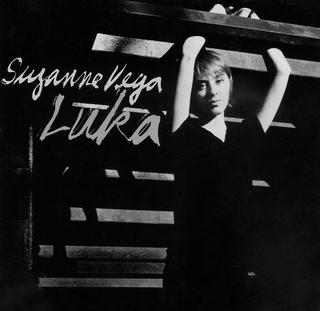
The name arrived on the wrong mail. A children's magazine addressed to somebody called Luka landed in Suzanne Vega's box, and she could not tell from the name whether the child was a boy or a girl, or what part of the world the family came from. Then she met him at the elevator. The song she built around him was about child abuse, written deliberately in a bright major key, and it climbed to number three on the American pop chart in 1987. For thirty-five years Vega said it was about a neighbor. Then she said something else: that she was Luka.
"Luka" was written by Suzanne Vega around 1984 after a real boy named Luka, who lived in her New York apartment building, caught her attention. She wrote it from the point of view of an abused child who cannot say what is happening, set it in a major key so it would not sink into gloom, and released it on her 1987 album Solitude Standing. It reached number three on the Billboard Hot 100. In 2021 Vega revealed the song also drew on abuse in her own family.
A name on the wrong mail
The origin was an accident of the postal service. "It was probably late-summer in 1983 or '84 and I lived in New York City, in Chelsea, on the corner of 8th Avenue and 23rd Street," Vega told Songwriting Magazine. "I'd gotten mail wrongly delivered to my house and I saw the name on it said 'Luka'. It was a children's magazine, so I knew it was a child." The name itself fascinated her. "I thought it was a fascinating name because not only could you not tell if it was male or female, you couldn't tell what nationality it was."
Then she met the child it belonged to. "I opened the door one day and I saw this kid waiting for the elevator," she recalled. "I said, 'What's your name?' And he said, 'My name's Luka,' and I thought, 'Oh you're Luka.' I said, 'I get your magazines all the time,' and he looked totally nonchalant and unconcerned." He was about nine. That was the whole encounter, and Vega has always been careful to say the real boy gave her only a name and a face, nothing more. "I just took his name and his character and put them in the song," she said, "even though I had no evidence that he was being abused." She described the real Luka on Swedish television in 1987 the same way: "In the song, the boy Luka is an abused child," she said, but "in real life I don't think he was. I think he was just different."
Writing the unspeakable
The subject came before the boy. Vega had wanted to write about child abuse and could not find the door in. "I knew I wanted to write about the issue of child abuse, but I wasn't sure how to do it," she told Songwriting Magazine. She had been listening to Lou Reed. "I was impressed by the way he wrote about a violent world, and I had to think of how to write about a subject that no one talks about," she told Songfacts.
Her breakthrough was structural, and she describes it like a technician. The problem, as she framed it to Songfacts, was that an abused child cannot say what is wrong. "Now the problem that that person has is that they can't say it. So how do you get the problem out if you can't say it?" Her answer was to make the child introduce himself and disarm the listener with small talk. "Well, you introduce yourself: 'My name is Luka.'" The song states the situation without ever naming it. She also made a deliberate choice about the music. She wrote it in a major key, she said, specifically to keep it from becoming a "sad, introspective song about a child thinking about his abuse."
Vega is precise about how long that craft took. The idea circled her mind for months before it fell into place in a single sitting. "It takes months of kind of fingering it in my mind, while I'm walking around or doing something else," she told Songfacts. "Like if you're playing pool and you want to clear the table, you line it all up, and then you just hit it and everything clears." Once the angle came, the writing was fast. "I think I wrote it in two hours, one Sunday," she told Songwriting Magazine. One real-life detail flipped inside the song: the lyric puts Luka upstairs, on the second floor, while Vega herself lived on the ground floor. "I used to live on the ground floor, so everyone lived upstairs from me," she said. The narrator hearing something through the ceiling is the listener's seat, a triangle she built "like a playwright, to make a triangle between Luka, the neighbour and the audience."

The argument about whether a song can matter
Vega did not believe "Luka" was a hit. Her manager did, and they fought about it. "My manager had an idea that this song could be a hit," she told Songwriting Magazine. "He said, 'It's a song about an issue and we need more songs that are about issues.'" Vega was skeptical that pop songs changed anything. Her manager, older, was certain they did. As she recounted to Songfacts, "he really let go: 'We ended the Vietnam war, you know, how can you tell me that music didn't change anything?'" She gave in. "So in the end I said, 'Fine, knock yourself out.'"
The song had been written before her 1985 debut album and held back. "We saved it, specifically, for the second album," she told Songwriting Magazine, because it "needed some time for it to settle into the bag of songs." The production was labored over. "They spent a couple of years on the production, getting the arrangement right, getting the drum sound right, getting the sound of the solo just right," Vega said, "and in the end all of that diligence paid off because the minute it went to radio it was an instant hit, it started in Boston and spread quickly all over America and all over the world." "Luka" reached number three on the Billboard Hot 100 on August 22, 1987, Vega's highest-charting US single, and earned three nominations at the 1988 Grammy Awards, including Record of the Year and Song of the Year.
Years later the real boy closed the loop himself. Vega's former roommate reported that Luka, by then a teenager, had come back to the building. "When he was like 15 years old, he came and knocked on the door one day and he had a girl with him, and he said, 'Could you tell this girl that Suzanne Vega really did used to live here?'" Vega recounted. "So I guess he figured out he was the child in the song." She added, "Wherever he is, I wish him well and I hope he doesn't mind that I took his name."
"I am actually Luka"
For most of the song's life, that was the whole story: a real name, a real boy, a writer's craft, and a subject handled with care. Vega left something out, on purpose, for decades. In 2021 she said it plainly for the first time. The hurt child in the song was not really the neighbor boy at all. It was Vega herself, and the abuse in the song reached back into her own family.
She has explained why she waited. "When I wrote Luka back in the '80s, I was still afraid," she told Music Republic Magazine in 2025. "I was still very much in the circle of my family and I did not want to talk about this in public." The character was armor. "I felt the need to express it and so I chose a character to speak through, which protected me all those years." The disclosure was not entirely her choice of timing. As she told the same interviewer, a historian preparing a podcast for a New York museum forced the door. "He said: I know you're Luka and we're going to start the interview from there. And so I thought: I've been caught. He's found me out. And I decided to accept that challenge." She has continued to write about that history through characters since, including "Song of the Stoic" on her 2014 album, whose narrator faces down an abusive father.
How the telling has grown over the decades
The story arrived in two clearly separated layers, and the gap between them is the whole point. In 1987, on Swedish television and everywhere else, Vega told a tidy, honest-sounding version: she had seen a distinctive boy named Luka in her building, remembered his name and face, and built a character on him while stressing she had "no evidence" the real child was abused. Through the years that followed, her interviews, including the detailed Songwriting Magazine and Songfacts accounts, deepened the craft story: the misdelivered magazine, the major-key decision, the "My name is Luka" device, the two-hour write after months of circling. All of that stayed on the surface of technique.
The deeper layer did not surface until 2021, when Vega confirmed that the emotional source was abuse within her own family. This is not a contradiction, and Vega has been clear that it is not. The real boy and the real name existed. What she withheld was that the feeling in the song was her own, carried by a borrowed name because a borrowed name was safer than her own. The drift in this story is a writer slowly deciding she is allowed to say the true thing out loud. Both versions are true. She simply could not tell the second one until she was ready.
The honest bottom line
"Luka" is, on its face, an issue song, the kind Vega herself doubted could change anything, dressed in a deliberately pretty melody to smuggle a hard subject onto pop radio. It borrowed a stranger's name, flipped a floor number, and was buffed for two years in the studio before it sold. None of that makes it less true. Vega built a piece of craft precise enough to say something unsayable without ever spelling it out, and then spent thirty-five years letting the world assume it was about someone else before admitting it was about her. The care that went into hiding the real subject is exactly what made the song safe enough for millions of people to hear their own story inside it. A year later, Tracy Chapman would push the same technique further with Fast Car, another song about damage and escape dressed in a melody gentle enough for pop radio, and the two records together proved that the late 1980s could hear a hard truth if it was wrapped carefully enough.
FAQ
What is "Luka" by Suzanne Vega about? It is about child abuse, sung from the point of view of a boy named Luka who lives upstairs and cannot say what is happening to him. He deflects a concerned neighbor with lines like "I think it's because I'm clumsy," so the listener understands the situation the child cannot state directly.
Was Luka a real person? Yes. Suzanne Vega first saw the name on a children's magazine misdelivered to her New York apartment, then met the real boy, about nine years old, at the elevator. She used his name and general character but has said she had no evidence the real child was being abused. She thought he simply seemed different from the other kids.
Is "Luka" about Suzanne Vega herself? In part, yes. For decades Vega presented it as inspired by the neighbor boy, but in 2021 she revealed that the song also drew on physical and emotional abuse she experienced within her own family, saying she used the Luka character to speak through and protect herself.
Why is a song about child abuse so upbeat? Vega made that choice on purpose. She wrote "Luka" in a major key specifically to keep it from becoming a "sad, introspective song," believing a more formulaic, obviously grim song about the subject would not get heard.
How high did "Luka" chart? It peaked at number three on the Billboard Hot 100 on August 22, 1987, making it Suzanne Vega's highest-charting hit in the United States. It was nominated for three 1988 Grammy Awards, including Record of the Year and Song of the Year.
How long did it take Suzanne Vega to write "Luka"? The idea circled in her mind for months, but once she found the angle she wrote it in about two hours on a single Sunday. It was written before her 1985 debut album and held back for her second album, Solitude Standing, in 1987.
Sources
- Songwriting Magazine, "How I Wrote 'Luka' by Suzanne Vega," first-person interview
- Songfacts, "Luka by Suzanne Vega," with quotes from a 1987 Swedish television special and later Vega interviews
- Music Republic Magazine, "Suzanne Vega: 'Yes, I Am Luka!'" (interview), April 2025
- Billboard Hot 100 weekly tables, August 1987; Wikipedia, "Luka (song)," for chart and Grammy detail
Serious songs get the most serious checking, our word on that.
Part of Stories Behind the Songs. See also The Story Behind Every Breath You Take and The Story Behind In the Air Tonight.