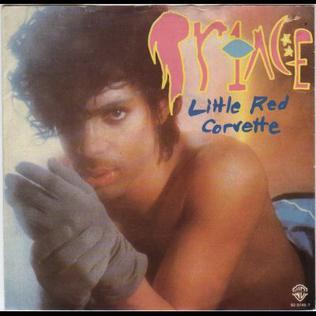
The car in the most famous car song of 1983 was not a Corvette, was not red, and did not belong to the man singing about it. It was a pink and white 1964 Mercury Montclair Marauder that belonged to his keyboard player, who kept finding fresh dents in it. He wrote the song while falling asleep in it, in pieces, over several naps, and he said later that he was never fully awake for any of it.
Prince wrote "Little Red Corvette" in the spring of 1982 while dozing in Lisa Coleman's 1964 pink Mercury Montclair Marauder after an all-night recording session. The lyrics arrived across three or four catnaps. He cut it in his Kiowa Trail home studio in Chanhassen, Minnesota within hours of a new console being installed, with Dez Dickerson on the guitar solo. It peaked at number 6 on the Billboard Hot 100 on May 21, 1983.
The car
Lisa Coleman, keyboardist in Prince's band and one half of Wendy and Lisa, bought the Mercury at a car auction in 1980. Prince helped her get it and then treated it as communal property.
"I bought this vintage pink Mercury at a car auction," Coleman told The Guardian in 2008. "It was so bitching-looking that Prince used to borrow it and dent it, which I'd make him feel bad about. He slept in it one time and came up with 'Little Red Corvette'... even though it was a pink Mercury."
She filled the picture in for Mark Savage of BBC News in November 2019. "Prince was always borrowing my car because it was awesome," she said. "It was just the perfect cruise-mobile on a beautiful day in Minneapolis."
The dents came with the loan. "He actually put a couple of dents in it, because it was so big. He'd come up to me and mumble, 'Hey Lisa, sorry about your car.' So I'd run out to inspect the damage and there'd be a little dent with some yellow paint from a pole he'd reversed into, and I'd go, 'Damn it. Watch where you're going!'"
What was actually happening in the car
Coleman is also the person who has said out loud what the song came out of, and she has been careful to mark which part she witnessed and which part she is inferring.
"He was sleeping with someone we knew... and she was 'sleeping' in the back of the car, too," Coleman told BBC News in 2019. "I imagine they were making out, or doing whatever, in the back seat and they probably had a wonderful moment of afterglow, which is when he got the seed of the idea. But it's not a red Corvette, it's a pink Mercury!"
That is the whole engine of the lyric: a one-night stand recalled the morning after, with the car standing in for the woman, the horses and jockeys standing in for the men before him, and a pocket full of Trojans doing the rest of the work in plain sight.
Prince's own account: he was asleep for it
Prince rarely explained his songs, and when he did it was usually in writing rather than in an interview. His own account of this one is in the unpublished liner notes he wrote for the 1993 compilation The Hits, where he said he "always considered the song a dream because it was written between 3 or 4 catnaps and he was never fully awake."
That matches the mechanics everyone else describes. The lyrics did not arrive in one sitting. They came in bits and pieces across that nap and later ones, and Prince eventually finished the words without sleeping at all.
Recorded almost before the studio was finished
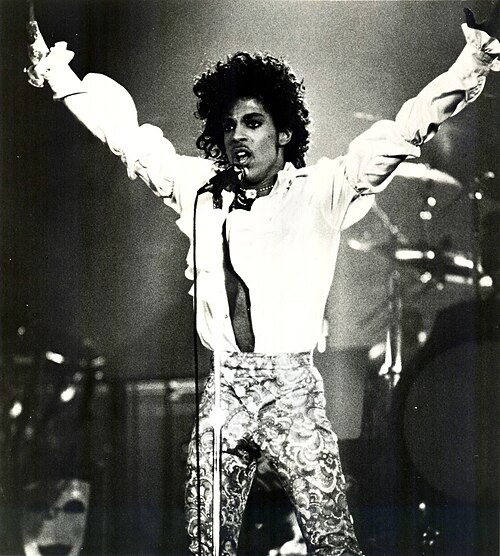
When Prince got back to Minnesota from Los Angeles in May 1982, his first job was upgrading the basement studio at his home on Kiowa Trail in Chanhassen, swapping the 16-track setup for a 24-track machine. Don Batts, his home studio engineer, oversaw about two weeks of work. Within hours of the new room being operational, Prince had cut the basic track for "Little Red Corvette."
"It was incredible to build the studio in that short time and then come up with that tune so quickly," Batts said, in an account collected by biographer Per Nilsen. Then he shrugged it off: "That's how fast it generally went."
The session personnel list is three names long. Prince sang and played nearly everything, Lisa Coleman sang, and Dez Dickerson sang and played the guitar solo. The rhythm bed is a Linn LM-1 drum machine at 123 beats per minute, which is why the song can be slow and smoky for 48 seconds and then turn into a straight 4/4 rock chorus without anything sounding stitched together.
The solo that made it a rock song
Dickerson's eight bars at 1:40 are the reason "Little Red Corvette" got played on rock radio and on MTV. It was also, by Dickerson's own telling, not entirely his own playing.
In his 2003 memoir, quoted by the Prince song-by-song project Dance / Music / Sex / Romance, Dickerson wrote that the short solo was assembled from four different takes, which "ended up creating a melodic flow that I probably would not have played naturally."
Handing a guitar solo to somebody else was unusual for Prince, and the people around him read it as management as much as generosity. Batts said the gesture was aimed at keeping a restless guitarist in the band. Dickerson himself has described the same arrangement onstage: "I remember [Prince] came into the dressing room before a show and said, 'I'm gonna start letting you do most of the soloing live,'" he recalled. "[H]e made sure he had his moments, but he was more than happy, for the most part, to just let me be the guitar hero up there."
What changed after it charted
"Little Red Corvette" debuted on the Billboard Hot 100 at number 66 on February 26, 1983, climbed for thirteen weeks, and peaked at number 6 on May 21, 1983. It was Prince's first top ten single and the first of his records to do better on the pop chart than on the R&B chart, where it stopped at number 15.
The crowds changed with it. Monte Moir, keyboardist for opening act the Time, said the 1999 tour audiences were "90 per cent black until 'Little Red Corvette' came out," and then "all of a sudden it shifted, drastically. It got to be half and half, if not 60-40 white."
Dickerson remembered management tracking that shift in the crudest possible terms, in an account collected by Duane Tudahl: Prince's managers "would come back before the show. 'It's one third white tonight. It is one half white. It's three quarters white!' We were getting the 'White report' on the house."
The video, in which Prince and Dickerson share a microphone and Prince drops into a James Brown split, went into MTV rotation alongside "1999" and Michael Jackson's "Billie Jean" at the moment that channel's unofficial color barrier came down. Video director Bob Greenberg, speaking in 2017, said the split was not the effortless moment it looks like: Prince "didn't tell me what he was going to do. He said, 'Just follow me.' So I follow him and he does the splits and he drops below my camera. You can't just drop! It doesn't work that way. So I explained to him how we needed to do that. We did it two more times and that take is actually the third take of that sequence."
Two years later Prince would use the same home-studio instincts on a bigger scale, and the run from here to "When Doves Cry" and Purple Rain is short and direct.
How the telling has grown over the decades
1993, The Hits liner notes. Prince gives the only first-person account he ever really gave of writing it: a dream, three or four catnaps, never fully awake. He does not mention the car, the woman, or Lisa Coleman.
1999, Per Nilsen's biography. Don Batts supplies the studio timeline: two weeks to install the new 24-track setup, and the basic track cut within hours of it working.
2003, Dez Dickerson's memoir. The guitar solo turns out to be a comp of four takes, and Dickerson says plainly it produced a melodic line he would not have played naturally.
2008, The Guardian. Lisa Coleman puts her car in the story for the first time in wide circulation, and corrects the make: a pink Mercury bought at auction, dented repeatedly by Prince.
November 2019, BBC News. Coleman gives Mark Savage the fuller version, including who else was in the car and what she believes was happening in the back seat, plus the yellow paint from the pole.
Where the tellings drift: the seat moves. Some accounts put Prince asleep in the front seat, others in the back, and Coleman's own description has the other two people in the back. The car's identity moved too. For years it was reported as a pink Edsel before Coleman clarified it was a Montclair Marauder. And Prince's version and Coleman's version are not really the same story: his is about sleep and dreaming, hers is about sex and a Minneapolis morning. Nobody has ever reconciled them, and since Prince died on April 21, 2016, nobody will. Both were told by people who were there, and they are best left sitting side by side.
The honest bottom line
Prince did not write "Little Red Corvette" so much as half-dream it in somebody else's car and then spend the next few weeks catching up to it. The title is inaccurate, the sexual metaphor is not subtle once you are old enough to hear it, and the guitar solo that broke him on rock radio was edited together out of four passes by a guitarist who was already halfway out the door. It is still the record that turned a Minneapolis cult act into a pop star, the first step toward the year he would own with When Doves Cry and Purple Rain, and the reason it holds up is that the arrangement stays out of the way. Drum machine, a few synth swells, a whisper of a verse, and one enormous chorus.
FAQ
What is the story behind "Little Red Corvette"? Prince fell asleep in keyboardist Lisa Coleman's 1964 pink Mercury Montclair Marauder after an all-night session in the spring of 1982 and the song came to him across three or four catnaps. He recorded it at his Kiowa Trail home studio in Chanhassen, Minnesota within hours of a new 24-track setup being installed.
Was "Little Red Corvette" a real car? Not the one in the title. The real car was Lisa Coleman's pink and white 1964 Mercury Montclair Marauder, bought at a 1980 auction. "It's not a red Corvette, it's a pink Mercury!" Coleman told BBC News in 2019. For years it was misreported as a pink Edsel.
What is "Little Red Corvette" actually about? A one-night stand. The car is a metaphor for the woman, the jockeys and horses stand in for the men before the singer, and the "pocket full of horses, Trojans, some of them used" line is exactly what it sounds like. Coleman has said Prince got the idea in the afterglow of a night with someone they both knew.
Who plays the guitar solo on "Little Red Corvette"? Dez Dickerson, Prince's guitarist at the time, who also sang backing vocals on the track. Dickerson wrote in his 2003 memoir that the eight-bar solo was compiled from four separate takes.
How high did "Little Red Corvette" chart? It reached number 6 on the Billboard Hot 100 on May 21, 1983, after debuting at number 66 on February 26, 1983. It was Prince's first US top ten single and the first of his records to chart higher on the pop chart than the R&B chart, where it stopped at number 15.
Did Prince ever explain the song himself? Once, in writing. In his unpublished liner notes for the 1993 compilation The Hits he said he "always considered the song a dream because it was written between 3 or 4 catnaps and he was never fully awake."
Sources
- Prince, unpublished liner notes for The Hits (1993), as quoted by Dance / Music / Sex / Romance (Zachary Hoskins), "Little Red Corvette," September 9, 2019
- The Guardian, Lisa Coleman interview, 2008, as quoted by Dance / Music / Sex / Romance
- BBC News, Lisa Coleman interview by Mark Savage, November 2019, as quoted by MusicRadar (Neil Crossley), September 19, 2025
- Dez Dickerson, memoir, 2003, and Duane Tudahl's Prince studio-sessions research, both as quoted by Dance / Music / Sex / Romance
- Per Nilsen, Prince biography, 1999, for Don Batts on the Kiowa Trail studio build, as quoted by Dance / Music / Sex / Romance
- Songfacts, "Little Red Corvette by Prince"
- Wikipedia, "Little Red Corvette," Origins and Composition
- Billboard Hot 100 weekly charts, April 30, May 7, May 14 and May 21, 1983
A body like this telling needs a maintenance record.
Part of Stories Behind the Songs. See also Purple Rain and When Doves Cry.