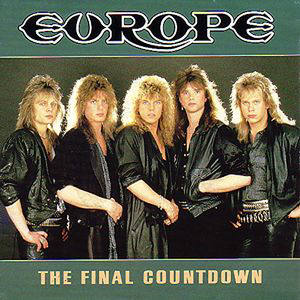
The riff sat in a drawer for years before anyone thought to finish it. The keyboard it was written on was borrowed from a schoolmate. And the six-minute song built on top of it was never meant to be a single at all. It was meant to be the sound that opened a rock concert. Joey Tempest has been telling the story of "The Final Countdown" for four decades, and every telling circles the same unlikely fact: the biggest synth-rock anthem of the 1980s started as an intro tape a teenager made in his parents' basement.
"The Final Countdown" was written by Joey Tempest of the Swedish band Europe, built on a keyboard riff he composed years earlier on a Korg Polysix borrowed from bandmate Mic Michaeli. Bassist John Levén suggested he turn the old riff into a song. Tempest wrote it as a grand opening for the band's live show, not as a single. Released in 1986, it hit number one in 25 countries and number 8 on the US Billboard Hot 100.
The borrowed keyboard
The whole thing starts with an instrument that was not his. "It started with me borrowing a Korg Polysix keyboard from ... Mic Michaeli, who went to the same school," Tempest told MusicRadar in 2016. Michaeli would soon join Europe as its keyboard player, but at this point he was just the kid with the synth. The early 80s were flooding with keyboards, and Tempest wanted in. "At the beginning of the '80s, there was the big influx of keyboards, so I borrowed one and came up with it in a night."
The instinct to write on keys instead of guitar was deliberate. "I write lyrics by a piano, because it's a rich instrument; you don't need a whole band with you," he told MusicRadar. What came out of that borrowed Polysix in a single night was the sweep everyone now recognizes in the first four seconds of the song. "I found this sweeping sound; it felt special to me," Tempest said. "So then I did a one-minute demo of it, with no verses, no nothing."
A riff left in a drawer
Here is the part that makes the song's history strange: the demo did not become a song for years. Tempest was still in school when he made it. "I was still in college, and the teachers always told me off for not concentrating enough," he told MusicRadar. "I'd be rehearsing with John and the others at night and partying, going to see bands like Thin Lizzy, Whitesnake or whoever came to town."
The riff went into storage. When Europe was assembling its third album in 1985, Tempest pulled it back out. "We were putting out our third album and we wanted a really 'grand' opening for the show," he explained in an interview archived at Rockeyez. "So, I had that riff tucked away in a drawer since my college years and I took it out, found a tempo for it, wrote lyrics and it turned out to be a great opening for that album and for the show as well." Songfacts, quoting Tempest, notes the riff was composed roughly five years before the song was finally recorded.
Space Oddity and the leaving-Earth lyric
The lyric came the same way the music did: alone, at the microphone, singing nonsense until words arrived. "I didn't have a title for it; I just played the song loud over and over again to myself, improvising stood by the microphone," Tempest told MusicRadar. "And then the title came, and inspired by Space Oddity, I thought of what it would be about: leaving ground, leaving Earth, the Earth is spent, we're going somewhere else, ha ha!"
David Bowie is the source. "Space Oddity was one of the first singles I bought, and I was mesmerised by the lyrical content about leaving Earth, which is what inspired The Final Countdown," Tempest told MusicRadar. He gave the same account to Songfacts: "I had the demo without vocals, and I was singing it over and over again. The music was almost like a soundtrack to a movie, about leaving Earth, and that the Earth was spent. And one day, we'll probably have to leave this place. It was kind of a dream-like lyric, but that was the backdrop for it."
The band that was "supposed to be a guitar band"
Europe was a hard rock band with one guitarist, John Norum, and a keyboard-led song was a strange fit. There is a popular version of this story where Tempest had to drag a reluctant band, especially Norum, into recording it. Tempest tells it differently, and the difference matters. "I played it to the guys and everybody was surprised, because we were supposed to be a guitar band," he told MusicRadar. "While this song was keyboard-driven, we all loved Rush and other things that were more keyboard-based. It wasn't completely alien; actually, it was kinda cool."
The friction, in Tempest's telling, came later, not at the start. "So, it was only later when John was more negative... He actually came to my basement to do the solo on the demo, so he was part of it early on and had no complaints then!" The guitar solo motif itself came from Tempest, who asked Norum for a "Ritchie Blackmore triplet-kinda-thing," per MusicRadar. The demo was cut in the basement studio of Tempest's family home in Stockholm on a Tascam eight-track.
Never meant to be a single
The most consistent thread across every interview is that Tempest never expected a hit. On VH1's 100 Greatest One-Hit Wonders, quoted by Songfacts, he laid it out plainly: "It was quite a surprise that the song 'The Final Countdown' became such a big hit because it was written for the band, it was written for our concert, it was written to be the opening song in our concert. It was almost six-minutes long, it was never intended to be a short pop hit or anything, it was very much a surprise."
The song outran everyone's expectations. It went to number one in the UK, where it spent two weeks at the top, and reached number 8 on the US Billboard Hot 100 and number 18 on the Mainstream Rock chart. Epic Records paired the band with producer Kevin Elson, who had worked on Journey's 1983 album "Frontiers," and released the title track as the first single. It became the band's calling card in 25 countries at once, an anthem later borrowed by boxing rings, Formula 1, and the NBA's Detroit Pistons.
The video, the helicopter, and the cappuccinos
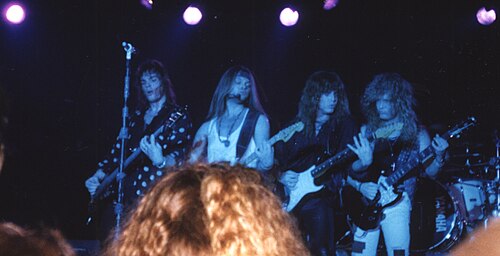
The video is as improbable as the song. Director Nick Morris wanted a space shuttle launch, but the cost killed it, so he filmed the band being filmed at their May 1986 home-turf shows near Stockholm, a meta concept he told Songfacts he borrowed from the control-room scene in the Beatles film "A Hard Day's Night." The aerial shots that open the video required a police helicopter and a rooftop painted "Europe 86," and the first flight was too early: no crowd, no excitement.
The pilot had a fix. Morris told Songfacts: "We went round the clock tower a couple of times so we could film that, and just landed in a quiet local square. All these guys were sitting there, bent doubled, watching this police helicopter land. We get out, he locks up the helicopter, and we walk across to get cappuccinos. A couple of minutes later he says, 'There should be people there now, let's go.' We took off again and got the shots that you see in the beginning of the video." Tempest, for his part, hated the close-up of him singing the wordless "ooh" hook, telling Morris it was "too girly," per Songfacts. The record company kept it.
How the telling has grown over the decades
The spine of this story has held remarkably steady, which is rare for a song told and retold for forty years. Early tellings, like the VH1 One-Hit Wonders segment, locked in the two load-bearing facts: it was written as a concert opener, and it was never meant to be a single. The Rockeyez interview added the drawer, the riff sitting in storage since college. Songfacts pinned the Bowie connection and the roughly-five-years gap between writing and recording.
The richest single account is MusicRadar's 2016 piece, published for the song's 30th anniversary, which supplied the borrowed Korg Polysix, the one-night demo, the Blackmore-triplet request to Norum, and Tempest's correction to the "reluctant band" legend: everyone was on board early, and Norum only soured later. By the time of his 2023 Louder interview marking Europe's 40th anniversary, Tempest had made peace with the song's total dominance of his life. Asked whether he had ever done an interview where "The Final Countdown" was not mentioned, he answered simply: "I don't think so."
One detail drifts. MusicRadar's 2016 feature opens by stating Tempest "was just 17 years old when he wrote" the song, while the Songfacts account frames the riff as composed about five years before the 1985 recording, which would place it closer to 1980. The tellings agree the riff is old and predates the band's fame by years; they differ on exactly how old the teenager was when he found that sweeping sound on a borrowed synth.
The honest bottom line
Strip away the affection and "The Final Countdown" is a recycled keyboard doodle, written on an instrument its author did not own, held in a drawer for years, then bolted onto a third album because the band needed a dramatic way to walk on stage. It is over the top on purpose, and it has topped more "worst of" lists than most songs ever make charts at all. None of that has dented it. The thing Tempest built as functional stage furniture became one of the most recognizable ten seconds in rock, and he has spent forty years telling the story with the amused honesty of a man who knows exactly what he made and exactly why people cannot let it go. "We could never have dreamt what that song gave us," he told Louder in 2023. Three years earlier, Styx had created a similar monster with Mr. Roboto, another arena-rock keyboard hook that outlasted the band and the concept album it came from, and the two records between them prove that the decade's guiltiest pleasures are the ones built to be throwaway that refused to die.
FAQ
What is the story behind "The Final Countdown" by Europe? Joey Tempest wrote it on a Korg Polysix keyboard borrowed from schoolmate and future bandmate Mic Michaeli, building it on a riff he had kept since college. When Europe made its third album in 1985, bassist John Levén suggested he finish the old riff, and Tempest turned it into a grand opening for the band's live show. It was released in 1986 and became a worldwide hit.
Who wrote "The Final Countdown"? Joey Tempest, Europe's lead singer, wrote both the music and the lyrics. The signature keyboard riff was his, composed years before the song was recorded, and he asked guitarist John Norum for a "Ritchie Blackmore triplet-kinda-thing" for the solo motif.
Was "The Final Countdown" ever meant to be a single? No. Tempest has said in many interviews that it was written as the opening song for Europe's concerts, ran almost six minutes, and was never intended as a short pop hit. Its success as a single surprised the whole band.
What is "The Final Countdown" actually about? Leaving Earth. Tempest was inspired by David Bowie's "Space Oddity," one of the first singles he bought, and wrote a dream-like lyric about humanity abandoning a spent planet and heading into space.
How well did "The Final Countdown" do on the charts? It reached number one in the UK, where it spent two weeks at the top, and number one in 25 countries overall. In the United States it peaked at number 8 on the Billboard Hot 100 and number 18 on the Mainstream Rock chart.
Sources
- MusicRadar, "Europe's Joey Tempest: how I wrote The Final Countdown," July 27, 2016
- Songfacts, "The Final Countdown by Europe" (Joey Tempest interview quotes, VH1 100 Greatest One-Hit Wonders quote, and Nick Morris video interview)
- Rockeyez interview with Joey Tempest, as quoted by Songfacts
- Louder / Classic Rock, "Joey Tempest interview: 40 years of Europe and the legacy of the Final Countdown," May 3, 2023
- Billboard Hot 100 and Mainstream Rock weekly charts, 1986 to 1987 (chart peaks)
The final countdown before publish is the fact check.
Part of Stories Behind the Songs. See also Eye of the Tiger and Here I Go Again.