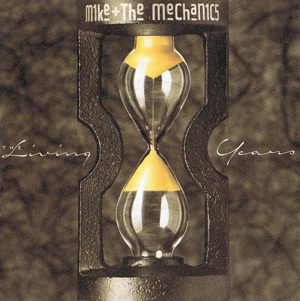
Two men who had just buried their fathers sat down to write about it, and one of them almost stopped the whole thing because he was afraid a song about death would come out mawkish. The man who wrote the lyrics had started the first verse before his own father died. And the singer they handed it to, who neither of them chose for this reason, had lost his father in a factory accident at the age of eleven. The song did not know it was aiming at everyone. It just was.
"The Living Years" was written by Mike Rutherford and B.A. Robertson after both men lost their fathers in 1986. It is about the things a son never manages to say while his father is alive. Robertson wrote the lyrics, Rutherford the music, and singer Paul Carrack, whose own father died when he was eleven, sang it. It reached number one on the Billboard Hot 100 the week of March 25, 1989, the only US number one Mike + The Mechanics ever had.
Two fathers, the same year
Mike Rutherford was in the middle of Genesis's Invisible Touch tour when the call came. His father, a retired Royal Naval captain who had fought in the Second World War, had died. It was late 1986, and Rutherford flew home on Concorde for the funeral. The distance between them had been the ordinary distance of that generation, sharpened by the military background. "As a teenager in the late 1960s, the last thing I wanted was to be like my father," Rutherford later wrote in The Guardian in 2014.
By coincidence, his new songwriting partner had just been through the same loss. B.A. Robertson, the Scottish singer and songwriter who had co-written the first Mike + The Mechanics hit "Silent Running," had also lost his father around the same time. According to Songfacts, Robertson had even written the first verse before his father died in 1986, the same year Rutherford lost his dad. They decided to write about it together.
The song Rutherford almost talked himself out of
Rutherford has been open about how nervous the subject made him. He explained the generational gap to Songwriting Magazine in December 2019: "So we had the idea of writing a song about how you never really talk to your father, and you miss out on these things." But turning that into a lyric felt dangerous. "It's all very well to start working on it, but it's a pretty heavy lyric, so I turned to B.A. and said, 'Are we sure we can write a song about death?'" he told the same magazine. "If we'd got it wrong, it would've been very schmaltzy."
The writing itself got to both of them. Rutherford remembered the sessions where Robertson brought lyrics down to work on: "a couple of times I had to leave the room," he said, because "it touched a nerve with both of us."
Written leaning on a kitchen ledge
The lyric is Robertson's, and he assembled it in pieces over a long stretch, in some very specific places. "The lyrics were an assembly," Robertson told American Songwriter in August 2021. "I had the first two verses before I took it to Mike. The third verse I wrote pulled over on the A3, the road from Guildford to London." The last verse, the one about not being there the morning his father died, came to him abroad. "I wrote the last verse in Los Angeles at a house I had just bought. I wrote it outside the kitchen window, leaning on the ledge one afternoon."
He could barely perform what he had written. "Then I couldn't play it to anyone, because I would break down when I sung it," Robertson told American Songwriter.
The verse that got cut
The record everyone knows is tight and direct, but it was almost a great deal longer. Producer Chris Neil, who co-produced the album with Rutherford, killed an instrumental section that Rutherford and Robertson had grown fond of. Rutherford told Songwriting Magazine that Neil pushed back with a simple question, "are you really sure it needs that?", and they cut it. The band recorded the song and the album that bears its name between April and August 1988 at Genesis's own studio, The Farm, in Surrey.
The singer who made it real, by accident
Paul Carrack sang the lead, and neither writer knew until later how close the song sat to his own life. "I didn't realise at the time that Paul Carrack's father died when he was young," Rutherford told Songwriting Magazine. "So, in a sense, the song had a resonance for him."
Carrack has told his side plainly. His father died in a factory accident when Carrack was a child, and he traces his connection to the song straight back to it. "That wasn't particularly a problem for me, but when I was a kid I lost my father," he told the Daily Post in January 2017. "I was 11-years-old when he had a fatal accident and that had a very profound affect on my whole life and my personality." He believes it is the reason the vocal lands the way it does. "I always felt that I could bring a good sense of what that song was about having experienced a loss," he said. "If I would have just been some bloke who hadn't had that experience, I don't think I would have been able to give such a powerful performance."
What it became
"The Living Years" was released on December 27, 1988. It climbed slowly and then everywhere, reaching number one on the Billboard Hot 100 for the week of March 25, 1989, the only time Mike + The Mechanics ever topped that chart. It won the 1989 Ivor Novello Award for Best Song Musically and Lyrically. It was nominated for the Grammy for Song of the Year and lost, per Songfacts, to Bette Midler's "Wind Beneath My Wings." What Rutherford remembers is not the trophies but the faces. Touring the song, he told Songwriting Magazine, "most nights on the Mechanics tour you'll see someone in the audience crying."
How the telling has grown over the decades
The story of this song is less a set of contradictions than a set of corrections, because the popular version has always been slightly wrong about who it belongs to.
The video, 1988. The official clip shows Rutherford with his own young son around Porlock Weir in Somerset, which quietly sold the idea that the song was Rutherford's story about Rutherford's father. That reading has stuck for decades.
Songwriting Magazine, December 2019. In the "How I Wrote" interview, Rutherford corrected the record on two fronts: the lyric was Robertson's, not his, and the song grew out of both their losses, not one. This is also where the "are we sure we can write a song about death?" doubt and the accidental fit with Paul Carrack's life were laid out.
American Songwriter, August 2021. Robertson finally got to narrate his own half: the verse written pulled over on the A3, the last verse written leaning on a kitchen ledge in Los Angeles, and the fact that he could not sing it without breaking down. The lyricist stepped out of the shadow of the band's name.
Where the tellings drift. The honest wrinkle is authorship and ownership. Because the band carries Rutherford's name and the video features his family, "The Living Years" is remembered as a Mike Rutherford song about his father. It is more accurately a B.A. Robertson lyric, built partly before Robertson's own father had even died, set to Rutherford's music, and sung by a third bereaved son who was hired for his voice and not his grief. Three men lost their fathers, and all three are in the record whether the credits make that obvious or not.
The honest bottom line
"The Living Years" is the kind of song that gets called manipulative, and on paper the ingredients look engineered for tears: dead fathers, a children's choir, a key change, a baby's cry in the last verse. The difference is that nobody set out to engineer it, and the man writing the words kept worrying it would tip into schmaltz. It is sentimental because the thing it is about is sentimental, and it was made by people who could not get through writing or singing it without stopping. That is why it survives the cynicism it invites.
FAQ
What is "The Living Years" about? It is about the regret of not saying enough to a parent before they die, specifically the emotional distance between fathers and sons. Mike Rutherford and B.A. Robertson wrote it after both lost their fathers in 1986, and the lyric centers on the things left unsaid "in the living years," while the person is still alive to hear them.
Who wrote "The Living Years"? Mike Rutherford wrote the music and B.A. Robertson wrote the lyrics. The two had also co-written the earlier Mike + The Mechanics hit "Silent Running." Despite the band carrying Rutherford's name, the words are Robertson's.
Who sang "The Living Years"? Paul Carrack, one of the two lead vocalists in Mike + The Mechanics and previously the voice of Ace's "How Long" and Squeeze's "Tempted." His own father died in an accident when Carrack was eleven, which he says is why he could deliver the vocal.
Was "The Living Years" a number one? Yes, in the United States. It reached number one on the Billboard Hot 100 for the week of March 25, 1989, the only US number one of the band's career. It peaked at number two in the UK.
Did "The Living Years" win any awards? It won the 1989 Ivor Novello Award for Best Song Musically and Lyrically. It was nominated for the Grammy for Song of the Year but lost to Bette Midler's "Wind Beneath My Wings."
Sources
- MusicRadar, "The story of Mike + The Mechanics' classic No.1 The Living Years," Neil Crossley, April 20, 2025: the recording timeline and studio, the Ivor Novello award, release date, and compiled quotes
- Songwriting Magazine, "How I Wrote 'The Living Years' by Mike + The Mechanics' Mike Rutherford," December 27, 2019: Rutherford's quotes on the concept, the "song about death" doubt, the cut section, the tour audiences, and Paul Carrack's connection
- American Songwriter, "Behind The Song: 'The Living Years'," August 2021: B.A. Robertson's account of writing the verses
- Daily Post, "Paul Carrack: 'How the pain of dad's death made The Living Years so powerful'," January 19, 2017: Carrack's quotes about his father
- The Guardian, 2014: Mike Rutherford on his relationship with his father, as quoted by MusicRadar
- Songfacts, "The Living Years by Mike + the Mechanics": the writing sequence, Robertson's first verse, and the Grammy Song of the Year loss
- Billboard Hot 100, week of March 25, 1989: chart position and number-one status
Say it loud, say it clear, and say it sourced.
Part of Stories Behind the Songs. See also The Story Behind In the Air Tonight and The Story Behind Every Rose Has Its Thorn.