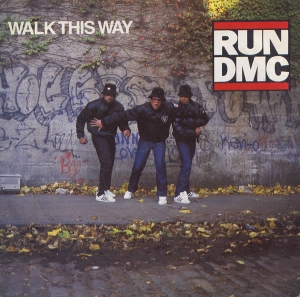
The rappers who made the most famous rap-rock record ever did not know the song, did not know the band, and did not even know the title. They thought the lyrics were nonsense and were certain the whole thing would end their careers. On the other side of the wall was a rock band that was broke, strung out, and nearly finished. One producer put them in the same room anyway, and the wall between rock and rap came down for good.
"Walk This Way" was originally a 1975 Aerosmith song. In 1986, producer Rick Rubin had Run-DMC remake it for their album Raising Hell, using a beat the group had been spinning without knowing it was Aerosmith. Run and DMC resisted, calling the lyrics "hillbilly gibberish," until DJ Jam Master Jay and Rubin talked them into it. Steven Tyler and Joe Perry joined the session, and the record hit number four, reviving Aerosmith's career.
The beat with no name
Run-DMC had been using "Walk This Way" for years without knowing what it was. The group's DJ, Jam Master Jay, would loop the opening drum break at shows, and Run and DMC would rhyme over it, never hearing the rest of the record. When Rubin walked in on them doing it during the Raising Hell sessions, he had to fill them in. DMC has told the story many times. As he told Classic Rock: "We were in the studio one day looping the beat and [producer] Rick Rubin walks in. He's like, 'Yo, do you know what that is?'. And me and Jay were like, 'Yeah, that's Toys In The Attic'."
They knew the album cover, not the artist. "We didn't know the group," DMC said. Rubin told them the song was called "Walk This Way," that the band was Aerosmith, and that they should remake the whole thing, lyrics and all. To two rappers from Hollis, Queens, that sounded like a terrible idea.
"Hillbilly gibberish"
Run and DMC hated the plan. They dismissed the lyrics as "hillbilly gibberish," and DMC has been blunt about how sure they were it would sink them. He and Run warned Rubin the cover would "ruin us" and be "fake, nobody in hip-hop is going to like it." Even after Rubin got them to sit down and actually listen to the original, the reaction got worse, not better. "We had this big argument," DMC said.
The one member open to it was Jam Master Jay, and that turned out to be decisive. The plan, at first, was for Run and DMC to imitate Steven Tyler's rapid-fire delivery, but Jay pushed them to attack the lyrics in their own natural flow instead. That single instinct is why the record sounds like Run-DMC and not like a novelty, and it is the reason it worked.
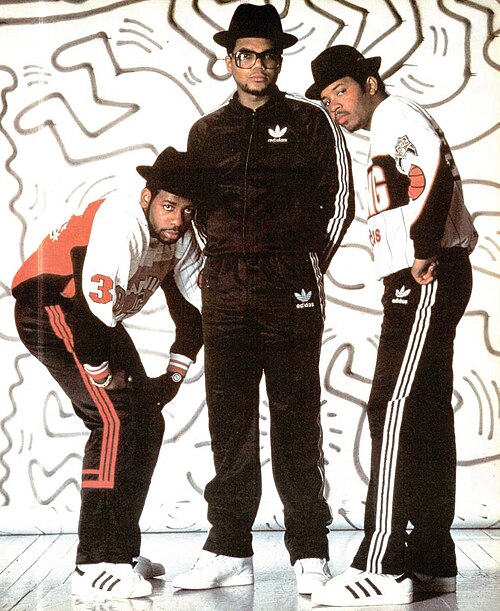
The room Rubin set up
What Run-DMC did not know was that Rubin had already booked the other half of the record. He had asked Steven Tyler and Joe Perry to come to the studio, without telling the rappers. So Run-DMC did the least they could. "We went into the studio and laid down a weak version," DMC said, because they did not want to make the record at all. Then they went home. It did not stay dead. "Eight hours later, we get a call to come back to the studio," DMC said. "We walk in and Joe Perry is playing his riff, Steven Tyler is in the booth doing the lyrics. Me and Run knew we had to step our game up."
Jay reframed it for them one more time. As DMC recalled Jay saying: "Yo, don't think of the record as 'Steven Tyler and Joe Perry's record', think of those lyrics as Run-DMC lyrics." That unlocked it. "So we went in the booth and that went so good that Steven said, 'Yo, let me get in with y'all'."
Perry was as lost as anyone about what the session would be. "I didn't know what was gonna happen when I walked into the studio," he said. "I thought they'd show us ideas on how to rearrange the song, but all they had was a drum track." He ended up playing bass too, because the studio did not have one on hand, and one of the Beastie Boys, hanging around the studio, went home and brought back his own bass for Perry to use. The culture gap in the room was real, and Tyler has told the funniest version of it. "Run and D and Jay were huddled in a corner, really intent on something," Tyler wrote in the band's autobiography. "I go, 'Joe, what are they doing?'. 'Probably smoking crack', he says. Later we went over to the corner. They'd been eating lunch from McDonald's."
The comeback nobody planned
Nobody involved thought it was a hit. Run-DMC did not even want it out as a single, and were stunned when it started playing on rock and urban stations at the same time. Rubin felt the same. "I never even thought 'Walk This Way' would be a single," he recalled. "Not that I didn't like it, but I didn't think in those terms."
It became Run-DMC's biggest record, reaching number four on the Billboard Hot 100, higher than Aerosmith's 1977 original had ever gone, and the first hip hop single to crack the top five. The video, built around Tyler literally smashing through a wall separating the two bands, ran all over MTV in the summer of 1986 and did in pictures what the record did in sound. Perry has never gotten over what it broke open. He said the collaboration "really did break down walls. At the time, I don't think that there were any minority acts on MTV, except for Michael Jackson, up to that point." He added: "I'd like to say we planned it and that we knew that it was going to happen, but we didn't. I'm just glad it was Aerosmith and Run-DMC that did it."
The bigger rescue was Aerosmith's. The band had spent years out of the spotlight while Tyler battled addiction and Perry and Brad Whitford were out of the lineup, and their 1985 comeback album had underperformed. "Walk This Way" put them back on the radio and set up the run of hits that followed, starting with "Dude (Looks Like a Lady)" in 1987.
How the telling has grown over the decades
This is a story its participants have told for forty years, and the remarkable thing is how well the versions line up. DMC always lands on the same beats: the beat they could not name, the "hillbilly gibberish" verdict, the weak first take, and Jam Master Jay talking them into their own flow. Perry always tells the "all they had was a drum track" version. Tyler always tells the McDonald's story. Rubin always says he never saw a single in it.
There is a fuller irony that only shows up when you go back to the original. Aerosmith's 1975 "Walk This Way" got its title almost by accident, when the band took a break from recording to see Mel Brooks's Young Frankenstein and came back laughing about Marty Feldman's "walk this way" limp, which producer Jack Douglas suggested as the name. So the song that broke down the wall between rock and rap was itself named after a movie gag, and then remade by two rappers who did not know any of that. The details that drift between tellings are small, a studio name here, the order of the arguments there. The spine has never moved: almost everyone in the room thought it was a mistake.
The honest bottom line
Strip away the history-making and "Walk This Way" is a record nearly everyone who made it tried to avoid. The rappers thought it was fake and career-ending. The rock band did not know what rap was and showed up for a day's pay. The producer never pictured it as a single. It got made anyway, mostly because one DJ kept insisting, and it turned into the song that put rap on MTV and pulled Aerosmith back from the edge. Sometimes the record that changes everything is the one nobody wanted to make. A year earlier the Beastie Boys had pulled the same trick in reverse with Fight for Your Right, a rock-rap crossover built as a parody that its audience decided to take at face value.
FAQ
What is the story behind Run-DMC's "Walk This Way"? Producer Rick Rubin realized the beat Run-DMC had been rhyming over for years was Aerosmith's 1975 "Walk This Way," and pushed them to remake the whole song. Run and DMC resisted, calling the lyrics "hillbilly gibberish," but DJ Jam Master Jay and Rubin convinced them. Steven Tyler and Joe Perry joined the 1986 session, and it became a landmark rap-rock hit.
Who wrote "Walk This Way"? Steven Tyler and Joe Perry of Aerosmith wrote it. It was first released in 1975 on the album Toys in the Attic and reached number ten in early 1977. Run-DMC's 1986 version is a cover of that song, made with Tyler and Perry.
How did Run-DMC and Aerosmith record "Walk This Way"? Rubin brought Tyler and Perry into the studio, sometimes without Run-DMC's knowledge. Run-DMC laid down a reluctant first take, then returned to find the Aerosmith pair already recording and stepped up their performance. Jam Master Jay convinced Run and DMC to rap the lyrics in their own style rather than imitate Tyler.
Did "Walk This Way" save Aerosmith's career? Yes. Aerosmith had been out of the mainstream for years while Steven Tyler struggled with addiction, and their 1985 album had underperformed. The 1986 collaboration put them back on radio and MTV and led directly to their late-1980s comeback.
How high did Run-DMC's "Walk This Way" chart? It reached number four on the Billboard Hot 100, higher than Aerosmith's original, and became Run-DMC's biggest hit. It was the first hip hop single to reach the top five on the chart and reached number eight in the UK.
Where did the original "Walk This Way" title come from? From the Mel Brooks film Young Frankenstein. Aerosmith took a break from recording to see it, came back quoting Marty Feldman's "walk this way" limping gag, and producer Jack Douglas suggested it as the song's title.
Sources
- Classic Rock via Louder, "Run DMC thought Walk This Way would ruin them," quoting Darryl McDaniels, Joe Perry, and Steven Tyler's account in the band's autobiography
- Wikipedia, "Walk This Way," for release and chart data, the "hillbilly gibberish" reaction, the Rick Rubin single quote, Joe Perry's MTV comments, and the original song's Young Frankenstein title origin
- Billboard Hot 100 weekly charts, 1977 and 1986
Two genres, one verified telling, that is the job.
Part of Stories Behind the Songs. See also The Story Behind Billie Jean and The Story Behind Eye of the Tiger.