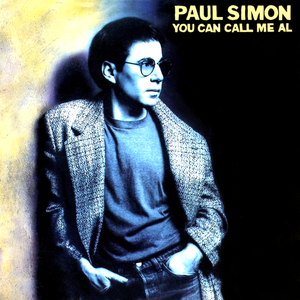
A French composer got Paul Simon's name wrong at a party in 1970, and got his wife's name wrong too. Sixteen years later that mistake was the chorus of a hit single. And that single flopped the first time out, stalling at number 44, until a comedian in a bad suit lip-synced it into the top 25.
"You Can Call Me Al" came from a 1970 party where the composer Pierre Boulez called Paul Simon "Al" and Simon's wife Peggy "Betty." Simon built the 1986 song on that joke, writing the lyric to instrumental tracks cut in South Africa with guitarist Ray Phiri and bassist Bakithi Kumalo. It stalled at number 44 in 1986, then reached number 23 on May 23, 1987 after the Chevy Chase video took off.
The party, and whose party it was
The chorus is a real misunderstanding preserved in amber. The names came from a party in 1970 attended by Simon and his first wife, Peggy Harper, at which the French composer and conductor Pierre Boulez heard "Paul" as "Al" and "Peggy" as "Betty."
The tellings do not agree on the room. Songfacts places it at a party Simon hosted, with Simon's friend the composer Stanley Silverman bringing Boulez along, and Boulez producing the wrong names on his way out the door. American Songwriter, telling it as Simon's memory, puts it in Boulez's own New York apartment, with Boulez meeting the couple at the door, not knowing who they were, and introducing them to his guests as "Al and Betty." The biographer Marc Eliot, quoted by the classical station YourClassical in 2016, sides with the first version: "Paul likely got the title from something he overheard at a party he hosted, where he met the conductor and composer Pierre Boulez for the first time. As he was leaving, Boulez called Simon 'Al,' and the humor of the situation stuck with him."
Host or guest, everyone agrees on the mistake and on the fact that Simon found it funny enough to keep for sixteen years. Stanley Silverman's family found it funny too: in 2011 his son Ben commissioned a piece from him called "Les Folies d'Al," built out of variations on the song.
He wrote the words to a track, not to a guitar
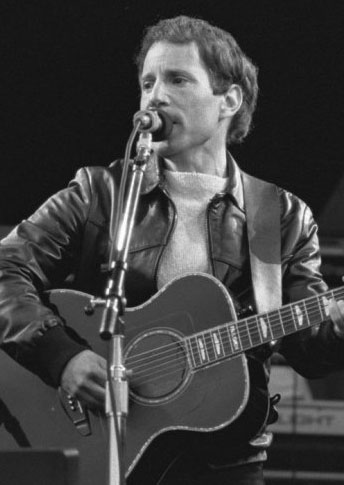
Everything about how this song was made is backwards from how Simon had worked before. The music existed first, as tape, made thousands of miles from the lyric.
Simon cut instrumental tracks in South Africa with local players, then took the tapes home to New York and wrote to them. Guitarist Ray Phiri, of the group Stimela, came up with the guitar figure this song is built on during a jam. The bass is Bakithi Kumalo, and the break everyone remembers is an accident of scheduling and studio trickery: American Songwriter reports that Simon asked for it on learning it was Kumalo's birthday, that Kumalo improvised a fast fretless run, and that producer Roy Halee used the first half of the phrase and then ran it backwards for the second half, making a palindrome. The penny whistle solo is Morris Goldberg, a South African living in New York.
Simon has been open for decades about what that method did to his writing. In the interview Paul Zollo published in American Songwriter, from their first conversation in 1988, he described the state he was chasing while the tracks played: "The act of throwing a ball and catching a ball is so natural and calming. It's like a Zen exercise, really. It's a very pleasant feeling if you like playing ball, and while you do it, your mind kind of wanders, and that's really what you want to happen. You want your mind to wander and to pick up words and phrases, and fool around with them and drop them."
The point of the ball game is to keep the deliberate part of his brain out of the room. "Because as soon as your mind knows that it's on, and it's supposed to produce some lines, either it doesn't or it produces things that are very predictable," he said. "I'm not interested in writing something that I thought about; I'm interested in discovering where my mind wants to go or what object it wants to pick up."
His summary of his own job, from the same conversation: his task is "to find out what it is that I'm thinking. Even if it's something that I don't want to be thinking." And earlier in that interview, the line that explains the whole record: "I'm more interested in what I discover than what I invent."
Simon's own blueprint for the lyric
This is the part that makes "You Can Call Me Al" a stories-lane song rather than a trivia entry. Simon has explained, repeatedly and in technical detail, exactly how the lyric is engineered, and the explanation matches what you hear.
It starts, he says, as a joke structure. "'You Can Call Me Al' starts off very easily with sort of a joke: 'Why am I soft in the middle when the rest of my life is so hard?' Very easy words," he told SongTalk in 1990, as quoted by Songfacts.
Then the chorus arrives and deliberately explains nothing. "Then it has a chorus that you can't understand. What is he talking about, you can call me Betty, and Betty, you can call me Al? You don't know what I'm talking about. But I don't think it's bothersome. You don't know what I'm talking about but neither do I. At that point."
The second verse buys time, and the third verse spends what the first two earned. "The second verse is really a recapitulation: A man walks down the street, he says... another thing. And by the time you get to the third verse, and people have been into the song long enough, now you can start to throw abstract images. Because there's been a structure, and those abstract images, they will come down and fall into one of the slots that the mind has already made up about the structure of the song."
Which is how a pop single gets to end on angels in the architecture without losing the room. "So now you have this guy who's no longer thinking about the mundane thoughts, about whether he's getting too fat, whether he needs a photo opportunity, or whether he's afraid of the dogs in the moonlight and the graveyard."
In the American Songwriter version of that same telling, he names the joke template he was copying: "There's a rabbi, a minister and a priest ...", "Two Jews walk into a bar ...", "A man walks down the street ...". He also explains why the opening is so plain: "You have to be a good host to people's attention span."
What the song is actually about
Simon's shortest account of the song's meaning ties it directly to the trip that produced the tracks. In the documentary Under African Skies, quoted by Songfacts, he put it this way: "'You Can Call Me Al' is really the story of somebody like me, who goes to Africa with no idea and ends up having an extraordinary spiritual experience."
Read the three verses against that sentence and the structure he described stops being a technique and becomes the plot: a soft, self-absorbed man in verse one, a frightened one in verse two, and in verse three a foreigner who does not speak the language, holds no currency, and finally looks up.
The video that rescued it
The first video for the song was shot on the set of Saturday Night Live and Simon did not like it. According to Rolling Stone's 2018 account, Lorne Michaels and director Gary Weiss came up with the replacement: Simon and his old friend Chevy Chase, who he had known since SNL's first season in 1975, in a plain room, one camera, Chase lip-syncing the whole lead vocal while Simon sits there holding instruments and waiting to matter.
It reads now as a joke on the era's default video grammar. Nearly every clip on MTV in 1986 was a fake performance, so this one made the fakery the entire premise and let the tallest man in the room mime the words of the shortest.
What it did on the chart
The single entered the Billboard Hot 100 at number 83 on the chart dated August 9, 1986, credited to P. Simon as writer and producer on Warner Bros. Then it stalled. Through the autumn it drifted in the sixties: number 65 on the chart dated October 25, in its twelfth week, with a peak of 44 behind it.
It did not stay dead. The record was still on the Hot 100 the following spring, at number 59 in its seventeenth week on the chart dated April 11, 1987, and it kept climbing. It reached number 23 on the chart dated May 23, 1987, its twenty-third week on the survey, and was still there at number 32 two weeks later.
A hit that takes nine months and a second promotional push to peak is not a hit anybody planned. The album, meanwhile, took the Grammy for Album of the Year.
How the telling has grown over the decades
Simon's tellings are unusually consistent, because most of them are him explaining craft rather than reminiscing. The spine is the long interview Paul Zollo conducted in 1988 and published in American Songwriter, which contains the baseball-against-the-wall method, the joke-structure opening, and the three-verse escalation. The version quoted by Songfacts is credited to SongTalk in 1990 and reads as the same telling reaching print twice, with small wording differences: American Songwriter has him say "The second verse is really a recapitulation of the first," Songfacts has "The second verse is really a recapitulation." Anyone lining up "two separate Simon interviews" on that passage is really looking at one conversation with two publication dates.
The Under African Skies documentary telling is the one that supplies the meaning rather than the mechanics, and it is the one worth quoting when somebody asks what the song is about.
The Boulez story is the piece that genuinely drifts, and it drifts in a way nobody has resolved. Two accounts and one biographer put the party at Simon's place with Boulez leaving; American Songwriter puts it at Boulez's apartment with Boulez greeting. The core of it never changes, and neither does the reason it survived: a man heard his own name wrong and thought it was funny for sixteen years.
The honest bottom line
The famous chorus of this song means nothing. Simon says so himself, in plain words, and the rest of the lyric is a deliberately built ramp designed to let an audience swallow abstraction by the third verse. The music was made by South African musicians whose country was under a cultural boycott Simon crossed to record there, a decision that drew serious criticism at the time and that no amount of affection for the record erases. It stalled on release and needed a comedian to save it. What survives all of that is the thing Simon was chasing with the baseball: the song sounds discovered rather than written, and Bakithi Kumalo's bass break still empties a chair at every wedding on earth.
FAQ
What is the story behind "You Can Call Me Al"? The title comes from a 1970 party where the composer Pierre Boulez mistakenly called Paul Simon "Al" and Simon's wife Peggy "Betty." Simon kept the joke for sixteen years and built the 1986 chorus on it.
Who are Al and Betty in the Paul Simon song? Paul Simon and his first wife, Peggy Harper, as misheard by Pierre Boulez. Accounts differ on whether the party was at Simon's home or Boulez's apartment, but every version agrees the names were a mistake.
What does "You Can Call Me Al" mean? Simon said in the documentary Under African Skies that it is "really the story of somebody like me, who goes to Africa with no idea and ends up having an extraordinary spiritual experience." The three verses move a self-absorbed man toward being a stranger who finally looks up.
Who played the bass solo on "You Can Call Me Al"? Bakithi Kumalo. American Songwriter reports the break was improvised on his birthday at Simon's suggestion, and that producer Roy Halee built the finished solo by reversing the first half of the phrase to make the second half.
Why is Chevy Chase in the "You Can Call Me Al" video? Simon disliked the first video, shot on the Saturday Night Live set. Rolling Stone reports that Lorne Michaels and director Gary Weiss replaced it with the one-room version starring Chase, a friend of Simon's since SNL's first season in 1975.
How high did "You Can Call Me Al" chart? It debuted at 83 on the Billboard Hot 100 dated August 9, 1986 and stalled with a peak of 44 that autumn. It kept selling and finally reached number 23 on the chart dated May 23, 1987, in its twenty-third week.
Sources
- American Songwriter, "Behind the Song: Paul Simon's You Can Call Me Al," carrying Paul Zollo's interview with Simon from 1988
- Songfacts, "You Can Call Me Al by Paul Simon," including Simon's SongTalk interview from 1990 and his quote from the documentary Under African Skies
- YourClassical, "Did Pierre Boulez inspire Paul Simon's You Can Call Me Al?," January 2016, quoting Marc Eliot's biography Paul Simon: A Life
- Rolling Stone, on the making of the Chevy Chase video, September 2018
- Ultimate Classic Rock, on the Chevy Chase video, October 2012
- Billboard Hot 100 charts dated August 9 and October 25, 1986, and April 11, May 9, May 23 and June 6, 1987
You can call us careful.
Part of Stories Behind the Songs. See also Once in a Lifetime and Sledgehammer.