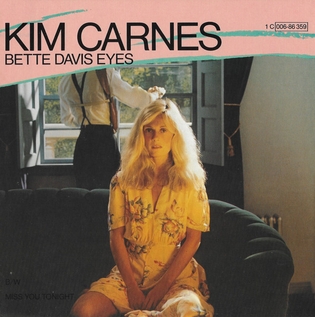
The song was a flop first. In 1974 it was a boogie-woogie shuffle about old Hollywood glamour that went nowhere. Seven years later a keyboard player stumbled onto a synthesizer riff, and the same song became the biggest American hit of 1981, nine weeks at number one, a Grammy sweep, and a raspy voice that half the country mistook for Rod Stewart. Then the 73-year-old actress it was named after sat down and wrote the songwriters a thank-you note. "Bette Davis Eyes" took the long way to the top, and the people who wrote it have never pretended otherwise.
"Bette Davis Eyes" was written in 1974 by Jackie DeShannon and Donna Weiss, inspired by classic Hollywood and the actress Bette Davis. DeShannon recorded a rock and roll version that flopped. In 1981 Kim Carnes cut it in a radically different synthesizer arrangement built on keyboardist Bill Cuomo's riff, produced by Val Garay. It spent nine non-consecutive weeks at number one on the Billboard Hot 100, won two Grammys, and prompted Bette Davis herself to write the writers a letter of thanks.
The song that flopped first
The song began with a stack of paper and two women who loved old movies. "We loved Bette Davis. We were always talking about what great movies and how we love her," DeShannon told American Songwriter. Donna Weiss arrived at DeShannon's place with lyrics already drafted. "Donna had this idea and she brought a lot of papers over one day," DeShannon recalled. "She said, 'Do you think you can make anything out of this?' So I kind of went through and looked at some lyrics and put some things together and we wrote this song." DeShannon has described the split of labor plainly: "Donna had written many pages, and I was fooling around with the melody, and we pieced together 'Bette Davis Eyes.'" The title namechecked Davis, whose most famous close-ups came in films like the 1942 melodrama "Now, Voyager."
DeShannon recorded it herself for her 1974 sessions, released on a 1975 album, and it did nothing. Her version was a jazzy, piano-driven shuffle, nothing like the record the world would eventually memorize. "We made a demo with a much more rock-and-roll feel," DeShannon told American Songwriter, as quoted by Songfacts. "That's what I thought we were going to do." For seven years the song sat.
How it got to Kim Carnes
The song survived because Weiss kept it moving. "Time went on and Donna was sending the song around to different people, the version that we had recorded on the demo," DeShannon said. The break was almost incidental. "She was taking some other songs over to Kim Carnes because she was recording and she just happened to have that demo with her and she gave it to Kim and the rest is history." Carnes, a decade into a career with only modest chart success, did not immediately hear a smash in it either. Her producer Val Garay reworked it with Carnes' band, and the transformation was total.
The synth riff that changed everything
The record that everyone knows exists because of one keyboard part. Carnes has consistently given the credit for it to her keyboardist, Bill Cuomo, who found the song's signature synthesizer hook on a Sequential Circuits Prophet-5. The rest of the arrangement was built to match that cold, gleaming pulse. The production team went out of its way for the drum sound too: an assistant was sent to buy the cheapest, cheapest-sounding drum kit they could find, and paired with the Prophet-5 it gave the track its brittle, modern snap. Val Garay produced. What came out was, as much as any single record, the sound of 1981 pop turning electronic.
DeShannon, the co-writer, has been honest and slightly conflicted about the makeover. "The producer had another concept," she told Songfacts. "It turned out OK. I don't dislike it, but it was not my concept." In nearly the same breath she added that "her version was much closer to the demo version" than people assume. Both things sit in her telling at once: the synth arrangement was not what she pictured, and yet she hears her original underneath it. That is a songwriter watching someone else find the version that works.
Bette Davis wrote back
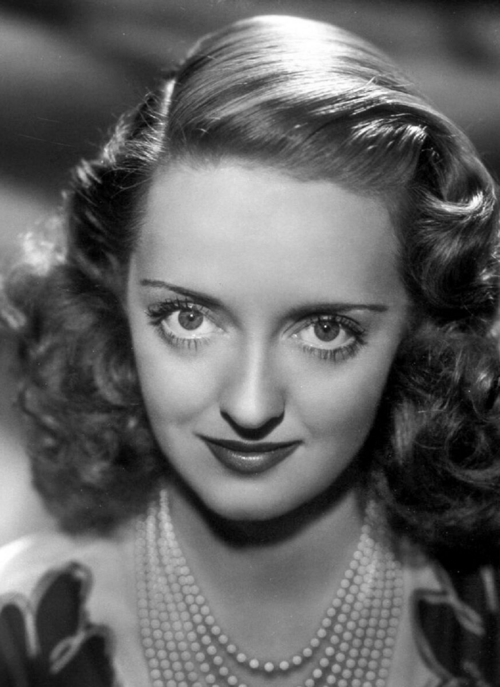
The best part of the story is that its subject was alive to hear it, and delighted. Bette Davis was 73 when the song hit number one, and she wrote letters to Kim Carnes, Donna Weiss, and Jackie DeShannon to thank them. Per the account preserved on Wikipedia, Davis thanked them for making her "a part of modern times" and said that her grandson now looked up to her. When the song won its Grammys, Davis sent roses to everyone involved, and she happily accepted gold and platinum records from Carnes, which she hung on her wall. Davis and Carnes became friendly, and Carnes visited the actress at home a few times before Davis died in 1989.
What it became
Kim Carnes' "Bette Davis Eyes," from her album Mistaken Identity, was a phenomenon. It reached number one on the Billboard Hot 100 and held the top for nine non-consecutive weeks in 1981, its run interrupted when "Stars on 45" grabbed a week before "Bette Davis Eyes" climbed back. It was Billboard's number one single of the entire year. At the 24th Grammy Awards in February 1982 it won both Record of the Year, for Carnes and producer Val Garay, and Song of the Year, for writers DeShannon and Weiss. It was also a hinge point in pop history: the song's success came right before MTV launched in August 1981, and its shadowy, curtain-billowing video, directed by Russell Mulcahy, became an early template for the channel's whole look.
How the telling has grown over the decades
For a song with such a long life, the story has stayed remarkably stable, told mostly by Jackie DeShannon across interviews over the years and by Kim Carnes crediting Bill Cuomo's riff. The core is agreed: written in 1974 by DeShannon and Weiss out of a shared love of old movies, flopped as a rock and roll number, revived seven years later by a synthesizer.
The drift is in the small print. The exact wording of Bette Davis's thank-you letter shifts between retellings, from "a part of modern times" to "a part of modern history," and the grandchild who found her newly cool is a grandson in some tellings, a granddaughter in others, and grandchildren in general in still others. Accounts also differ on who owns the original spark, with some crediting Weiss with the whole idea and DeShannon herself describing it as Weiss's pages plus her own melody and lyric edits. And DeShannon's own verdict on the hit arrangement is genuinely two-sided in the same interview, both "not my concept" and closer to her demo than people think. None of these cracks damage the song. They are just what happens when a record this big gets told and retold for forty years.
The honest bottom line
"Bette Davis Eyes" is a seven-year-old reject that only became a classic when a producer and a keyboard player stripped out its original character and bolted on a synth hook the writer says was not her idea. On paper the lyric is almost mean, a cool-eyed portrait of a woman who uses people. It could easily have stayed a forgotten album track. What saved it was other people's imagination laid over a genuinely sharp piece of writing, and the rare grace of a subject, Bette Davis herself, who took a song using her name as pure flattery and wrote back to say thank you. The long road is the whole charm. That same year, Stevie Nicks built Edge of Seventeen from a similarly borrowed image, a line about a dove copied off a restaurant menu, and the two records between them prove that a woman with the right voice and the right stolen detail could own a year.
FAQ
Who wrote "Bette Davis Eyes"? Jackie DeShannon and Donna Weiss wrote it in 1974. Weiss brought the initial lyric pages, and DeShannon shaped the lyrics and wrote the melody. Kim Carnes, who made it famous in 1981, did not write it.
Was "Bette Davis Eyes" a cover? Yes. Jackie DeShannon recorded the original version in 1974, released on a 1975 album, in a rock and roll and boogie-woogie style. It was not a hit. Kim Carnes' 1981 synthesizer version was the smash.
What makes the Kim Carnes version sound so different? The arrangement. Carnes' band, led by producer Val Garay, rebuilt the song around a synthesizer riff played by keyboardist Bill Cuomo on a Prophet-5, plus a deliberately cheap-sounding drum kit. That cold, electronic pulse replaced DeShannon's original piano shuffle entirely.
Did Bette Davis like "Bette Davis Eyes"? Yes, very much. Davis, then 73, wrote thank-you letters to Kim Carnes and both songwriters, saying the song made her a part of modern times and that her grandson now looked up to her. She sent roses after the Grammy wins and became friendly with Carnes.
How long was "Bette Davis Eyes" number one? It spent nine non-consecutive weeks at number one on the Billboard Hot 100 in 1981, with its run briefly interrupted by "Stars on 45." It was Billboard's number one single of the year.
Did "Bette Davis Eyes" win a Grammy? Yes, two. At the 1982 Grammy Awards it won Record of the Year for Kim Carnes and producer Val Garay, and Song of the Year for writers Jackie DeShannon and Donna Weiss.
Sources
- American Songwriter, "Meet the Writers Behind the Kim Carnes' Hit 'Bette Davis Eyes,'" with Jackie DeShannon quotes
- Songfacts, "Bette Davis Eyes by Kim Carnes," with DeShannon quotes and arrangement details
- uDiscover Music, "'Bette Davis Eyes': A Great Grammy Night For Kim Carnes"
- Stereogum, "The Number Ones: Kim Carnes' 'Bette Davis Eyes'" (Tom Breihan)
- Wikipedia, "Bette Davis Eyes," for the Bette Davis letter, chart, and Grammy detail; Billboard Hot 100 weekly and year-end tables, 1981
Every quote in this telling is the real thing, per the bubble.
Part of Stories Behind the Songs. See also The Story Behind Total Eclipse of the Heart and The Story Behind Girls Just Want to Have Fun.