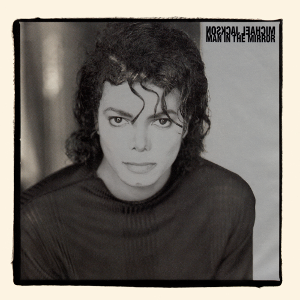
The biggest anthem of Michael Jackson's career was written by two other people. It came together in about an hour on a borrowed electric piano, late one evening in a house in Encino. The title had been riding around in a notebook in the songwriter's car for a year. And for two and a half years of making the album Bad, Jackson had refused to record a single song he had not written himself.
"Man in the Mirror" was written by Siedah Garrett and Glen Ballard, not by Michael Jackson. Quincy Jones had asked Garrett for songs for Jackson's next album, and she and Ballard wrote it fast, off a title Garrett had kept in a notebook for about a year. Jackson, who had rejected every outside song for two years of Bad sessions, loved it and made it his own. It reached number one in 1988.
The song Michael Jackson did not write
By 1987, Michael Jackson was not just the biggest star in music, he had become one of its most respected songwriters, and he was guarding that. When Quincy Jones asked Siedah Garrett to bring songs for the Bad sessions, the odds were long, and Jones told her so. Garrett has quoted his warning many times. She remembered him saying: "You know, ['Man In The Mirror'] is a great song. But we've been in the studio with Michael for two-and-a-half years recording [the Bad album], and Michael has yet to record anything that he didn't write."
That was the wall the song had to clear. Garrett was a Quincy Jones signing, a singer and vocal arranger who would also duet with Jackson on "I Just Can't Stop Loving You." The brief was open. As she put it, Jones "asked me for anything from a funk-groove street song to a ballad. So I figured I pretty much had free rein." What she brought back was not a groove or a love song but a call to look at yourself first, and it landed with a singer who cared about exactly that.
The title that lived in a notebook
Garrett did not write the title on the spot. She collected phrases the way some people collect receipts, and "man in the mirror" had been sitting in her stash for about a year before it became a song. "I have a book and when I hear things that I like, I write it down. I keep a pad in my car at all times," she said. When she went to write with Ballard, she would mine that book. "When I go to Glen's house, I'll listen to what he has to play me and I'll leaf through my book at these titles that I've written or collected."
The concept arrived with the phrase. She said: "When that title came to me, I already knew the concept behind the whole song." The genius of it, she has explained, is that it does not lecture. "It was that, juxtaposed with the idea of a man going deeper inside himself to change from within. To make a difference on the outside, you have to first start from within." The lyric points the finger inward, at the singer, not out at the listener. That is why Jackson could sing it without preaching.
Written in about an hour
Glen Ballard's telling is about how fast it happened. Garrett called him, late, insisting they write one more for the Jackson sessions after a run of rejections. His studio was down, so they used what was there. He told Songwriting Magazine: "I just had a Fender Rhodes down in one room, so I just sat there, she was sitting over there and it was late one evening." He had cancelled his plans because, as he put it, Garrett is hard to say no to.
Then it just came. Ballard put it simply: "It took about an hour, honestly." He added, "We did a little scratchy demo of it, and I just thought, 'Okay, well, good luck!'" He did not expect anything. He had pitched Jackson before and missed. But Garrett was certain. "Siedah Garrett, the very next day, called up Quincy and said, 'Glen and I have just written the song for Michael. I'm bringing it up to your house.'" Ballard has always been direct about whose song it is at heart. As he said: "It was all Siedah's idea, the man in the mirror, of taking responsibility for anything."
Getting it to Michael
Garrett would not wait for business hours. In her telling, the demo was done on a Friday evening, and she knew Jones's offices were closed until Monday, so she called him anyway and drove the tape over. His first response was not yes. He told her, "Baby, the song is great. It's really good." Then came the catch: "I've been playing songs for Michael for two years. And he has yet to accept an outside song." Then the wait. As Garrett tells it: "Three days later I got a call from Quincy and he told me that Michael loved the song and wanted to cut it. I screamed! Couldn't believe it."
Jackson took the demo and made it enormous. Ballard had written it in A-flat, and when Jackson wanted it a half-step lower in G, Ballard built a modulation that climbs back up for the final section, the moment the whole song lifts. Ballard said of the key: "A-flat is just magical." When Ballard offered to fade the long outro, Jackson refused: "No, give me all of that real estate," he said, and turned the back half into his own thing. Jones brought in the Andraé Crouch Choir for the gospel finish. The bones stayed almost exactly as they were on the one-hour demo.
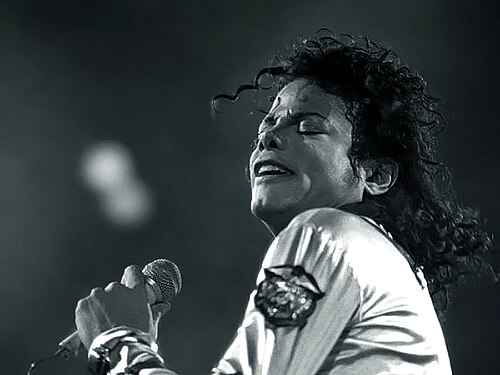
How the telling has grown over the decades
Because two writers tell this story, the small details shift depending on who is talking, and the drift is honest to note. Ballard remembers Garrett driving the tape to Jones "the very next day." Garrett remembers finishing on a Friday evening and getting Jones's cautious "but" four hours later. Even the warning Jones gave her moves: in one telling it is "two years" of sessions with no outside song accepted, in another it is "two-and-a-half years" and "anything that he didn't write." The gap is the difference between someone retelling a phone call decades apart, not a contradiction about what happened.
What every version agrees on is the shape: Quincy Jones set an almost impossible bar, Garrett cleared it with a title she had been carrying for a year, and the two of them wrote it in a single short session. Garrett has also said Jackson asked her to extend the bridge with new lyrics, and that she wrote three versions of it, but the song ran long and the addition was cut, so what you hear is close to the demo, with the key change added. The song that broke Jackson's own no-outside-writers streak barely changed on its way to number one.
The honest bottom line
The most inspirational record of Michael Jackson's career is one he did not write, from a title that sat unused in a notebook, knocked out in about an hour on a broken-studio Rhodes. Five years earlier, Billie Jean had made him the biggest recording artist alive through a bassline and a denial; now Garrett and Ballard made him a preacher. Jackson is a complicated figure to write about now, and the troubling parts of his life sit outside this song and are not weighed here. What the record settles is a quieter thing: that the era's defining songwriter was secure enough to hand his biggest sermon to a newcomer, and that Siedah Garrett wrote a lyric humble enough for him to sing it in the first person and mean it.
FAQ
Who wrote "Man in the Mirror"? Siedah Garrett and Glen Ballard wrote it. Garrett wrote the words, including the title she had kept in a notebook for about a year, and Ballard wrote the music on a Fender Rhodes. Michael Jackson did not write it, though he shaped the arrangement and the extended ending.
Did Michael Jackson write "Man in the Mirror"? No. It is one of the few major Jackson hits he did not write. Quincy Jones said Jackson had refused every outside song for roughly two years of the Bad sessions before accepting this one.
What is "Man in the Mirror" about? It is about taking personal responsibility for change: looking at yourself first before blaming the world. Garrett has said the point was to aim the message inward, at the singer, so it never sounds like preaching.
How long did it take to write "Man in the Mirror"? Glen Ballard has said it took about an hour. Garrett and Ballard wrote it in a single evening session and had a rough demo the same night, which is unusually fast for either of them.
Who sang the choir part on "Man in the Mirror"? Quincy Jones brought in the Andraé Crouch Choir for the gospel vocals on the song's climb to its finish, which is widely cited as one of the best uses of a gospel choir on a pop record.
How high did "Man in the Mirror" chart? It reached number one on the Billboard Hot 100 on March 26, 1988, and stayed for two weeks. It was the fourth straight number-one single from the album Bad and was nominated for Record of the Year.
Sources
- Songwriting Magazine, "How we wrote Michael Jackson's 'Man In The Mirror'" (Glen Ballard interview)
- American Songwriter, "Behind the Song: Man In The Mirror" (Paul Zollo), reprinting Siedah Garrett's SongTalk interview for the National Academy of Songwriters
- SongwriterUniverse, "Siedah Garrett Interview" (Dale Kawashima, 2017)
- Wikipedia, "Man in the Mirror," for release and chart data, the writing credits, and the Andraé Crouch Choir
- Billboard Hot 100 weekly charts, 1988
We start with the man in the method.
Part of Stories Behind the Songs. See also The Story Behind Billie Jean and The Story Behind Total Eclipse of the Heart.