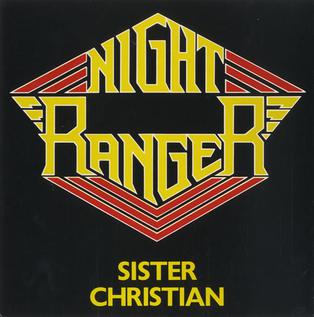
The man who wrote it was sleeping on a friend's couch. The title is a word the rest of the band misheard and everybody liked better than the real one. And the song that turned a hard rock band into a stadium act is the same song that locked them in a box they spent the rest of the decade trying to climb out of. Kelly Keagy has been telling the story of "Sister Christian" for more than thirty years, and the more he tells it, the more it turns into a story about consequences.
"Sister Christian" was written by Night Ranger drummer Kelly Keagy about his younger sister Kristy, who was 16 and living in Oregon at the time. Keagy sang "Sister Christy" as a placeholder, his bandmates misheard it as "Christian," and the band kept the mistake. It debuted on the Billboard Hot 100 dated March 10, 1984 at number 90 and peaked at number 5 on June 9, 1984.
The couch, the chorus, and the sister back in Oregon
Keagy did not write the song in a studio or on a writing retreat. "When I wrote that, I was living with a friend, sleeping on his couch. It just came out," he told The Washington Times in 2015. "I had the chorus before I had the verse."
That order matters, because the part everybody in America can sing is the part that arrived first. "That was the first section that I wrote," Keagy told Songfacts in 2021 about the motoring chorus. "I wanted something that sounded like it had some teeth to it, and movement. But at the same time, a little left of center so it wasn't so obvious."
The famous second line came with it, and Keagy has been candid that even he found it odd. "The first thing I started writing was the chorus, and the second line was, 'What's your price for flight?' Which is kind of weird," he told Songfacts. "But if you understand that it's coming from a brother to a sister, it was like, 'What's the price for making a bad decision now with your life going forward?'"
The subject was his kid sister. "It's a song about my kid sister growing up. She was 16 and in high school at the time," Keagy told The Washington Times. Jack Blades filled in the geography when Night Ranger sat down with Fox News in 2015: "Kelly's sister's name is Christy and so he was writing a song about his little sister growing up in a small town in Oregon and cruising up and down the street on a Friday, Saturday night, you know, motoring, everything like that, but it was sister Christy."
Kristy herself did not get it right away. "She embraced it after a while. She didn't really know what the idea was behind it, but I gave her the idea of the big brother looking after his little sister when she's growing up," Keagy told Songfacts. "I wanted her to be able to see what I was talking about, that I was protecting her. So, that's really what it was about."
How a misheard word became the title
This is the beat the whole song hangs on, and Keagy tells it the same way every time. He was singing a name that was not a title yet, and the room heard something else.
"I started writing it about my sister. I didn't really have the words. I was singing 'Sister Christy,' and the other guys in the band asked, 'What are you saying?'" he told The Washington Times. "I said, 'I don't know. Just writing about my sister.' They said, 'We thought you were saying Christian.'"
Nobody argued for accuracy. "Everyone kind of looked at each other, and I said, 'That sounds better. Let's use that.' We built the song around that."
Blades tells his half of it from the other side of the misunderstanding, as the guy doing the mishearing: "He's singing 'sister Christy oh the,' and we all thought it was Christian." So the biggest song of Night Ranger's career is named after a slip of the ear that four people agreed to keep.
One footnote the tellings disagree on: Blades said on Fox News that the sister's name is Christy, spelled with a C. Songfacts, interviewing Keagy in 2021, put a note directly in its question stating that Kristy with a K is the correct spelling and that Keagy confirmed it. Thirty years of retelling will do that to a name, even a name in your own family.
What motoring actually means
It is the single most-asked question about the song, and the band has answered it flatly, without any of the mystique a smarter marketing department would have protected.
"People have always asked, 'what does motoring mean?'" guitarist Brad Gillis said in the same 2015 Fox News segment. "You know, 'Motorin' what is it?' It's driving around in your car."
That is it. Blades placed it in the specific setting: cruising up and down the street on a Friday or Saturday night in a small Oregon town. No code, no metaphor, no drug reference. Which has never stopped anyone from inventing one. The band told Fox News about a woman from Minnesota who once walked up to them and asked, "Is that about a nun who sells dope to school kids?" Their answer: "We were like, 'yes ma'am'... never destroy the dream."
What the charts actually did
The Billboard weekly tables tell a slow story, not an explosion. "Sister Christian" entered the Hot 100 dated March 10, 1984 at number 90. On the chart dated May 12 it was still only at number 17. It kept climbing through the spring, reached number 5 on the chart dated June 9, 1984, and held number 5 again the following week, June 16. Cyndi Lauper's "Time After Time" was the number one song in the country the week "Sister Christian" hit its peak.
Fourteen weeks on the chart before it topped out. This was a record that radio and MTV pushed uphill for three months.
The ballad that boxed the band in
Here is the part that makes this a story instead of a trivia card. Night Ranger did not want a ballad as a single. They were a guitar band with two lead guitarists, and they knew what a hit ballad would do to their identity.
"We were a rock band getting lots of notoriety with our uptempo rock tunes, but at the same time, maybe not reaching a wider audience," Keagy told Songfacts. The label made the call anyway, and the album started climbing again behind the single. Then the bill came due.
"After that we started to get defiant, like, 'Do we have to go with a ballad first? Give us some teeth here!'" Keagy said. So the band turned in an album with no ballad on it at all, as a statement. "We turned it in, and they all just laughed. They said, 'Yeah, right... a Night Ranger record without a ballad!' And we were starting to see, 'Oh my God. We're stuck here. We're not going to be able to push it.'"
They went back and wrote the ballad. Then the label did something worse than reject it. Keagy laid this out in a 2026 interview with the YouTube channel Dr. Music, reported by Ultimate Classic Rock: "And they loved it, but they didn't release it," he said. Then the punchline: "They released a song we didn't write, which was 'I Did It for Love.' And that's when we knew we were stuck."
He was blunt about the machinery behind it. "The record company gives you a large amount of money to make a record and so their goal is to sell records," Keagy said, describing a label that wanted another "Sister Christian" and had stopped caring what else the band could do. His summary of where that left them: "We didn't have a safe zone anymore."
Boogie Nights, and the sweating
The song's second life started in 1997, when Paul Thomas Anderson dropped it into the drug-deal scene in "Boogie Nights," over a coked-up Alfred Molina and a string of firecrackers. As the sole writer, Keagy had veto power over sync placements. He signed off on it based on a rough script, then went to a theater like everybody else.
"I hadn't heard anything or seen any clips, so I went to the movies and saw it firsthand... and I started sweating!" he told Songfacts. Not out of embarrassment about the scene. Out of recognition. "Not because I didn't like it, but because I thought I'd been in that position in Hollywood at one point, at some drug dealer's house!"
The video that made it a hit in the first place was a much smaller production. "We were all living in the San Francisco Bay Area at the time, which is where the band got together," Keagy told Songfacts. "And the director of the video thought it would be a good idea to do a play on the whole high school, Catholic school, growing up." They shot it at San Rafael High School in San Rafael, California, using some of the actual student body as extras.

How the telling has grown over the decades
The spine of this story has never moved, but each telling has added a different room to it.
2015, Fox News: Jack Blades gives the outsider's version of the misheard title and puts the setting in a small Oregon town. Brad Gillis kills the motoring mystery in one sentence. The band tells the nun-who-sells-dope story.
2015, The Washington Times (Keith Valcourt): Keagy supplies the physical circumstances nobody else mentions, the friend's couch, the chorus before the verse, and his sister's age at 16. He names the album that broke the band's patience as "Man in Motion" in 1988, and says the label's response to a ballad-free record was "the record is not coming out." He names the replacement ballad "Restless Tide."
2021, Songfacts (Greg Prato): The longest and most reflective telling. Keagy explains the motoring section as a deliberate craft decision, decodes "What's your price for flight?" as brother-to-sister advice, and reports that Kristy came around to the song. He tells the Boogie Nights sweating story. Here the label's reaction is not a threat but laughter, and the replacement ballad is "Restless Kind."
2026, Dr. Music via Ultimate Classic Rock (Corey Irwin): Forty-two years out, Keagy adds the ending. The label loved the ballad they demanded and released a song the band did not write instead. "That's when we knew we were stuck."
The drift is worth naming rather than smoothing. The song title Keagy remembers writing under pressure is "Restless Tide" in 2015 and "Restless Kind" in 2021 and 2026. The label's response is a flat refusal in one telling and mockery in the others. The sister's name is Christy when Blades says it and Kristy when Songfacts checks it with Keagy directly. None of that touches the spine: brother, sister, misheard word, kept anyway.
The honest bottom line
"Sister Christian" is a power ballad written by a drummer sleeping on a couch, named after a mistake, built on a chorus with a line its own author called weird, and pushed onto radio by a record company over the band's objection. It is exactly as calculated as its critics say and exactly as sincere as its fans say, at the same time. What makes it last is that the sincerity is real: there was an actual 16 year old in Oregon, and her brother was actually worried about her. And the punishment for writing it was real too. Night Ranger got a career-defining hit and a cage in the same envelope, and Keagy has spent four decades telling both halves honestly.
FAQ
What is the story behind "Sister Christian" by Night Ranger? Drummer Kelly Keagy wrote it about his younger sister Kristy, who was 16 and living in a small town in Oregon. He sang "Sister Christy" as a working lyric, his bandmates misheard it as "Christian," and the band agreed it sounded better and kept it.
Who is Sister Christian actually about? Kelly Keagy's real sister. Keagy told Songfacts in 2021 that the idea was "the big brother looking after his little sister when she's growing up," and that he wanted her to see he was protecting her.
What does "motoring" mean in "Sister Christian"? Driving around in your car. Guitarist Brad Gillis told Fox News in 2015: "It's driving around in your car." Jack Blades placed it as cruising up and down the street on a Friday or Saturday night in a small Oregon town.
Did "Sister Christian" go to number one? No. It debuted on the Billboard Hot 100 dated March 10, 1984 at number 90 and peaked at number 5 on the chart dated June 9, 1984, holding number 5 the following week.
Who wrote "Sister Christian"? Kelly Keagy wrote it alone. He is the sole songwriter, which is why he personally holds veto power over where the song gets licensed, including its use in "Boogie Nights."
Is "Sister Christian" about a nun? No. The name came from a misheard placeholder lyric about Keagy's sister Christy. The band has been asked the nun question for decades, including by a woman in Minnesota who asked whether it was about a nun selling drugs to schoolchildren.
Sources
- Fox News, "The real story behind Night Ranger's 'Sister Christian'," FOX411 Story Behind the Song video segment, August 24, 2015
- The Washington Times, "Kelly Keagy interview: Night Ranger drummer on 'Sister Christian' surprise hit, band's longevity," Keith Valcourt, May 19, 2015
- Songfacts, Songwriter Interviews series, Kelly Keagy of Night Ranger, Greg Prato, August 4, 2021
- Ultimate Classic Rock, "Night Ranger 'Knew We Were Stuck' After 'Sister Christian'," Corey Irwin, July 1, 2026, quoting Keagy's interview with the YouTube channel Dr. Music
- Billboard Hot 100 weekly charts dated May 12, June 9, and June 16, 1984
Motoring toward a fully sourced telling.
Part of Stories Behind the Songs. See also Time After Time and Misheard 80s Lyrics.