Two of the biggest acts in the world walked into a Swiss studio with no plan, warmed up on old cover songs, and stumbled into a classic before dinner. Then they broke for food and wine, and the most famous bass riff of the decade nearly vanished for good. More than forty years later, the four men in the room still cannot agree on who wrote it, who saved it, or even what they ate. "Under Pressure" is a masterpiece assembled by accident, and every person who made it tells the story a little differently.
"Under Pressure" came out of an unplanned jam between Queen and David Bowie at Mountain Studios in Montreux, Switzerland, in the summer of 1981. The song grew from a bass riff worked up in the room, with Bowie taking control of the lyric. Released on October 27, 1981, it hit number one in the UK and peaked at number 29 on the Billboard Hot 100 on January 9, 1982. Who actually wrote the bassline is still disputed by the people who were there.
The jam that was not supposed to happen
Bowie was in Montreux and Queen were recording at the studio they had a stake in. The two acts knew each other only slightly. Bowie has said he was simply invited down. What began as small talk turned into playing, because that is what musicians do when you put them in a room together. "Now time dims the memory a little, but the way I remember it, we all very quickly decided that the best way to get to know each other was to play together," Brian May told The Mirror in 2016.
They ran through old rock songs to loosen up. Then Freddie Mercury and Bowie started trading vocal scraps, scatting at each other, and John Deacon started playing a bass figure. The song was moving before anyone decided to write one.
The riff, and the dinner that almost killed it
Here is where the accounts split, and they split hard. In Brian May's telling, the riff was Deacon's. "John came up with the riff which starts it all off," May said in the DVD commentary for Queen's Greatest Video Hits II. Then the group broke for a long dinner and, by most accounts, a fair amount of wine, and when they came back the riff had drifted.
Bowie tried to correct Deacon on his own part. It did not land well. "I remember David Bowie reaching over to John and saying, 'No, don't do it like that,' and John going, 'Excuse me? I'm the bass player, right? This is how I do it!,'" May recalled to Ultimate Classic Rock. He has described the moment as tense. "Deacy did not take kindly to being told what to do, especially by physical interferences while he was playing! But he was good-natured, and it all went ahead," May wrote on his official website.
Who wrote the bassline
Ask the four people in that room and you get four answers. Popular history hands the riff to John Deacon. Deacon himself handed it to Bowie. "It was an interesting experience, because David wrote the bassline, he's responsible for it," Deacon told Viva Rock in 1983. "He's a talented man, and that song is one of those that I really like." Brian May's version keeps the riff as Deacon's idea that Bowie only nudged after the break. And Roger Taylor's account, given in the documentary Queen: Days of Our Lives and reported by Songfacts, is different again: Deacon came up with the riff, the band went out for pizza, and when they returned Deacon had completely forgotten how it went, until Taylor remembered it. Dinner and wine in one telling, pizza in another. Bowie saving the riff in one, Taylor saving it in another. The one thing everyone agrees on is that it almost got lost.
The vocals nobody was supposed to hear
Once the music was locked, Bowie directed the singers to build the melody blind. "The procedure was each of us went into the vocal booth consecutively, without listening to each other... vocalised the first things that came into our heads," May wrote on his website. The idea was raw instinct with no copying.
The idea did not entirely survive contact with Bowie. Producer Reinhold Mack remembered him cheating the setup. "Freddie is doing all his bits and pieces and I see out of the corner of my eye David sticking his head in and listening," Mack told Songfacts. "Then Fred came down and David went up, and Fred was quite impressed how David was counterpointing to what he (Freddie) had done before." When Mercury learned Bowie had been listening from the doorway, he was, by Mack's account, not thrilled.
Bowie takes the wheel
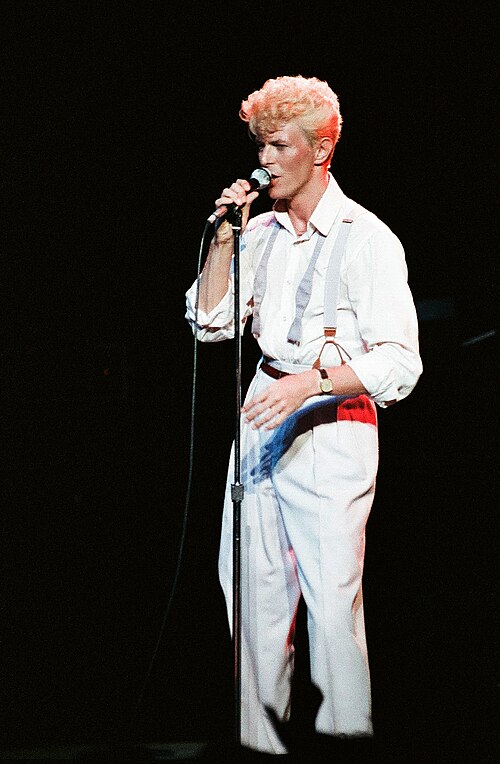
The song needed a subject, and Bowie decided what it would be. "David was in there first and told us he wanted to take the track over, because he knew what he wanted it to be about," May wrote on his website. "We all backed off and David put down a lyric which now focused on the 'under pressure' part of the existing lyric." Mercury answered Bowie's stark opening with the soaring plea for one more chance, and the two voices became the song's argument with itself.
The peace did not extend to the mixing desk. A few weeks later in New York, Mercury and Bowie fought over the final mix, and May stepped out of the way. "I think it's probably the only time in my career I bowed out, because I knew it was going to be a fight," he told Total Guitar. "So basically it was Freddie and David fighting it out in the studio with the mix. And what happened in the mix was that most of that heavy guitar was lost."
What it became
"Under Pressure" was released on October 27, 1981, and gave Queen their second British number one. In America the climb was slower and stopped short: the Billboard Hot 100 dated January 9, 1982 shows it at number 29, up from 31 the week before, and it held at 29 the following week before falling. Number 29 was its US peak. The song has outlived that modest chart run many times over, not least because Vanilla Ice built "Ice Ice Baby" on its bassline in 1990, uncleared, in a use that ended in a settlement.
How the telling has grown over the decades
The story arrived in fragments across more than thirty years, and the fragments do not always fit. The earliest pieces came in 1983, when Bowie described being invited to the studio and Deacon, in the same year, credited Bowie with the bassline. Brian May has been the most frequent narrator since, in a Mojo interview in 2008, the Days of Our Lives documentary, a Mirror piece in 2016, and another Mojo sit-down in 2017, where he summed up the Freddie-and-Bowie friction as a contest over "who would arrive last at the studio," adding, "So it was sort of wonderful and terrible. But in my mind I remember the wonderful now, more than the terrible." Roger Taylor's warmest verdict came to VH1 in 2011: "For me [Under Pressure] was a great pleasure."
The honest reading is that nobody is lying and nobody fully remembers. The bassline credit alone has landed on Deacon, on Bowie, and on a group rescue led by Taylor, depending on the year and the speaker. Wine became pizza. A blind vocal session had a man listening at the door. That is what a spontaneous night looks like refracted through four memories decades later.
The honest bottom line
Strip away the legend and "Under Pressure" is a happy accident its makers nearly bungled and then argued about for years. The riff almost died over dinner. The vocals were supposed to be private and were not. Two of the great egos in music fought over the mix until the guitars washed out, and the guitarist walked away rather than referee. None of that dulls it. The tension is audible in the record, the collaboration never happened again, and every contradictory memory only makes the four minutes feel more like something that could easily never have existed. Five years later, Run-DMC and Aerosmith would stumble into a similar collision with Walk This Way, another genre-crossing record nobody in the room expected to work, and the parallel proves that the best collaborations are the ones neither side would have chosen.
FAQ
What is the story behind "Under Pressure"? Queen and David Bowie jammed together with no plan at Mountain Studios in Montreux in the summer of 1981. A bass riff worked up in the room became the song, Bowie shaped the lyric around the idea of pressure, and it was released that October.
Who wrote the bassline in "Under Pressure"? It is disputed. It is often credited to John Deacon, but Deacon himself said in 1983 that "David wrote the bassline." Brian May credits Deacon with the original idea, and Roger Taylor has said the riff was nearly forgotten after a break and that he remembered it.
Where was "Under Pressure" recorded? At Mountain Studios in Montreux, Switzerland, during an impromptu session in the summer of 1981, with the final mix done weeks later in New York.
Did Queen and David Bowie get along making it? Not entirely. Brian May has described a tense session and a fight between Mercury and Bowie over the final mix, during which May said he bowed out and much of his heavy guitar was lost.
How did "Under Pressure" do on the charts? It reached number one in the UK, Queen's second British number one, and peaked at number 29 on the Billboard Hot 100 in January 1982.
Sources
- MusicRadar, "The tense night David Bowie and Queen spontaneously came up with a classic" (Andy Price), assembling quotes from Brian May (The Mirror 2016, Ultimate Classic Rock, Total Guitar, official website, Greatest Video Hits II commentary), David Bowie (1983 video interview) and John Deacon (Viva Rock, 1983)
- Songfacts, "Under Pressure by Queen (featuring David Bowie)," including Roger Taylor's account from the Days of Our Lives documentary, producer Reinhold Mack's recollection, and Brian May (Mojo, 2008 and 2017)
- Roger Taylor interview, VH1, 2011, as quoted by MusicRadar
- Billboard Hot 100 weekly charts, January 9 and 16, 1982
Facts under pressure hold their shape, ours did.
Part of Stories Behind the Songs. See also The Story Behind Jessie's Girl and The Story Behind Total Eclipse of the Heart.