
It is a song about a continent none of the men who made it had ever set foot on. The band thought it was the worst thing on the record and nearly left it off. And when it finally reached number one, it stayed there for exactly one week before the song it had bumped came right back. David Paich has been explaining "Africa" for more than forty years, and the strange part is that his answer for what the song is even about keeps changing.
"Africa" was written by Toto's David Paich and drummer Jeff Porcaro for their 1982 album Toto IV. Paich, who had never been to Africa, built the melody around a brassy Yamaha CS-80 sound and blurted out the chorus line "Bless the rains down in Africa." The band nearly cut it. Released as a single, it hit number one on the Billboard Hot 100 for one week in February 1983.
The riff that came with the keyboard
The song started with a new machine. Synth player Steve Porcaro introduced Paich to the Yamaha CS-80, and the sound did the writing. "I had gotten a new instrument called the CS-80 from Yamaha, and it was like Stevie Wonder's dream machine," Paich told SongwriterUniverse in 2022. He reached for a brassy flute patch, played the first thing that came, and the song followed. When he got to the chorus, the hook arrived almost by accident. "I started singing the chorus words, and I blurted out 'Bless the rains down in Africa.'" He called the finished track "a self-discovery song."
The rhythm was its own project. Steve Porcaro programmed the famous kalimba figure on a Yamaha GS-1 digital piano, recording it six times with different rhythms and layering them. Jeff Porcaro built the groove from a loop, drawing on percussion sounds he traced back to the African pavilion at the 1964 New York World's Fair and a National Geographic special. He and his father Joe made percussion loops on bottle caps and marimba, and Porcaro played the drum part live with no click track.
A continent none of them had seen
Paich wrote the whole thing without ever having been to Africa, and the band never hid it. Jeff Porcaro put it bluntly: "A white boy is trying to write a song on Africa, but since he's never been there, he can only tell what he's seen on TV or remembers in the past." The imagery came secondhand, from television and a National Geographic article, and one very specific childhood source. As a boy Paich attended a Catholic school where several teachers had done missionary work in Africa. Their missionary work, as Wikipedia notes from Paich's own account, "became the inspiration behind the line: 'I bless the rains down in Africa.'"
Under the travel-poster surface, Paich has said, the song is really about him. There was "a little bit of autobiographical information in there," he told Songfacts, "being consumed by my work, not having time to go out and pursue getting married and raising a family and doing all the things that other people do that were my age at the time." The lonely man singing about a faraway place was a session musician who never left the studio.
The song the band tried to cut
Almost nobody in Toto believed in it. The band grew so tired of the track that they considered leaving it off the album entirely, and guitarist Steve Lukather was the loudest doubter. "I thought it was the worst song on the album," he said in a quote preserved by Songfacts. "I swore that if it was a hit record, I'd run naked down Hollywood Boulevard!" On the radio station KROQ, Lukather and Steve Porcaro went further, calling the song "dumb" and "an experiment" and dismissing some of the lyrics, especially the line about the Serengeti, as goofy placeholders. Paich defended it as a "fantasy song," in the same spirit as "Margaritaville," a picture of a place rather than a report from one. He won the argument by one vote and a record-company push, and the odd song out became the one everybody remembers.
What "Africa" did
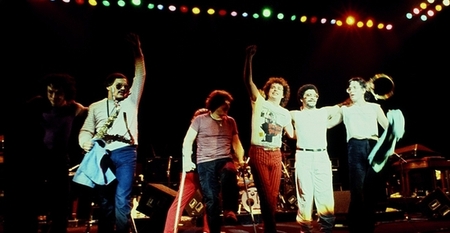
Released in the US in October 1982, "Africa" reached number one on the Billboard Hot 100 on the chart dated February 5, 1983. It held the top spot for a single week, interrupting Men at Work's "Down Under," which returned to number one the very next week. It was Toto's only American number one. The parent album, Toto IV, swept the 1983 Grammys, winning Album of the Year, though it was "Rosanna," not "Africa," that the band pushed for Record of the Year and won.
The one-week peak undersold what the song would become. "Africa" outlived nearly every record that spent longer at the top in 1983. It has passed a billion streams, been installed to play on a solar-powered loop in the Namib desert, and turned a whole generation of listeners into people who will shout the chorus without warning. The throwaway track became the band's signature and, for many, the sound of the decade.
How the telling has grown over the decades
For a song this specific, its own author has given remarkably different accounts of where it came from. In the liner notes to a later compilation and again in 2015, Paich traced it to a harrowing late-night documentary. "It both moved and appalled me, and the pictures just wouldn't leave my head," he said. "I tried to imagine how I'd feel about it if I was there and what I'd do." In 2018 he emphasized the Catholic-school missionaries behind the "bless the rains" line. By 2022 the origin had softened into wanderlust: "I'd been watching travelogues of Africa on TV when I was growing up," he told SongwriterUniverse. "And I romanticized it and was compelled to want to visit Africa, or at least write about it."
Documentary of suffering, missionary memory, romantic travelogue. The three do not cancel each other out so much as pile up, the way any writer's memory of a decades-old song accumulates new explanations. Jeff Porcaro's version was always the plainest and probably the most honest: a guy who had never been there, writing down what he had seen on TV. What none of the tellings dispute is that the song was imagined, not reported, and that its makers knew it.
The honest bottom line
Strip the affection away and "Africa" is a song about a place its writers had never visited, stitched together from a National Geographic article and late-night television, with lyrics the band itself called goofy and nearly threw in the bin. Critics have spent years pointing out that Kilimanjaro does not rise like Olympus above the Serengeti and that the geography is a fantasy. None of it matters. The song never claimed to be a documentary. It is a daydream about longing, sung by a man stuck at work, and the daydream turned out to be more durable than almost anything that was true.
FAQ
What is "Africa" by Toto actually about? By David Paich's own accounts it is a fantasy about a continent he had never visited, layered over something personal: a man consumed by his work and longing for a fuller life. Paich has called it "a self-discovery song."
Had anyone in Toto been to Africa when they wrote it? No. Paich wrote it having never set foot in Africa, drawing on television, a National Geographic article, and childhood memories of Catholic-school teachers who had done missionary work there. Jeff Porcaro described it as a song by someone who "can only tell what he's seen on TV."
Where does the line "I bless the rains down in Africa" come from? From Paich's Catholic-school teachers who had done missionary work in Africa. Their missionary work inspired the line, according to Paich's own account.
Did Toto almost leave "Africa" off the album? Yes. The band grew tired of the song and nearly cut it. Steve Lukather called it "the worst song on the album" and joked he would "run naked down Hollywood Boulevard" if it became a hit.
How long was "Africa" number one? One week, on the Billboard Hot 100 chart dated February 5, 1983. It interrupted Men at Work's "Down Under," which returned to number one the following week. It was Toto's only US number one.
Who wrote "Africa"? David Paich and drummer Jeff Porcaro. Paich built the melody and lyrics around a Yamaha CS-80, and Porcaro shaped the drum and percussion groove.
Sources
- SongwriterUniverse, "David Paich Toto Interview" by Dale Kawashima, 2022
- Songfacts, "Africa" song page, quoting Paich's liner notes for Toto's Best Ballads, a Songfacts interview with Paich, and Steve Lukather via Rock Eyez
- Wikipedia, "Africa (song)," for Paich's 2015 and 2018 tellings, Jeff Porcaro's quote, the CS-80 and GS-1 composition, release, and chart facts (citing Billboard)
- Billboard Hot 100 weekly charts, February 1983 (number one on the chart dated February 5, 1983)
We blessed the facts down in this one, house rules.
Part of Stories Behind the Songs. See also The Story Behind Sweet Child o' Mine and The Story Behind In the Air Tonight.