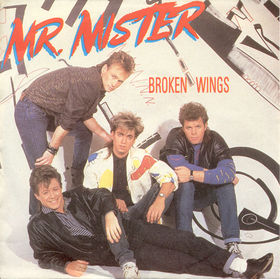
A lyricist reaches back to a 1912 novel by a Lebanese poet-philosopher and travels to the writer's estate to ask permission to borrow a phrase. The finished song carries a line almost identical to a Beatles classic, and the man who sang it to number one swears he never noticed until it was already a hit. Then, to get a nearly six-minute ballad onto the radio, the band flat-out lied about how long it was. Richard Page has told the pieces of the "Broken Wings" story for decades, and the odd part is how much of it he only half-planned.
"Broken Wings" was written by Mr. Mister's Richard Page and Steve George with lyricist John Lang, Page's cousin. Lang drew the central image from Kahlil Gibran's 1912 novel The Broken Wings and, by Page's account, sought permission from Gibran's estate. Its "Take these broken wings and learn to fly" line closely echoes the Beatles' "Blackbird," which Page calls unintentional. Released in June 1985, it hit number one on the Billboard Hot 100 in December 1985 for two weeks.
The cousin with the dark streak
Mr. Mister's lyrics came from outside the band. John Lang was Page's cousin, not a member, and Page has always described the collaboration as a clash of temperaments that happened to work. "His writing had this edgy kind of weirdness, and I had this light melodic thing going on, so it was an interesting contrast," Page told MusicRadar. "Sometimes, John's words were kind of angst-ridden, just full of despair, so they didn't always work with my little melodies. But he had a lot of great ideas, and Broken Wings was one of them." By Page's account to Songfacts, the three writers pulled the song together fast, cutting it in about 20 minutes at Page's California home on his own tape machine.
The novel behind the title
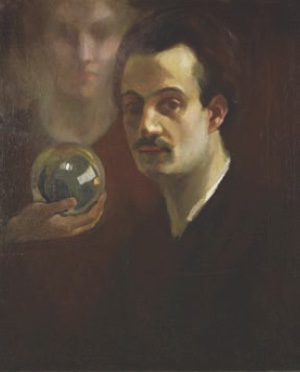
The title and its central image did not come from a breakup. They came from a book. As Songfacts documents, Lang had been reading The Broken Wings, the 1912 novel by the Lebanese poet-philosopher Kahlil Gibran, a story of a love doomed by social convention. Page has said Lang took the borrowing seriously enough to seek permission at the source. "John got that from the Khalil Gibran book called The Broken Wing," Page told Smashing Interviews in 2013. "He actually went to Khalil Gibran's estate and asked for permission to use it." Page even wondered aloud whether the same well fed a more famous song: the estate visit "made me wonder if that was where Paul McCartney got it, too, but who knows?"
The Beatles line he never heard coming
The line "Take these broken wings and learn to fly" sits at the heart of the song, and it sits almost word for word inside the Beatles' 1968 "Blackbird." Asked directly whether it was a reference, Page did not dodge. "It was a mindless unintentional reference," he told Smashing Interviews. What makes the answer disarming is that, by his telling, he did not catch the overlap while making the record. "In any case, the sequence of those words is very close to 'Blackbird' and I was not even aware of it, believe it or not, until it became a hit," Page said. "Somebody pointed it out to me and my heart sank. I just felt like, 'Oh wow, we shouldn't have done that.' But it was no big deal because legally it's not a copyright infringement so it's all good."
The lie that got it on the radio
"Broken Wings" was the first single off the band's second album, Welcome To The Real World, and Page has said it was chosen for the simplest reason: in his estimation it was "the best song." It was also the longest track on the record, which in 1985 was a problem. "I never thought it would be a hit," Page told MusicRadar. "It was too long, nearly six minutes. The conventional wisdom was: there's no radio station in the world that will play a song this long." So the band cheated. "So when Broken Wings was sent out to radio, we lied," Page said. "We put a different time on the cassette box: four minutes twenty seconds. And it worked. Nobody ever knew."
One take in the big room
The vocal that carried it all was cut in a single pass at Ocean Way in Los Angeles. Page has described the moment in almost reverent detail. "I was in the big room at Ocean Way," he told MusicRadar. "They had the lights down, and I could just see a little glimmer of the control room and the guys in there. I had a C12 microphone, worth around $30,000. The right kind of preamp. Everything was sounding really good in my headphones. It was just one of those moments when I was really inspired." The song reached number one on the Billboard Hot 100 for the week of December 7, 1985, held for a second week, and was knocked off the top by Lionel Richie's "Say You, Say Me" on December 21. It was the band's breakthrough, followed straight up the chart by "Kyrie," which also hit number one.
How the telling has grown over the decades
The story has come out in pieces, and the pieces emphasize different things depending on when Page is talking. In the 2013 Smashing Interviews conversation, the focus is the lyric: the Gibran novel, the estate visit, and the Beatles echo that made his heart sink. In the later MusicRadar telling, the lyric barely comes up, and the spotlight moves to the recording and the running-time trick that snuck a near-six-minute ballad past radio programmers.
The details drift in small ways worth being honest about. Page calls the Gibran novel "The Broken Wing," singular, in 2013, while the book's actual title is The Broken Wings, plural, as Songfacts and the novel itself have it. And Page's line about Paul McCartney is speculation, not fact: he floats the idea that McCartney may have drawn from the same Gibran well and immediately undercuts it with "but who knows?" What stays constant across every version is the admission at the center, that the song's most quoted line arrived by accident.
The honest bottom line
Strip the mystique and "Broken Wings" is a song built on a borrowed phrase, carrying an unplanned echo of one of the most famous acoustic songs ever recorded, that its own band had to lie about to get on the air. Page does not pretend otherwise, which is exactly why the story holds up. The Gibran connection is real and sourced, the Beatles overlap is real and, he insists, unnoticed until it was too late, and the record still went to number one on the strength of a one-take vocal in a darkened room. The accidents did not cheapen it. They are the reason it is worth retelling.
FAQ
What is the story behind "Broken Wings" by Mr. Mister? Lyricist John Lang, Richard Page's cousin, took the song's central image from Kahlil Gibran's 1912 novel The Broken Wings and, by Page's account, got permission from Gibran's estate. Page and Steve George wrote the music, cutting the song quickly at Page's home. It became the band's first number one in December 1985.
Is "Broken Wings" based on the Beatles' "Blackbird"? Not intentionally. The line "Take these broken wings and learn to fly" closely matches a line in "Blackbird," but Page has called it "a mindless unintentional reference" and says he did not even notice the similarity until after the song was a hit.
What book inspired "Broken Wings"? The Broken Wings, a 1912 novel by the Lebanese poet-philosopher Kahlil Gibran, about a love doomed by social convention. Lang was reading it when he wrote the lyric.
Did "Broken Wings" reach number one? Yes. It topped the Billboard Hot 100 for two weeks starting the week of December 7, 1985, before Lionel Richie's "Say You, Say Me" replaced it.
Why did Mr. Mister lie about the length of "Broken Wings"? The song ran nearly six minutes, which programmers considered too long for radio. Page has said the band printed a false running time of four minutes twenty seconds on the cassette boxes sent to stations so it would get played.
Sources
- Smashing Interviews Magazine, "Richard Page Interview: Mr. Mister Founder on His Latest Album, 'Peculiar Life'" (Melissa Parker), March 20, 2013
- MusicRadar, "How an '80s classic got to No 1, with a little bit of cheating" (Richard Page interview)
- Songfacts, "Broken Wings by Mr. Mister"
- Billboard Hot 100 weekly charts, weeks of December 7, 14 and 21, 1985
Take these broken wings and learn to source, we did.
Part of Stories Behind the Songs. See also I Want to Know What Love Is and Africa.