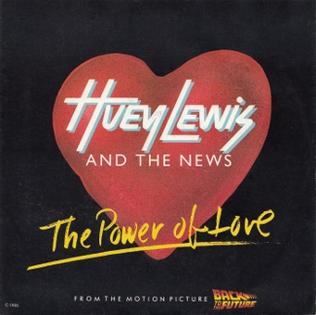
The band said no to writing a song called "Back to the Future." The director said the first demo was not up enough. The version blasting through the gym in the most famous audition scene in movie history is not the record at all. It is the demo. Huey Lewis and guitarist Chris Hayes have been telling the story of "The Power of Love" for forty years, a piece at a time, and when you line the tellings up you get one of the richest origin stories any 80s hit ever had.
"The Power of Love" was written by Chris Hayes, Johnny Colla, and Huey Lewis after a 1985 lunch where Steven Spielberg, Robert Zemeckis, and Bob Gale told Lewis that Marty McFly's favorite band was Huey Lewis and the News. Lewis declined to write a song titled "Back to the Future," so they took whatever the band wrote next. Hayes wrote the music, Lewis the words, and it became the band's first number one on August 24, 1985.
The lunch that started it
The band was playing Los Angeles when the meeting request came in. "We were playing in LA when Spielberg requested the meeting," Lewis told Classic Rock. "So we had lunch, and they said they'd written a movie called Back To The Future, and decided their hero Marty McFly's favourite band would have been Huey Lewis & The News, so how would we like to write a song for the film?"
Lewis was not sold. As he put it to The Guardian in 2025: "I said, 'I'm flattered, but I don't know how to write for film necessarily. And frankly, I don't fancy writing a song called Back To The Future.' They said, 'No problem. We just want one of your songs.'" So Lewis made the least Hollywood counteroffer imaginable: the band would simply send over the next thing they wrote. Whatever it was. Hayes, for his part, read the script and was not impressed. "I remember thinking to myself, 'This doesn't sound plausible or like it's going to be good,'" he admitted to The Guardian. "And boy was I wrong!"
How the song actually got written
The music came from the guitar player. "That's how The Power of Love came about," Hayes told Guitar World in 2023. "I knocked out the guitar riff, and the rest of the song came together. I demoed it up with Johnny Colla. He made a couple of edits, and that was that. We submitted it and they liked it." Lewis tells the same half of the story from his side: "Chris wrote the progression and gave it to me on tape." In a 2019 Rolling Stone interview, Lewis added the detail fans love most: he put the tape on his Walkman, went for a jog, and came back with the song finished in his head.
What nobody planned was how little the lyric had to do with the movie. "It was actually a love song, and Marty McFly had no love interest to speak of," Lewis told Classic Rock. "I knew it was a good song, but I didn't actually think it was going to work for him."
The note from Zemeckis
The first demo did not sail through. Lewis has told this part on camera, in a Top 2000 a gogo interview from his Montana ranch: the demo opened cold on the minor-key verse, and Zemeckis pushed back. "Bob Zemeckis got it and he said, 'Oh, I don't know. It's not up enough. We need something to be up.'" Lewis took the note back to the band, and Johnny Colla came up with the three bright chords that became the intro. Zemeckis heard the fix and signed off. When the finished mix was done, Lewis says, Zemeckis and Michael J. Fox flew up to hear it in person.
The demo in the movie, and the man with the bullhorn
Here is the detail that separates people who have heard the story from people who have not. The version Marty and the Pinheads play in the school gym audition is not the single. "They took that demo and [soloed] all over it in the scene where Marty is playing guitar," Lewis said in the same interview. "That's our demo!"
And the teacher who cuts them off with "just too darn loud" is Lewis himself. He resisted that too. "I was reluctant, because I thought it was a kids' movie," he told Classic Rock. "We agreed I'd do a cameo if I was disguised and uncredited. So they made this part up for me, and we filmed it in a matter of hours at a high-school gym."
The part they rarely tell: the money
The band sold the song outright. "I didn't get paid much," Lewis told Classic Rock. "We sold it to them. And I don't know if it was for $100,000. Maybe it was even less." In America the song was not allowed on a Huey Lewis and the News album, only on a soundtrack Lewis calls "a very lousy album." His verdict on the whole arrangement: "We didn't do it for the money."
The song paid the band back anyway. It was the most added track on American radio in its first week, and as it climbed, the studio flipped the usual arrangement on its head: instead of the movie promoting the song, the song dragged the movie forward. "The studio kept yelling at Zemeckis: 'Get the film out there! The song is killing it!'" Lewis told The Guardian. The film's release was moved up, nine weeks after principal photography ended.
What it became
"The Power of Love" hit number one on the Billboard Hot 100 on August 24, 1985 and held for two weeks, the first chart-topper of the band's career. It earned an Oscar nomination for Best Original Song at the 58th Academy Awards, losing to Lionel Richie's "Say You, Say Me," and a Grammy nomination for Record of the Year. Hayes remembers the Oscar night for a different reason: "Richard Dreyfuss sat next to me at the Academy Awards ceremony. I tried to say something to him, but he ignored me. Other than that, it was incredible."
Lewis still plays it, and still ranks it with a wink: "As long as you don't play The Power Of Love too much it's the best song in the world. Or one of them, anyway."
How the telling has grown over the decades
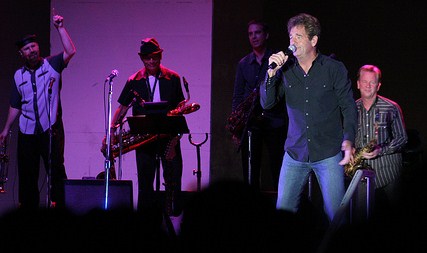
Every few years another interview adds a layer. The 2019 Rolling Stone telling gave us the Walkman jog. The 2022 Top 2000 a gogo sit-down added the demo in the audition scene and the Zemeckis "not up enough" note. Guitar World's 2023 Chris Hayes interview put the riff in his hands and revealed the solo was cut on a '57 Stratocaster, with a bend he owed to watching Stevie Ray Vaughan, who was opening the band's shows that year. The Guardian's 2025 piece put numbers on the radio explosion, and Classic Rock's long telling stitched the whole arc together. The details of who supplied which chords shift slightly depending on who is talking and what year it is, which is what forty years of retelling does to any true story. The spine never moves.
The honest bottom line
Strip away the affection and this is a work-for-hire song, sold for a flat fee, written to order for a movie the writers privately doubted, with a lyric that has nothing to do with time travel. The band did not even keep the American album rights. None of that matters when the intro hits. The song outgrew the deal, outgrew the doubts, and became the sound of 1985 itself, and the people who wrote it clearly love telling the story more than they ever loved the paycheck.
FAQ
What is the story behind "The Power of Love" by Huey Lewis and the News? Spielberg, Zemeckis, and Gale asked Lewis for a song at a lunch meeting, telling him Marty McFly's favorite band was Huey Lewis and the News. Lewis refused to write a song called "Back to the Future," so the band sent the next song they wrote. That song was "The Power of Love."
Who wrote "The Power of Love"? Chris Hayes, Johnny Colla, and Huey Lewis. Hayes wrote the guitar riff and progression, Colla made edits and later supplied the upbeat intro chords, and Lewis wrote the melody and lyric.
Is the version in Back to the Future the real recording? No. The audition scene uses the band's original demo with a wild guitar solo added over it. Lewis has said plainly in interviews: "That's our demo!"
Is Huey Lewis actually in Back to the Future? Yes. He is the disguised, uncredited teacher who rejects Marty's band at the audition with the line "just too darn loud." He agreed to the cameo only if he could be disguised and uncredited.
Did "The Power of Love" win an Oscar? No. It was nominated for Best Original Song at the 58th Academy Awards and lost to Lionel Richie's "Say You, Say Me." It was also nominated for the Record of the Year Grammy.
Sources
- Classic Rock, "The Power Of Love: the story behind the song" (Henry Yates), republished at Louder, April 2026
- The Guardian interview with Huey Lewis and Chris Hayes, 2025, as quoted by American Songwriter, April 2026
- Guitar World, Chris Hayes interview (Joe Bosso), May 2023
- Top 2000 a gogo video interview with Huey Lewis, 2022, as quoted by MusicRadar, January 2023
- Rolling Stone, Huey Lewis interview, 2019, as cited by MusicRadar
- Billboard Hot 100 weekly charts, August 1985
The power of love is real, so is the power of receipts.
Part of Stories Behind the Songs. See also Take On Me and We Built This City.