It is the best-selling twelve-inch single ever made, and the label lost money on early copies, a fact the people involved still argue about. It was built on a sequencer the band soldered together from a kit and could not get to work until a scientist wired it up. Its most famous stutter, the part everyone air-drums, is a note somebody forgot to type in. The beat was lifted from a Donna Summer B-side. And it became a hit without radio play, because it was seven and a half minutes long and only existed as a twelve-inch. New Order have been telling the story of "Blue Monday" for forty years, and most of it is stranger than it sounds.
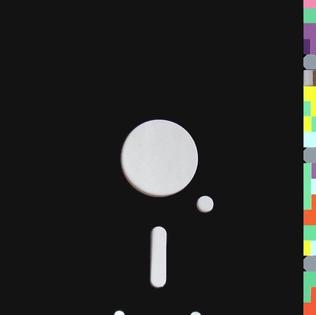
"Blue Monday" was written and produced by all four members of New Order, Bernard Sumner, Peter Hook, Stephen Morris and Gillian Gilbert, and released as a twelve-inch single on Factory Records on March 7, 1983. Built on a home-made sequencer and a drum pattern taken from a Donna Summer B-side, it became the best-selling twelve-inch single in history. Its elaborate die-cut sleeve, designed to look like a floppy disk, cost so much that early copies sold at a loss.
The machine they built by hand
"Blue Monday" was made in a grim room with new toys. "We wrote it in our horrible rehearsal room in Cheetham Hill, which had a graveyard piled up in the back of it," Bernard Sumner told NME. What excited him was the gear. "It was pre-computers, pre-MIDI, and I'd built this sequencer from an electronics kit," he said. "We programmed everything in step-time using binary code digital readouts."
The trouble was getting the machines to cooperate. "Steve had bought a drum machine, but we couldn't get the sequencer to talk to it," Sumner recalled. "Through Martin Hannett, we'd gotten to know this scientist called Martin Usher, so I took the sequencer and drum machine to him, and he designed a circuit that could make them speak to each other." The day the circuit came back was the day the song existed. "We brought the circuit in, hooked it all up and pressed 'GO' on the drum machine, then the synthesiser started chattering away, and somehow it all worked," Sumner said. Their manager did not trust it. Rob Gretton, Sumner recalled, thought "it was witchcraft. He really did!"
Sumner has never quite called the result a song. "I don't really see it as a song," he told NME. "I see it more as a machine designed to make people dance."
Stolen off a Donna Summer B-side
New Order have always been honest that "Blue Monday" was assembled from other people's records. "[T]he truth is that we were borrowing from Kraftwerk," Peter Hook told NME. "We were also inspired by people like Giorgio Moroder, Sparks, people like that." He has been even more specific about where the engine of the song came from. The drum pattern, Hook told The Guardian in 2006, "was ripped off from a Donna Summer B-side," the track "Our Love." Sumner has pointed to other borrowings too, naming "Dirty Talk" by Klein + MBO and Sylvester's "You Make Me Feel (Mighty Real)" as parts that fed into it.
Hook has never pretended it was the band's finest writing, only its most powerful record. "'Blue Monday' has a sonic impact that very, very few records have," he told NME. The band's own summary of the lyric is almost comically flat. "It was just one of those things where Barney just went for it and the rest was history," Hook told Songfacts.
The accident that made it
The detail that makes the record unmistakable, the way the melody trips slightly against the beat, was a mistake nobody fixed. Gillian Gilbert programmed the whole thing by hand, one note at a time. "The synthesizer melody is slightly out of sync with the rhythm," she told The Guardian in 2013. "This was an accident. It was my job to program the entire song from beginning to end, which had to be done manually, by inputting every note." The scale of it was absurd. "I had the sequence all written down on loads of A4 paper Sellotaped together the length of the recording studio, like a huge knitting pattern. But I accidentally left a note out, which skewed the melody."
The band's approach to the new gear was equally undignified. To learn their early sampler, Gilbert said, "Bernard and Stephen had worked out how to use it by spending hours recording farts." There was also a genuine disaster mid-session. "Steve accidentally kicked out the drum machine lead so we had to start from scratch and it was never as good," Hook told The Guardian. The version everyone knows is the rebuilt one.

The sleeve that lost money, and the argument about whether it did
The most repeated fact about "Blue Monday" is that Factory Records lost money on it, because designer Peter Saville's sleeve, die-cut to resemble a five and a quarter inch floppy disk, cost more to make than the record sold for. Asked by NME to finally confirm or kill the rumour, Peter Hook did not hesitate. "No, it's absolutely true," he said. "Factory sold it for £1, and it cost £1.10 to make because of the sleeve, which had to have three die-cuts, all individually." He remembered the celebration that was really a wake. "Tony ended up having those wonderful brass awards cut for us to celebrate 500,000 sales, when what we were actually celebrating was a loss of £50,000. That could only happen at Factory!" Hook has said elsewhere that "for two years no one spotted that the sleeves cost more to make than the records."
That is the legend, and it is at least partly true: the die-cut sleeve was expensive, and early copies sold at a loss. But the exact figures are where the story starts to wobble. Tony Wilson, Factory's boss, put the loss at just five pence per sleeve, blaming "our strange accounting system." Saville, the man who designed the thing, has grown tired of the whole tale. "I am so bored with this story," he said in one account. "We didn't even know how many of these expensive covers were ever made anyway." Factory quietly fixed the problem, replacing the die-cut areas with printed silver ink on later pressings, so the loss only ever applied to an early batch of unknown size. The band affirm the myth, the boss shrank it to pennies, and the designer suspects far fewer of the costly sleeves existed than everyone assumes. All of those can be true at once, which is very Factory.
A hit that radio could not play
"Blue Monday" succeeded by breaking the rules of how a single worked. It ran past seven minutes and came out only as a twelve-inch, so radio had nothing to play. "We actually never got any radio play off Blue Monday; it was a hit in spite of the radio," Sumner told NME. It spread through clubs instead. In the UK it charted twice in 1983, first reaching number 12, then re-entering and climbing to number 9, and it stayed on the singles chart for 38 weeks. Because Factory was not a member of the British record-industry body, the single was not even eligible for an official gold disc despite selling in the hundreds of thousands. It is, by common reckoning, the best-selling twelve-inch single in history.
When the band did try to play it on television, on the BBC's Top of the Pops, they insisted on performing live at a time when the show expected miming, and it fell apart. "Blue Monday was never the easiest song to perform, anyway, and everything went wrong," Stephen Morris said. "The synthesisers went awry. It sounded awful."
How the telling has grown over the decades
For a band famous for saying little, New Order have told this story generously, and the retellings mostly agree while drifting at the edges. Even the title has two origin stories. By one account, Stephen Morris took it from a line in Kurt Vonnegut's novel Breakfast of Champions, which reads "Goodbye Blue Monday." By Hook's account, it came from somewhere plainer. "I was reading about Fats Domino," he told The Guardian. "He had a song called Blue Monday and it was a Monday and we were all miserable so I thought, 'Oh that's quite apt.'" Both stories have been told for years, and nobody has forced them into one.
The money legend has drifted the most, from Hook's flat "it's absolutely true" and a £50,000 loss to Wilson's five pence a sleeve to Saville's weary suspicion that the whole thing is overblown. And Hook's own feeling about the song has swung back and forth. He has admitted going "through stages of intense dislike" for it, has always thought other New Order songs were better written, and once got into an onstage fight with a DJ in Nottingham over refusing to play it. What never changes is the respect. The band that lost money on their biggest record, Hook has said, ended up with something the multi-millionaires he meets do not have.
The honest bottom line
Strip away the mystique and "Blue Monday" is a patchwork: a beat stolen off a Donna Summer B-side, a melody knocked out of line by a forgotten keystroke, a title argued over, a lyric its own bass player says has nothing much behind it, wrapped in a sleeve so expensive it may have been sold at a loss. It got no radio play because it was too long and only came out as a twelve-inch. By every ordinary measure it should not have worked. Instead it became the best-selling twelve-inch single ever pressed and one of the records that taught pop how to dance to machines. The people who made it will tell you it was mostly accidents, borrowings and bad accounting. They will also tell you they would not trade it for anything. That same year, Eurythmics made Sweet Dreams under conditions just as precarious, a broken-up couple in an attic with borrowed gear, and together the two records proved that a synthesizer and a bad situation could produce something a guitar band never would.
FAQ
How was "Blue Monday" made? New Order built it in a Manchester rehearsal room using a sequencer Bernard Sumner assembled from an electronics kit, plus a drum machine. They could not get the two to communicate until a scientist named Martin Usher designed a circuit to link them. The song's slightly off-kilter melody came from Gillian Gilbert accidentally leaving a note out while programming it by hand.
Why did "Blue Monday" lose money? Its sleeve, designed by Peter Saville to look like a floppy disk, was die-cut and expensive to produce. Peter Hook has said Factory sold the single for £1 while it cost £1.10 to make, so the label lost money on early copies. The exact loss is disputed: Tony Wilson put it at five pence a sleeve, and Saville has questioned how many of the costly sleeves were ever made. Later pressings used a cheaper printed sleeve.
Who wrote "Blue Monday"? All four members of New Order, Bernard Sumner, Peter Hook, Stephen Morris and Gillian Gilbert, are credited as writers and producers. Bernard Sumner wrote the lyric and vocal.
Was "Blue Monday" copied from another song? The band say they borrowed heavily. Peter Hook has said the drum pattern was taken from a Donna Summer B-side, "Our Love," and cited Kraftwerk and Giorgio Moroder as influences. Bernard Sumner has also named "Dirty Talk" by Klein + MBO and Sylvester's "You Make Me Feel (Mighty Real)" as sources.
Where does the name "Blue Monday" come from? There are two accounts. One credits the phrase "Goodbye Blue Monday" from Kurt Vonnegut's novel Breakfast of Champions, which Stephen Morris was reading. Peter Hook has instead said it came from Fats Domino's song "Blue Monday," combined with the band simply being miserable on a Monday.
Is "Blue Monday" the best-selling 12-inch single ever? Yes, it is widely regarded as the best-selling twelve-inch single in history. It was released only as a twelve-inch in 1983, got almost no radio play because of its length, and became a hit through clubs, charting in the UK twice that year and peaking at number 9.
Sources
- NME, "New Order: How We Wrote 'Blue Monday'" (Barry Nicolson), interview with Bernard Sumner and Peter Hook, published January 22, 2015
- Songfacts, "Blue Monday" song page, including Peter Hook in The Guardian (2006) and Q, and Gillian Gilbert in The Guardian (2013)
- Wikipedia, "Blue Monday (New Order song)," for the influences, the sleeve-cost dispute, and UK chart history
- The Official Charts Company / Wikipedia, for UK chart positions and sales
How does it feel to read a telling that got verified? Find out.
Part of Stories Behind the Songs. See also In the Air Tonight and Total Eclipse of the Heart.