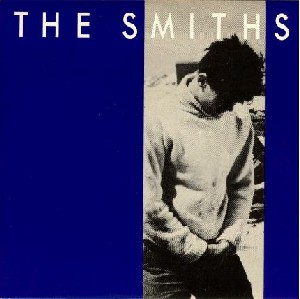
The most famous guitar sound of the British 1980s started life as a demo called "Swamp." The band's own label buried it on the B-side of a 12 inch. The men who made it still cannot agree on how many amplifiers were in the room. Forty years of interviews later, "How Soon Is Now?" has one of the best documented origin stories in 80s music, and one of the least settled.
Johnny Marr wrote "How Soon Is Now?" at Earl's Court in June 1984 during a four day run that also produced "William, It Was Really Nothing" and "Please, Please, Please, Let Me Get What I Want." His demo was called "Swamp." He and producer John Porter built the shuddering tremolo at Jam Studios in London by re-amping one guitar track, riding the tremolo speeds by hand and recording in bursts of about ten seconds. Morrissey wrote the lyric last. Rough Trade released it as a B-side.
The demo called Swamp
Marr was twenty and on a tear. Wikipedia's account of the writing, drawn from Tony Fletcher's 2013 Smiths biography, puts three songs inside one four day stretch at Earl's Court in June 1984, with the demo for this one titled "Swamp." What Marr wanted was the opposite of the jangling chord movement the Smiths were known for: one chord, F sharp, held as long as he could hold it.
The riff came out of records nobody expected from a Smiths guitarist. Marr told John Kennedy in a 2018 Radio X interview about the record that started it: "In the 70s, there was a song by Hamilton Bohannon called Disco Stomp and it was a real dumb pop record. When my mates were getting into real clever guitar stuff like Deep Purple and Led Zeppelin, I was obsessed by it. I was a real student of the guitar and I was only about 12 or something."
He followed the thread backwards. "It's really so dumb. I used to wait for it on the radio, I was obsessed with it," Marr said in the same interview. "I was kind of like, that's what a guitar should do. As I got older I realised it came from this guy called Bo Diddley, who basically invented his own beat."
The ambition for the intro was stated plainly. "I wanted an introduction that was almost as potent as 'Layla,'" Marr told Rolling Stone. "When it plays in a club or a pub, everyone knows what it is."
The night at Jam Studios
Marr recorded the basic track with Andy Rourke and Mike Joyce at Jam Studios in London in July 1984, the afternoon after a night out celebrating the previous session. Porter set microphones at varying distances from the band to get a swampy room sound, and Marr held the F sharp for as long as sixteen bars at a time. One take ran fifteen minutes and ate an entire reel.
Nobody involved has ever been coy about the conditions. "We used to smoke dope from when we got out of bed to when we got back to bed," Porter recalled in the account Fletcher assembled. Marr's version of the same fact: "You're from Manchester, you smoke weed till it comes out of your ears." Joyce remembered the studio's light bulbs being swapped for red ones.
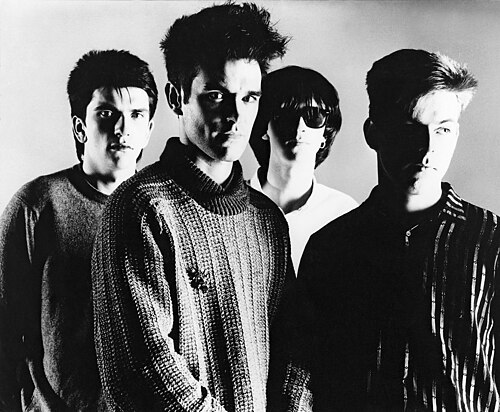
The tremolo came at the end of a long night, out of frustration rather than a plan. "It got to really late and I just wasn't digging it. It didn't have the vibe of the demo," Marr told Radio X in 2018. "I always wanted to put this tremolo effect on a track, so I thought now's my chance. I just said, right send the guitar out through the amp, and we got these amps and put the effect on it. It's so simple."
Simple to describe, brutal to execute. Marr gave the fullest account of the method to The Guitar Magazine: "I wanted it to be really, really tense and swampy, all at the same time. Layering the slide part was what gave it the real tension. The tremolo effect came from laying down a regular rhythm part with a capo at the second fret on a Les Paul, then sending that out in to the live room to four Fender Twins. John was controlling the tremolo on two of them and I was controlling the other two, and whenever they went out of sync we just had to stop the track and start all over again. It took an eternity."
The amps drifted out of phase constantly. Fletcher's account has engineer Mark Wallis rewinding the tape every time the two men lost the sync, with usable segments sometimes running no longer than ten seconds, and Porter locking the pulse by triggering a noise gate from a drum machine set to sixteenth notes to keep the whole thing in time.
The parts nobody notices
Underneath the famous throb sit three other Marr inventions. There is the wailing slide figure, which Marr said "gave it real tension," built through an early harmonizer in multiple passes at odd intervals. There is the marimba style figure after each verse, played entirely in natural harmonics at the twelfth fret on a retuned guitar. And that harmonic lick is a lift, on purpose: Wikipedia's account traces it to a synthetic vibraphone part on rapper Lovebug Starski's "You've Gotta Believe," and reports Marr meant it as a shot at critics who had written the Smiths off as 1960s revivalists. The Financial Times, in a 2018 Life of a Song column by Sam Taylor, dates the Starski record to 1982.
Marr's 1990 telling to Guitar Player laid the whole method out in one breath: "The vibrato [tremolo] sound is incredible, and it took a long time. I put down the rhythm track on an Epiphone Casino through a Fender Twin Reverb without vibrato. Then we played the track back through four old Twins, one on each side. We had to keep all the amps vibrating in time to the track and each other, so we had to keep stopping and starting the track, recording it in 10-second bursts... We did it in three passes through a harmonizer, set to some weird interval, like a sixth. There was a different harmonization for each pass. For the line in harmonics, I retuned the guitar so that I could play it all at the 12th fret with natural harmonics. It's doubled several times."
The lyric arrived last
Porter pushed a rough mix through Morrissey's letterbox that night. Morrissey turned up the next morning with a notebook of works in progress and cut the vocal, in Porter's account, in two takes.
Marr has told the moment it landed to The Guardian: "I remember when Morrissey first sang, 'I am the son and the heir...' John Porter went, 'Ah great, the elements!' Morrissey continued, '...of a shyness that is criminally vulgar.' I knew he'd hit the bullseye there and then."
The opening line is adapted from George Eliot's Middlemarch, which contains the phrase "To be born the son of a Middlemarch manufacturer, and inevitable heir to nothing in particular." The title is not in the lyric at all. It comes from Marjorie Rosen's 1973 feminist film study Popcorn Venus, a book Morrissey named as a favourite, which asks: "How immediately can we be gratified? How soon is 'now'?"
Buried on a B-side, then rescued by radio
Rough Trade boss Geoff Travis heard a nearly seven minute one chord record that sounded nothing like the band's singles, and he passed on it. "How Soon Is Now?" went out in August 1984 as a bonus track on the 12 inch of "William, It Was Really Nothing."
Porter has never hidden what he thought of that call. "I thought 'This is it!' ... but I don't think the record company liked it ... They totally threw it away, wasted it," he said in the account Fletcher gathered.
Night time British radio disagreed with the label immediately. John Peel, Janice Long and Annie Nightingale drove it up the request shows, and the track got prime placement on side one of Hatful of Hollow in November 1984. In America, Sire boss Seymour Stein called it "the Stairway To Heaven of the 80s," which is the kind of line that gets a song onto college radio without getting it onto pop radio. Sire's US push included a video the band had nothing to do with. Songfacts reports the budget was five thousand dollars and the brief from Warner video promotion chief Jeff Ayeroff to director Paula Greif was "Find some performance footage and put a girl in it."
Morrissey told Creem magazine exactly what he thought of the result: "It had absolutely nothing to do with The Smiths. Quite naturally we were swamped with letters from very distressed American friends saying, 'Why on earth did you make this foul video?' And of course it must be understood that Sire made that video, and we saw the video and we said to Sire, 'You can't possibly release this... this degrading video.' And they said, 'Well, maybe you shouldn't really be on our label.' It was quite disastrous."
What the chart actually did
Rough Trade finally issued it as a UK A-side on 28 January 1985. The Official Charts weekly tables tell a short story: it entered at number 35 on the chart dated 3 February 1985, climbed to 26 the following week, peaked at number 24 on 17 February, and was back down to 28 by 24 February. Four weeks, one Top 30 placing, for a record now routinely voted one of the greatest of the decade. A 1992 Warner reissue did better, reaching number 16.
Travis blamed promotion: "I can't understand why 'How Soon Is Now?' wasn't a top 10 single, but perhaps I'm being naive. If only their singles had been played on the radio." Porter blamed arithmetic: "Everybody knew the Smiths' fans already had it." Morrissey told Creem he was simply stunned: "It's hard to believe that 'How Soon Is Now?' was not a hit. I thought that was the one..."
It also punished the band on stage. The tremolo could not be reproduced live without the studio rig, so the Smiths mostly left it out of the set. Andy Rourke called it "the bane of The Smiths' live career."
How the telling has grown over the decades
The spine of this story has never moved: Marr's one chord demo, the re-amped tremolo, the hand riding, Morrissey's lyric arriving last. Almost every technical detail around that spine has moved, and the makers are the ones moving it.
1990, Guitar Player. Marr's earliest detailed telling. An Epiphone Casino into a Twin Reverb with the vibrato off, then played back through "four old Twins," and the slide part done in three passes through a harmonizer. He was already apologising for his memory of the slide part in this telling.
Undated, The Guitar Magazine. Marr again, and the gear has changed: a capo at the second fret on a Les Paul, out to four Fender Twins, Porter riding two and Marr riding two. Casino in one telling, Les Paul in the other, from the same guitarist.
2013, Tony Fletcher's Smiths biography. Both men interviewed at length. The count drops to three Fender Twin Reverbs, with engineer Mark Wallis rewinding the tape through the failed passes and Porter locking the pulse with a gated drum machine. Fletcher's book is also where Porter says he played one of the slide guitars, and where Marr disputes it.
2018, Radio X. Marr's telling to John Kennedy foregrounds the frustration and the Bohannon and Diddley lineage rather than the gear, and Radio X's write-up of it puts the count at two Fender Twins.
2020, Guitar World, and Porter's correction. Chris Gill's teardown described four Twin Reverbs and gave Marr the slide part. Porter then wrote to the magazine himself: "having produced, largely arranged and mixed the track I'd like to correct a few inaccuracies." His version: the rhythm track went down through a stereo Roland Jazz Chorus plus a DI with no tremolo at all, then through "a Drawmer noise gate triggered by a 16th note cowbell coming from my LinnDrum," and the amps were three, not four, "including (as Marr recalls) feeding the DI through three Twins, one of which I recall was a Blackface." On the slide: "I played the slide guitar part, which to be a little more precise was a '54 Tele (in open A tuning) through an MXR Dynacomp into an old tweed Fender Deluxe (volume 4, tone on full) then into two outboard UA 1176s." He closed with a note that reads like four decades of accumulated irritation: "I've been reading misinformation about this track ever since I did it."
So: two amps, three amps, or four. A Casino or a Les Paul. Marr on the slide or Porter on the slide. Nobody is lying. This was a very late night in July 1984 with a lot of cannabis in the room and nobody writing anything down, which Marr himself called out in 1990 as one of the banes of his life. The one number both men give consistently is the ten second burst, and that is the number that explains the record.
The honest bottom line
Strip the mythology and "How Soon Is Now?" is a one chord jam, extended past fifteen minutes by a stoned band, saved by a studio trick that its own makers cannot reconstruct, and thrown away by the label as filler on the flip of a better behaved single. It peaked at 24. It is not even representative of the band that made it. None of that has mattered for forty years, because the intro does something no amount of craft can be talked into doing, and because the lyric Morrissey wrote over it said the least fashionable thing a pop song can say out loud: I am human and I need to be loved. Marr's own verdict in 2007 stands up: possibly the Smiths' most enduring record, most people's favourite. Two years later, Robert Smith would build Just Like Heaven from a similarly personal place and a similarly borrowed guitar sound, and the two records between them hold down opposite poles of what British indie meant in the 1980s.
FAQ
What is the story behind "How Soon Is Now?" by The Smiths? Johnny Marr wrote it at Earl's Court in June 1984 as a one chord demo called "Swamp," inspired by Hamilton Bohannon and Bo Diddley. He and producer John Porter built the tremolo at Jam Studios in July by re-amping the guitar track and riding the tremolo speeds by hand in bursts of about ten seconds. Morrissey wrote the lyric after hearing a rough mix.
How did Johnny Marr make the How Soon Is Now guitar sound? He recorded a plain rhythm part with the tremolo off, then played that track back through multiple Fender Twin Reverb amps with their tremolos running at different speeds, while he and Porter adjusted them by hand. Every time the amps drifted out of sync the tape was rewound, so the finished part is assembled from very short passes.
How many amps were used on "How Soon Is Now?" The makers disagree. Marr said four old Twins in Guitar Player in 1990 and four again in The Guitar Magazine. Tony Fletcher's 2013 biography, drawing on both men, says three. Porter, writing to Guitar World in 2020, also says three, and adds that the guitar first went down through a Roland Jazz Chorus and a DI with no tremolo at all.
What is "How Soon Is Now?" about? Crippling shyness and the fear of dying alone. The opening line adapts George Eliot's Middlemarch, and the title comes from Marjorie Rosen's 1973 book Popcorn Venus, which asks "How immediately can we be gratified? How soon is 'now'?" The title phrase never appears in the lyric.
Was "How Soon Is Now?" a hit? Not at first. It went out as a B-side in August 1984, and when Rough Trade finally released it as a UK A-side it entered at 35 on 3 February 1985 and peaked at number 24 on 17 February. A 1992 reissue reached number 16. The song's reputation was built by radio play, clubs and compilations, not by its chart run.
Why did The Smiths rarely play "How Soon Is Now?" live? The tremolo effect depended on a studio rig and two people riding amp controls in real time, which could not be reproduced on stage. Andy Rourke called the song "the bane of The Smiths' live career."
Sources
- Wikipedia, "How Soon Is Now?", Origin and recording and Music and lyric sections, drawing on Tony Fletcher, "A Light That Never Goes Out" (2013), and reproducing Marr's Guitar Player interview, January 1990
- Guitar World, "The secrets behind Johnny Marr's tone on The Smiths' How Soon Is Now?", Chris Gill, 25 March 2020, including producer John Porter's written correction published in the same article
- Radio X, "This is how Johnny Marr came up with the How Soon Is Now riff", Martin O'Gorman, quoting Marr's 2018 interview with John Kennedy
- Songfacts, "How Soon Is Now? by The Smiths", quoting Marr in The Guitar Magazine, Rolling Stone and The Guardian, Morrissey in Creem, and the Sire video account
- Financial Times, Life of a Song, "The Smiths' How Soon Is Now", Sam Taylor, 7 June 2018
- Official Charts Company, UK Singles Chart weekly tables, 3, 10, 17 and 24 February 1985
How soon is now? For fact-checking, immediately.
Part of Stories Behind the Songs. See also Blue Monday and Just Like Heaven.