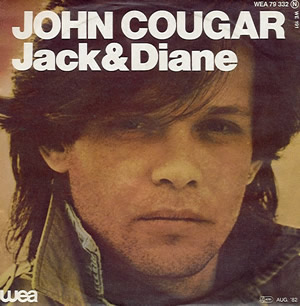
The most famous line in the song was almost never sung, because the man who wrote it had given up on the whole thing and thrown it on the junk heap. The character everyone pictures as an all-American football player was, on the first draft, a Black kid, until the record company said no. And the hand claps that carry the whole record were only ever meant to keep time, and were supposed to be erased.
"Jack & Diane" was written by John Mellencamp for his 1982 album American Fool. The original version was about an interracial couple, which his label pushed him to change. He nearly abandoned the song until ex-David Bowie guitarist Mick Ronson rescued the arrangement, adding baby-rattle percussion and the "let it rock, let it roll" chant. Released under the name John Cougar, it hit number one on the Billboard Hot 100 on October 2, 1982 and stayed there four weeks, the only number one of Mellencamp's career.
The song was about race, until it wasn't
The two teenagers in the heartland's favorite coming-of-age anthem did not start out that way. Mellencamp has said the spark was the interracial couples he kept noticing while touring the country, and in the first draft Jack was not a football star at all.
He told the whole sequence to the Huffington Post in 2014: "Originally the line was Jack was not a football star, Jack was an African-American. In 1982, when I turned the song in to the record company, they went, 'Whoa, can't you make him something other than that?' I said, 'Well, I don't really want to. I mean, that's the whole point. This is really a song about race relationships and a white girl being with a black guy, and that's what the song's about.' And they said, 'No, no, no, no.'"
He was young, and he lost the argument. In his words, "through much debate and me being young, I said, 'Okay, we'll make him a football star'." With the race angle stripped out, he rebuilt the lyric around what he knew: growing up in Seymour, Indiana, Tastee-Freez, James Dean, and the film of Tennessee Williams' Sweet Bird of Youth. The song stopped being about a specific hard thing and became about the universal one, holding on to sixteen while life goes on long after the thrill of living is gone.
The record its own writer hated
Mellencamp has never pretended the recording came easy. The opposite. "'Jack & Diane' was a terrible record to make," he said in a 2008 Classic Rock interview. "When I play it on guitar by myself, it sounds great; but I could never get the band to play along with me. That's why the arrangement's so weird. Stopping and starting, it's not very musical."
Producer Don Gehman had a blueprint for fixing that weirdness. He told Sound on Sound in 2011 that they were chasing a specific model: "one of our models for 'Jack & Diane' was Phil Collins' 'In the Air Tonight'. John came in one day and, after he sat down and played it, he said, 'This is what I want to create. I want to have a couple of verses that sound like a little folk song and then I want the big, bombastic entrance of some drums, and we'll take it to a whole new place.'" Drummer Kenny Aronoff knew what to hit, but nobody in the room knew how to make it sound as huge as Mellencamp wanted. Even the hand claps that became the song's signature were an accident of necessity: they were put down only to help the band keep time and were meant to be wiped from the final mix, and Mellencamp left them in when he realized the song fell apart without them.
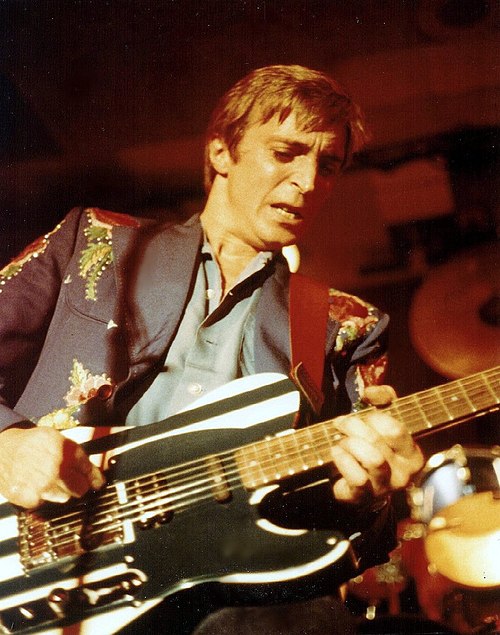
The Spider from Mars who saved it
The rescue came from an unlikely visitor. Mick Ronson, the guitarist who had defined the sound of David Bowie's Ziggy Stardust and the Spiders from Mars, came through Criteria Studios in Miami while Mellencamp and Gehman were stuck. Ronson showed Gehman how to put a gated-echo effect on the drums, the same trick Hugh Padgham had used on that Phil Collins record. Then he went further.
Mellencamp has been blunt about the debt for years. "I owe Mick Ronson the hit song 'Jack & Diane'," he said in 2008. "Mick was very instrumental in helping me arrange that song, as I'd thrown it on the junk heap." The specific idea that made the record was pure Ronson: "Mick said, 'Johnny, you should put baby rattles on there.'" Mellencamp thought it was nonsense. Ronson was right. "So he put the percussion on there and then he sang the part, 'Let it rock, let it roll' as a choir-ish-type thing, which had never occurred to me. And that is the part everybody remembers on the song. It was Ronson's idea." Ronson went uncredited on the record. Mellencamp has spent decades making sure everyone knows anyway.
The video nobody wanted to pay for
Even after the arrangement clicked, the label did not believe in the song. The video only exists because a crew took pity on it. Paul Flattery, whose company had been hired to shoot the album's other singles, recounted the ask in the book I Want My MTV: "there's a song on the album the label doesn't believe in. But I do. Can you do me a favor and save one roll of film, shoot me singing the song, I'll give you some old photos and stuff and then you cobble it together for me?" So they improvised, using Mellencamp's actual high-school photos and home movies. As Flattery put it, "we had the tape-op wear white gloves to do the clapping. We didn't charge John a cent." That cobbled-together clip went into heavy rotation on the young MTV, and the song the label had written off skyrocketed, the kind of accidental heartland anthem an all-80s stream from the Bubble was built to keep alive.
How the telling has grown over the decades
The Jack and Diane story is unusual in that its most important detail arrived last. For years Mellencamp told the studio version of the tale, and the race origin stayed private until well into the 2010s.
In 2008, across a Classic Rock interview and a talk with The Sun, the story was about the making: the "terrible record," the junk heap, and above all Mick Ronson and the baby rattles. That same year he gave The Sun his warm-weary verdict on the two characters who defined him: "As much as I am a little weary of those two, I don't know any other two people in rock and roll who are more popular than Jack and Diane," adding, "that's what Jack and Diane gave me, so I can't hate them too much."
In 2011, producer Don Gehman filled in the technical spine for Sound on Sound: the Phil Collins model, the folk-verse-into-bombast plan.
In 2014, Mellencamp finally told the Huffington Post the origin he had left out for thirty years, that Jack was written Black and the label made him change it. That is the honest drift in this story: not a contradiction between tellings, but a piece of the truth that only surfaced once the singer was old enough and safe enough to say it out loud.
And in his reflective mode for Rolling Stone, the meaning landed where he always wanted it: "I think people, particularly in the Midwest, really identified with these characters. I can't tell you how many people have come up to me and said, 'I'm Jack and I'm Diane. You wrote about my life.' To me, that's a successful song."
The honest bottom line
Strip the nostalgia off and "Jack & Diane" is a compromised song its own author disowned mid-recording: the sharp idea about race sanded down at a label's request, an arrangement so awkward Mellencamp could not get his band to play it, and a hit hook handed to him by a guest guitarist who never got a credit. It should not have worked. It became the only number one he ever had and the song he is most identified with, because the compromises accidentally made it universal, and because Ronson's baby rattles and that "let it rock, let it roll" chant turned a folk sketch into a chant a whole country could shout back. Mellencamp is right to be a little weary of those two kids. He is also right that he cannot hate them.
FAQ
What is the story behind "Jack and Diane" by John Mellencamp? Mellencamp wrote it for his 1982 album American Fool. It began as a song about an interracial couple, which his label made him change, so he reworked it into a small-town coming-of-age story. He nearly gave up on the recording until Mick Ronson rescued the arrangement, and it became his only number one.
Is "Jack and Diane" about real people? No specific real couple. Mellencamp drew on his own upbringing in Seymour, Indiana and on the film of Tennessee Williams' Sweet Bird of Youth. He has said the characters resonated because listeners, especially in the Midwest, saw their own teenage lives in them.
Who wrote and produced "Jack and Diane"? John Mellencamp wrote it and co-produced it with Don Gehman at Criteria Studios in Miami. Guitarist Mick Ronson, formerly of David Bowie's band, contributed the arrangement idea, the baby-rattle percussion, and the "let it rock, let it roll" vocal part, though he went uncredited.
What did Mick Ronson do on "Jack and Diane"? A lot. Mellencamp said in 2008, "I owe Mick Ronson the hit song 'Jack & Diane'." Ronson showed the producer how to get a huge gated drum sound, suggested adding baby rattles for percussion, and sang the "let it rock, let it roll" chant that everyone remembers.
Did "Jack and Diane" reach number one? Yes. Released under the name John Cougar, it hit number one on the Billboard Hot 100 for the week of October 2, 1982 and stayed there four weeks. It is the only number one single of Mellencamp's career.
Was "Jack and Diane" originally about a Black man? Yes. Mellencamp told the Huffington Post in 2014 that Jack was originally African American, not a football star, and that his record company pushed him to change it in 1982.
Sources
- Wikipedia, "Jack & Diane," for personnel, recording location, and chart positions
- Ultimate Classic Rock, "'Jack and Diane' Hit No. 1, But Did John Mellencamp Even Like It?," October 2017, collecting the dated Mellencamp and Gehman quotes
- John Mellencamp, Classic Rock magazine interview, 2008 (the "terrible record" and Mick Ronson quotes)
- John Mellencamp, The Sun, October 10, 2008 (the "weary of those two" reflection)
- Don Gehman, Sound on Sound, 2011 (the Phil Collins model)
- John Mellencamp, Huffington Post, 2014 (the interracial-couple origin)
- Paul Flattery, in I Want My MTV by Craig Marks and Rob Tannenbaum, on the video shoot
- Songfacts, "Jack & Diane by John Mellencamp"
- Billboard Hot 100, week of October 2, 1982
A little ditty about two guys who check everything.
Part of Stories Behind the Songs. See also In the Air Tonight and Summer of 69.