Two men in Los Angeles could not give this song away. The title was the problem, and everybody in the business said so. The bassline that finally cracked it was a joke a frustrated musician played on himself, in a falsetto he had spent his whole career hiding.
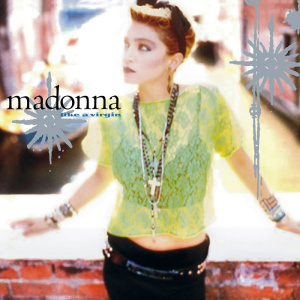
"Like a Virgin" was written in 1983 by lyricist Billy Steinberg and composer Tom Kelly, before Madonna had a top ten hit. Steinberg wrote the words about falling in love after a wrecked relationship. Kelly cracked the music by clowning around in a Smokey Robinson falsetto over a Motown bassline. Nobody would take the song for a year. It reached number one on December 22, 1984, and held six weeks.
The lyric came first, and it was not about sex
Steinberg wrote lyrics before there was any music, every time. "Every hit that Tom and I wrote, all the biggest hits, were always lyrics first," he said in a 2012 interview quoted by Variety in February 2026. "I started out writing music to my own poetry, so that became a process for me where I would write the lyrics, and then write the music to the lyrics."
The words to this one came out of his own wreckage. "I used to work at my father's farming operation growing grapes, and I had been in this really difficult relationship," he told Ones To Watch in 2019. "I finally emerged from that relationship, and I met somebody new, and fell in love."
He has described the writing itself as something close to automatic. "I always wrote my song lyrics in a sort of a stream of consciousness," he told Songwriting Magazine in 2025. "I just get out my pen and my pad of paper and I just start writing." What came out was the opening most people can still recite: "I made it through the wilderness / somehow I made it through / I didn't know how lost I was until I found you."
The title arrived last and sideways. "So the title really came out of the 'shiny and new,'" Steinberg told Songwriting Magazine. "'Shiny and new, like a virgin,' I don't know, it just popped out. So I also thought as soon as I wrote that, 'Wow, this is a cool song lyric.'"
Then he took the page to his partner. "And then when I got together with Tom, I placed that typed lyric on his keyboard and I said, 'Let's write this song.'" He had nothing else to offer. "I had no melody in mind at all."
Tom Kelly tried to write a ballad, and it kept dying
Kelly read the lyric the way a friend reads it, not the way a producer does. He knew exactly what Steinberg had been through, and he was going through his own bad stretch. "I especially related to the lyric at the time, since I was going through a tough divorce," Kelly told SongwriterUniverse in 2013.
So he treated it as a sincere song, which is what it looked like on paper. "Initially, I tried to compose a ballad or midtempo song to accompany the lyric, but it wasn't working," Kelly said in the same interview.
Steinberg watched it fail from across the room and knew why. "He read that and he was more focused on that than he was on the title. So he started playing it sort of like a ballad," he told Songwriting Magazine. "And I kept saying 'That's not going to work, Tom,' because I knew that 'like a virgin' was not going to sing very well as a ballad." In the 2019 telling he put it more bluntly: "But when it got to the chorus, and the line, 'Like A Virgin,' came up, it always sounded ridiculous."
They kept at it over multiple sessions. "For Tom and me, we spent a lot of time writing that song because, with a lyric like that, you've got to find the right approach [or] it doesn't sound right at all," Steinberg said. "So it took some experimentation."
The joke that became the record
What broke it was Kelly giving up. "Out of frustration, I started to clown around, performing the song in an uptempo, Smokey Robinson-style, with falsetto vocals," Kelly told SongwriterUniverse. "Lo and behold, it worked."
Steinberg heard it land the second it started. "Out of just frustration, Tom started to fool around playing a bass line that sounded something like I Can't Help Myself or Billie Jean, and he started singing falsetto," he told Songwriting Magazine. "And I just said, 'That is it right there, that's Like A Virgin.'"
Kelly did not want to sing it. He had a reputation to lose. "He just was taken aback because Tom was quite well-known as a singer in Los Angeles," Steinberg said in the same interview. "He was a session singer, and he was known for this powerful high-range rock voice. And he had never exposed this falsetto-type singing in the music industry, so he was a little like, 'You mean you want me to actually commit to this falsetto singing kind of thing?' And I said, 'Yeah, that sounds great.'"
The models were explicit. "I would say the song was influenced to a certain degree by 'I Can't Help Myself' by The Four Tops or 'Billie Jean' by Michael Jackson," Steinberg told Ones To Watch. "They have similar basslines to 'Like A Virgin.'"
The demo took almost nothing. "I had just purchased a Roland Jupiter 8 keyboard," Kelly told SongwriterUniverse. "We used the Jupiter 8 to create the main keyboard and bass tracks. For the drum track, we used an old Linn drum computer. We demoed the song quickly, and kept it simple. I sang the falsetto in a Smokey-style voice, then we added some background vocal parts." Steinberg's summary of the philosophy, to Ones To Watch: "if you have a great song you don't need an elaborate demo."
The year nobody would touch it
They were proud of it. The industry was not. "We tried to place 'Like A Virgin,' but everyone looked at us like we were nuts," Steinberg told SongwriterUniverse. "Some people even asked us to change the title."
Kelly, speaking to Billboard in February 2026 after Steinberg's death, put a clock on the rejection: "We shopped it for at least a year. Nobody wanted to touch it. Anything goes now in 2026, but in 1983, the word 'virgin' was kind of taboo."
The note was always the same. "A lot of people just said, 'You're going to have to change that title, you can't be serious,'" Steinberg told Songwriting Magazine. He refused, and his reasoning was not commercial. "I remembered how I felt when I wrote the lyric, that it had authenticity. That it wasn't a gimmick. That it came out of a real-life experience and that it was sincere." His verdict: "I just thought, 'I'm not going to change the title. That's the whole core of the thing.'"
The meeting with Michael Ostin
The song reached Madonna through Michael Ostin, then a senior A&R executive at Warner Bros. Records. The two writers went in pitching rock songs, positioning themselves as artists, and played the odd one last.
"We were nervous about playing 'Virgin' for Ostin, but at the end of the meeting we finally played it," Kelly told SongwriterUniverse. "When he heard it, he flipped over the song. He said it would be great for his artist Madonna to record."
Steinberg tells the same meeting with the ask coming from Ostin's side: "Tom and I had a meeting with a guy called Michael Ostin, a prominent A&R guy at Warner Brothers, and he mentioned that he needed songs for Madonna," he told Ones To Watch. Kelly's 2026 telling to Billboard is blunter still. "Towards the end, he [asked], 'You have anything for Madonna?' I didn't even know who she was, honestly. He said it's perfect for her because she had that risqué image. The rest is history."
Steinberg did know who she was, by an accident of domestic life. "I don't think Tom knew who Madonna was at that time, but I did because my girlfriend taught aerobics classes and used a Madonna song called 'Burning Up' in her class," he told Ones To Watch. "This was before 'Holiday' or 'Borderline' had been hits."
The producer did not like it either
Nile Rodgers produced the record and initially did not want it. Quoted in Fred Bronson's The Billboard Book of Number 1 Hits, Rodgers said the hook would not leave him alone even while he was rejecting it: "I couldn't get it out of my head after I played it, even though I didn't really like it," and then, "it grew on me. I really started to like it." His argument for cutting it, in the same account, was pure arithmetic: "if it's so catchy that it stayed in my head for four days, it must be something."
What Madonna did with the demo still delights Steinberg in every telling. She followed it almost literally. "At the end of the song when the melody changes, all of that is Tom, and she copied every single note," he told Ones To Watch. "But also, one of the things I did was add 'hey!' and she even incorporated that little punctuation, so she clearly studied our demo carefully."
The record went out as the lead single from the "Like a Virgin" album on October 31, 1984.
What the chart actually did
"Like a Virgin" debuted on the Billboard Hot 100 at number 48 on November 17, 1984. Six weeks later, on the chart dated December 22, 1984, it went to number one from number three. It stayed there through the January 26, 1985 chart, six weeks in all, and was knocked off on February 2, 1985 by Foreigner's "I Want to Know What Love Is." It was the first of five Hot 100 number ones Steinberg and Kelly wrote together over five years.
How the telling has grown over the decades
The spine of this story has never moved: lyric first, ballad attempts, frustrated falsetto, a year of rejection, Ostin. The details around it drift in ways worth naming.
- 2012 (quoted by Variety, 2026): Steinberg gives the compressed version, with the ballad instinct and the Motown bassline breakthrough, and the line "That's it!"
- December 2013 (SongwriterUniverse): the only telling that puts a vehicle in it. "I was driving around in my pickup truck and I got the idea for the song." This is also the only place Kelly mentions his own divorce, and the only one with the gear list: Jupiter 8 and Linn drum machine.
- January 2019 (Ones To Watch): Steinberg relocates the origin to his working life, at his father's grape farming operation in the Coachella Valley, with no truck mentioned. He also names the two basslines behind Kelly's and supplies the ad-lib detail, the "hey!" Madonna copied.
- October 2025 (Songwriting Magazine): the longest first-person account. No truck, no farm, just pen and paper and stream of consciousness. New here: Kelly's reluctance to be heard in falsetto, and the fact that they had already written "Alone" before this.
- February 2026 (Billboard): Kelly, speaking after Steinberg's death, sharpens the Ostin meeting into a question from Ostin and adds that he had no idea who Madonna was.
The honest gaps: the pickup truck and the vineyard are not the same scene, and the 2025 telling gives neither. Who raised Madonna's name in the Ostin meeting depends on who is talking, Kelly saying Ostin flipped over the song and named her, Steinberg and later Kelly saying Ostin came in already needing songs for her. None of this is contradiction on the load-bearing facts. It is what forty years of retelling does to the small stuff.
The honest bottom line
Strip the affection away and "Like a Virgin" is a work-for-hire pop song, built to a Motown template by two men who had failed at it as a ballad, sold to a singer neither of them had really heard of, and named with a word that was mostly a marketing problem until it became a marketing weapon. Steinberg himself would not call it timeless. "I think 'Like A Virgin' has stood the test of time as an iconic song rather than timeless," he told Ones To Watch. Five years later Madonna would revisit the same collision of personal exposure and public outrage with Like a Prayer, but the blueprint was here. The reason it holds up anyway is the thing nobody in the rejection year could hear: the lyric is sincere. A man wrote down what it felt like to be undamaged again, and a joke falsetto made it dance. Billy Steinberg died in February 2026 after a long battle with cancer, his attorney told Variety, and he spent four decades patiently explaining that his most notorious title was the least cynical thing about it.
FAQ
What is the story behind "Like a Virgin"? Billy Steinberg wrote the lyric in 1983 about falling in love after coming out of a devastating relationship. Tom Kelly tried to set it as a ballad, failed, and out of frustration started playing a Motown bassline in falsetto. That version was the song. They then spent about a year unable to place it because of the title.
Who wrote "Like a Virgin"? Billy Steinberg wrote the lyric and Tom Kelly wrote the music. Madonna did not write it. Nile Rodgers produced her recording.
Is "Like a Virgin" about sex? Not in Steinberg's account. He has said for decades that the title came out of the phrase "shiny and new" in his lyric, and described the song as being about feeling renewed by a new love after a bad relationship.
Why did nobody want "Like a Virgin"? The title. "We shopped it for at least a year. Nobody wanted to touch it," Tom Kelly told Billboard in 2026. "In 1983, the word 'virgin' was kind of taboo." Steinberg was repeatedly asked to change it and refused.
How did Madonna get the song? Warner Bros. A&R executive Michael Ostin heard it at the end of a meeting where Steinberg and Kelly had been pitching rock songs, and connected it to Madonna, who was not yet a major artist.
How long was "Like a Virgin" number one? Six weeks. It topped the Billboard Hot 100 on the chart dated December 22, 1984 and held the spot through January 26, 1985, when Foreigner's "I Want to Know What Love Is" replaced it.
Sources
- SongwriterUniverse, "Billy Steinberg & Tom Kelly, Writing Madonna's Hit 'Like A Virgin'," December 4, 2013
- Ones To Watch, "Iconic Songwriter Billy Steinberg Deconstructs Madonna's 'Like A Virgin' [Anatomy of a Song]," Anna Scholfield, January 3, 2019
- Songwriting Magazine, "How we wrote Madonna's 'Like A Virgin' by Billy Steinberg," October 31, 2025
- Billboard, "After Billy Steinberg's Death, Co-Writer Tom Kelly On Their Five Hot 100 No. 1s Including Madonna's 'Like a Virgin'," February 17, 2026
- Variety, "Billy Steinberg, Songwriter Who Co-Wrote Smashes Including 'Like a Virgin,' 'True Colors,' 'Eternal Flame' and 'So Emotional,' Dies," February 16, 2026
- Nile Rodgers quotes as published in Fred Bronson, The Billboard Book of Number 1 Hits (2003), p. 600, cited in the Wikipedia article on the song
- Billboard Hot 100 weekly charts, December 22 1984, January 26 1985, February 2 1985
Touched for the very first time by actual sourcing.
Part of Stories Behind the Songs. See also Eternal Flame and Billie Jean.