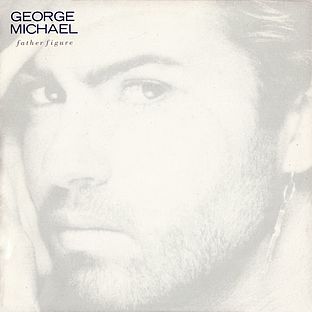
It was supposed to be a dance record. It sounded, by its writer's own description, a bit like Prince. Then he pulled down one fader to hear something buried underneath, the backbeat vanished, and the song turned into the slow, cavernous thing that went to number one in America. He was still writing the lyrics at the microphone when it happened. George Michael told this story twice, eighteen years apart, and told it the same way both times.
"Father Figure" was written and built in the studio during the 1987 sessions for Faith. George Michael intended a mid-tempo dance track, and while mixing he cut the snare out of the board to hear something else. The song immediately became slow and dreamy, and he rewrote the rest of the track around that sound. It reached number one on the Billboard Hot 100 for two weeks in February and March 1988.
The fader that made the record
The clearest telling comes from Michael himself, given to Fred Bronson for The Billboard Book of Number One Hits.
"The initial concept was completely different from the way the song turned out," Michael said. "In fact, the intial concept for 'Father Figure' was to make it a kind of mid-tempo dance track. And what happened was I wanted to hear something in my mix so I happened to cut out the snare on the board and suddenly it changed the whole entire mood of the track."
The important part is what he did next, which was nothing clever. He listened. "Suddenly it just seemed really dreamy. And this was halfway through writing it... because I was writing the song as I was going along in the studio. And I just thought, well, hey, this is actually much better! So I worked the rest of the feel of the track around this kind of spacey type sound. And it ended up, in my mind, being the most original sounding thing on the album."
Two things are worth sitting with. The accident happened halfway through the writing, not after, so the lyric and melody that exist are the ones written to fit the accident. And the man who made it rated it as the most original thing on an album that produced four American number ones.
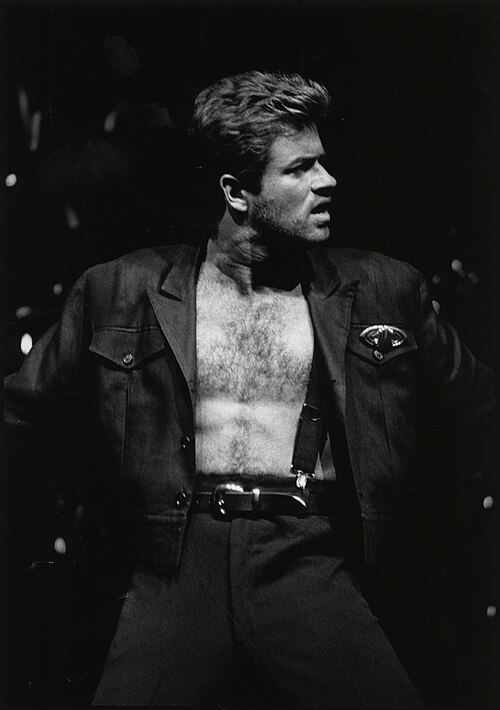
What it sounded like before
In 2010, talking to DJ Mark Goodier for the liner notes of the Faith: Legacy Edition reissue, Michael described the version nobody has heard.
"Do you know what's interesting about the making of that song? It started off with a rhythm track with a snare, and when you play it like that it sounds a bit like Prince," he said. "But I must have been listening to it without the snare and gone, 'Oh my God, that totally changes the record!' It suddenly becomes a gospel record."
That is a precise piece of musical description. Put a snare on beats two and four and the track is a mid-eighties funk arrangement. Take the snare away and the same chords, the same tempo and the same vocal become devotional. On the finished record the backbeat is carried by finger snaps, which is why the song feels like it is being sung in a large empty room.
Michael also drew a general lesson from it, in the same 2010 conversation, and it explains a lot about how he worked. "A couple of things in my career have been a complete accident, where I stumbled upon the sound," he told Goodier. "I know when something resonates, and one of my saving graces is that I can hear something when I stumble upon it. When I'm actually going for something else, on the way to a different sound, I have the ability to stop and say, 'No. Actually, that's much better.' It's tiny little things like that that make a record, I think."
The engineer's version: why the song could be built that way
For a song to change shape halfway through being written, the writing has to still be happening in the room. Chris Porter, Michael's engineer from "Wham Rap" onward, described exactly that process to Sound on Sound in March 2013.
"For this and his subsequent albums, George actually wrote the lyrics in front of the microphone," Porter said. "I would start recording, he'd sing a line and then he'd say, 'OK, stop a second. Play that back... Can you drop me in for the word 'the'?' This would be the first time I'd heard the lyric and the first time he'd sung it, and that's how we would build the whole song."
That method put an unusual demand on the sound. Michael would not write to a rough monitor mix. "George didn't want just a rough balance to sing to; he wanted to hear exactly how it would sound on the record, with or without delays, dry or with reverb," Porter said. "When he sang to that, if a word didn't have the right consonance or resonance, he'd change the word so that it matched what he wanted to say while also ringing true with the music."
Porter named "Father Figure" specifically as the hardest case of this. "For instance, on 'Father Figure', the delay... the slight DDL and the reverb all had to be perfect before he began singing and writing the lyrics," he said. "Then he might finish for the night and, when he came back to it a couple of days later, it had to sound exactly the same in his headphones so he could continue working on it... exactly the same delay, exactly the same quality of delay."
So the vocal effect on "Father Figure" is not a mixing decision applied at the end. It is part of the writing instrument. The words exist because they sounded right through that specific delay, in those headphones, on those nights.
Porter's kit list for the era is on the record too: an AMS delay of about 30 milliseconds panned slightly left and 45 milliseconds slightly right, a Lexicon 224 for the high-frequency reverb pings, an AMS RMX16, and a Neumann M49 microphone at Puk Studios in Denmark that Porter later bought and kept using.
What the song is about, and what the record actually says
The lyric names nobody. Michael wrote it before he was publicly out, and the video he co-directed with Andy Morahan cast model Tania Coleridge as the love interest, which framed the song as heterosexual for the audience that saw it first. That video won Best Direction at the 1988 MTV Video Music Awards.
People have argued about the subject of the lyric for nearly forty years, and Songfacts' comment threads are a monument to that argument. Michael did not settle it. This piece will not settle it either. What is documented is how the record was made, and that story is unusually well attested by the two people who made it.
Where it went
"Father Figure" entered the Billboard Hot 100 on the chart dated January 16, 1988. It reached number one on the chart dated February 27, 1988, jumping from number 4, and held the top spot for a second week on March 5. On the chart dated March 12 it slipped to number 2, displaced by Rick Astley's "Never Gonna Give You Up."
It was the third of four American number ones from Faith, alongside the title track, "One More Try" and "Monkey."
How the telling has grown over the decades
- 1992, The Billboard Book of Number One Hits. Michael gives Fred Bronson the mechanical account: intended as mid-tempo dance, snare cut on the board to hear something else, mood changed, rest of the track rebuilt around it, written as he went.
- 2010, Faith: Legacy Edition liner notes. Talking to Mark Goodier, Michael adds the before-and-after description. With the snare it sounded like Prince. Without it, it became a gospel record. He also generalizes the lesson about recognizing an accident when he hears one.
- March 2013, Sound on Sound. Chris Porter supplies the missing half: how Michael wrote lyrics live at the microphone, why the headphone mix had to be identical across nights, and the specific delay and reverb chain that made "Father Figure" possible.
The tellings do not contradict each other, which is rarer than it sounds. What does drift is the wording of the Bronson quote itself. The version archived at George Michael Forever reads "Suddenly it just seemed really dreamy" and "this kind of spacey type sound." MusicRadar's 2025 rendering of the same book passage drops two of those words. That is a small thing, and it is exactly the kind of small thing that turns into a different sentence after another twenty years of copying. The version quoted above is the one from the archive, verbatim, including its original typo.
The honest bottom line
The most atmospheric record George Michael ever made owes its atmosphere to a fader he moved for an unrelated reason. That is not a flattering origin, and he never dressed it up: he called it an accident both times he told it. What the story actually proves is the thing that is hard to teach, which he named himself, the ability to stop on the way to something else and admit that the wrong turn was better. Every other detail of that record was controlled to an obsessive degree, down to identical headphone delays across separate nights. The one thing nobody planned is the reason it still sounds like nothing around it. That same year, Rick Astley proved the point from the opposite direction with Never Gonna Give You Up, a record where the production team set each variable and the result sounded exactly like the system that built it, which is the distance between a studio and a factory in one chart week.
FAQ
What is the story behind "Father Figure" by George Michael? Michael was building it as a mid-tempo dance track during the Faith sessions. While mixing, he cut the snare out of the board to hear something else, the whole mood turned slow and dreamy, and he rewrote the rest of the track around that sound while still writing the lyrics.
Was "Father Figure" a mistake? The sound of it was an accident, by Michael's own repeated account. He described it as a moment where he stumbled on a sound while going for something else and recognized it was better.
What did "Father Figure" sound like originally? Like Prince, according to Michael. "It started off with a rhythm track with a snare, and when you play it like that it sounds a bit like Prince," he said in 2010. Without the snare, "it suddenly becomes a gospel record."
Who engineered "Father Figure"? Chris Porter, who had worked with Michael since Wham!. Porter has described how Michael wrote lyrics standing at the microphone, one line at a time, with the delay and reverb set exactly as they would appear on the finished record.
Did "Father Figure" reach number one? Yes. It topped the Billboard Hot 100 for two weeks, on the charts dated February 27 and March 5, 1988, after entering the chart on January 16, 1988.
What is "Father Figure" about? The lyric does not name its subject and Michael never specified one. The song was written before he was publicly out, and the video he co-directed cast a woman as the love interest.
Sources
- George Michael Forever, "How George Michael's Father Figure Accidentally Became a Slow Tempo Song," quoting Michael to Fred Bronson in The Billboard Book of Number One Hits
- MusicRadar, "How George Michael accidentally created the '80s smash that inspired Taylor Swift," October 3, 2025, quoting Michael's 2010 interview with Mark Goodier for the Faith: Legacy Edition liner notes
- Sound on Sound, "Classic Tracks: George Michael Faith," March 2013, interview with engineer Chris Porter
- Songfacts, "Father Figure by George Michael," for the video credits and the 1988 MTV Video Music Award
- Billboard Hot 100 weekly charts dated February 27, March 5 and March 12, 1988
George deserves the careful version, we insist on it.
Part of Stories Behind the Songs. See also Never Gonna Give You Up and Wake Me Up Before You Go-Go.