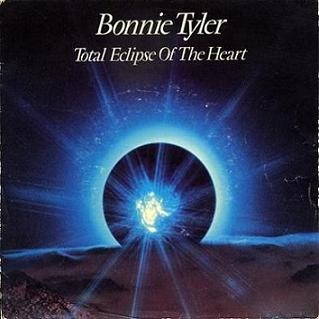
The biggest love ballad of 1983 was written to be a vampire song. It started as a piece of an abandoned musical about Nosferatu, carried a refrain lifted from a show its writer had staged as a student in 1969, and was recorded by a Welsh singer with a voice reshaped by throat surgery. Jim Steinman kept explaining the strange truth of "Total Eclipse of the Heart" for decades, Bonnie Tyler told her side across three of them, and the two accounts only fully make sense side by side.
"Total Eclipse of the Heart" was written by Jim Steinman, who conceived it as a vampire love song titled "Vampires in Love" for an unfinished Nosferatu stage musical. Bonnie Tyler, chasing a comeback after a career lull, sought Steinman out because of his Meat Loaf work. Released in 1983 as the lead single from Faster Than the Speed of Night, it reached number one on the Billboard Hot 100 on October 1, 1983, and held for four weeks.
The singer went looking for the writer
By the early 1980s Tyler needed a hit. Her voice, roughened permanently after surgery on her vocal cords, had already carried "It's a Heartache," but the follow-ups had faded. She had one producer in mind, and she had seen exactly where. "I'd seen Meat Loaf on the BBC's Old Grey Whistle Test doing Bat Out of Hell, so I told Muff Winwood at Sony that I wanted to work with Jim Steinman," Tyler told The Guardian in 2023, at the song's 40th anniversary. "Muff looked at me like I was barmy and told me that Jim would never do it. 'I just want you to ask him,' I said."
Steinman, the composer behind Meat Loaf's operatic Bat Out of Hell, said yes. What he handed her was not a fresh idea. It was a song he had been circling for years.
The song was a vampire song first
Here is the detail that surprises everyone who learns it. The soaring pop ballad about longing was drafted as something gothic. Steinman spelled it out in a 2002 interview with Playbill, the year his vampire stage musical Dance of the Vampires reached Broadway carrying the song inside it. "But with Total Eclipse of the Heart, I was trying to come up with a love song and I remembered I actually wrote that to be a vampire love song. Its original title was Vampires in Love because I was working on a musical of Nosferatu, the other great vampire story."
He insisted the clues were sitting in plain sight. "If anyone listens to the lyrics, they're really like vampire lines. It's all about the darkness, the power of darkness and love's place in [the] dark. And so I figured 'Who's ever going to know; it's Vienna!' And then it was just hard to take it out." The reprieve into Dance of the Vampires was, by his own account, almost casual: "That was an accident almost. I'm surprised it stayed in... I had only a month and a half to write this whole show and we needed a big love duet."
The parts came from other places
The song was assembled from spare parts of Steinman's own past. The "turn around, bright eyes" refrain that anchors the chorus, sung on the record by backing vocalist Rory Dodd, was pulled from a musical Steinman had written back in 1969, according to The Independent. That refrain, in its first life, had nothing to do with romance at all.
Tyler, for her part, sang it like she meant every second. 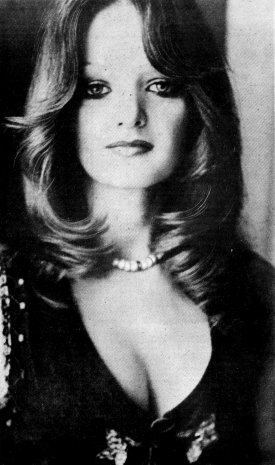
She has said the vocal cost her something real. "Around the time we were recording, Meat Loaf had lost his voice, and after it was a hit he always used to say: 'Dang. That song should have been mine!' I poured my heart out singing it," she told The Guardian in 2023.
The video nobody could explain
The single ran nearly seven minutes on the album and was cut down to roughly four for radio, per The Independent. The video, directed by Russell Mulcahy, became its own legend: an old boarding school full of glowing-eyed boys, doves, wind machines, and imagery so surreal that the singer at its center gave up trying to account for it. "Thirty-nine years on and I still can't explain [the video]," Tyler tweeted in 2022. The shoot itself unsettled her. "We shot the video in a frightening gothic former asylum in Surrey. The guard dogs wouldn't set foot in the rooms downstairs where they used to give people electric shock treatment," she told The Guardian.
What it became
On the Billboard Hot 100 dated October 1, 1983, "Total Eclipse of the Heart" moved from number two to number one. The weekly tables show it holding the top spot through October 22, before Kenny Rogers and Dolly Parton's "Islands in the Stream" took over on October 29. Four weeks at number one, off a song its writer had first sketched as the love theme for a monster.
How the telling has grown over the decades
The story arrived in pieces, from two people, over forty years. Steinman's 2002 Playbill interview is where the vampire origin went public, timed to the Broadway run of Dance of the Vampires, where the song lived on as "Totale Finsternis." Tyler's tellings ran on a separate track and filled in the human side: a 2014 account of how the song came to her rather than to Meat Loaf, a 2022 tweet throwing up her hands at the video, and the full 40th-anniversary sit-down with The Guardian in 2023 that supplied the Muff Winwood exchange and the haunted asylum. By 2025 and 2026, retrospectives in Classic Rock and The Independent were stitching the two accounts together into one arc.
The tellings do not perfectly agree, and the honest move is to say where. The sharpest disagreement is over who the song was for. Meat Loaf claimed it was written for him. Tyler consistently said otherwise. "Meat Loaf was apparently very annoyed that Jim gave [the song] to me," she said in 2014, as reported by The Independent. "But Jim said he didn't write it for Meat Loaf, that he only finished it after meeting me." A smaller drift sits in the paperwork: Classic Rock names the 1969 student musical that seeded the song The Dream Engine, while The Independent calls it The Dream Machine. Both agree a 1969 Steinman show is where a piece of it began. They disagree on its title, and neither the singer nor the writer settled it on the record.
The honest bottom line
Strip away the reverb and this is a recycled song. It was drafted for a vampire musical that fell apart, patched with a refrain from a decade-old student show, and offered to a singer who came looking for the man who made Meat Loaf sound enormous. The lyric was never about the person most listeners picture. None of that dents it. The song rescued Tyler's career, sold in the millions, tops the charts again every time the moon crosses the sun, and both of its makers clearly enjoyed telling its weird true history more than they ever pretended it was simple.
FAQ
What is the story behind "Total Eclipse of the Heart"? Jim Steinman wrote it as a vampire love song titled "Vampires in Love" for an unfinished Nosferatu stage musical. Years later he gave it to Bonnie Tyler, who had sought him out after admiring his Meat Loaf work. It became her signature hit in 1983.
Is "Total Eclipse of the Heart" really about vampires? Steinman said the song began as one. "I actually wrote that to be a vampire love song," he told Playbill in 2002, adding that the lyrics "are really like vampire lines" about "the power of darkness."
Who wrote "Total Eclipse of the Heart"? Jim Steinman wrote it, words and music. Bonnie Tyler sang the 1983 hit version, and backing vocalist Rory Dodd sang the "turn around, bright eyes" refrain.
Was "Total Eclipse of the Heart" written for Meat Loaf? This is disputed. Meat Loaf claimed it was written for him. Tyler said in 2014 that Steinman told her he "only finished it after meeting me."
How long was "Total Eclipse of the Heart" number one? It spent four weeks at number one on the Billboard Hot 100, reaching the top on October 1, 1983 and holding through October 22 before "Islands in the Stream" replaced it.
Sources
- Playbill interview with Jim Steinman, 2002, as quoted by Louder (Classic Rock, Liz Scarlett), January 2025
- The Guardian interview with Bonnie Tyler, 2023 (40th anniversary), as quoted by Louder, January 2025
- The Independent, "Total Eclipse of the Heart: The surreal story behind Bonnie Tyler's mad blockbuster power ballad" (Adam White), July 2026, quoting Tyler in 2014 and 2022
- Louder / Classic Rock, "Bonnie Tyler's Total Eclipse Of The Heart was originally written for a Nosferatu musical" (Liz Scarlett), January 2025
- Billboard Hot 100 weekly charts, October 1, 15, 22 and 29, 1983
Turn around, bright eyes, the sources are right here.
Part of Stories Behind the Songs. See also The Story Behind Jessie's Girl and The Story Behind Under Pressure.