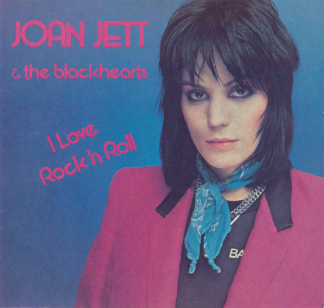
The most famous rock anthem of the early 80s was written to answer the Rolling Stones, buried as a B-side, ignored completely in Britain, and might have vanished forever. It was rescued by a teenager in a touring girl band who saw it once on a television show and could not talk her own bandmates into recording it. And the man who wrote it spent the rest of his life explaining that his co-writer, credited on every pressing, had really only paid for a plane ticket. Alan Merrill and Joan Jett told this story for decades, and it is stranger than the song lets on.
"I Love Rock 'n' Roll" was written in 1975 by Alan Merrill of the Anglo-American glam band the Arrows, as what he called a "knee-jerk response" to the Rolling Stones' "It's Only Rock 'n Roll." The Arrows buried it as a B-side and it never charted in the UK. Joan Jett saw them perform it on British TV in 1976, and after her band the Runaways passed on it, she cut her own version with the Blackhearts. It hit number one on the Billboard Hot 100 on March 20, 1982, and stayed there for seven weeks.
Written to answer the Rolling Stones
The song was a commission with an attitude behind it. The Arrows needed another single, and their producer, the hitmaker Mickie Most, told Merrill to write something loud and simple. "Arrows needed a fourth single, and Mickie Most, our producer and owner of our label [Rak], suggested I try to come up with something, as our first three singles had been written for us," Merrill told GuitarPlayer in an interview conducted in 2016. "He said, 'Think of a simple three-chord rocker with an anthemic sing-along chorus and a great riff.'" To Louder, in 2013, Merrill described the brief the same way: "Mickie requested that we write a rousing, three-chord anthem in the vein of Summertime Blues or Wild Thing." The producer, he said, "commissioned it like you would a tailor."
The spark for the words was irritation with the biggest band in the world. "The Stones had just released 'It's Only Rock 'n Roll,' which sounded a bit apologetic to me," Merrill told GuitarPlayer. "I wanted to say it loud and clear. I wrote the riff, the guitar break and the verses that night." He was blunter about the Stones to Songfacts: "That was a knee-jerk response to the Rolling Stones' 'It's Only Rock 'N' Roll.'" He had met Mick Jagger socially, and he read the Stones' hit as a wink to a rich crowd. "I almost felt like 'It's Only Rock and Roll' was an apology to those jet-set princes and princesses that he was hanging around with," Merrill said. "That was my interpretation as a young man: Okay, I love rock and roll. And then, where do you go with that?"
The hit within a hit
Merrill built something cleverer than a three-chord shout, and he was proud of it for the rest of his life. The chorus, he decided, would be a song inside the song. "I had the chorus, which to me sounded like a hit. And I thought, I'll do something really unusual. I'll write it that this is a song separate from the verse," he told Songfacts. "So the actual chorus is something that's coming out of a jukebox, and the two kids in the disco who are flirting are hearing this song that's a hit. It felt like The Twilight Zone." The idea was that the fictional jukebox hit inside the record would come true when the record itself became a hit. "So when it actually became a huge hit for Joan Jett, my Twilight Zone concept came true," Merrill said. "But it was actually a pretty clever stroke, one that I'm proud of."
Even the most famous line in the song was a producer's call. Merrill, a New Yorker living in England, first wrote it for a British listener. "We were in England, so I thought it should have said: 'Put another coin in the jukebox baby,'" he told Louder. "But Mickie replied: 'No, make it 'dime', because you're American.'" The dime stayed, long after most jukeboxes stopped taking them.
The B-side that nobody heard
The Arrows almost threw the song away. Mickie Most first slated "I Love Rock 'n' Roll" as the B-side to a single called "Broken Down Heart." It was Most's wife who saved it, telling him it was far too good to be a flipside. The band re-recorded it as an A-side, and then everything that could go wrong did. The record came out during a British newspaper strike, so new singles were not getting written up. The Arrows were feuding with their label. Most was winding down as a producer and barely promoted it. "All we needed was a Top Of The Pops," Merrill told Louder, "but we didn't get one BBC radio airplay and no television whatsoever." The song did not chart in Britain at all.
What kept it alive was television. The Arrows were good enough on a UK music program that they were handed their own series, "The Arrows Show," which ran for two seasons across 1976 and 1977. And one of the people watching was an American teenager on tour.
The teenager who would not let it go
Joan Jett was in England with the Runaways, the all-teenage girl band, when she saw the Arrows play "I Love Rock 'n' Roll" on TV in 1976. It hit her instantly. Merrill, who later became friends with her, remembered her telling him how she chased the record down. "She told me about sending a roadie out to buy the single ... when she was touring the UK with The Runaways," he told Louder. Jett said the same thing in public for years, and again the day Merrill died in 2020, when she posted: "I can still remember watching the Arrows on TV in London and being blown away by the song that screamed hit to me."
She wanted the Runaways to record it. They passed. So in 1979, after the Runaways broke up, Jett cut an early version with two former Sex Pistols, guitarist Steve Jones and drummer Paul Cook, and put it out as a B-side to "You Don't Own Me." She was not intimidated by the company. "I did a very early version with them, it was great working with them, and no, there was no sense of trepidation on my part, despite the fact that everyone was telling me they were the most notorious band on the planet," she told Uncut in 2010. That version was underground, but it stuck. Finally, in 1981, she recorded it again with her own band the Blackhearts, and that was the one.
The cover did something to the song the original never had. In the Arrows' version, a guy picks up a young girl. In Jett's, a girl spots a guy by the jukebox and takes him home, and she is the one doing the choosing. That flip, sung by a woman in a red leather jacket, is a large part of why the record became an anthem.
Seven weeks at number one
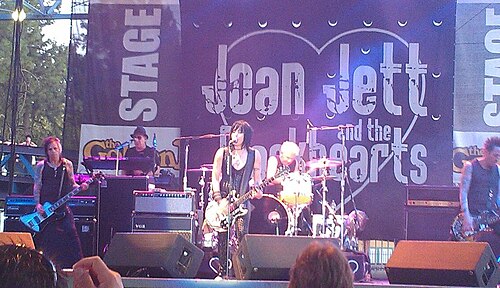
Jett's timing was perfect in one way and terrible in another. She had no major-label deal and had to start her own label, Blackheart Records, when nobody would sign her. Once "Do You Wanna Touch Me" and "Bad Reputation" got airplay, she landed a deal with Boardwalk, and "I Love Rock 'n' Roll" became her first single on a real label. It entered the Billboard Hot 100 at number 63 on February 6, 1982, and climbed fast. On March 20, 1982, it reached number one. It held the top spot for seven straight weeks, through May 1, before "Chariots of Fire" by Vangelis finally displaced it on May 8. It was produced by Ritchie Cordell and released on Boardwalk.
The stark black-and-white video, cheap and gritty, stood out on the barely-year-old MTV against a sea of color clips and pushed the song even harder. Jett has spent the rest of her career slightly wary of her biggest hit. "I quickly realized, this song is gonna follow you, so you're either gonna let it bother you, or you gotta make peace with it, and feel blessed that you were involved with something that touched so many people," she told Mojo in 2008.
The credit nobody can settle
Every pressing of "I Love Rock 'n' Roll" credits two writers, Alan Merrill and Jake Hooker. Merrill spent decades insisting the second name was a favor, not a collaboration. Hooker publicly claimed he wrote the song in fifteen minutes. Merrill had a pointed answer. "Jake used to say that it took him 15 minutes to write 'I Love Rock 'N' Roll,' which used to really annoy me," Merrill told GuitarPlayer. "The 15 minutes was how long it took me to teach him how to play it." To Vive Le Rock, he was harsher: "When it came to songwriting sessions, Jake was basically an enthusiastic cheerleader for the most part."
By Merrill's account, Hooker earned his co-writing credit not at the piano but at an airline counter. Hooker had paid for a plane ticket that got Merrill to where his career took off in the mid-1970s, and in return Merrill promised to always list Hooker as a co-writer. "I gave him half of the B-side royalties from Arrows' records, but I was the sole writer on all of the songs," Merrill told GuitarPlayer. The honest problem with this story is that only one side of it can still be told. Jake Hooker died in 2014, six years before Merrill, and never publicly answered the specific charge that he added nothing. What survives is Merrill's version, told consistently and to more than one outlet, and a co-writing credit that a dead man cannot defend. Merrill, for his part, made his peace with the arrangement through the sheer scale of the payday. "I think the song has earned about 50 million dollars to date in worldwide royalties," he told GuitarPlayer. "Considering that the plane ticket cost Jake a thousand bucks, he got a pretty good return."
How the telling has grown over the decades
The two central figures told this story from opposite ends. Jett kept telling the discovery: the girl in the touring band, the TV set in London, the roadie sent to buy the single, the bandmates who said no. Her tellings, in Mojo in 2008, in Uncut in 2010, and in her tribute the day Merrill died in 2020, barely change, because her part of the story is simple and true and she has never wavered on it.
Merrill kept telling the writing, and his version deepened with time. In the Louder interview from 2013 he laid out the Mickie Most commission and the coin-versus-dime exchange. In the 2016 interview published by GuitarPlayer he added the Rolling Stones spark and finally settled his scores about the Jake Hooker credit. In his Songfacts interview he explained the hit-within-a-hit design he was proudest of. The one real discrepancy is not between Jett and Merrill but between Merrill and the dead: the fifteen-minute claim, which Merrill spent years correcting and Hooker can no longer argue. Merrill went out generous about the whole thing. He told Jett she was "an honorary Arrow because she looked like one of us," and he never tired of the song. "I don't tire of it," he told Louder, "because I never sing a song the same way twice."
The honest bottom line
Strip the leather jacket off and "I Love Rock 'n' Roll" is a work-for-hire glam single, written to a producer's spec, that flopped so completely on release that it never touched the British charts. The most iconic word in it, "dime," was a marketing note. Its author openly admitted the co-writer credited beside him mostly bought a plane ticket, a claim the co-writer is no longer alive to dispute. None of that is what people hear. They hear a woman deciding she wants the guy by the jukebox and going to get him, over a riff built to be an anthem before it ever was one. The Arrows wrote a hit-within-a-hit that no one noticed, and Joan Jett made the outer hit come true. Both things are the same song. Later that year, Survivor's Eye of the Tiger would take a similar path from borrowed idea to ubiquitous anthem, another song written to someone else's brief that became bigger than the assignment.
FAQ
Who sang "I Love Rock 'n' Roll" first? The British glam band the Arrows recorded it first, in 1975. It was written by their singer Alan Merrill, with a co-writing credit for guitarist Jake Hooker. The Arrows' version was released as a single but never charted in the UK. Joan Jett's famous version came later, in 1981.
Who actually wrote "I Love Rock 'n' Roll"? Alan Merrill wrote it, and always said he was the sole writer despite the shared credit. He wrote it in 1975 as what he called a "knee-jerk response" to the Rolling Stones' "It's Only Rock 'n Roll." Jake Hooker received a co-writing credit, which Merrill said was a standing promise in return for Hooker paying for a plane ticket in the 1970s.
Why did Alan Merrill write "I Love Rock 'n' Roll"? His producer Mickie Most asked the Arrows for a simple three-chord anthem, and Merrill wrote it partly as a reply to the Rolling Stones. He felt "It's Only Rock 'n Roll" sounded apologetic, and he wanted to say the opposite loudly and plainly.
How did Joan Jett find "I Love Rock 'n' Roll"? She saw the Arrows perform it on their British TV show in 1976 while she was touring England with the Runaways, and sent a roadie to buy the single. The Runaways refused to record it. Jett cut an early version in 1979 with two former Sex Pistols, then the hit version with the Blackhearts in 1981.
How long was "I Love Rock 'n' Roll" number one? Joan Jett and the Blackhearts' version was number one on the Billboard Hot 100 for seven weeks, from March 20, 1982, through May 1, 1982. It was replaced at the top by "Chariots of Fire" by Vangelis.
Is "I Love Rock 'n' Roll" a response to the Rolling Stones? Yes, according to its writer. Alan Merrill said repeatedly that he wrote it as a reaction to the Stones' single "It's Only Rock 'n Roll," which he found too apologetic. He wanted a song that declared its love of rock and roll without hedging.
Sources
- GuitarPlayer, "'I Wanted to Say It Loud and Clear': Alan Merrill on Writing 'I Love Rock 'N' Roll'" (Mark McStea), January 12, 2022, quoting a 2016 interview
- Louder / Classic Rock, "Joan Jett and the Blackhearts' I Love Rock 'N' Roll: the story behind the song," quoting Alan Merrill interviews from 2013
- Songfacts, "I Love Rock And Roll" song page, including Songfacts interviews with Alan Merrill and Kenny Laguna, and Merrill's Vive Le Rock interview
- Joan Jett interviews in Mojo (January 2008) and Uncut (August 2010), as quoted by Songfacts
- Joan Jett tribute to Alan Merrill, March 2020, as quoted by Songfacts
- Wikipedia, "I Love Rock 'n' Roll"
- Billboard Hot 100, weeks of March 20, May 1, and May 8, 1982
Put another dime in a telling that got verified.
Part of Stories Behind the Songs. See also Eye of the Tiger and Sweet Child o' Mine.