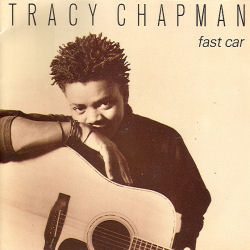
The song was written in one sitting in the middle of the night, with a miniature dachshund on the couch. The performance that made it famous happened because somebody lost a set of computer discs backstage. And the woman who wrote it has spent nearly forty years politely correcting the one thing everybody assumes: she never had a fast car.
Tracy Chapman wrote "Fast Car" in 1986, at around 22, in a single late-night session, then revised it over the following week. Elektra released it on 6 April 1988 as her debut single. It debuted on the Billboard Hot 100 at number 95 on 4 June 1988, and after an unplanned second appearance at the Nelson Mandela birthday concert at Wembley on 11 June 1988, it peaked at number six on 27 August 1988.
The night it was written
Chapman gives few interviews, which is why the writing story took decades to arrive in her own words. She gave it to CBC's Q in April 2025.
"It was pretty late or early in the morning, maybe two or three in the morning," she said. She was awake with a guitar, and she was not alone: "my dog was sitting next to me on the couch," a "miniature dachshund, extremely important to the story." Then the song showed up in the order everybody hopes for and almost nobody gets. She started playing the figure on the guitar, and the first line of the song arrived on top of it.
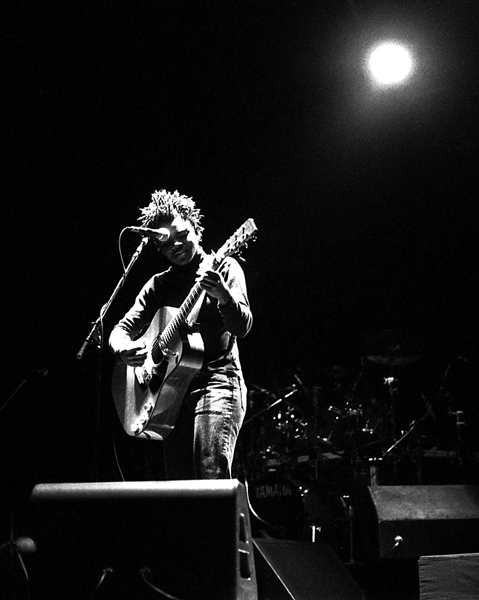
"It developed from there. I think I wrote most of the song that night and then I went back and revised it throughout the week," she told Q. "So in a way, it was quick. There's some songs that take me years to finish, but that was not one."
The verse she will not tell you about
The revising is the part worth sitting with, because Chapman used to refuse to do it.
Speaking to The New York Times Style Magazine for a 2024 feature on how artists begin things, she described the rule she started out with: "I had this notion when I first started writing songs that to respect the muse... I shouldn't do any editing. The first thing that came to me was meant to be." That is how "Talkin' Bout a Revolution" got written at 16, in one sitting.
"Fast Car" broke the rule. "A song like 'Fast Car,' which I wrote when I was maybe 22, wasn't a very long process, but it reflected a different strategy about songwriting," she said. "It was more about revelation, sharing a story about a person and the changes happening in their life."
Then she went as close to the edge as she has ever gone about the actual words: "I made edits to 'Fast Car.' I definitely changed words and lines. I'm too embarrassed to tell you exactly what, but it was the verse that starts 'See, my old man's got a problem.' Let's just say that there was something else there."
That is the single most tantalizing sentence in the entire Chapman record. Something else was in the drunk-father verse of one of the most-heard songs of the last forty years, and the only person who knows what it was has said she is too embarrassed to say. Her broader conclusion is the useful part: "I'm not as enamored with this idea that the very first thing that comes to mind is what I have to remain committed to."
It is not autobiographical, and there is no car
The most persistent misreading is that the song is Chapman's own life. She has been correcting it since the beginning.
To the BBC World Service series Striking a Chord, in a conversation Wikipedia dates to 2010, she gave the fullest version: the song "very generally represents the world that I saw" growing up in Cleveland, Ohio, "coming from a working class background," raised by a single mother, in a community of people who were struggling.
Then the flat denial: "It wasn't directly autobiographical," she said, and then, in the same breath: "I never had a fast car. It's a story about a couple and how they are trying to make a life together and they face various challenges."
She had already told Q magazine the same thing in fewer words: "It's not really about a car at all... basically it's about a relationship that doesn't work out because it's starting from the wrong place."
The joke version is older still. Rolling Stone's Steve Pond asked her in a September 1988 cover profile whether she was going to go buy herself a fast car. She was not. "Somebody asked me what kind of car it was in that song," she said, laughing at the absurdity. "I think it was an Aries K car at first. And then it was a Toyota Corolla." And on her own vehicle: "No, no fast cars. I'll just fix up my old car. It's a 1980 Tercel with, like, 99,000 miles on it."
An Aries K and a Corolla. The most famous fast car in pop music is a Dodge economy sedan that got demoted.
Wembley, and the discs that went missing
Chapman had a record out and a slow-building following: an Elektra deal, an opening slot with 10,000 Maniacs, and a single that had crept onto the charts in early June 1988. What she did not have was mass attention.
On 11 June 1988 she played a three-song afternoon set at the Nelson Mandela 70th Birthday Tribute at Wembley Stadium, which included "Talkin' 'Bout a Revolution" and did not include "Fast Car." Job done. Then, later in the show, Stevie Wonder's performance stalled when the computer discs for his set went missing, and the producers needed somebody who could walk out and play immediately.
Chapman was the only act in the building who needed nothing but a guitar. As she told Q in 2025: "It was the largest audience I'd ever been in front of.... Because I was solo acoustic... they realized they could slot me in at any point in the show. And so we were just waiting in the green room and then they came and said, 'Look, you're on.' And that was it. There was no warning."
Her own summary of standing there: "I was clearly overwhelmed."
She played "Fast Car" alone, in prime time, to a stadium of 90,000 and a global broadcast audience. The song went up on both sides of the Atlantic immediately afterward.
She has also credited the years of busking for making that possible, which is the least romantic and most convincing explanation available: she already knew how to hold a crowd with nothing but a voice and a guitar, because she had done it on street corners for people who had not chosen to be an audience.
What it did, and what it kept doing
"Fast Car" debuted on the Billboard Hot 100 at number 95 on 4 June 1988. Twelve weeks later, on the chart dated 27 August 1988, it reached its peak of number six, with George Michael's "Monkey" at number one. It hit number five in the UK, topped the charts in five other countries, and her self-titled debut went to number one on the Billboard 200.
At the 31st Grammy Awards it was nominated for Record of the Year and Song of the Year and won Best Female Pop Vocal Performance. Thirty-five years later, Luke Combs's country cover took the song to number one on Hot Country Songs and Country Airplay in 2023, and won Chapman the Country Music Association Award for Song of the Year, making her the first Black person to win that award.
She also noticed early that the song travels strangely. Onstage in Philadelphia in 1988, per that same Rolling Stone piece, she told the crowd her lyrics had been translated into five languages: "'Fast Car,' in German it's called 'Flitzer.' It takes on a very different sense, but I think the idea's a very good one."
How the telling has grown over the decades
Chapman's record on this song is thin by rock-star standards and remarkably consistent by any standard. In September 1988 she gave Rolling Stone the deadpan version: no fast car, an Aries K, a beat-up Tercel. Around 2010, on the BBC World Service, she gave the Cleveland context and the flat statement that the song is not autobiography. In 2024, in The New York Times Style Magazine, she gave the craft version for the first time, including the admission that she edited the "old man" verse and will not say how. In April 2025, on CBC's Q, she finally gave the scene itself: the hour, the couch, the dog, the first line, the week of revisions after.
Almost forty years, and the story only gets added to, never rewritten. What does drift is the transcription. The BBC quote appears in two slightly different forms in the two places it is commonly reproduced, Songfacts and Wikipedia, with wording that does not match word for word, and the Q magazine quote circulates with no date attached to it anywhere reliable. There is also a widely repeated claim that Chapman said in 1996 that the song was really about her parents. That version is repeated constantly online, and it does not trace to any interview text that can be verified, so it is not treated as her words here.
The honest bottom line
The uncomfortable truth about "Fast Car" is how much of its life was luck. A great song written in one night still sat at number 95 until a technical failure at somebody else's set pushed an unknown busker into prime time in front of 600 million people. The song is not about the writer's life. There is no car. The most famous verse in it was rewritten from something she has never disclosed. What survives all that is a piece of writing so exact about wanting out and not getting out that a country singer could take it to number one thirty-five years later without changing a word, and nobody, in either audience, found it dated. A year earlier, Suzanne Vega had opened the same door with Luka, another song about domestic damage dressed in a deliberately pretty melody, and together they proved that pop radio in the late 1980s could carry a story nobody wanted to hear.
FAQ
What is the story behind "Fast Car" by Tracy Chapman? Chapman wrote it in 1986 at around 22, in a single late-night session at two or three in the morning, and revised it over the following week. It became her debut single in April 1988 and broke wide after she played it unannounced at the Nelson Mandela birthday concert at Wembley in June 1988.
What is "Fast Car" actually about? Chapman has said it is not directly autobiographical. She has described it as a story about a couple trying to build a life together and failing, drawn from the working-class Cleveland world she grew up in, raised by a single mother.
Did Tracy Chapman have a fast car? No. She said so in 1988 and again in later interviews. When asked what the car in the song was, she joked that it started as an Aries K and became a Toyota Corolla. Her own car at the time was a 1980 Tercel with about 99,000 miles on it.
How did "Fast Car" become a hit? Stevie Wonder's set at the Nelson Mandela concert at Wembley on 11 June 1988 was delayed when the computer discs for his performance went missing. Chapman, who was solo and acoustic, was sent back on with no warning and played "Fast Car" to the stadium and a worldwide television audience. The single climbed immediately afterward.
How high did "Fast Car" get on the charts? It peaked at number six on the Billboard Hot 100 on 27 August 1988 and reached number five in the UK. Chapman's debut album topped the Billboard 200.
Did Tracy Chapman rewrite any of "Fast Car"? Yes. She has said she changed words and lines in the verse beginning "See, my old man's got a problem," and that she is too embarrassed to say what was there originally.
Sources
- CBC Arts, "Tracy Chapman wrote her life-changing hit Fast Car in one night" (Vivian Rashotte), Q interview with guest host Garvia Bailey, 11 April 2025
- The New York Times Style Magazine, 2024 feature on artists and beginnings, Chapman's contribution as archived by About Tracy Chapman, 18 April 2024
- Rolling Stone, "Tracy Chapman: On Her Own Terms" (Steve Pond), 22 September 1988
- Songfacts, "Fast Car" song page, carrying Chapman's BBC World Service Striking a Chord and Q magazine quotes and the Wembley account
- Wikipedia, "Fast Car," for release date, chart and awards details and the dating of the Striking a Chord interview
- Billboard Hot 100 weekly chart, 27 August 1988
A telling this good deserves to be this well checked.
Part of Stories Behind the Songs. See also Luka and Born in the U.S.A..