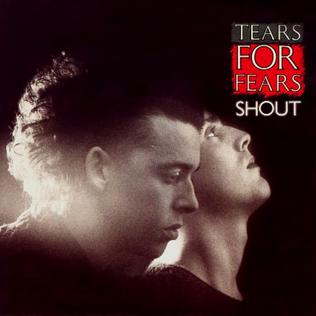
It started as one line, sung over a drum machine in a front room, repeated until it sounded like a mantra. The man who wrote it thought it was a decent album track and nothing more. His keyboard player heard a worldwide hit. And almost forty years later the writer is still explaining to people that his biggest anthem is not the primal-scream song everyone assumes it is.
"Shout" was written by Roland Orzabal with keyboardist Ian Stanley for Tears for Fears' 1985 album Songs from the Big Chair. Orzabal built it from a single repeated chorus in his home setup and filed it as filler, until Stanley and producer Chris Hughes insisted it would be a global smash. It hit number one on the Billboard Hot 100 on August 3, 1985 and held for three weeks. Orzabal has always insisted it is a protest song, not a primal-therapy anthem.
The one-line mantra in the front room
The whole thing began with almost nothing. In the notes printed inside the single, Orzabal laid out the origin plainly: "The song was written in my front room on just a small synthesizer and a drum machine. Initially I only had the chorus, which was very repetitive, like a mantra." He did not think he had a hit. He thought he had a fragment.
The people around him disagreed. "I played it to Ian Stanley, our keyboardist, and Chris Hughes, the producer," Orzabal wrote. "I saw it as a good album track, but they were convinced it would be a hit around the world." Stanley heard it and, in the account preserved on the song's Wikipedia entry, insisted it would be a "worldwide smash," then helped Orzabal finish the writing, which is why Stanley shares the songwriting credit. The two words at the center of it, "shout, shout," never got more complicated than that first repetition. That was the point.
The song that shifted the band into a different gear
By his own telling, Orzabal was not sitting on a pile of finished songs when the second album came together. Speaking to SuperDeluxeEdition in March 2020 for the reissue of Songs from the Big Chair, he described a sudden burst: "We started off with two or three songs and bits of b-sides and within one month I came up with 'Shout', 'Everybody Wants to Rule the World', and 'I Believe'." One month, three of the songs that would define the band.
He is specific about which one changed everything. "It was when we did 'Shout' that we really moved to a completely different gear," he told SuperDeluxeEdition. Part of the momentum came from outside the band. Their A&R man Dave Bates kept pushing singles out fast, and Orzabal recalled the attitude in Bates's own words: "you've got a song, we're putting it out as a single. It sounds like a single, we're putting it out." A band that had once sat on material got shoved into the market, and "Shout" rode that push straight up the charts.
Not the primal-scream song everyone thinks it is
Here is the part Orzabal keeps having to say out loud. Tears for Fears took their name from the work of American psychologist Arthur Janov, whose primal therapy pushed patients to confront buried pain by shouting and screaming, and whose book supplied the phrase the band adapted. Their debut album leaned hard on that framework. So when a song called "Shout" arrived with a chorus telling you to let it all out, the world filed it as a primal-scream record. It is the reading printed on fan sites and in liner-note summaries to this day.
Orzabal has spent decades pushing back. Talking to The Creative Independent in January 2022, he put the song in context alongside the rest of the album and drew the line himself: "Shout, which is kind of like a cheesy reference back to the primal scream, but it's also just a song about protest." Not therapy. Protest. He was writing under Thatcher, on a council-estate chip on his shoulder, and the chant was aimed outward at power, not inward at childhood.
The confusion was easy to earn, because the band really had been that deep in Janov. Curt Smith, the other half of Tears for Fears, told Broward Palm Beach New Times in 2010 about the moment the spell broke, when Janov himself turned up at a London show and took the pair to lunch: "all he wanted was for us to write a musical about primal therapy. So at that point, we felt it was a little Hollywood." The philosophy that named the band curdled into a punchline, right around the time its most famous "shout" stopped being about screaming out pain and started being about protest.
The cliff, the chart, and the long life
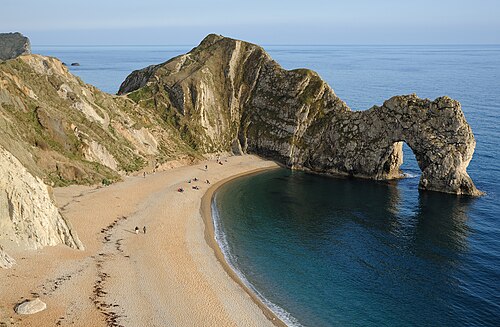
The video sealed the anthem status. Orzabal and Smith spent it on the wind-battered chalk arch at Durdle Door on the Dorset coast, shouting into open air over the sea, an image as wide and stark as the chorus.
The chart run backed the ambition. Released as a single in late 1984, "Shout" reached number four in the band's native UK in January 1985. In America it went all the way: number one on the Billboard Hot 100 for the week of August 3, 1985, where it stayed for three weeks and topped the Cash Box chart as well. It became one of the defining singles of the year and one of the most durable stadium chants of the decade, the kind of wide-open 80s anthem an all-80s stream from the Bubble was built to carry.
How the telling has grown over the decades
The story of "Shout" has been told in pieces, and the pieces line up cleanly rather than fighting each other.
The 1984 single notes gave the origin: the front room, the drum machine, the one repeated chorus, Stanley and Hughes overruling Orzabal's own low expectations. That is the writing story, straight from the year it happened.
In 2010, Curt Smith added the primal-therapy backdrop and the Janov lunch, explaining why the band had drifted from the philosophy that once defined them.
In 2020, Orzabal filled in the studio context for SuperDeluxeEdition: the one-month writing burst, the "different gear," Dave Bates forcing singles into the market.
In 2022, with The Creative Independent, he stated the meaning outright, calling the song a protest more than a primal-scream reference.
The one genuine tension is not between the writers, it is between the writers and the audience. The public has always heard "Shout" as a primal-scream song. Orzabal keeps saying it is protest. And he does not fully deny the other reading: he calls it "kind of like a cheesy reference back to the primal scream" in the same breath that he calls it protest. The honest version is that the song is both, and the band's own name is the reason the therapy reading refuses to die.
The honest bottom line
Strip the myth away and "Shout" is a two-word hook repeated over a drum machine, a fragment its own writer nearly left as album filler until two other men in the room told him what it was. The primal-scream association is not a mistake, the band's name and first album planted it on purpose. But the intent Orzabal has named for forty years is protest, a shout aimed at power rather than at private pain. The reason the song still fills arenas is that the ambiguity is a feature: a chant simple enough and broad enough to be therapy, rebellion, or just release, depending on who is shouting it. On the same album, Everybody Wants to Rule the World was the throwaway track the band expected to vanish, and it went to number one too, which is the whole punchline of Songs from the Big Chair.
FAQ
What is the story behind "Shout" by Tears for Fears? Roland Orzabal wrote it in his front room on a small synthesizer and drum machine, starting with just a repeated chorus he saw as a good album track. Keyboardist Ian Stanley and producer Chris Hughes were convinced it would be a global hit, Stanley helped finish it, and it became the band's biggest anthem.
Is "Shout" about primal scream therapy? Not according to Orzabal. The band's name comes from Arthur Janov's primal therapy, so listeners assumed the song did too, but Orzabal has called it "a song about protest" and says it is more concerned with political protest than with screaming out personal pain.
Who wrote "Shout"? Roland Orzabal and Ian Stanley. Orzabal wrote the core of it alone, and Stanley earned a co-writing credit for helping complete the song after hearing it and predicting a worldwide smash.
What is "Shout" actually about? Protest. Orzabal wrote it in early-1980s Britain and has repeatedly framed the chorus as a call to push back against authority, not as an exercise in primal-scream release, though he admits the title nods to the band's therapy roots.
Did "Shout" reach number one? Yes, in the United States. It topped the Billboard Hot 100 for the week of August 3, 1985 and held the top spot for three weeks. In the UK it peaked at number four in January 1985.
Where was the "Shout" video filmed? At Durdle Door, the natural limestone arch on the Dorset coast in England, where Orzabal and Curt Smith performed the song on the clifftop above the sea.
Sources
- Songfacts, "Shout by Tears for Fears," quoting Roland Orzabal's notes printed in the 1984 single
- Wikipedia, "Shout (Tears for Fears song)," for the Ian Stanley co-write, the "worldwide smash" account, and chart positions
- SuperDeluxeEdition, "Tears for Fears' Roland Orzabal in the Big Chair: The SDE interview," March 2020
- The Creative Independent, "Songwriter Roland Orzabal on looking inward to create your best work," January 21, 2022
- Broward Palm Beach New Times, "Q&A: Tears for Fears' Curt Smith on Ditching Primal Scream Philosophy," August 2010
- Billboard Hot 100, week of August 3, 1985
Shout, shout, let it all out, these are the sources we can show you.
Part of Stories Behind the Songs. See also Everybody Wants to Rule the World and Tears for Fears in the 80s.