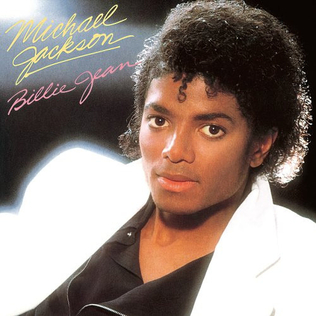
The producer wanted to cut the intro, change the title, and thought the bassline was nothing special. The engineer mixed it ninety-one times and then threw all ninety-one away. The drums were recorded on a plywood platform with a cinderblock inside the kick drum. And the woman in the title never existed. "Billie Jean" is the song that turned Michael Jackson into the biggest star on the planet, and almost every part of it was argued over first.
"Billie Jean" was written by Michael Jackson and released in January 1983 as the second single from Thriller. Producer Quincy Jones wanted to cut its long intro, disliked the demo and bassline, and pushed to rename it "Not My Lover," fearing people would think of tennis star Billie Jean King. Jackson refused on every count. Engineer Bruce Swedien mixed the track 91 times before they went back and used mix two. It hit number one for seven weeks.
The song Quincy Jones almost changed everything about
By the time "Billie Jean" reached the studio, Jackson and Jones were the most successful pop partnership alive, and they still fought over nearly every decision on this one. The most famous argument was about the intro, that long stretch of drum and bass before Jackson sings a word. Jones wanted it gone. Jackson would not budge, and Jones has told the story for years.
"I said, 'Michael we've got to cut that intro,'" Jones recalled. "He said, 'But that's the jelly! That's what makes me want to dance.' And when Michael Jackson tells you, 'That's what makes me want to dance,' well, the rest of us just have to shut up." The 29-second intro stayed.
Then there was the title. Jones wanted to call it "Not My Lover," because he was convinced record buyers would assume a song called "Billie Jean" was about the tennis player Billie Jean King. Jackson refused again, and the title held. According to Jones, he was not even sold on the bassline that Rolling Stone would later call untouchable. The disagreement went further than the music: Jackson felt the finished record sounded so close to his own demo that he asked Jones for a co-production credit and extra royalties. Jones granted neither, and the two fell out for several days.
Who Billie Jean was, and was not
There was no Billie Jean. Jackson was clear about that in his 1988 memoir Moonwalk, where he described the character as a composite drawn from years of touring, not one real person. "I used to be really amazed by it," he wrote. "I couldn't understand how these girls could say they were carrying someone's child when it wasn't true." The song grew out of the women who fixated on him and his brothers during the Jackson 5 years, some of them genuinely frightening.
Jackson kept a running list of the strangest encounters. He wrote: "Even today, there are girls who come to the gate at our house and say the strangest things, like, 'Oh, I'm Michael's wife,' or 'I'm just dropping off the keys to our apartment.'" That is the ground the lyric stands on: a man accused of fathering a child he insists is not his, denying a claim he cannot make go away. The subject was dark, and Jones knew the track had to match it.
The drum sound built out of plywood and a cinderblock
The reason "Billie Jean" still sounds like nothing else is that engineer Bruce Swedien built it that way on purpose. Jones set the brief high. Swedien later described the instruction to The Blender: "When we recorded 'Billie Jean' ... Quincy told me, 'Okay, this piece of music has to have the most unique sonic personality of anything that we have ever recorded.'"
Swedien got there with carpentry as much as electronics. The drums were not a machine, as people often assume, but a single live take recorded with extreme isolation, played by Leon Ndugu Chancler on a purpose-built wooden riser raised ten inches off the floor. He took the bass drum apart to get its sound. "It was the first time I took the kick drum apart," Swedien remembered. "I took the front head off, put a special cinderblock in it for weight, and then had this cover made out of furniture blanket with a zippered hole for the mic to go through." Even the spoken "don't think twice" aside in the second verse was sung through a long cardboard tube. Every choice served the same goal Jones had set: a record you could identify in three or four beats, before Jackson even started singing.
Ninety-one mixes, and the one they kept
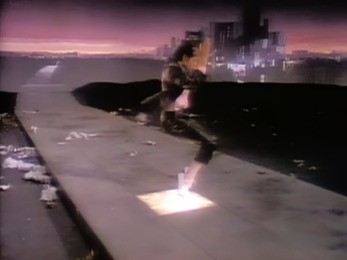
Then came the part of the story engineers love most. Swedien mixed "Billie Jean" ninety-one times. He kept refining, and the team kept tweaking. Swedien recalled Jackson slipping out of the control room to whisper a note: "Please Bruce, it's perfect, but turn the bass up just a tiny bit, and do one more mix, please." Jones had his own note, in his own language. "Then Quincy pulled me over into the corner and said 'Add a little garlic salt to the snare and the kick. Just a squirt!!!'"
By mix 91, Swedien had a stack of half-inch tapes nearly to the ceiling, and the song had been polished past its own life. Jones made the call that saved it. Swedien wrote in his autobiography: "I did 91 mixes of 'Billie Jean', and finally Quincy said 'Let's go back and listen to mix number two.' And we did, and it blew us all away! I had overmixed that song right into the pooper, so the mix that went onto the record was mix number two." Ninety of the ninety-one mixes went in the bin, and the second attempt is the one the world has heard ever since.
How the telling has grown over the decades
Each person who worked on "Billie Jean" tells the piece they owned. Jones has told the cut-the-intro, change-the-title story for decades, always landing on the same "that's the jelly" punchline. Jackson gave the origin of the character in Moonwalk in 1988. Swedien laid out the engineering, the drum riser, and the ninety-one mixes across interviews, his Facebook page, and two of his own books, and his account has stayed remarkably consistent.
Where the tellings genuinely diverge is over the synth part, the eerie three-note figure in the intro. Composer Michael Boddicker said Jackson played it himself, in one take, in seven minutes, on a Yamaha CS-80. Keyboard player Bill Wolfer flatly disputes that, saying he played the CS-80 chords on both the demo and the album version and that Boddicker was simply misremembering the session. "Everyone who worked with Michael Jackson knows that he didn't play keys but a tiny bit, and never played them on a record!" Wolfer said. The disagreement is still unresolved, and both men are on the record. It is a reminder that even the most-documented song of the era has corners its makers remember differently.
The honest bottom line
Take away the legend and "Billie Jean" is a song its own producer wanted to shorten, rename, and re-credit, built on a bassline he shrugged at and mixed so many times it nearly died on the console. It was the single that broke the Thriller album wide open; the title track's own story is a different beast entirely, and five years later Jackson would hand his biggest sermon to an outside writer for Man in the Mirror. Michael Jackson is a difficult figure to write about now, and the troubling parts of his life sit outside the making of this record and are not settled here. What is not in dispute is the craft: a composite character, a cinderblock in a kick drum, and a producer wise enough to reach back past ninety bad mixes to grab the second one. The arguments are the reason it sounds the way it does.
FAQ
What is "Billie Jean" about? It is about a woman who claims the narrator fathered her son, which he denies. Michael Jackson said in his memoir that Billie Jean was not a real person but a composite of the obsessive fans who claimed his brothers had fathered their children during the Jackson 5 touring years.
Who wanted to cut "Billie Jean"? Producer Quincy Jones wanted to cut the song's long intro, disliked the demo and its bassline, and wanted to change the title. Some reports even said Jones felt the song was too weak for Thriller, though Jones denied that part. Jackson insisted the song stay exactly as it was.
Why did Quincy Jones want to change the title of "Billie Jean"? Jones wanted to rename it "Not My Lover" because he thought record buyers would assume a song called "Billie Jean" was about the tennis star Billie Jean King. Jackson refused, and the title stayed.
Is there a real Billie Jean? No. Jackson wrote in Moonwalk that there was no single real Billie Jean and that the character was a composite of the fans and stalkers who followed him and his brothers, some of whom made frightening claims and threats.
How many times was "Billie Jean" mixed? Engineer Bruce Swedien mixed it 91 times. After all that work, Quincy Jones asked to hear mix number two again, and that early version, not the ninety-first, is the one that was released.
How high did "Billie Jean" chart? It reached number one on the Billboard Hot 100 on March 5, 1983, and stayed there for seven weeks. It topped charts around the world and helped make Thriller the best-selling album of all time.
Sources
- MusicRadar, "The making of Billie Jean," quoting Quincy Jones, Michael Jackson's memoir Moonwalk (1988), Bruce Swedien via The Blender and his 2013 Facebook posts, and keyboardist Bill Wolfer
- Sound on Sound, "Bruce Swedien: Recording Michael Jackson," quoting Swedien's autobiography Make Mine Music on the drum riser, the kick drum, and the 91 mixes
- Wikipedia, "Billie Jean," for release and chart data, the intro and title disputes, and the Boddicker and Wolfer synth accounts
- Billboard Hot 100 weekly charts, 1983
The kid is not my son, and the facts are not our guesses, see how.
Part of Stories Behind the Songs. See also The Story Behind In the Air Tonight and The Story Behind Eye of the Tiger.