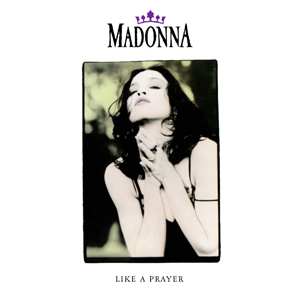
The most ambitious record Madonna ever made was written on a schedule that looks like a factory shift. Piano at seven in the morning, singer at eleven, lyrics finished by lunch, everybody home by four. The guitar that kicks the whole thing open was played by somebody who was not in the room and whose contribution was otherwise thrown out.
"Like a Prayer" was written in a single day in 1988 by Madonna and Patrick Leonard, the first song completed for the album that took its name. Leonard wrote the music at the piano in the morning, Madonna wrote the lyric in about an hour and sang it, and the demo vocal is the vocal on the record. Prince played the opening guitar. It reached number one on April 22, 1989 and held three weeks.
The assembly line that produced it
Leonard has described the working method more precisely than most collaborators ever do. "The norm was that I would go in the morning... I'd get to the studio very early, 8 o'clock, 7 o'clock sometimes," he told Billboard in 2014. "I like to start really early in the day. She would come in about 11 and I would have the musical idea on whatever piece of gear I was using."
The pitch was blunt and the material was disposable. "I would just put the track, the chord changes, some kind of drum beat, bass line... and say, 'here's the idea, here's what I have for the day.'" Madonna would listen and start rearranging immediately. "Oftentimes I'd say, 'here's the verse, and here's the chorus,' and she'd say, 'no, it's the other way around, switch 'em.' So I'd switch 'em. This thing is an hour old, it's not etched in stone."
Then she wrote. "She would write the lyrics in an hour, the same amount of time it took me to write the music," Leonard told Billboard. "And then she'd sing it. We'd do some harmonies, she'd sing some harmony parts, and usually by three or four in the afternoon, she was gone."
That is the entire origin of the song, and Leonard says so flatly: "That's how 'Like a Prayer' was written, and then the next day we wrote 'Cherish,' and then the next day we wrote 'Dear Jessie.' And that's how it was. We wrote the album in less than two weeks."
The vocal you hear is the first one she sang
The detail Leonard keeps coming back to across interviews is that nothing was fixed afterward. Speaking to Music Business Worldwide in 2022, he put it as plainly as it can be put: "she didn't sing the songs on Like a Prayer more than once, ever. There were no re-takes, there was the demo vocal and that was the record. It was absolutely extraordinary."
That is the guide vocal on one of the biggest singles of the decade, kept because it was better than anything a second pass would produce.
Why the two of them worked
Leonard's read on the partnership is that it functioned because they had almost nothing in common musically. "The one thing would be that, in terms of musical spirits, like any good collaboration, we're sort of on opposite ends of the spectrum, in terms of our approach to music," he told Billboard.
He was the trained one. "I started playing the piano when I was three-years old, and studied music my whole life. It's my language. And for her, it's much more just about creativity, and a natural gift, what the impulse says is right." His defense of what she brought is worth quoting whole: "And when I say simple, I don't mean stupid. I mean just not complicated. You know, simple in that beautiful way that when something is really simple, it's not easy to do something simple."
Prince is on it, and almost was not
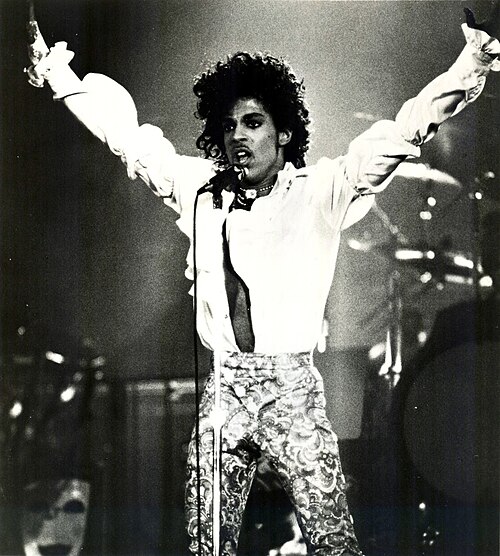
The song opens with a slash of hard rock guitar that gets cut off by a slamming door. That is Prince, and it is nearly all that survived of him.
"What I know is that his guitar work is on, when you start 'Like a Prayer,' the guitar that you hear before the door slams," Leonard told Billboard in 2014. "That's Prince. What happened is, [Madonna] sent him something to play on and he played on it and sent it back. And we didn't feel that what he did served it. But that piece, that beginning, is him."
Leonard is honest about the limits of his own memory on this. Listening back years later, he could not be certain about the heavy guitar in the bridges. "Because the sound is similar to the first sound [in the opening], but it's not exactly the same," he said. "But I know for a fact that we did use that [Prince] thing as the intro, because we just thought it was crazy and really cool. I seem to recall that that's all we used, but I could be wrong."
The Catholicism underneath it
Madonna gave her own account of what was driving the record in the March 23, 1989 Rolling Stone interview, published as the album arrived. Asked whether she had forsaken her Catholicism, she answered: "Once you're a Catholic, you're always a Catholic..." She went on: "Sometimes I'm wracked with guilt when I needn't be, and that, to me, is left over from my Catholic upbringing. Because in Catholicism you are born a sinner and you are a sinner all of your life."
Asked whether she would raise a child Catholic, she said no, and explained why in a line that reads like the album's thesis: "Catholicism is not a soothing religion. It's a painful religion. We're all gluttons for punishment."
Madonna has described the song itself as being about a passionate young girl "so in love with God that it is almost as though He were the male figure in her life," a quote carried in the Wikipedia article on the song. That reading is what set up the fight over the lyric. According to J. Randy Taraborrelli's biography of Madonna, as cited in the same article, Leonard was uncomfortable with the double meaning in the first verse and asked her to change the line. She refused.
The gospel choir was recruited with the same question in mind. Andraé Crouch, whose choir sang on the record, said he studied the lyric before agreeing, wanting to "find out what the intention of the song might be. We're very particular in choosing what we work with, and we liked what we heard," a quote from Lucy O'Brien's Madonna biography cited in the article on the song.
The Pepsi part, in her own words
Everyone remembers what happened next: a Pepsi commercial built around the song, then the actual music video, then the boycotts, then Pepsi walking away. Two months before any of it, Rolling Stone asked her whether she was worried about the song being swallowed by a soft drink campaign. Her answer was five seconds of pure Madonna: "Well, I wouldn't put Pepsi in any of my songs. Pepsi is Pepsi, and I'm me."
What the chart actually did
"Like a Prayer" debuted on the Billboard Hot 100 at number 38 on March 18, 1989. It reached number one from number three on the chart dated April 22, 1989, and held the top spot for three weeks, through May 6. Bon Jovi's "I'll Be There for You" replaced it on May 13, 1989. The album spent six weeks at number one on the Billboard 200, Madonna's longest run at the top with any album.
How the telling has grown over the decades
- March 1989 (Rolling Stone): Madonna, before the storm, talking about Catholic guilt as the engine of the record and refusing to treat the Pepsi deal as a compromise. Nothing here about how the song was made.
- March 2014 (Billboard): Leonard's twenty-fifth anniversary interview, still the single richest account. The 7 a.m. start, the 11 a.m. arrival, the hour for lyrics, the four o'clock finish, the one-day write, and the Prince intro.
- March 2021 (KSLX): Leonard tells the story again on radio, the interview framed around the Prince guitar and the controversy.
- February 2022 (Music Business Worldwide): Leonard, now decades out, adds the detail that reframes everything else. No re-takes. The demo vocal is the record.
Where the tellings drift: Leonard hedges his own Prince memory openly in 2014, unsure whether more of the guitar survived into the choruses, and says so rather than guessing. The compressed anniversary tellings tend to make "written in a day" sound like a stunt, while the long 2014 version makes clear it was simply how they worked every day for two weeks. Both are true. The tension is between a good headline and a boring schedule.
The honest bottom line
This is a song about religious ecstasy written by a man who arrived at seven in the morning to beat the traffic, sung once by a woman who was gone by four, with an intro borrowed from a collaborator whose actual contribution got thrown out. Nothing about the process was reverent. The lyric that caused a global boycott was defended by its author against her own co-writer's objections and never changed. What survives is the ambition Leonard heard while it was still on the desk: a pop single with stops and starts, minimal percussion, a bombastic chorus and a full gospel choir, none of which belonged on a 1989 radio record. It worked because nobody sanded it down. Five years earlier, Like a Virgin had made the same singer's name a controversy by putting a word on a single that nobody would touch; this time the controversy was an image, not a word, and it cost her a sponsorship instead of earning one.
FAQ
Who wrote "Like a Prayer"? Madonna and Patrick Leonard wrote and produced it together. Leonard wrote the music at the piano and Madonna wrote the lyric, in about an hour, on the same day.
How long did it take to write "Like a Prayer"? One day. Leonard has said the entire album was written in under two weeks, one song per day, with "Cherish" written the day after "Like a Prayer" and "Dear Jessie" the day after that.
Is that Prince playing guitar on "Like a Prayer"? Yes, on the intro. Madonna sent him the track, he played on it and sent it back, and Leonard has said they used only that opening piece because the rest did not serve the song.
Is the vocal on "Like a Prayer" a demo? Yes. Leonard told Music Business Worldwide in 2022 that Madonna never sang the songs on that album more than once and that the demo vocal became the record.
What is "Like a Prayer" about? Madonna has described it as a young girl so in love with God that He is effectively the male figure in her life, written out of the Catholic upbringing she discussed at length in Rolling Stone in 1989. The lyric was deliberately built to carry a second meaning, which she refused to remove.
How long was "Like a Prayer" number one? Three weeks. It topped the Billboard Hot 100 on the chart dated April 22, 1989 and held until Bon Jovi's "I'll Be There for You" took over on May 13, 1989.
Sources
- Billboard, "Madonna Producer Patrick Leonard Talks 'Like A Prayer' at 25," March 21, 2014
- Music Business Worldwide, World's Greatest Songwriters interview with Patrick Leonard, February 3, 2022
- Rolling Stone, "Madonna: The Rolling Stone Interview," March 23, 1989
- KSLX, "Patrick Leonard on Madonna's Like a Prayer," March 12, 2021
- Wikipedia article on "Like a Prayer," for the Madonna quote on the song's subject and for quotes drawn from J. Randy Taraborrelli's and Lucy O'Brien's Madonna biographies
- Billboard Hot 100 weekly charts, April 22 1989 and May 13 1989
Every telling here is checked like it matters, because it does.
Part of Stories Behind the Songs. See also Like a Virgin and Billie Jean.