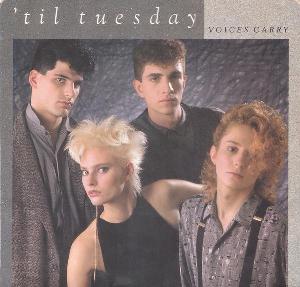
The most quoted line in the song is a man telling a woman to keep quiet. On the first version, the person being told to hush was a woman too, until a record company made them swap the pronoun. And decades later, at least four people who were in the room or in Aimee Mann's life tell four different stories about who the song is really about. The confusion is not a gap in the record. It is the record.
"Voices Carry" was written by Aimee Mann and her 'Til Tuesday bandmates for their 1985 debut. Mann says she based it on a male friend's story; producer Mike Thorne says it was originally sung to a woman and that Epic Records forced the gender change; drummer Michael Hausman's past romance with Mann is cited as a source; and Ministry's Al Jourgensen claims it came from his own fling with her. It reached number eight on the Billboard Hot 100, the band's only US top ten hit.
What Aimee Mann says
Mann wrote the words to every 'Til Tuesday song, and she has given the most detailed account of this one. Talking to Conan O'Brien, she traced it not to her own romance but to someone else's. She said she wrote it about "a friend of mine," specifically "a male friend," who was, in her words, "talking about a relationship where the girl didn't want to be affectionate with him in public, like, 'Keep your voice down, don't tell people we're going out.'" Then she named why it stuck to her: "The reason I related to that story was because of my history."
That is Mann flipping the roles. A man told her about a woman who kept him at arm's length, and Mann rebuilt it as a woman kept quiet by a controlling man. She has also said the rewritten studio verse that starts "He wants me but only part of the time" came, in her phrase, "on something I was going through with a relationship at the time." Her account is layered, and it is about a friend, a flip, and her own life feeding one verse.
What the producer says
Mike Thorne, who produced the debut album, tells it differently, and he wrote his version down. In a 1999 essay on his own Stereo Society site, he was flat about the original: "The title track was originally written and sung by Aimee as if to a woman. We had rehearsed that format in Boston the previous summer, and for me it was one of the two most compelling songs on the demo tape." In Thorne's telling the song was a same-sex song first, and the label balked.
He did not fight it, and he was candid about why. "The record company was predictably unhappy with such lyrics, since this was a very powerful, commercial song and they would prefer as many of its components as possible to swim in the acceptable mainstream," he wrote. "I wasn't certain what to think about the pressure to change the gender of the love interest, but eventually thought that it didn't matter any to the impact of the song itself." Thorne even weighed the politics: "Would a quasi-lesbian song have had any effect on the liberation of such homosexuals... I don't think so, but it was hard to judge at the time." He noted that he made this record right after producing Bronski Beat's openly gay Age Of Consent, where "decisions with them were easier, for their politics were specific and out loud."
The two men who also claim it
There are two more names attached to the song's origin, and neither is Mann's own explanation.
The first is Michael Hausman, 'Til Tuesday's drummer and Mann's former boyfriend. One account holds that an argument between the two of them fed the lyric. Hausman and Mann had ended a relationship around the time the band made the album, and that breakup colored much of the record. Whether it directly produced this particular song is exactly where the accounts split.
The second is Al Jourgensen, the frontman of industrial band Ministry, who has claimed the song was inspired by a brief relationship he had with Mann while she was living in Boston. It is his claim about his own life, and it sits alongside all the others without resolving any of them.
The one thing everyone agrees on: Epic changed the pronoun
For all the disagreement about inspiration, the accounts converge on one fact. The version the world knows is not the version 'Til Tuesday first played. Epic Records wanted a hit, decided the original lyric was a commercial risk, and pushed to change the gender of the person the singer is addressing. Thorne, who was in the studio, states it plainly in his essay, and the same account appears throughout the song's documented history. The "he" who shushes the narrator started life as a "she." The label sanded the song toward the mainstream, and the record that resulted went to number eight and sold the album into gold territory.
The video that rewrote the song again
If the label reshaped the lyric, the video reshaped the meaning. Directed by D.J. Webster and filmed around Boston, the clip casts Mann as a musician with an overbearing, abusive boyfriend who berates her career and her look, culminating in her standing up in a Carnegie Hall audience to belt the song in defiance. It became one of the defining videos of early MTV and won 'Til Tuesday the 1985 MTV Video Music Award for Best New Artist.
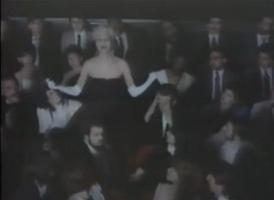
Mann has been clear that the anthem reading came from the video, not from her pen. "I didn't write it as a feminist anthem, but when it came time to make the video, that idea was in the air," she told Conan O'Brien. "It was very heavy handed." And she has poked fun at the on-screen romance, adding of the actor playing her boyfriend, "Come on, give me some credit. I'm not going to go out with this muscle-bound doofus."
How the telling has grown over the decades
The accounts did not arrive together. They accumulated, and they never merged.
The 1985 release gave the public a song addressed to a "he," with no note that it had ever been anything else. In 1999, Thorne published the behind-the-scenes truth on his own site: the original was sung to a woman, and Epic changed it. Over the years since, Mann has given her own version in interviews, including the Conan O'Brien telling about a male friend's relationship, which does not match the "sung to a woman" account so much as sit beside it. Along the way, Michael Hausman's romance with Mann and Al Jourgensen's claimed fling with her both got folded into the song's lore.
The honest read is that these do not reconcile into one clean origin, and it would be dishonest to pretend they do. Mann says a friend's story. Thorne says a woman. Hausman is a former boyfriend in the same band. Jourgensen says it was him. What they share is not a single inspiration but a single documented act: a label deciding a same-sex love song needed a straighter pronoun to sell. In 2017, introducing the song at a New Hampshire church, Mann said she had shelved it for years because she "thought parts of it were kind of dumb," then reconsidered: "recently I feel like it's weirdly appropriate and I'm not sure why." Months later the MeToo reckoning began.
The honest bottom line
"Voices Carry" is a song about someone being told to keep their feelings quiet, and its own history acts out the theme. The people closest to it cannot agree on who it was for, and the one thing the record proves is that a major label looked at a woman singing to a woman and decided the safe move was to change her into a man. The song survived that edit and outgrew it, because the core of it, being loved on someone else's terms and told to hush about it, reads the same no matter which pronoun the label allowed. The disagreement about its origin is not a flaw in the story. It is the most honest thing about it. Three years earlier, the Human League's Don't You Want Me had broken through with a similar tension, a song about power between two people told from both sides, and the two records together bracket the decade's quiet argument over whose voice gets to carry the story.
FAQ
What is "Voices Carry" about? On its surface it is about being in a relationship with someone who wants the singer to stay quiet about their feelings and hide the romance. Aimee Mann has said she based it on a male friend's account of a partner who did not want to be affectionate in public, then rewrote it from the perspective of a woman being controlled by a man.
Was "Voices Carry" written about a woman? According to producer Mike Thorne, yes. He has said the song was originally written and sung by Mann as if to a woman, and that Epic Records pressured the band to change the gender of the love interest before release. Mann's own accounts of the inspiration differ from Thorne's, which is why the song's origin is genuinely disputed.
Who wrote "Voices Carry"? Aimee Mann wrote the lyrics, and the music is credited to all four members of 'Til Tuesday: Mann, drummer Michael Hausman, guitarist Robert Holmes, and keyboardist Joey Pesce. Mike Thorne produced it.
Is "Voices Carry" about Al Jourgensen? Ministry's Al Jourgensen has claimed the song was inspired by a brief relationship he had with Aimee Mann in Boston. It is his claim, and it conflicts with Mann's own account and with producer Mike Thorne's. There is no agreed-upon single subject.
Did "Voices Carry" reach number one? No. It peaked at number eight on the Billboard Hot 100 in the spring of 1985. It was 'Til Tuesday's highest-charting single and their only US top ten hit.
Why did they change the lyrics of "Voices Carry"? Epic Records considered the original same-sex lyric a commercial risk for such a strong single and pushed the band to make the love interest a man. Producer Mike Thorne, who disagreed that it mattered to the song, went along with the change.
Sources
- Mike Thorne, "Til Tuesday: Voices Carry," essay at The Stereo Society (stereosociety.com), March 1999
- American Songwriter, "The Story and Meaning Behind 'Voices Carry,' 'Til Tuesday's Searing '80s Classic," November 8, 2024, quoting Aimee Mann's Conan O'Brien interview
- Wikipedia, "Voices Carry," for the competing inspiration claims, writing credits, and chart position
- Songfacts, "Voices Carry by 'Til Tuesday," for Mann's video and 2017 Portsmouth quotes
- Billboard Hot 100, week ending June 1, 1985
Voices carry, and quotes carry their sources.
Part of Stories Behind the Songs. See also Sweet Dreams (Are Made of This) and Don't You Want Me.