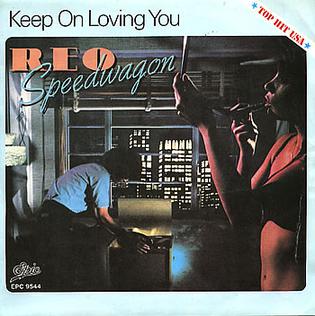
America's favorite first-dance song is about catching your partner cheating. The band that recorded it told the guy who wrote it that it was not an REO Speedwagon song. And the guitar part that turned it into a number one record may have been the lead guitarist trying to drown out the piano out of spite. Kevin Cronin has told this story for four decades, and he has never once cleaned it up.
"Keep On Loving You" was written by Kevin Cronin after he learned his wife had been unfaithful. He woke in the night with the piano intro in his head and finished the verses in about 20 minutes. His REO Speedwagon bandmates rejected it at rehearsal as not an REO song, until guitarist Gary Richrath plugged into a Marshall stack over it. It hit number one on the Billboard Hot 100 on March 21, 1981.
The song arrived at three in the morning on a red Wurlitzer
Cronin gave American Songwriter the most detailed version of the writing itself in April 2020, by email, during the first weeks of the pandemic.
"I believe every song is a miracle. That said, sometimes you find yourself writing something that feels extra special," he told the magazine. "'Keep on Loving You' came to me in the middle of the night. I woke up with that simple piano intro in my head, stumbled into my little home studio, and sat down at my old red Wurlitzer electric piano. The verses came in about 20 minutes, in pretty much their finished form."
He had the verses and nothing else. "The following afternoon, I commandeered the piano at an REO rehearsal session. We were working up songs for what would become the Hi Infidelity album. I sat and played those verses over and over, hoping a chorus would show itself." When the chorus arrived it was built on the three most common chords in popular music, and Cronin describes it landing all at once: "a melody and lyric appeared as if by magic."
What the verses are actually about
The subject is not romance. It is infidelity and the decision to stay anyway. Songfacts, in its 2017 interview with Cronin, states directly that he wrote "Keep On Loving You" when he learned his wife had cheated on him before they were married, that they rode out that storm and split up a few years later, and that Cronin remarried in 1992.
Cronin's own reaction to how the song gets used is one of the great recurring bits in classic rock interviews. "It's funny, because a lot of people over the years have told me how they played that song at their wedding and it was the first dance at their wedding, or it's 'their song' with their boyfriend or girlfriend," he told Songfacts. "My first thought is always, 'Wait. Did you listen to the verses of the song?!'"
He does not treat that as a joke on the couples, though. He treats it as the actual meaning of the song. "That song is a yin-yang thing, where there is obviously trouble in paradise in the verses, but I always believed that people are capable of changing, and that if your life runs into a tough spot, it doesn't mean that you necessarily have to run from it," Cronin told Songfacts. "You can also look it in the eye, and if there is enough worthwhile in the relationship to keep it going, then you give it all you've got, and that's what I did."
And then the part most writers would leave out. Asked how the eventual breakup changed the sentiment of the line "When I said that I loved you I meant that I loved you forever," Cronin did not defend himself. "So when I wrote that line, I meant it. I tried my best, but it just didn't happen."
"That's not an REO Speedwagon song"
The rejection is the center of this story, and Cronin gave the fullest account of it to Louisville.com in February 2010.
"I walked into rehearsal and sat down at the piano, which I rarely do because I'm a guitar player, and started playing 'Keep on Loving You.'" Then the room reacted. "And the guys in the band looked at me like I was from another planet. They were like, 'What are you...?' because we were all bringing in songs for this record we were going to make and they looked at me like I was crazy. And I'm like, 'Dude, this song really means a lot to me.'"
The band's verdict was flat: "So, dude, that's not an REO Speedwagon song."
Cronin's answer to that is the line every songwriter in a band should have laminated. "You know what? I'm the main songwriter for REO Speedwagon, so if I write a song, it's an REO Speedwagon song. It's the band's job to turn it into an REO Speedwagon song."
The guitar part that may have been an insult
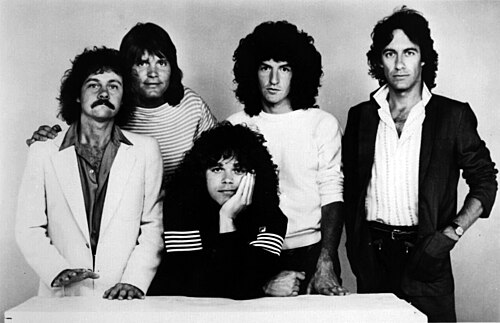
Gary Richrath, REO's lead guitarist and the writer of "Take It on the Run," did not argue the point. He plugged in.
Cronin's 2020 telling to American Songwriter: "Up until that point the band had been totally uninterested in what I was playing, but when Gary Richrath heard the chorus, he plugged one of his vintage Les Pauls into a Marshall double-stack, and cranked up the volume. He may have been simply trying to drown me out." Cronin's own account has him coming up off the piano bench at the sound of it. "That powerful rock edge was exactly what the song needed to fully express the song's message."
Talking to Classic Rock writer Malcolm Dome for AOR Magazine in late 2010, Cronin put Richrath's motive less charitably and the setting more precisely. "We were in S.I.R. Rehearsal Studios in Los Angeles working on the material for Hi Infidelity and I kept pushing this song and getting nowhere," he said. In the end, he said, Gary "got so fed up that he plugged his Les Paul into two Marshall amps and delivered the nastiest solo he could in the song. I'm sure he wanted to piss me off, but the opposite happened. His solo made it come alive. It worked! And the rest is history."
Cronin has been consistent that none of this was strategy. "The next thing we knew, it was a number one record and everyone was calling it a power ballad and acted like we had this strategy for success that made this song happen when really it was just an accident," he told Louisville.com. "Just those guys didn't want to play a soft song and so they took my love song and amped it up a little bit."
Asked whether REO invented the power ballad, Cronin declined the crown and kept the receipt. "I can't say who did it first. All I know is our record went to number one on the Billboard charts, and put REO Speedwagon on the map," he told American Songwriter. "'Keep on Loving You' is often credited with being the first 'power ballad,' but I suspect there were others before it."
What the charts actually did
The Billboard weekly tables show a four-month climb, not an overnight hit. "Keep On Loving You" entered the Hot 100 dated November 29, 1980 at number 88. It reached number one on the chart dated March 21, 1981, in its seventeenth week on the chart, and held the top spot for one week before Blondie's "Rapture" took over on March 28.
The album behind it did the heavier lifting. On the Billboard 200 dated August 1, 1981, the day MTV signed on the air, Hi Infidelity was at number 2, behind The Moody Blues' "Long Distance Voyager." Cronin has told the MTV story slightly bigger than the chart supports, which is worth noting because he is otherwise scrupulous about this stuff.
The Chicago accent, and the sneaking into Fogelberg sessions
One small confession Cronin volunteered to American Songwriter, about the drawn-out delivery of the word "forever" that everybody imitates in the car: "That foreverrrr was actually me channeling Danny Fogelberg."
The two acts shared a manager, Irving Azoff, and studios in Nashville years earlier. "We were making REO/TWO at CBS Studios in Nashville, and Fogelberg was recording his first album down the street at Norbert Putnam's Quadraphonic Studio. I would sneak in and listen as Dan was cutting tracks with Norbert and his band of Nashville cats."
How the telling has grown over the decades
February 2010, Louisville.com (Zach Everson): The rehearsal-room rejection in full dialogue, including "that's not an REO Speedwagon song" and Cronin's songwriter's-rights comeback. Richrath here plugs in and plays power chords, with no stated motive. Cronin insists the whole power ballad thing "was just an accident."
November 2010, Classic Rock Presents AOR (Malcolm Dome): Same year, sharper edges. Cronin names the room, S.I.R. Rehearsal Studios in Los Angeles, says he had been trying for ages to get the band to do a power ballad and was met every time with "This isn't what REO does," and says outright that he believes Richrath was trying to annoy him. Two Marshall amps here, and a solo rather than power chords.
2017, Songfacts (Greg Prato): The emotional telling. The wedding-song irony, the yin-yang reading of the verses, and Cronin's admission that he meant the forever line and it still did not work out. Also his recollection that Hi Infidelity was number one when MTV launched.
April 2020, American Songwriter (Rick Moore): The writing itself, in the most detail he has ever given: the middle-of-the-night wake-up, the old red Wurlitzer, verses in 20 minutes, chorus found the next afternoon at rehearsal. Richrath's guitar is now a vintage Les Paul into a Marshall double-stack, and Richrath's motive is softened to "may have been simply trying to drown me out."
The drift is small but real, and it all points one direction. Over ten years the guitar gear gets more specific, Richrath's hostility gets gentler after his death in 2015, and the song's origin moves from "I walked into rehearsal and sat down at the piano" to a two-part story that starts at home in the dark. The one thing that never softens is what the verses are about.
The honest bottom line
This is a breakup song that got adopted as a wedding song, written by a man who admits he did not come out of the marriage looking as good as the lyric makes him sound, and rescued from the reject pile by a guitarist who may have been trying to bury it. Every romantic thing about "Keep On Loving You" is an accident. What is not an accident is the nerve it took to keep pushing a piano ballad at a hard rock band that had already told him no, and Cronin has never dressed up how badly they wanted him to stop. Years later, Whitesnake's David Coverdale would face the same fight from the other side when David Geffen forced Here I Go Again back into the studio for a 1987 remake Coverdale resisted, and that record became theirs the same way this one became REO's.
FAQ
What is the story behind "Keep On Loving You" by REO Speedwagon? Kevin Cronin wrote it after learning his wife had been unfaithful. The piano intro woke him in the middle of the night, the verses came in about 20 minutes, and he found the chorus the next afternoon at an REO rehearsal, where the band initially told him it was not an REO song.
Is "Keep On Loving You" a love song or a breakup song? Both, by design. Cronin told Songfacts it is "a yin-yang thing, where there is obviously trouble in paradise in the verses," and that he believed a relationship worth keeping deserves everything you have. He and that wife later split.
Why did REO Speedwagon not want to record it? They did not see themselves as a ballad band. Cronin told Louisville.com the response was "So, dude, that's not an REO Speedwagon song," and his answer was that if the band's main songwriter writes a song, it is the band's job to turn it into an REO Speedwagon song.
Who played the guitar solo on "Keep On Loving You"? Gary Richrath. Cronin has said Richrath may have been trying to drown out the piano when he plugged in over the song, and that the aggression is exactly what made the record work.
Did "Keep On Loving You" go to number one? Yes. It debuted on the Billboard Hot 100 dated November 29, 1980 at number 88 and reached number one on the chart dated March 21, 1981, holding for one week before Blondie's "Rapture" replaced it.
Was "Keep On Loving You" the first power ballad? Cronin will not claim it. He told American Songwriter the song is often credited as the first, but that he suspects there were others before it and cannot say who did it first.
Sources
- American Songwriter, Behind the Song, REO Speedwagon, "Keep on Loving You," Rick Moore, April 14, 2020
- Louisville.com, REO Speedwagon's Kevin Cronin interview, Zach Everson, February 24, 2010
- Classic Rock Presents AOR issue 1, Kevin Cronin interview by Malcolm Dome, November 2010, republished at Louder
- Songfacts, Songwriter Interviews series, Kevin Cronin of REO Speedwagon, Greg Prato, 2017
- Yahoo Entertainment, feature on the origins of "Keep on Loving You," quoting Cronin's Songfacts and American Songwriter interviews
- Billboard Hot 100 weekly charts dated March 21 and March 28, 1981, and Billboard 200 dated August 1, 1981
We keep on checking, it is a compulsion.
Part of Stories Behind the Songs. See also Sister Christian and Here I Go Again.