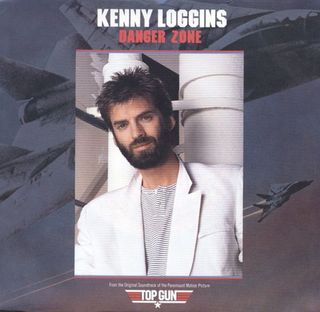
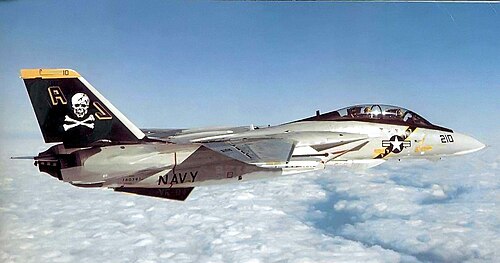
Three hundred songs were auditioned against the opening carrier deck footage of Top Gun and every one of them failed. The song that finally worked was written in a rush by two men who had never seen a finished cut, sung on the demo by somebody else, and offered around Hollywood until a band lost it in a legal argument. Kenny Loggins agreed to sing it without hearing a note of it.
"Danger Zone" was composed by Giorgio Moroder with lyrics by Tom Whitlock in January 1986, after Jerry Bruckheimer asked Moroder to write something for the opening of Top Gun. Joe Pizzulo sang the demo. Columbia, which was releasing the soundtrack, wanted an act from its own roster, and the song went to several artists before Kenny Loggins took it. It peaked at number two on the Billboard Hot 100 on 26 July 1986, held off by Peter Gabriel's "Sledgehammer."
Three hundred songs and none of them worked
Tom Whitlock, who died in 2023 at 68, laid out the whole sequence in a Rediscover the 80s interview published in 2018, one of the fullest first-person accounts of the Top Gun sessions anybody left behind.
The film came to Moroder's studio for practical reasons. "Top Gun came to Giorgio's studios (Oasis Recording Studios) for several reasons. The producers, Don Simpson and Jerry Bruckheimer, had just had massive success with Giorgio on Flashdance," Whitlock said. Bruckheimer, Simpson and music supervisor Michael Dilbeck arrived with a stack of candidates: "The producers and the Music Supervisor (Michael Dilbeck) came to the studio with over 300 songs to audition against various scenes. There was a Sony TV in the studio and they would run footage and play bits of songs against various scenes. Nothing seemed to be working very well so (if I remember correctly) Jerry asked Giorgio to write something."
What Moroder wrote is the record. "'Danger Zone' came from the track that Giorgio cooked up for the opening carrier deck scenes. I wrote the lyrics and Joe Pizzulo sang the demo and they flew it against those opening scenes and it worked," Whitlock said. He was not precious about the lyric even then: "In retrospect, I may have been a bit too clever (or obvious) with all of the allusions but it was fun nevertheless. As with most of the stuff we did in those days, everything was conceived and executed under pressure."
The speed is the part that gets lost. Whitlock's description of the workflow: "Giorgio wrote a track and melody. Richie, Arthur and Brian recorded it and by the next day we were cutting a demo vocal with Joe."
The song nobody could get signed
Having a hit song and having somebody to sing it turned out to be two different problems. "Since there was a soundtrack album deal in place, it took a while to figure out who was going to sing 'Danger Zone' because the record company that was going to release the soundtrack wanted an artist that was signed to their label," Whitlock said.
So it went around. Wikipedia's account, citing a 2022 AXS TV interview with Loggins, has Jefferson Starship offered it first and withdrawing, and Kevin Cronin of REO Speedwagon passing because the notes sat too high for him. Songfacts reports Mickey Thomas of Starship saying the band liked the song but were uneasy about the film's pro-military framing. Corey Hart turned it down because he preferred to write and perform his own material.
The near miss that still gets argued about is Toto. Loggins's own account of it, preserved on the band's official site, is short and unbothered: "I got lucky on that one...Toto was originally selected to sing the song, but their lawyers didn't get along...and they needed a singer in a hurry."
Toto's side is more specific and less forgiving. Wikipedia, citing Steve Lukather's 2019 memoir The Gospel According to Luke, records that when the band submitted their version they were told only Joseph Williams's vocals would be used, and that the band found that unacceptable and pulled out. Lukather has separately made clear that Toto were working on Top Gun material at the time, writing in the liner notes to a Toto ballads collection about the song "Only You": "A song Dave and I actually wrote for the movie Top Gun. It was intended as the theme track, but they chose 'Take My Breath Away' instead. We saved it for one of our records." The ballad that beat it, and the band who did record it, have their own story at Take My Breath Away.
Loggins said yes before he heard it
By the time the song reached Loggins he was already in the building. "I was in the studio recording another song for Top Gun, that I did write...called 'Playing With the Boys.' They asked me if I would be interested in doing Danger Zone...and I needed an uptempo song in my show. So I said yes...and the rest is history," he said in the account kept on Toto's site.
He has been candid that the decision was commercial arithmetic rather than artistic instinct. "I'd been writing nothing but ballads and I needed a rocker for my show," he told Professor of Rock. "In those days, if the movie didn't hit, no one would ever hear it anyway. But if it did hit, then you had a hit record, so it made sense to me to just go for it. So I committed to it having never heard the song."
Whitlock then drove out to meet him. "Once Kenny Loggins was on board, I went to meet him at a house in Encino and ran the lyric down. He moved some stuff around and had a few ideas (please note that anything that makes you cringe in the song is Kenny's fault)," Whitlock said in 2018. "He came over and sang it a few days later. He's masterful in how he uses his voice and extremely adept at recording. It all went down very quickly."
Loggins described the same meeting to Rock Cellar Magazine in March 2023, shortly after Whitlock's death, and the two accounts line up almost exactly. "That's really the only encounter I had with Tom during that period of time. Giorgio sent him out to my house and what he showed me was basically a three chord song. I added chord substitutions, inversions, some melodic and lyric stuff on the bridge," Loggins said. "Tom and Giorgio were very open to whatever lyric changes I brought. Tom was really dedicated as a lyricist and tried really hard to bring the best game he had to whatever Giorgio would present him with."
The most recognisable thing Loggins added is not on paper at all. He put the phrasing of the title line down to somebody else entirely, saying on the film's DVD commentary that he was channelling Tina Turner: "I think that's why I ended up singing DaaangAH zone."
Why Kenny Loggins is not a credited writer
He rewrote chords, wrote into the bridge, altered lyrics, and got no songwriting credit. The reason he has given is procedural rather than personal.
Loggins explained it to Rock Music History: "Giorgio and Tom had written most of the songs for Top Gun, just the two of them, and there's a particular category in the Academies for songs, and if you have like six songs, you can be eligible for this Academy Award, provided it's the same writers." Adding a third name to one song would have broken the run. Loggins took a share of the publishing instead of a credit, and Songfacts reports that the arrangement came apart later when Moroder sold his publishing.
The Academy Award did arrive, for the other Moroder and Whitlock song on that soundtrack, not for this one.
What the chart did, and who was standing on it
The Billboard Hot 100 tables show "Danger Zone" entering at number 85 on the chart dated 10 May 1986. It climbed for eleven weeks and peaked at number two on 26 July 1986. It was number three by 2 August.
The record above it is a coincidence worth savouring. "Sledgehammer" by Peter Gabriel debuted the same week as "Danger Zone," at number 89, four places below it. The two singles climbed the chart together for two and a half months, and the week "Danger Zone" reached number two was the exact week "Sledgehammer" reached number one.
It was Loggins's second biggest hit, behind Footloose, which had gone to number one two years earlier and made him the closest thing the 80s had to a resident soundtrack specialist. The other big soundtrack rocker of that era, Maniac, came out of the same industry machinery, a movie needing an anthem and a song getting rewritten to fit.
How the telling has grown over the decades
This story has an unusual shape: the songwriters told it early and consistently, the singer told it repeatedly and casually, and the band who lost it told it last and most sharply.
Undated, Toto's official site. The earliest Loggins account we can point to is the one preserved on the site of the band who lost the song, in which he calls it luck and blames Toto's lawyers.
2007 and 2008, in passing. Loggins is dismissive of the record while still performing it. Asked about playing his soundtrack hits, he says of this one: "It's a good rock 'n' roll song, but I don't think it holds up that well." In a 2008 interview cited by Wikipedia he goes further, saying the song does not represent him as an artist.
2018, Rediscover the 80s. Whitlock's long interview, the spine of everything anyone knows about how the song was made. It is also the only account with the Encino meeting in it, and the only one where a writer volunteers that the cringe lines belong to the singer.
2019, The Gospel According to Luke. Lukather's memoir puts the Toto collapse down to being told only Joseph Williams's vocals would be used. This is a different story from Loggins's "their lawyers didn't get along," and neither man has ever adjudicated it publicly. Both can be true: a vocal decision handed down through lawyers is exactly the kind of thing that reads as a legal fight from one side of the room and a creative insult from the other.
2022, AXS TV. Loggins adds Jefferson Starship as the first act offered the song and Kevin Cronin as a decline on grounds of vocal range. Neither name appears in Whitlock's 2018 telling, which lists Bryan Adams and admits he cannot remember everyone who was considered.
2023, Rock Cellar. After Whitlock died, Loggins gives the most respectful and most specific version of the writing session: a three chord song that he added substitutions, inversions and bridge material to, with both writers open to his changes. It is the closest thing to a joint account that now exists, since only one of the three men is still alive to give it.
The honest bottom line
"Danger Zone" is a piece of contract work in the purest sense. It was written to picture on demand, demoed by a session singer, shopped around a label roster, refused by at least four acts, and finally cut by a man who agreed to it sight unseen because he needed something fast for his live show. Its own singer spent years saying it did not hold up and did not represent him. There is no romance in any part of that. And yet the first four bars of it still do to a room exactly what they were engineered to do to an audience watching jets launch off a carrier, which is what happens when professionals build something under pressure and get it exactly right.
FAQ
Who wrote "Danger Zone"? Giorgio Moroder composed the music and Tom Whitlock wrote the lyrics, in January 1986, for the Top Gun soundtrack. Kenny Loggins sang it but is not a credited writer, despite altering chords and lyrics.
Why did Kenny Loggins sing "Danger Zone" instead of Toto? Toto were lined up for it and it fell apart. Kenny Loggins has said their lawyers did not get along and that the producers needed a singer in a hurry. Steve Lukather's memoir gives a different reason: the band were told only Joseph Williams's vocals would be used, and pulled out.
Who else turned down "Danger Zone"? Accounts vary on the order, but the names that recur are Jefferson Starship, REO Speedwagon, Bryan Adams and Corey Hart. Loggins has said Kevin Cronin of REO passed because the notes were too high. Corey Hart preferred to record his own material.
Did "Danger Zone" reach number one? No. Billboard's Hot 100 tables show it peaking at number two on 26 July 1986, behind Peter Gabriel's "Sledgehammer." The two songs had entered the chart on the same week in May, with "Sledgehammer" four places lower.
Why is Kenny Loggins not credited as a songwriter on "Danger Zone"? He has explained that Moroder and Whitlock needed to be the sole writers across enough Top Gun songs to qualify for an Academy Award category, so he took a share of the publishing instead of a credit.
Did Kenny Loggins like "Danger Zone"? Not for a long time. He called it a good rock and roll song that he did not think held up well, and said in 2008 that it did not represent him as an artist. He later recorded a new version for Top Gun: Maverick, though the original recording was used in the film.
Sources
- Rediscover the 80s, "Back to the 80s: Interview with Tom Whitlock", 2018
- Rock Cellar Magazine, Kenny Loggins interview, 10 March 2023
- Toto official website, Top Gun soundtrack page, archived 2003, carrying Kenny Loggins's account and Steve Lukather's liner notes for "Only You"
- Songfacts, "Danger Zone by Kenny Loggins", quoting Loggins to Professor of Rock, to Rock Music History, and on the Top Gun DVD commentary
- Wikipedia, "Danger Zone (song)", Background section, citing Steve Lukather's The Gospel According to Luke (2019), Loggins's 2022 AXS TV interview, and the Springfield News-Sun (2008)
- The Hollywood Reporter, Tom Whitlock obituary, 2023
- Billboard Hot 100 weekly charts, 12, 19 and 26 July and 2 August 1986
The only danger zone here is an unchecked claim, we avoid it.
Part of Stories Behind the Songs. See also Take My Breath Away and Footloose.