Seventy songs were already written. The album had been in progress for two years. Then the manager said it still did not have a single, and the artist went home furious and wrote the biggest hit of his career before morning, about how much he did not want to write it.
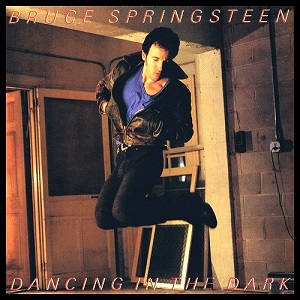
"Dancing in the Dark" was the last song written for Born in the U.S.A. Jon Landau told Bruce Springsteen the album lacked a single, Springsteen refused, then went back to his room the same night and wrote it out of his own exhaustion and boredom. It was cut in six takes on February 14, 1984, released that May, and peaked at number two on the Billboard Hot 100.
The argument, and why you should not trust the famous line
The version everyone repeats comes from Dave Marsh's Springsteen biography Glory Days, not from Springsteen's own mouth. Marsh has him snapping at Landau that he had written seventy songs already and that if Landau wanted another one he could write it himself.
That line is worth pausing on, because it demonstrates exactly why this site quotes primary tellings. Three reputable outlets carry Marsh's sentence three different ways. Guitar Player in 2025 renders it "Look, I've written 70 songs... You want another one, you write it." American Songwriter in 2023 has "I've written 70 songs... If you want another, you write it." The Wikipedia article on the song, citing Marsh directly, gives "Look... I've written seventy songs. You want another one, you write it."
Same anecdote, three wordings, none of them from an interview with Springsteen. Treat it as the gist of a real argument, not as a quotation.
What Springsteen actually said about it
His own account came in a long interview with Bill Flanagan published in Musician in April 1987, and it is calmer and better than the legend.
"Jon [Landau] had been bothering me to write a single, which is something he rarely does," Springsteen said. "But he did that day. And he wanted something direct. That seemed to be what he was hitting on me for at the time."
Then the part that explains the lyric: "I was angry. I had written a lot of songs and was kind of fed up with the whole thing. We'd been making the record for a long time, and I was bored with the whole situation."
And the moment itself, which is the least dramatic version of a famous night ever told: "That particular night, I came home and sat on the edge of my bed, and the thing I remember thinking first was that we had a record, but it wasn't necessarily finished; I could change the whole thing right now if I wanted to. That's all I remember thinking."
No lightning. A man sitting on a bed, tired, realizing the record was not sealed yet.
The song is about the man writing the song
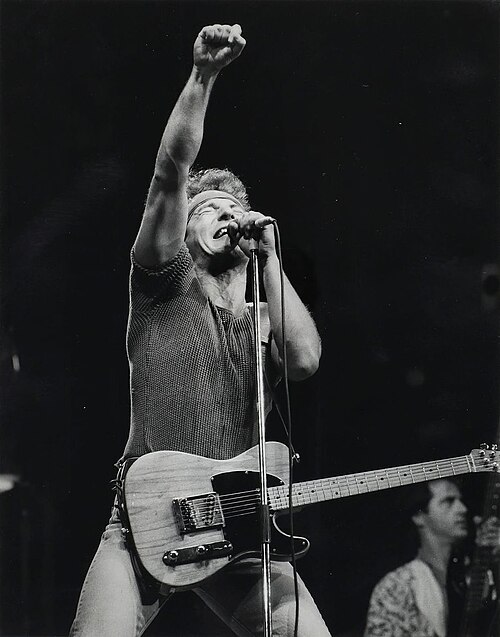
Thirty years later, in his 2016 memoir Born to Run, Springsteen described the song as his own "alienation, fatigue, and desire to get out from inside the studio, my room, my record, my head and ... live." The ellipsis is his.
That is not interpretation, it is the author's own reading, and it lines up exactly with what the lyric does. The narrator gets up in the evening, is sick of looking at himself, wants to change his clothes and his hair and his face, and asks for a little help. Landau asked for something direct. He got a man complaining, in the most radio-ready form available, about being asked for something direct.
What it took to finish it
The band cut six takes of "Dancing in the Dark" on February 14, 1984 at the Hit Factory in New York. Roughly another month went into mixing it, 58 mixes in all, before work was declared finished on March 8, 1984, per Guitar Player's 2025 account.
The sound that dates it, and that a lot of Springsteen loyalists still argue about, is the synthesizer. Rolling Stone's 40th anniversary piece on the album in June 2024 noted that keyboardist Roy Bittan played the analog Yamaha CS-80 across most of the record but switched to a digital synth on "Dancing in the Dark." Bittan's verdict on the older machine, in the same piece: "In some ways it was a crude instrument, because it had these toggle switches."
The video that finished the job
Brian De Palma directed the video, shot at Springsteen's June 29, 1984 concert at the St. Paul Civic Center in Minnesota. The adoring fan pulled from the front row to dance on stage was Courteney Cox, planted in the audience, years before Family Ties or Friends.
Cox has told her side more than once. Recalling the audition among professional dancers, she said: "I thought I was in the wrong place... I was like, 'I don't know what they're doing, but I can't even bend my leg. Like, this is it.'"
The video became Springsteen's first to get heavy MTV rotation and delivered him a young audience that had never bought a Springsteen record.
What the chart actually did
"Dancing in the Dark" debuted on the Billboard Hot 100 at number 36 on May 26, 1984. It reached number two on the chart dated June 30, 1984 and stayed stuck there. Duran Duran's "The Reflex" held it off first. When that fell, Prince's "When Doves Cry" took over the top spot and kept it there. It never went to number one on the Hot 100, and it remains Springsteen's highest-charting single. It won him his first Grammy, for Best Rock Vocal Performance, in 1985.
How the telling has grown over the decades
- 1984 (Dave Marsh, Glory Days): the biographer publishes the confrontation, including the snarled refusal that became the story's signature line. It is secondhand from the start, and later outlets reword it freely.
- April 1987 (Musician, Bill Flanagan): Springsteen's own long account. Landau pushing for a single, his own anger and boredom, and the edge-of-the-bed moment. This is still the richest first-person telling.
- 2016 (Born to Run, memoir): Springsteen names what the song is about in his own words, alienation and fatigue and wanting out of his own head, and rates it among his best-crafted pop songs.
- June 2024 (Rolling Stone): the E Street Band's 40th anniversary interview fills in the machinery, including Bittan's synthesizer switch on this specific track.
Honest note on this one: the origin story is carried by two deep first-person tellings, the 1987 interview and the 2016 memoir, plus decades of secondhand repetition of Marsh's line. Most of what circulates online is a rewrite of one of those three. The wording of the argument drifts every time it is retold, which is exactly what happens to a good line nobody can source to a transcript.
The honest bottom line
This is a manufactured single. It exists because a manager demanded product, it uses the most contemporary and least timeless production on the album, and its author has said outright that he wrote it fed up and bored. Purists have held that against it for forty years. What they cannot get around is that the demand produced the truest lyric on the record: a rock star at the top of his powers admitting he is sick of the sight of himself. Springsteen wrote to order and told the truth anyway, which is the harder trick.
FAQ
What is the story behind "Dancing in the Dark"? Jon Landau told Springsteen that Born in the U.S.A. still needed a single after roughly 70 songs had been written for it. Springsteen refused, went back to his room the same night, and wrote "Dancing in the Dark" out of his own frustration with the process.
Did Springsteen really write "Dancing in the Dark" in one night? Yes. He has described sitting on the edge of his bed that night realizing the record was not finished and that he could still change it. The band recorded six takes two weeks later, on February 14, 1984.
What is "Dancing in the Dark" about? Springsteen wrote in his 2016 memoir that it was about his own alienation and fatigue and his desire to get out from inside the studio, his room, his record and his head. The lyric is a man bored with himself asking for help.
Did "Dancing in the Dark" reach number one? No. It peaked at number two on the Billboard Hot 100 on June 30, 1984, blocked first by Duran Duran's "The Reflex" and then by Prince's "When Doves Cry." It is still his highest-charting single, and it won his first Grammy.
Who is the girl in the "Dancing in the Dark" video? Courteney Cox. She was planted in the front row at the June 29, 1984 show in St. Paul, Minnesota, and pulled on stage in the Brian De Palma-directed video.
Did Springsteen really tell Jon Landau to write the single himself? That line comes from Dave Marsh's biography Glory Days, not from a Springsteen interview, and different outlets quote it with different wording. The argument was real. The exact sentence is not verifiable.
Sources
- Musician magazine interview with Bruce Springsteen by Bill Flanagan, April 1987, as quoted by Guitar Player, October 18, 2025 and American Songwriter, October 5, 2023
- Guitar Player, "Bruce Springsteen on the hit song that was his most personal," Christopher Scapelliti, October 18, 2025
- American Songwriter, "The Story Behind How 'Dancing in the Dark' by Bruce Springsteen Came to Be," October 5, 2023
- Bruce Springsteen, Born to Run (memoir, 2016), as quoted by American Songwriter
- Dave Marsh, Glory Days, as quoted by Guitar Player, American Songwriter and the Wikipedia article on the song
- Rolling Stone, "40 Years of 'Born in the U.S.A.': The E Street Band Looks Back," June 5, 2024
- Songfacts, "Dancing In The Dark by Bruce Springsteen," for video and release details
- Billboard Hot 100 weekly charts, June 30 1984 and July 28 1984
This gun is for hire, but the facts are not.
Part of Stories Behind the Songs. See also Born in the U.S.A. and Hungry Heart.