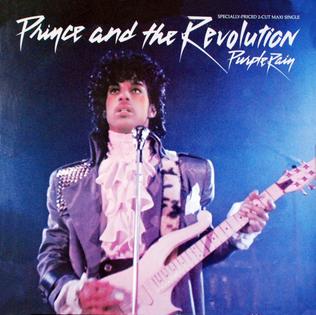
Stevie Nicks was offered the song first and said no because it scared her. The band that finally cracked it heard it as a country tune played with triads on a piano. And the version that sold twenty million copies is not a studio recording at all: it is a benefit gig in a sweaty Minneapolis club, played in front of a crowd that had never heard the song and did not know what to do with it. Everyone in the room that night has been telling the story ever since.
"Purple Rain" was written by Prince in mid to late July 1983 and rebuilt by The Revolution in rehearsal, where guitarist Wendy Melvoin stretched Prince's simple piano triads into the opening chords everyone knows. Stevie Nicks had already turned down an offer to write lyrics for it. The song was performed and recorded live for the first time on August 3, 1983 at First Avenue in Minneapolis, at a benefit for Minnesota Dance Theatre. That live take is the record.
The song Stevie Nicks turned down
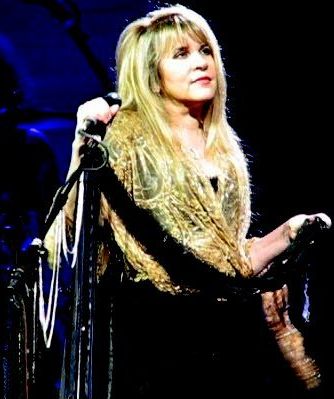
Before The Revolution ever heard it, a cassette went to Stevie Nicks. She has told this story for fifteen years, and the shape of it has never changed: she was flattered, she was overwhelmed, and she said no.
"It was so overwhelming, that 10-minute track... I listened to it and I just got scared," Nicks said in 2011, in an interview with the Minneapolis Star Tribune reported by NME that September. She called Prince back: "I can't do it. I wish I could. It's too much for me." She has never treated it as a regret. "I'm so glad I didn't, because he wrote it, and it became 'Purple Rain'."
Two years later she filled in the physical details. "Out of the blue, one day he gave me this song that he wanted me to write lyrics for," Nicks said in a 2013 interview published by Louder in November 2025. "It was Purple Rain! I've still got the cassette demo. It was the whole instrumental track and every now and again Prince would come in singing, 'Can't get over that feeling,' or something like that." What stopped her was scale. "It was so epic! So off-the-scale," she said. "I told him, 'Prince, I'm sorry, but I've listened to this a hundred times and I don't know where to start.'"
Her verdict on how it landed is generous and a little proprietary at once: "It felt like a movie. It became a movie. It became his signature song too, and I always feel like there's a little bit of me in it."
A little country tune, played with triads on the piano
What Prince brought to his own band did not sound like an epic. It sounded like Nashville.
"He just said, 'I have this song idea, and it goes a little something like this,'" Wendy Melvoin told Vertex Effects, in an interview quoted by MusicRadar in January 2026. Her description of what he played is the single most useful sentence in the whole story: "It's like this little country tune, played with triads on the piano. He had the melody and he had words, and he said 'What are you all going to come with? What can you do? What's your thing on this?'"
Melvoin's answer to that question is the reason the song sounds the way it does. "I thought to myself, 'how do I make those chords bloom with this very simple melody?'" she said. "And I stretched the chords out." MusicRadar spells out the mechanics: she took the triads Prince had played, Bb, Gm, F and Eb, and voiced them as Bbsus2, Gm11, Fadd9 and Ebadd9. Melvoin's own name for what she added is better than the chord symbols. "I call them bluer notes," she said. "I gave it more blue notes."
Lisa Coleman watched Prince hear it. "He was excited to hear it voiced differently," Coleman told The Guardian, as quoted by MusicRadar. "It took it out of that country feeling. Then we all started playing it a bit harder and taking it more seriously. We played it for six hours straight and by the end of that day we had it mostly written and arranged."
Keyboard player Matt Fink remembers the same session as the moment the thing announced itself. "What was great about Purple Rain is that he had the chord progression, he had the lyrics, [but] they weren't finished," Fink told John McKie for his 2025 book Prince: A Sign o' the Times. "He took the song into rehearsal and we're jamming it and we're running through the chord progression and I'm playing the high singing part with the right hand and next thing you know he's singing along to it. That's part of the song."
None of this was unusual for that band in that year. "It was a very creative time," Fink told PopMatters in 2009, in a quote carried by Classic Rock at Louder. "There was a lot of influence and input from band members towards what he was doing. He was always open to anybody trying to contribute creatively to the process of writing." Melvoin put the same arrangement in plainer terms to Mojo back in 1997: "We were absolute musical equals in the sense that Prince respected us, and allowed us to contribute to the music without any interference."
Fink is careful about where the line sat, though. "But Prince was the main lyricist and melody maker for all the songs," he told PopMatters. "And never took any lyrical content from people."
August 3, 1983: a benefit, a hot room, and a tape truck
The song was barely finished when it got played in public. Fink's account, given to Minnesota Public Radio's The Current in 2020, dates it tightly: "Prince didn't write that one 'til the very end, which is more about like mid-to-late July of '83. He brought that song to the group. He hadn't finished the lyrics. He hadn't finished the melody. All he had was the chord structure and he came to us and said, 'Ok, let's try this; let's just start jamming on this chord progression I've got for this song.' And then we all coalesced into what you hear live."
The occasion was a benefit for Minnesota Dance Theatre, whose founder Loyce Houlton had asked Prince directly for help. First Avenue's records show about 1,200 tickets sold at $25, a price the club had never charged before, with roughly 1,500 people inside once staff and guest lists were counted. The night raised $23,000 for the dance company.
It was also Wendy Melvoin's first show with the band, which makes August 3, 1983 the debut of the classic Revolution lineup: Prince, Melvoin, Coleman, Fink, drummer Bobby Z and bassist Brown Mark.
The room was miserable. "We all knew it was a hot, muggy summer night and that First Avenue would be packed, and it would be very uncomfortable for older people to be standing in there," Fink told The Current. "And we were right, 'cause we were all drenched with sweat within two minutes of taking the stage, because that's how hot it was in there."
Outside, a mobile recording truck from the New York Record Plant was rolling. Prince's longtime engineer David Z, brother of Bobby Z, was capturing the show, and nobody read anything into it. "Nobody really knew there was a movie coming out," David Z told The Current. "We just thought it was gonna be a live record, or whatever."
The audience response to the song was not applause. It was silence. "The song seemed to go on forever," fan Heidi Vader remembered. "...nobody was freaking out and excited." Former First Avenue DJ Kevin Cole, describing the camera footage shot that night, saw the same thing from above: "And it's remarkable, but you're also seeing the audience. People are just stunned watching that song."
The director who was still missing a song
Albert Magnoli was in town that night scouting locations for a Prince movie that did not yet have a title. He and Prince had gone through roughly a hundred songs for the film, and Magnoli's problem was structural. "Interestingly enough, there was no 'Purple Rain' in that 100 songs," he told The Current.
He had told Prince exactly what the film lacked. "So I went to him, after I lined up what I thought was the storyline and lined up the songs...and said, we're missing the song," Magnoli said. "...that song that releases you finally to become the person you should become. And he said, ok, I got another song to write."
Then he heard it in the club. "Well, it had the right pacing and it had the right lyric content. It had the right soulfulness and emotion. And it wasn't like anything he had done before," Magnoli said. The exchange afterward decided the title of one of the most famous films of the decade in about four seconds: "I said, 'What's it called,' and he says, ''Purple Rain,'' and then there's a pause, and he says, 'Could we call the movie Purple Rain?' and I go, 'Yes.'"
What you actually hear on the record
The finished track is that August night, lightly doctored. "And you'll see that there's not very much added or changed to the original performance, especially with the song 'Purple Rain,'" David Z told The Current.
The changes are small and specific. Prince added bass overdubs, because the technology of the day could not record a wireless bass cleanly. About five minutes were cut, and the album version still runs past eight. And the crowd you hear is not entirely the crowd that was there, because the real one was too quiet. "When it came time for the movie, I cheated and put a crowd from the Minnesota Vikings in the audience track," David Z said.
Prince also improvised on the night rather than reproducing the rehearsal. "He wasn't playing it exactly like he did it every time at rehearsal," Fink told The Current. "Nor was I playing my piano parts exactly the same at rehearsal that evening. It just did what it did."
On the charts the song did everything but win. The Billboard Hot 100 dated October 6, 1984 shows "Purple Rain" by Prince and The Revolution entering at number 28. It reached number 2 and stayed there two weeks, on the charts dated November 17 and November 24, 1984. Both weeks it was held off the top by Wham!'s "Wake Me Up Before You Go-Go."
How the telling has grown over the decades
- 1997, Mojo. Wendy Melvoin describes the working relationship as musical equality with no hoarding of ideas. The song itself is not yet the subject.
- 2009, PopMatters. Matt Fink establishes the general pattern: band members contributed constantly, and Prince still wrote the words.
- 2011, Minneapolis Star Tribune, reported by NME. Stevie Nicks reveals she was sent the song and turned it down because she got scared.
- 2013 interview, published by Louder in 2025. Nicks adds the physical evidence: she still has the cassette, and Prince sang "Can't get over that feeling" over the instrumental.
- 2017, The Guardian. Lisa Coleman supplies the rehearsal detail that everyone quotes now, the six hours straight and the song leaving its country feeling behind.
- 2020, The Current. Minnesota Public Radio assembles the night itself: Fink's mid to late July timeline, David Z's Vikings crowd, Magnoli's account of naming the movie, and First Avenue's own ticket records.
- 2025, John McKie's book. Fink describes hearing the song coalesce in rehearsal in real time.
- 2026, MusicRadar. Melvoin's Vertex Effects interview finally names what she actually played, triads stretched into suspended and added-note voicings, the "bluer notes."
Two things in the record do not line up, and smoothing them would be dishonest. First, the timeline. Nicks describes receiving a roughly ten-minute instrumental that was already epic enough to intimidate her, while Fink dates Prince bringing the song to the band as mid to late July 1983 with the lyrics and melody unfinished. Both cannot be describing the same object at the same moment, and neither teller has ever been asked to reconcile them.
Second, the sourcing on Nicks herself. NME in 2011 credits her quote to the Minneapolis Star Tribune. MusicRadar in 2026 credits the same words to The Guardian. She has clearly told it more than once, and secondary outlets have not tracked which telling they are carrying.
The honest bottom line
Prince's most sacred song is a rewritten country sketch, played by a band that had rehearsed it for a couple of weeks, in front of an audience so unmoved that the engineer had to import stadium noise to make the tape usable. The lyric was offered to someone else first. The guitar chords that open it were somebody else's voicing. None of that diminishes it. Little Red Corvette had turned him into a pop star; When Doves Cry had given him the nerve to delete a bassline from a number one; and he was writing hits for other people's bands under a fake name, as Manic Monday would prove. "Purple Rain" tells you the truth about how the record actually happened: a good idea handed to the right six people on a hot night, caught on tape by a truck parked outside, and finished before anyone in the room understood what they had just heard.
FAQ
What is the story behind "Purple Rain"? Prince brought a simple, country-flavored song to The Revolution in July 1983. Wendy Melvoin restated his piano triads as stretched, added-note guitar chords, the band rebuilt it in a marathon rehearsal, and it was recorded live at its first public performance on August 3, 1983 at First Avenue in Minneapolis.
Was "Purple Rain" recorded live? Yes. The version on the album and in the film is the August 3, 1983 First Avenue benefit performance, with bass overdubs, about five minutes cut, and crowd noise added. Engineer David Z said he used a Minnesota Vikings crowd on the audience track.
Did Stevie Nicks almost write "Purple Rain"? She was asked to write the lyrics and declined. "It was so overwhelming, that 10-minute track... I listened to it and I just got scared," she said in 2011. She has repeatedly said she has no regrets about it.
Who wrote the opening chords of "Purple Rain"? Prince wrote the progression as piano triads. Wendy Melvoin voiced them on guitar as the sustained, ringing chords heard on the record, describing her change as giving the song "more blue notes."
How high did "Purple Rain" go on the Billboard Hot 100? Number 2. It entered at number 28 on the chart dated October 6, 1984 and held number 2 for the weeks of November 17 and November 24, 1984, behind "Wake Me Up Before You Go-Go" by Wham!.
Why is the movie called Purple Rain? Director Albert Magnoli heard the song at First Avenue while still missing a climactic number for an untitled film. He asked Prince what it was called, and Prince asked whether the movie could take the same name.
Sources
- MusicRadar, "How Prince and The Revolution turned the bare bones of Purple Rain into a lighters-in-the-air epic" (Ben Rogerson), January 2026, carrying Wendy Melvoin's Vertex Effects interview, Lisa Coleman to The Guardian, and Matt Fink from John McKie's 2025 book Prince: A Sign o' the Times
- The Current, Minnesota Public Radio, "The Current Rewind: Aug. 3, 1983," October 2020, with Matt Fink, David Z, Albert Magnoli, Steve McClellan, Kevin Cole and Heidi Vader
- NME, "Stevie Nicks: 'I turned down Prince's offer to write Purple Rain lyrics'," September 16, 2011, reporting a Minneapolis Star Tribune interview
- Louder, "Stevie Nicks on why she turned down Prince's biggest song," November 14, 2025, from a 2013 interview
- Classic Rock at Louder, "The epic story of Purple Rain," June 25, 2019, carrying Matt Fink to PopMatters (2009) and Wendy Melvoin to Mojo (1997)
- Billboard Hot 100 weekly charts dated October 6, November 17 and November 24, 1984
Purple Rain deserves reverence and receipts, we bring both.
Part of Stories Behind the Songs. See also When Doves Cry and Billie Jean.