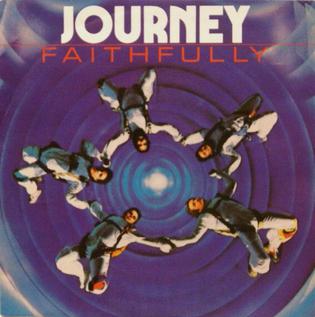
A man watching a road crew climb the rigging in an empty arena. A snowed-in bus, a beer, and a cocktail napkin on a nightstand. Thirty minutes the next morning, and one of the most covered ballads in American rock was finished. Jonathan Cain has told the story of "Faithfully" for forty years, and the two people who were there tell slightly different versions of what happened next in the studio.
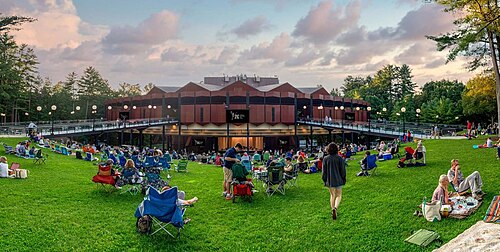
"Faithfully" was written alone by Journey keyboardist Jonathan Cain in the early 1980s, on a tour bus stuck in a snowstorm on the way to Saratoga Springs, New York. He scrawled the opening lines on a napkin, woke up and finished the lyrics in about 30 minutes, and worked it out on a backstage grand piano. It peaked at number 12 on the Billboard Hot 100 on June 11, 1983.
The riggers, the snow, and the napkin
The song did not start with a woman. It started with the crew.
"In all honesty, it's a road song," Cain told American Songwriter in 2021. He was watching Journey's touring crew tear down after a show, men who mostly could not afford to fly their families out to meet them. "I watched the crew take down the whole stage," he said. "I watched the daredevils climb to the top like 'Oh, my God, this is like a circus performance.' I was so touched, and I thought we didn't have a song, but if we had a song, or we sent one home to our loved ones, like a postcard to help bridge the distance between the road and home what would it be."
Then the personal layer, which Cain did not disclose for years. "I started thinking about me and my relationship, and I was missing my new wife at the time, and we were having trouble," he told American Songwriter. "There were early signs that we would probably split apart. I knew I needed to do something that said, 'I love you, and whether or not you want to leave me, here it is,'"
The image that opens the song came from the bus window that night. "So I got on the bus, and there was this grey sky, and the moon was doing some kind of crazy stuff in the clouds, and it looked like the midnight sun."
He wrote the first lines on a napkin, had a beer, and went to sleep.
Thirty minutes, and the line that ends it
Cain woke up to the smell of diesel. The napkin was still there.
"In the morning, I saw the napkin sitting there on the nightstand and I said to myself, 'This is a good song, so I started automatically lining up the lines and filling it in. In 30 minutes, all the lyrics were done. Then all of a sudden, I believe the Holy Spirit sent it to me, but I thought of the line 'I'm forever yours, faithfully.'" That is how he told it to American Songwriter.
Five years earlier he had told Songfacts the same beats with different framing. "I started it on the bus heading to Saratoga Springs. I woke up the next day with a napkin on the side of my nightstand and I looked at the lyrics, 'Highway run into the midnight sun.' Then I got this supernatural download: This is the rest of the song."
"I wrote rest of it down, almost frantically. I'd never had a song come to me so quickly that it was anointed, supernatural. Literally, in 30 minutes I had written that song."
He carried the napkin to the next stop. "I had the napkin in my pocket and I put it on the piano. I had a big grand piano there by the orchestra. I played through it and I thought, 'Man, this is good.'"
And he finished it alone, which was not his habit. "Normally I would go to Steve Perry or somebody and say, 'Help me finish this song.'" This time he did not.
Two versions of how it got recorded
Here the tellings split, and both men were in the room.
Cain's version, to American Songwriter in 2021, has Steve Perry setting a condition. "Perry said to me 'I'll sing it on one condition, you can't be in the room when I'm singing,'" Cain recalled. "I said, 'fine,' and we cut it in three takes. We never played it before. We never rehearsed it. That's how good Journey is."
Neal Schon's version, given to Billboard in 2016, separates the band track from the vocal entirely, and adds that Schon nearly did not play on it at all. "I didn't know what to do on it so I said 'I'll just sit this one out,' and everybody went, 'No, no, just play, play whatever comes to your mind,'" the guitarist said. "So I wrote out my own little chart and I went out, and I believe we played the song twice and that was it. There were no vocals on it yet. Steve [Perry] came in the next day and kicked everybody out of the studio 'cause he wanted to sing it by himself."
One thing both agree on: nobody labored over it. Cain has also said he gave Schon exactly one instruction for the part everyone hums, telling the guitarist to "be a French horn."
The dream nobody else describes
The most-repeated claim about "Faithfully" is that the melody came to Cain in a dream. That claim traces to Schon, not to Cain.
In the liner notes to Journey's 1992 box set, Schon wrote: "He (Cain) told me he got the melody out of a dream. I wish something like that would happen to me." Audacy repeated it in April 2023, and it has circulated ever since as the origin story.
Cain's own tellings never say dream. They say bus, napkin, waking up, and 30 minutes of writing. The two accounts are not contradictory, since a man who wakes with a finished song in his head might describe it either way, but the difference in wording is worth knowing about, because the version most people repeat is the one Cain did not say.
The phone call from Prince
In early 1984, Cain was told Prince wanted to talk to him. He went to Columbia Records' offices in Los Angeles and took the call.
Prince's opening, as Cain told Billboard in 2016: "I want to play something for you, and I want you to check it out. The chord changes are close to 'Faithfully'." And the reason for the call: "and I don't want you to sue me."
The song was "Purple Rain." Cain heard it and did not hesitate. "I thought it was an amazing tune, and I told him, 'Man, I'm just super-flattered that you even called. It shows you're that classy of a guy. Good luck with the song. I know it's gonna be a hit.'"
He never considered asking for a writing credit. "No, no, that'll just bring bad juju on you, and you don't want to do that," Cain told Billboard. "I just thought it seriously showed the kind of caring, classy guy Prince was."
Schon remembered the band's side of it the same way: "Prince felt, I guess, it was obvious enough that he was worried we were going to sue him," the guitarist told Billboard. "I think he called our office asking about it and we all talked about it and everybody said, 'Nah, it's the highest form of flattery. Let it go.'"
There is a coda. Years later, Cain and Schon learned through a mutual contact in Minneapolis that Prince had studied Schon's playing closely. "How much he loved Neal Schon is crazy," Cain told Billboard. "He studied Neal for so many years, learned his licks and made them his own."
What the charts actually did
"Faithfully" was not a blockbuster single. It entered the Billboard Hot 100 dated April 16, 1983 at number 55 and peaked at number 12 on the chart dated June 11, 1983, in its ninth week. Irene Cara's "Flashdance...What a Feeling" was the number one song in America that week.
Number 12 is the whole point. This is a song whose cultural footprint has almost nothing to do with its chart peak. It got there through radio, through weddings, through every band that has ever covered it in a bar, and through forty years of Journey opening the piano intro to an arena that already knows every word.
How the telling has grown over the decades
1992, Journey box set liner notes: Neal Schon introduces the dream. "He (Cain) told me he got the melody out of a dream." This is the earliest version in wide circulation and the source of a claim Cain himself does not make.
2016, Billboard (Gary Graff): The Prince phone call, told by Cain in detail for the first time in a major outlet, days after Prince's death. Schon supplies the recording session from his own angle, including his reluctance to play on it.
November 2016, Songfacts (Dan MacIntosh): Cain reframes the song as devotional. "If you take 'Oh girl' and you put 'Oh God' in there, you've got a Christian song." The napkin, the bus to Saratoga Springs, the grand piano, and the half hour are all here, described as a "supernatural download."
September 2021, American Songwriter (Tina Benitez-Eves): The most complete version. The riggers and the crew's families as the actual trigger, the snowstorm, the grey sky and the moon that looked like the midnight sun, the beer, the diesel smell, and the admission that his own marriage was already showing cracks when he wrote a song about fidelity.
The drift runs in a clear direction. In 2016 this is a song God gave him. In 2021 it is a song about the crew, and about a wife he was losing. Both are true and Cain has never retracted either. What moves is which layer he is willing to lead with.
The honest bottom line
"Faithfully" is a road-crew song dressed as a love song, written by a man whose own marriage was coming apart while he wrote it, and it stalled at number 12. Every romantic reading the song gets at weddings sits on top of something sadder: the distance was real, the trouble was real, and the promise in the chorus was aimed at a marriage that did not survive it. That is exactly why it lands. Nobody writes a line like that from a comfortable place. Two months later the same album produced Don't Stop Believin', a song about strangers holding on, and Perry would chase the same emotional exposure on his own two years later with Oh Sherrie, a love song aimed at the woman who replaced the road.
FAQ
Who wrote "Faithfully" by Journey? Jonathan Cain, alone. He started it on a tour bus headed to Saratoga Springs, New York, wrote the opening lines on a napkin, and finished the lyrics in about 30 minutes the next morning.
What is the story behind "Faithfully"? Cain was watching Journey's road crew tear down a stage and thinking about how the crew and band were separated from their families. He was also missing his wife and could already see the marriage was in trouble. The song came out of both things at once.
Did the melody for "Faithfully" come to Jonathan Cain in a dream? That claim comes from Neal Schon, who wrote in the liner notes to Journey's 1992 box set that Cain "told me he got the melody out of a dream." Cain's own interviews describe waking up, finding the napkin, and finishing the lyrics in 30 minutes, without using the word dream.
Did Prince ask Journey for permission to release "Purple Rain"? He called Jonathan Cain in early 1984 to play him the song, told Cain the chord changes were close to "Faithfully," and said he did not want to be sued. Cain told him he was flattered and to go ahead. He never asked for a writing credit.
How high did "Faithfully" get on the charts? It peaked at number 12 on the Billboard Hot 100 on the chart dated June 11, 1983, after debuting at number 55 on April 16, 1983.
How long did it take to record "Faithfully"? Very little time, though the two accounts differ. Cain says the vocal was cut in three takes with no rehearsal. Schon says the band played the song about twice with no vocals on it, and Steve Perry came in the next day and cleared the studio to sing it alone.
Sources
- American Songwriter, "Behind the Song: 'Faithfully' by Journey," Tina Benitez-Eves, September 10, 2021
- Billboard, "Why Prince Asked for Journey's Blessing Before Releasing 'Purple Rain'," Gary Graff, April 27, 2016
- Songfacts, Songwriter Interviews series, Jonathan Cain of Journey, Dan MacIntosh, November 10, 2016
- Audacy, feature on the origins of "Faithfully," April 17, 2023, quoting Neal Schon's liner notes from Journey's 1992 box set
- Billboard Hot 100 weekly chart dated June 11, 1983
Faithfully is also how we treat the facts.
Part of Stories Behind the Songs. See also Don't Stop Believin' and Purple Rain.