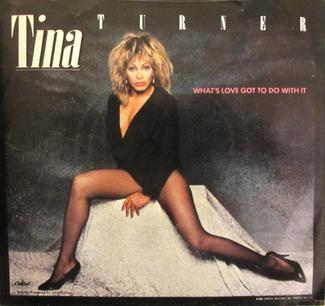
Two songwriters sat in a room strumming acoustic guitars, watching the clock and yawning, and one of them finally said out loud that it was not happening. Cliff Richard's office had already passed on the song they eventually wrote. Bucks Fizz cut it first and shelved it. The singer who took it to number one told the producer to his face that she thought it was throwaway pop. And after four weeks of building the record, the engineer's finished mix got thrown out in favor of a cassette the producer had in his pocket.
"What's Love Got to Do with It" was written by Terry Britten and Graham Lyle in Britten's studio in a single afternoon, after they abandoned acoustic guitars for a drum machine around 4pm. Cliff Richard's people rejected it, Bucks Fizz recorded it in February 1984 and shelved it, and Tina Turner disliked it. It reached number one on the Billboard Hot 100 on September 1, 1984 and held for three weeks.
The afternoon that was going nowhere
Britten gave the fullest account of the writing session to International Musician and Recording World in 1986, an interview MusicRadar returned to in 2024. Lyle showed up with the wrong instrument for the room.
"Graham came over with his acoustic guitar," Britten recalled, "and even though I hadn't written on acoustic for years I thought I'd give it a go. We were strumming away on some wishy washy stuff and both looking at our watches and yawning. It wasn't going at all well."
Then Britten changed the tools, and the song appeared almost immediately.
"Round about 4pm I said. 'This isn't happening. Have you ever written with a drum machine?' and he said 'no' because he was suspicious of electronics. But I worked up a feel on the machine, got the electric guitar out with a nice sound on it, and we wrote the music to What's Love Got To Do With It in a couple of hours, and finished off the lyric the next day!"
Lyle, interviewed by Jim Birmingham for Songwriter Magazine, described the way the two of them worked as a demo-first operation, which is exactly why the finished record ended up chasing a rough tape. "In most cases, certainly when I was writing with Terry Britten we would spend ten times as long recording as we had writing the song in the first place," Lyle said. "Even with Tina Turner, where we had already done something like fifteen songs, we still produced pretty polished demos."
The song nobody wanted
Before Turner, the song went begging. Britten and Lyle offered it to Cliff Richard, the artist Britten had already written "Devil Woman" and "Carrie" for, and Richard's people turned it down. Songfacts notes Richard finally recorded it himself in 2001, seventeen years late, for his covers album Wanted.
British pop group Bucks Fizz got it next. Member Jay Aston asked to sing lead after hearing the demo and was told by the producer that the song was unsuitable for a female lead vocal. The group recorded it in February 1984 with Bobby G singing lead, intended for their album I Hear Talk, and shelved it once Turner's version came out first. Aston has said the demo was very similar to the eventual Turner version, while the Bucks Fizz recording went in a very different direction. Their version stayed unreleased until a 2000 reissue.
How Britten got to Tina Turner at all
The connection ran through David Bowie. "It was [David] Bowie who first got Capitol interested in reviving Tina's career," Britten said in 1986. "When he was in New York playing them the finished mixes of the Let's Dance album in 1983, he told them she was his all-time favourite performer."
Bowie also handed Britten his first Turner job, and a small nightmare with it. "David had this song Girls for Tina, but he was too busy to produce it himself," Britten said. "So they asked me to do it. All I had to work from was a Portastudio demo with a drum machine, a keyboard and Bowie's voice. That was pretty terrifying because the day we finished it, they took it across to him and I had to sit and sweat to see what he thought of it. Fortunately, he liked it."
Britten wanted more Turner work for a reason that had nothing to do with stardom. "I jumped at the opportunity. Not just because of who she was, but because I was fed up with people recording my songs, smoothing them all out, and losing all the atmosphere."
"She really didn't like the song"
Turner's resistance is the part every teller agrees on. "It was a little more difficult when we first started working together on What's Love because she really didn't like the song," Britten said. "Over the years she'd got herself locked into thinking she was nothing but a rock 'n' roll screamer. In fact she told me when we first met that she thought What's Love was a throwaway pop number her manager and her record company wanted her to do."
Engineer John Hudson, who recorded the sessions at Mayfair Studios in London, told Sound on Sound in May 2004 that nobody in the room even expected it to be the single. "Tina didn't like it, and she, like the rest of us, was probably assuming 'I Can't Stand The Rain' would be released, because it was a really rocking track."
Turner, for her part, later framed her own resistance as the thing she had to get past. Writing in her 2020 book Happiness Becomes You, quoted by Songfacts, she said: "If I hadn't been willing to go outside my comfort zone, open my mind a little wider ... who knows if I would have broken through in my career."
The vocal she called the hardest of her life
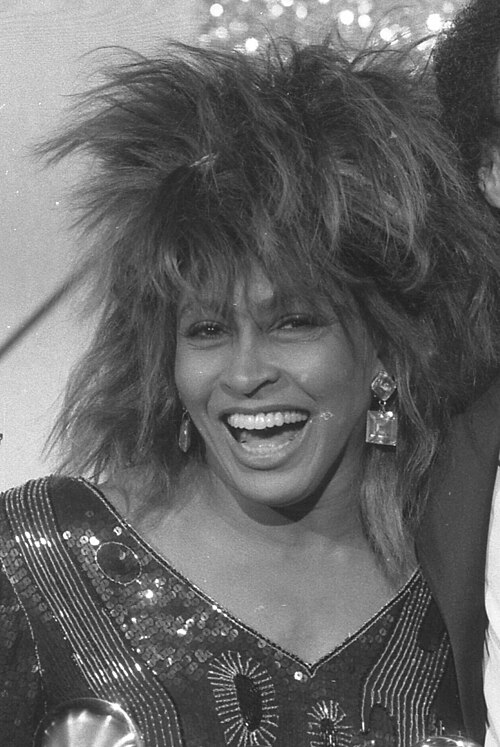
Hudson's account of the vocal session is the most vivid document of how the record actually got made. Turner walked in and sang it the only way she knew how.
"When we first put the track up, Tina sang like she was on stage in front of 25,000 people, belting it for all she was worth, and Terry was sitting there shaking his head, clearly concerned that this was going to be a disaster," Hudson said. "He said 'Tina, you just need to back it off a bit,' and we spent ages trying to get her to do that, but she didn't appear to know what 'back it off' meant."
It got tense. "She began getting annoyed, saying 'I sing everything like this!' to which Terry said 'But this is a love song,'" Hudson recalled. She was also, physically, too loud for the equipment. "She was so loud, it was unreal," Hudson said. "we had the doors closed and they could hear her in the reception area!" The distant valve microphone overloaded and Britten panicked in the control room: "He said, 'It's distorting! It's distorting! Quick, quick! Fix it! Fix it!'"
The fix was not technical. Britten walked into the live room and put his own ear next to the microphone. "In the end Terry told Tina 'Forget about the microphone. Imagine you're singing only to me, not an audience. Sing into my ear,'" Hudson said. "Terry just stood there with his ear by the microphone and said 'Right, sing the first verse,' and by the time we'd recorded the verses with him standing there with his ear in her face, she had totally got the hang of it."
Britten described the same negotiation from his side, and the result. "She began trying to take the song at full tilt right from the start. But I said 'No. We've got to start it quietly and build it all the way through. You can wail at the end'." The demand was total: "That meant she had to rethink her style of singing totally, and put lots of emotion in there while at the same time hardly singing at all. The song had to sound very intimate, and she'd never done that sort of singing before. Afterwards she told me that it was the hardest vocal she'd ever had to do in her life."
The mix that got thrown away
Hudson spent weeks building the record: Fairlight strings, percussion, backing vocals from Tessa Niles, a real drummer replacing the Linn drum machine, a real harmonica part that got replaced by a DX7 patch tweaked to sound like a flute. He was proud of it. "Everything was coming together, there were all these effects, and I was thinking 'Ohhh, this is the best thing I've ever done! It's bloody amazing!' I was so excited about it, I could hardly sleep."
Britten came in on a Sunday morning, listened all the way through without moving, and said nothing. "after several seconds he finally said 'Ah, that's not right.'" Hudson's reaction is on the record too: "Well, I nearly murdered him," he said, "I honestly could have grabbed him around the throat."
Then Britten produced the cassette. "he pulled a cassette out of his pocket and he said 'Just play this.'" It was the rough monitor mix from the day Turner sang: drum machine, guide bass, damped guitars, a synth sketch of the harmonica part, and the vocal. Nothing else.
"We put that on and listened to it all the way through," Hudson said, "and afterwards Terry said 'That's it. That is it.'" His instruction was blunt: "It's just too much. Play the vocal and the rhythm section." Hudson pulled down the strings, the backing vocals, the overdubs. Then they took out the live drums and flew the original Linn drum machine parts back in off the first 24-track reel, which had never been wiped.
"As soon as I pushed the faders up, pressed Play, and took the real drummer out, it was so tight, and I honestly had no doubt," Hudson said. "this was going to be a hit." His verdict on the whole thing: "It was magic that we made a cassette of the monitor mix when we recorded the vocals." And: "The whole process is so complex. There are no rules."
What it did
"What's Love Got to Do with It" debuted on the Billboard Hot 100 at number 92 on May 19, 1984, reached number one on September 1, 1984, and stayed there the weeks of September 8 and September 15, three weeks in all. It was Turner's first and only solo number one on the Hot 100, and at 44 she was, at the time, the oldest female solo artist to top that chart. On the Billboard Hot Black Singles chart it stalled at number two for five weeks, held off by Prince's "When Doves Cry," which also beat it to the top of the 1984 year-end Hot 100.
At the 27th Grammy Awards in February 1985, Turner won three, including Record of the Year and Best Pop Vocal Performance, Female, for this song. Britten and Lyle took Song of the Year as its writers.
Britten's opinion of the categories people file his work under has not softened. Asked in 1986 about being labeled an MOR songwriter, he said: "They're all just songs to me. I don't know anything about that categorisation crap."
How the telling has grown over the decades
1986, International Musician and Recording World. Britten gives the origin: the yawning acoustic session, the 4pm switch to a drum machine, music in a couple of hours and the lyric the next day, the Bowie connection, Turner's "throwaway pop" verdict, and the vocal she called the hardest of her life. This is the foundation telling and nothing later contradicts it.
May 2004, Sound on Sound. Richard Buskin's Classic Tracks piece hands the story to engineer John Hudson, and the record's real turning point arrives: the two-microphone vocal setup, Britten's ear at the mic, the four weeks of overdubs stripped back to a pocket cassette, the drum machine flown back in off an unwiped reel.
Songwriter Magazine, International Songwriters Association, Graham Lyle. Lyle's account is about method rather than the afternoon itself: the polished-demo discipline he and Britten shared, and his own placement of the song in his catalog. "was the biggest song I wrote, what with winning the Grammy and Tina going to Number 1 in America."
2020, Happiness Becomes You. Turner writes her resistance into her own story, framing the song as the moment she went outside her comfort zone rather than the moment a good song got past her.
2021, the documentary Tina. The film adds Britten's coaching image of asking her to slow the pace and imagine she was jogging, a detail that had not circulated widely before.
Where the tellings drift: Sound on Sound describes Turner as 45 at the time of the comeback, while the chart facts put her at 44 when the single hit number one. The demo trail also gets compressed depending on the teller. Songfacts lists Donna Summer and Bucks Fizz as offered the song, and Summer has said she sat with it without recording it, while Bucks Fizz actually cut a version. Britten's 1986 telling skips the rejections entirely, which is a normal thing for a writer to do once a song has won a Grammy.
The honest bottom line
The singer thought it was throwaway pop. Two of Britain's better songwriters had to be bored into writing it, and at least three acts passed on it or shelved it before Turner sang a note. Nothing about the origin is romantic. What saves it is that everyone involved kept telling the truth about that afterward, and the record itself is a lesson in subtraction: four weeks of production thrown out for a cassette rough, a live drummer swapped back for a drum machine, a huge voice talked down to a whisper. It is the most restrained record Tina Turner ever made and it is the one that gave her the rest of her career. Prince's When Doves Cry, the other 1984 number one defined by what was taken out, would edge it on the year-end chart, and the two of them owning the same summer is as good a snapshot of the decade as any chart run produced.
FAQ
What is the story behind "What's Love Got to Do with It"? Terry Britten and Graham Lyle wrote it in Britten's studio after an unproductive acoustic session. Britten switched to a drum machine and electric guitar around 4pm, the music came in a couple of hours, and the lyric was finished the next day. It was rejected by Cliff Richard's office, recorded and shelved by Bucks Fizz, and disliked by Tina Turner before she recorded it.
Who wrote "What's Love Got to Do with It"? Terry Britten and Graham Lyle. Britten also produced the record and won Song of the Year with Lyle at the 27th Grammy Awards. Lyle had previously been half of the duo Gallagher and Lyle.
Did Tina Turner like "What's Love Got to Do with It"? No, not at first. Britten said in 1986 that when they met she told him she thought it was "a throwaway pop number her manager and her record company wanted her to do." Engineer John Hudson said the room assumed "I Can't Stand The Rain" would be the single instead.
Was "What's Love Got to Do with It" offered to other artists first? Yes. Cliff Richard's people rejected it, and Bucks Fizz recorded a version in February 1984 with Bobby G on lead vocal that was shelved when Turner's release beat it out. Richard eventually recorded it himself in 2001.
When did "What's Love Got to Do with It" hit number one? It reached number one on the Billboard Hot 100 dated September 1, 1984 and held the top spot for three weeks. It debuted on the chart at number 92 on May 19, 1984.
Why does the record sound so stripped back? Because the finished production was abandoned. Britten rejected the fully built mix and played engineer John Hudson a rough cassette of the monitor mix from the vocal session. They pulled the strings, backing vocals and live drums back out and rebuilt the mix around the drum machine, the guide bass and the guitars Turner had actually sung to.
Sources
- International Musician and Recording World, Terry Britten interview, 1986, as quoted by MusicRadar (Andy Jones), last updated February 23, 2024
- Sound on Sound, "Classic Tracks: Tina Turner 'What's Love Got To Do With It?'" by Richard Buskin, May 2004, John Hudson interview
- Songwriter Magazine, International Songwriters Association, Graham Lyle interview by Jim Birmingham
- Songfacts, "What's Love Got To Do With It by Tina Turner," including Tina Turner's 2020 book Happiness Becomes You and the 2021 documentary Tina
- Wikipedia, "What's Love Got to Do with It (song)," Background and recording, for the Bucks Fizz and Jay Aston account
- Billboard Hot 100 weekly charts, September 1, September 8 and September 15, 1984
- Grammy.com, "Tina Turner's Second-Hand Emotion"
What is love got to do with it? Nothing. Rigor, everything.
Part of Stories Behind the Songs. See also When Doves Cry and Sweet Dreams.