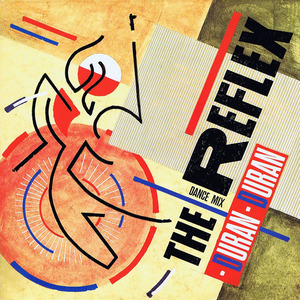
The biggest hit Duran Duran ever had started as track one on an album they had exhausted themselves making, and it was not going to be a single at all. The version everybody knows is not the version the band recorded. And when the man who fixed it sent the fix back, the American record label's first reaction was to try to bury it.
"The Reflex" was the opening track on Seven and the Ragged Tiger, too long at 5:29 to release as a single. After hearing Nile Rodgers's remix of INXS's "Original Sin," Duran Duran hired Rodgers to rework it. He looped the hook, invented the stuttering "Fle-fle-fle" sample, and cut it to roughly four and a half minutes. Capitol executives hated it. Released 16 April 1984, it hit number one on the Billboard Hot 100 on 23 June 1984.
The album that nearly ate the band
Seven and the Ragged Tiger was recorded across three continents through 1983, including five weeks at AIR Studios in Montserrat, and the band did not enjoy it. Asked by Q in February 2008 whether they had been sending themselves up, bassist John Taylor answered flatly: "I think so. I hated the procrastination of that album. It was approached like an old-school Dutch painting. Hours spent perfecting a cymbal sound. There was a lot of sitting around and I felt like a caged animal. I was drinking and looking for a way out really."
The touring was no gentler. Nick Rhodes has called the Sing Blue Silver tour a "golden cage." As he put it in a quote carried by Dig in 2023: "There were always hundreds and hundreds of people outside... I can say that I am very familiar with the kitchens of the world's hotels." John Taylor's summary of the era, in the same piece: "The madness was always a micron below the surface."
Simon Le Bon has never pretended the album concept landed. "The title was supposed to be about us seven (the five band members, plus their two managers) in this fairy tale, with the ragged tiger who was 'fate' or 'luck,'" he told Q. "I don't think anyone got it."
Why the album track could not be the single
"The Reflex" was sequenced first on the record, so the band clearly rated it. But the first two singles pulled from the album were "Union of the Snake" and "New Moon on Monday," and by the time the label wanted a third, the obvious candidate had a problem: at 5:29, the album version was not a radio single, and it carried none of the samples the world would later recognize.
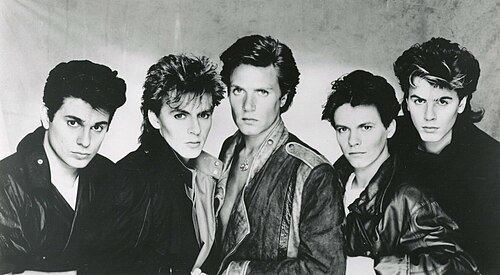
What the band did next was not a trim. They handed the song to somebody else. Duran Duran had heard Nile Rodgers's rework of INXS's "Original Sin" and wanted that. Rodgers at the time was in the middle of the run that produced David Bowie's Let's Dance and Madonna's Like a Virgin.
What Rodgers actually did to it
Rodgers has told the mechanics of it plainly. In Steve Malins's Duran Duran biography Notorious, quoted by Dig in 2023, he described hearing the record inside the record: "I got the track and listened to it, and I picked up on this obvious little hook thing... I went, 'Wow, that's the record, I could make a loop out of that.' And then I came up with the 'Fle-fle-fle'. I sent it to the guys; they thought it was fantastic."
That stutter is one of the earliest genuinely famous uses of sampling on a pop number one, and the band themselves could not immediately identify what they were hearing. "We weren't sure if he was scratching," Le Bon told Songfacts. "Then we figured out he was repeating certain tracks but within the mix, not the whole track. It was quite innovative."
Drummer Roger Taylor gave his own version of it on the band's official site in February 2011, answering a fan who asked whether anything had been re-recorded: "Actually, by the time we got to 'The Reflex' Nile Rodgers was up to all sorts of tricks, he was starting to use sampling and tape editing techniques, extending our recordings in a way that we hadn't heard before. He single handedly transformed what was an 'album track' into the most amazing dance track..all good news for the drummer!"
Rodgers's own framing has stayed consistent for decades and stayed blunt. Talking to Classic Pop, in a piece published in March 2015, he ran through his three jobs for the band: "For The Reflex... I came in and rescued it with a remix." Of the relationship generally: "The great thing about Duran is that they were always desperate."
The phone call from the tour bus
The part of this story that has aged into something bigger than a remix anecdote is what Capitol did when they heard it. Rodgers has said the news reached him from Nick Rhodes, calling from the band's tour bus.
"I still remember the sorrow in Nick Rhodes' voice," Rodgers said, in the telling relayed by Dig in 2023. "[He said] 'Nile, we've submitted it to the record company, and they hate it... they say you've made us sound too Black.'"
The label lost. The remix went out as the single on 16 April 1984, exactly as Rodgers had sent it, with Jason Corsaro credited alongside him on the remix. John Taylor's verdict, quoted by Dig: "Nile had created something extraordinary, beyond our wildest imaginings."
Taylor also won the argument about the video. Instead of another exotic location shoot, "The Reflex" clip was cut from two nights of concert footage at Maple Leaf Gardens in Toronto, directed by Russell Mulcahy. "I wanted to put aside all the conceptual filmmaking for a moment and show what a great live band we had become," Taylor wrote in his 2012 autobiography In the Pleasure Groove. "But with style. With Russell Mulcahy directing."
Two weeks at number one, and who was standing behind it
The chart run is worth reading slowly, because it is a snapshot of the single most crowded month in 80s pop. "The Reflex" entered the Billboard Hot 100 at number 46 on 21 April 1984. Nine weeks later, on 23 June 1984, it went to number one, pushing Cyndi Lauper's "Time After Time" down to number two. It was the band's first American number one.
The following week, 30 June 1984, it held the top spot, and the song sitting at number two was Bruce Springsteen's "Dancing in the Dark," which had climbed from number four and would never get past that position. Prince's "When Doves Cry" was at number three that week. On 7 July 1984, "When Doves Cry" took the number one spot, Springsteen stayed at number two, and Duran Duran's run was over at two weeks. Springsteen's biggest hit was blocked by two records in a row, and Duran Duran's remix was the first of them.
The one thing Simon Le Bon will not tell you
There is no origin story for the lyric, and that is deliberate. Le Bon has held the same line for forty years. "It's a kind of childish song," he told Absolute Radio. "There have been times when I've felt a little tired of it, but that's also to do with the fact that people always ask me what the song's about, and I never tell people what songs are about."
John Taylor has come closest to explaining the appeal of not knowing. "It's a really interesting lyric," he told Songfacts. "You wouldn't hear a lyric like that today. The early '80s was really great for profoundly weird, paranoid pop lyrics."
So the fan theories run free: Alice in Wonderland, a mirror, a child, sex, none of them confirmed by anyone who was in the room. The song's actual documented story is not about what the words mean. It is about what happened to the record after the words were sung.
How the telling has grown over the decades
The pieces arrived in a strange order. Rodgers's account of building the loop and the "Fle-fle-fle" sample was published in Steve Malins's band biography Notorious and has been recirculating ever since, including in Dig's 2023 write-up. Roger Taylor added the studio-side detail in February 2011 on the band's own site, framing Rodgers's tape editing as something the band had genuinely not heard before. John Taylor's 2012 autobiography In the Pleasure Groove supplied the video decision in his own words. Classic Pop's Rodgers interview, published in March 2015, boiled his role down to one verb: rescued. And the Capitol "too Black" line, which is now the headline of the whole story, reaches most readers third-hand, through Dig's 2023 retelling of Rodgers's account.
The tellings do not sit perfectly flush. Rodgers remembers sending the remix and the band thinking it was fantastic. Le Bon's own recollection is that they could not work out what Rodgers had done and had to figure out that he was repeating tracks inside the mix. Both can be true of the same afternoon, and neither man has ever adjusted his version to fit the other's. Nobody outside Capitol has put a name to the executive who objected, which is why that quote always arrives as reported speech inside Rodgers's memory of a phone call, and it is worth reading it as exactly that.
The honest bottom line
Duran Duran did not write their way to number one in America. They wrote a five and a half minute album track during sessions they hated, and a producer from another band turned it into a hit with editing tools most listeners had never heard before. The lyric means nothing anyone will confirm. The most famous sound on the record was made by a man who was not in the group. And the label that paid for all of it wanted to stop it going out. None of that has dented the song for a single day since. Hungry Like the Wolf had broken the band in America on swagger alone; this time it took a hired producer and a stolen sample to push them past number three. The record does the one thing pop records are supposed to do: it makes the first four seconds unmistakable.
FAQ
What is the story behind "The Reflex" by Duran Duran? It was the opening track on Seven and the Ragged Tiger, too long at 5:29 to be a single. Duran Duran hired Nile Rodgers to remix it after hearing his rework of INXS's "Original Sin." Rodgers looped the hook and added the stuttering sample, and the remix became the band's first American number one.
What is "The Reflex" actually about? Simon Le Bon has never said, on purpose. He has called it "a kind of childish song" and has stated flatly that he never tells people what his songs are about. Every reading of the lyric beyond that is a fan theory.
Who remixed "The Reflex"? Nile Rodgers, with Jason Corsaro credited alongside him. Rodgers created the looped hook and the stuttering "Fle-fle-fle" vocal effect using early sampling techniques.
Did the record label really hate the remix? Yes. Rodgers has said Nick Rhodes phoned him from the band's tour bus to report that Capitol executives hated the mix and told the band it made them sound, in the label's words, too Black. The remix was released unchanged.
When was "The Reflex" number one? It reached number one on the Billboard Hot 100 dated 23 June 1984 and held for a second week on 30 June 1984, then was replaced by Prince's "When Doves Cry." It had debuted at number 46 on 21 April 1984.
Is the album version of "The Reflex" different from the single? Completely. The album version runs 5:29 and has none of the samples. The single is Rodgers's remix, cut to roughly four and a half minutes, and it is the version used in the video and on radio.
Sources
- Dig!, "The Reflex: How Nile Rodgers Helped Duran Duran Score Their Biggest Hit" (Mark Elliott), 16 April 2023, quoting Nile Rodgers from Steve Malins's Duran Duran biography Notorious and John Taylor's 2012 autobiography In the Pleasure Groove
- Classic Pop, "Godfathers of Pop" Nile Rodgers interview, published March 2015
- Duran Duran official site, Ask Katy, Roger Taylor answer, 5 February 2011
- Songfacts, "The Reflex" song page, carrying Simon Le Bon's Absolute Radio comments and John Taylor and Le Bon quotes from Q, February 2008
- Wikipedia, "The Reflex," for release date, credits and version lengths
- Billboard Hot 100 weekly charts, 23 June 1984, 30 June 1984 and 7 July 1984
The reflex here is checking twice.
Part of Stories Behind the Songs. See also Dancing in the Dark and When Doves Cry.