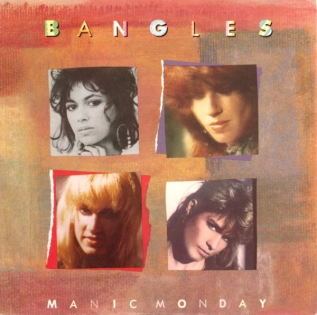
The second biggest song in America was written by a man using a fake name, for a band he was not in, after he first tried to give it to somebody else. The man who wrote it also happened to have written the number one song sitting directly above it that same week. And the woman who sang it still has the cassette he left behind in a box somewhere. Line up forty years of the Bangles telling this story and you get one of the strangest paths any 80s number two ever took to the chart.
"Manic Monday" was written by Prince in 1984 and credited to the pseudonym "Christopher," the name of his character in the film Under the Cherry Moon. He first recorded it for his protege group Apollonia 6, pulled it, then handed it to the Bangles on a cassette. Their version, produced by David Kahne, peaked at number two on the Billboard Hot 100 on April 19, 1986, kept off the top only by Prince's own "Kiss."
The man named Christopher
Prince did not put his own name on it. "Manic Monday" was written in 1984 and credited to "Christopher," a character Prince played in his 1986 film Under the Cherry Moon. The pseudonym was not a joke that wore off. Look up the Billboard Hot 100 from the week the song peaked and the songwriter field still reads, in full, "Christopher." The producer is listed as D. Kahne, the label as Columbia.
The song also had a life before the Bangles ever heard it. Prince wrote it in 1984 and recorded it as a duet for the self-titled album by Apollonia 6, the girl group he was mentoring, before he pulled it back. His own solo demo of the song sat in the vault until after his death in 2016, and it was finally released on the 2019 compilation Originals, with Prince singing lead. By the time most people learned the song had a author, they had already been singing it for thirty years.
How Prince found the Bangles
The Bangles did not chase Prince. He found them, on MTV. "My first introduction to Prince's music was actually hearing 'When Doves Cry' on the radio," Susanna Hoffs told NPR in 2019, for a piece tied to the Originals release. "Soon after I heard it, maybe even within the same week, somebody let me know that Prince had discovered The Bangles. So it was this sort of interesting feeling of kismet."
What he had discovered was their video. "He'd been watching our video on MTV for our early single Hero Takes A Fall and he loved the song," Hoffs told The Big Issue in 2023. "We all played different roles in the video and I happened to be dressed as a French maid, which he apparently liked too. So he started turning up at our gigs and getting on stage with us to perform these supernatural guitar solos."
One of those nights stuck. "Suddenly, word gets to us ... that Prince had come to see us," Hoffs told NPR. Prince did not just watch. He climbed onstage to play their single "Hero Takes A Fall" with them. "It was truly mind-blowing," Hoffs said. "I'd never seen anybody play guitar like that. I mean, it was almost like his guitar was just part of his body. There was no disconnect."
The cassette she still has
The handoff was a tape. The Bangles were in the studio for their second album, 1986's Different Light, when word came that Prince had written them something. "I went and picked up a cassette," Hoffs told Songfacts. "It had two songs on it and one of them was 'Manic Monday.' The other was called 'Jealous Girl.' ... The demo just had a girl singing it. I think he was offering us the track so we'd sing it the same way. But we wanted to do the whole thing from the ground up."
She has never let go of it. "I still have that original cassette," Hoffs told The Big Issue. "He'd recorded it with his own band but told me he thought it was perfect for The Bangles. When I first sang it, I thought to myself 'How did he know?' Some songs just fit like a glove." To NPR she described the whole band leaning in: "I still have it, ... the actual one. We Bangles hovered around the cassette machine because, back then, it was tape. And we were smitten with the song."
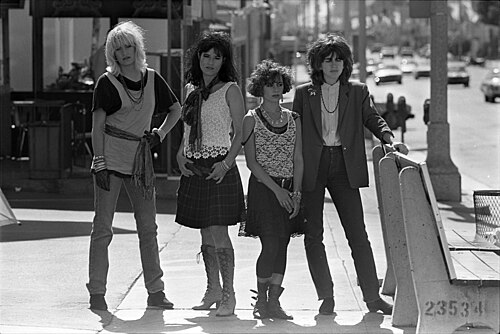
Bangle-fying a Prince song
Debbi Peterson laid out the exchange plainly in a 1989 MTV interview. "[Prince] really liked our first album," she said. "He liked the song 'Hero Takes a Fall', which is a great compliment, because we liked his music. He contacted us, and said, 'I've got a couple of songs for you. I'd like to know if you're interested,' and of course we were. One of the songs Prince brought to the group was 'Manic Monday', written under the pseudonym of Christopher."
The band refused to just sing over his backing track. "I know that there was some idea that we would just have access to the tracks and could just put our voices on it," Hoffs told NPR. "And that's one thing that we Bangles decided en masse and were very unified in this that we wanted to kind of make it ours." The word she used for it was "Bangle-fy it." Peterson used almost the same word to MTV: "It was a Banglefication of a Prince arrangement. He had a demo that was very specifically him. It was a good song, but we didn't record it like 'This is our first hit single! Oh my God! I can feel it in my veins!' We just did the song, and the album, and then sat back and thought about it."
Singing it still scared her. "I remember going in and singing that song and being on the mike and it was kind of like red light fever," Hoffs told Songfacts. "I knew it was a Prince song and I wanted to do a great job on it." She stretched the same moment out for NPR: "There's always a feeling when you sing a song for the first time where you don't know, as the singer, if the dress is going to fit, the shoe is going to fit, the key is going to fit, the words coming out of your mouth are going to make sense." Then the red light. "[T]hat red-light-fever moment where I see the red light ... and I thought, oh, yeah. This feels good."
There was a musical instinct underneath the nerves. "There was something in the arpeggiated riff that was a bit baroque," Hoffs told NPR. "The Bangles always gravitated to what we called baroque pop music." Prince, for his part, signed off. "Prince came to our rehearsal after the record was done, and he was really thrilled with how it came out," Hoffs told Songfacts. "I think he might have said something like, 'Oh, I was surprised you guys didn't use my track,' or something. But he was very happy with it."
Number two, behind Kiss
Here is the part that reads like a setup. "Manic Monday" debuted on the Billboard Hot 100 at number 86 on January 25, 1986, and climbed for three months. On April 19, 1986, it reached number two. The song sitting on top of it, at number one, was "Kiss," by Prince and the Revolution. The two highest songs in America that week were both written by Prince. He kept his own gift out of the top spot. "Manic Monday" spent thirteen weeks on the chart and never got past him.
The Bangles found out what a hit felt like on a street corner. "After we were done with this crazy European run that we were on, we went back to the East Coast, and we were standing on a street corner in Washington, DC," Hoffs told Songfacts. "We heard this song coming out of the car stereo of this red convertible. ... And then all of a sudden the realization hit us simultaneously that it was our song and we just started going crazy, jumping up and down and screaming and being very silly." It was the breakthrough. Their 1984 debut had produced no charting singles; "Manic Monday," with a Prince song at its core, was an easy sell to radio and MTV, and their next single but one, "Walk Like an Egyptian," went to number one.
The rumours, in her words
Because a male superstar handed a hit to a young woman, people invented a reason. The rumour was that Prince gave Hoffs the song hoping to sleep with her, and she has been asked about it for decades. She has never played along. "There were a lot of rumours swirling around," she told The Big Issue. "Whatever his feelings were about me I have no complaints because we were very lucky to have made that connection." What she describes instead is a friendship with a genius who liked an audience. "I liked to hang out with Prince back then, he was a mischievous person. He liked to sort of talk in riddles," she said. "I always liked the feeling of being blasted with someone's charm and that's what he did to me. He was very enigmatic."
Vicki Peterson put the bond in musical terms. "He definitely was a part of the same team," she told Songfacts. "He worshipped that same stuff. He was listening to Hendrix and all kinds of psychedelic stuff, and of course he became fantastically influential in the Bangles' lives."
How the telling has grown over the decades
The story arrived in pieces, and the emphasis moved as the years passed. In a 1989 MTV interview, while the Bangles were still a going concern, Debbi Peterson kept it practical: Prince liked their first album, he offered a couple of songs, they Bangle-fied the arrangement. The romance angle was not the point yet. By the Songfacts interview, the details had thickened: the two-song cassette, the second song she remembers as "Jealous Girl," the red-light nerves, the red convertible in DC.
Then Prince died in 2016, and the tone of every telling changed. Hoffs' 2019 NPR interview, built around the release of Prince's own demo on Originals, is soaked in gratitude and loss. "I feel so deeply grateful for the gift of this song," she said, wishing she had thanked him while she could. By the 2023 Big Issue interview, she was finally answering the rumour head on and describing the friendship on her own terms. The spine never moves: Prince wrote it, credited Christopher, left a cassette, and the Bangles made it theirs. What grew was everything around it, which is what four decades of being asked the same question does to any true story.
The honest bottom line
Strip the affection away and "Manic Monday" is a work-for-hire pop song the Bangles did not write a note of, handed to them by a superstar under a fake name after he had already tried and failed to place it with a different group. It is a cheerful complaint about the Monday commute with a bridge about running late because of last night's sex. The Prince pedigree, not the band, is what sold it to radio, and the outsized attention Hoffs drew as its singer helped seed the tension that broke the band up in 1989, the same band that would go to number one three years later with Eternal Flame. The man who wrote it was simultaneously building Purple Rain and Little Red Corvette into a catalog no one else in pop could touch. None of that dents the song. Two Prince compositions sat at number one and number two in the same week, the woman who sang the lower one still keeps his cassette, and she still gets emotional wishing she could thank him. The song outgrew the fake name on the label.
FAQ
Did Prince write "Manic Monday"? Yes. Prince wrote "Manic Monday" in 1984 and credited it to the pseudonym "Christopher," a character he played in his film Under the Cherry Moon. The Billboard Hot 100 songwriter credit for the song still reads "Christopher." Prince gave the finished song to the Bangles, who recorded it for their 1986 album Different Light.
What is the story behind "Manic Monday" by the Bangles? Prince discovered the Bangles through their "Hero Takes a Fall" video on MTV, showed up at their gigs, and later left Susanna Hoffs a cassette with the song on it. He had first written it for his protege group Apollonia 6, then pulled it. The Bangles rebuilt it from the ground up and it became their first hit.
Why did "Manic Monday" only reach number two? It was blocked from number one by Prince's own single "Kiss." On April 19, 1986, "Kiss" by Prince and the Revolution was number one on the Billboard Hot 100 and "Manic Monday," which Prince also wrote, was number two. Both of the top two songs in America that week were Prince compositions.
What was the pseudonym Prince used on "Manic Monday"? Christopher. It was the name of the character Prince played in his 1986 film Under the Cherry Moon. He used it as the songwriting credit rather than his own name.
Is Prince's own version of "Manic Monday" available? Yes. Prince's original demo, with him singing lead, was released in 2019 on the posthumous compilation Originals, three years after his death in 2016. He recorded the song years before the Bangles did.
What is "Manic Monday" about? It is about a woman waking up dreading a Monday at work, wishing it were still Sunday. The last verse reveals she is running late because her partner kept her up the night before. Susanna Hoffs has noted how well Prince wrote a relatable day in the life of a woman just trying to keep things from falling apart.
Sources
- NPR, "How Prince Worked His Magic On The Bangles' 'Manic Monday'" (Samantha Balaban), June 21, 2019
- The Big Issue, "Prince would blast me with his charm, says Bangles singer Susanna Hoffs" (interview by Sam Delaney, reported by Laura Kelly), July 9, 2023
- Songfacts, "Manic Monday" song page and Songfacts interviews with Susanna Hoffs and Vicki Peterson
- Debbi Peterson, MTV UK interview, 1989, as quoted by Wikipedia and Far Out Magazine
- Far Out Magazine, "The Story Behind The Song: How The Bangles created 'Manic Monday'" (Jordan Potter), February 3, 2022
- Wikipedia, "Manic Monday," for release, pseudonym, and Apollonia 6 origin
- Billboard Hot 100, week of April 19, 1986
Written on a manic Monday, checked on a careful Tuesday.
Part of Stories Behind the Songs. See also Girls Just Want to Have Fun and Jessie's Girl.