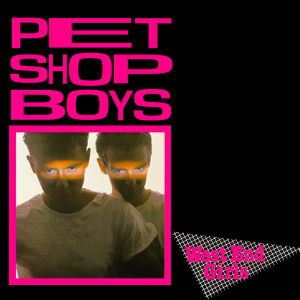
The song that most people think is about prostitutes was actually sparked by a black-and-white gangster film watched half-asleep at a cousin's house in Nottingham. It was written as a rap in an English accent, borrowed its structure from a T.S. Eliot poem, and was recorded twice by two different producers. The first version flopped almost everywhere. The one everybody knows came out more than a year later and went to number one on two continents.
"West End Girls" was written by Pet Shop Boys, with Chris Lowe composing the music and Neil Tennant writing the lyrics. Tennant has said it is about class and inner-city London life, not prostitution, and he sketched the opening lines while watching a James Cagney gangster film at his cousin's house in Nottingham in 1983. First recorded with producer Bobby O in 1984, it flopped, then was re-recorded with Stephen Hague and reached number one in the UK and, on the Billboard Hot 100, the week of May 10, 1986.
A Cagney film and a line that arrived at 1am
The song did not start in London at all. As The Quietus recounted in Matthew Lindsay's 2024 retrospective, "In 1983 Neil Tennant was at his cousin Richard's house in Nottingham." They had stayed up late to watch a James Cagney gangster film on television, and when Tennant went to bed the opening couplet arrived unbidden. In Lindsay's phrase, "words came to Tennant like shots fired from a pistol," the lines about being better off dead with a gun to your head. Tennant has never been able to say which Cagney picture it was, only that it was one of his gangster movies.
The music came first and separately. Chris Lowe wrote the track, and Tennant added the words on top, conceiving the whole thing, as Songfacts notes, "as a rap song in the style of" Grandmaster Flash and the Furious Five's "The Message." Tennant was fascinated by American hip hop and thought an English-accented rap would land hard. Once he got into the studio, he decided to sing the hook rather than rap it, and kept the verses closer to spoken word.
The T.S. Eliot skeleton
The reason "West End Girls" sounds like several people talking at once is deliberate, and the source is a 1922 poem. Tennant has cited T.S. Eliot's "The Waste Land" as the model for the song's collage of voices. Speaking to Smooth Radio, he explained the appeal: "What I like about it is, it's the different voices, almost a sort of collage." He built the lyric the same way, layering perspectives, and even lifted a phrase outright. "The line 'Just you wait till I get you home' is a direct quotation," he told Smooth.
What it is actually about
Because the title names two kinds of girls, listeners filled in the obvious blank and decided the song was about sex workers. Tennant has spent decades correcting that. Speaking to The Quietus, he said the song was "about class, about rough boys getting a bit of posh," an image he traced to skinheads roaming around Leicester Square. The West End was the glamorous, moneyed part of town; the East End was rougher, and the song is about those worlds colliding in the clubs.
He has expanded the reading over the years without ever landing on prostitution. In a 2020 interview with The Guardian, quoted by Songfacts, he described it plainly: "It's about the city at night. It's about boys and girls meeting to have fun and presumably to bond. It's about sex. It's paranoid." The same interview offered the fullest version of the "opposites attract" idea: "The idea is really that opposites attract, the glamorous posh girls and the beautiful rough East End boys all meeting in the West End and going clubbing or something." The real setting was the London club scene the duo lived in, down to a specific Chinatown basement. "It was a very funny place where they used to play soundtracks or Barbra Streisand on a vinyl record player," Tennant told broadcaster Phil Marriott of the Kings Head and Dive Bar they haunted.
The flop version nobody remembers
Here is the part that gets flattened in most tellings: there are two records called "West End Girls," and the famous one is the second attempt. Tennant, then a writer at the pop magazine Smash Hits, used his press access to get an audience with the American producer Bobby O (Bobby Orlando), a leader in synth-driven dance music. Bobby O agreed to produce the duo, and their 1984 version came out on Epic. It did respectably in France and Belgium and went nowhere else. The Pet Shop Boys then split from Bobby O on bad terms and had to sit out a year to satisfy the contract.
In 1985 they signed to EMI, released "Opportunities (Let's Make Lots of Money)" as their first single there, and watched it stiff. They still believed in "West End Girls," so they cut it again, this time with Stephen Hague, who stripped out the clubbier edges and gave it a slow, foreboding build. That second version is the hit. It topped the UK chart in January 1986 and reached number one on the Billboard Hot 100 the week of May 10, 1986. The debut album that followed, "Please," arrived in March 1986, named, as Songfacts explains, so that fans could walk into a shop and ask for "the new Pet Shop Boys album, Please."
How the telling has grown over the decades
The facts of this song have stayed stable, but the meaning Tennant assigns it and the myths around it have shifted in interesting ways.
The persistent misreading. From release onward, a large share of listeners heard "West End Girls" as a song about prostitution. Tennant's correction, that it is "about class, about rough boys getting a bit of posh," has had to be repeated for forty years and still has not fully caught up with the song.
The Eliot acknowledgment. Over time Tennant has been increasingly specific that the multi-voice structure is borrowed from "The Waste Land," even identifying "Just you wait till I get you home" as a lifted quotation. What could sound like a boast about literary ambition is really a craft note about how the lyric is assembled.
The 2020 Guardian reassessment. By 2020, with the song ranked the number one UK number one single of all time on The Guardian's list, Tennant was giving richer readings, that it is about the city at night, about sex, that it is "paranoid," and that it carries an outsider perspective. The song had become important enough to reinterpret.
Where the tellings drift. Two soft contradictions sit inside the record's history. First, the song is routinely discussed as a single artifact when it is really two recordings a year and a half apart, and the version most people picture in their heads is the Hague remake, not the Bobby O original that actually came first. Second, Tennant cannot name the Cagney film that started it, so the exact origin point of the most famous line is, by his own admission, lost.
The honest bottom line
"West End Girls" is a synth-pop record about class anxiety, built on a rap idea the singer chose not to rap, structured after a modernist poem most of its audience has never read, and misunderstood as being about something it is not. It should be too clever to work on the radio. It works because none of the cleverness is on the surface: what reaches you is the mood, the paranoia, the sense of a city at night. The Bobby O version proves the point in the negative. Same song, wrong feel, and it vanished. The difference between a flop and a global number one here was not the writing. It was the second producer knowing to slow it down and turn the lights off. Across the Atlantic, a-ha's Take On Me had taken even more tries and even more producers to break through, another synth-era single whose first version flopped and whose reworking became a decade-defining hit.
FAQ
What is "West End Girls" about? According to Neil Tennant, it is about class and inner-city life in London, specifically "rough boys getting a bit of posh," the collision of the rough East End and the glamorous West End in the city's nightlife. It is not about prostitution, despite a widespread assumption that it is.
Who wrote "West End Girls"? Pet Shop Boys. Chris Lowe wrote the music and Neil Tennant wrote the lyrics. Tennant drew the multiple-voice structure from T.S. Eliot's poem "The Waste Land" and sketched the opening lines after watching a James Cagney film.
Is "West End Girls" about prostitutes? No. Tennant has repeatedly said the title refers to social class, not sex work. He described it to The Quietus as being "about class, about rough boys getting a bit of posh."
Why are there two versions of "West End Girls"? The song was first recorded with producer Bobby O in 1984 and released on Epic, where it flopped outside France and Belgium. After signing to EMI, the duo re-recorded it with producer Stephen Hague in 1985. That second version, slower and moodier, became the worldwide hit.
When was "West End Girls" number one? The Stephen Hague version topped the UK singles chart in January 1986 and reached number one on the US Billboard Hot 100 the week of May 10, 1986.
Sources
- Songfacts, "West End Girls by Pet Shop Boys": the two-version recording history, the rap origin, the T.S. Eliot influence, the album naming, and Tennant's Guardian (2020) and Phil Marriott quotes
- Smooth Radio, "The Story of... 'West End Girls' by Pet Shop Boys," Tom Eames, April 28, 2024: the Nottingham and Cagney origin, and Tennant's quotes on "The Waste Land"
- The Quietus, "The Sound of the City: Pet Shop Boys' West End Girls 40 Years on," Matthew Lindsay, May 21, 2024: the cousin's house in Nottingham and Tennant's "rough boys getting a bit of posh" quote
- The Guardian, 2020: Neil Tennant on the song's meaning, as quoted by Songfacts
- Billboard Hot 100, week of May 10, 1986: US chart position and number-one status
East end boys, west end girls, checked sources all around.
Part of Stories Behind the Songs. See also The Story Behind Blue Monday and The Story Behind Take On Me.