The synthesizer that opens it was played by a nineteen year old who had been busking in the Paris Metro and thought he was getting a call from The Clash. The vocal was sung to a woman nobody in the room could identify. And when the record was finished, it spent ten weeks parked at number two on the Billboard Hot 100 and never got any further.
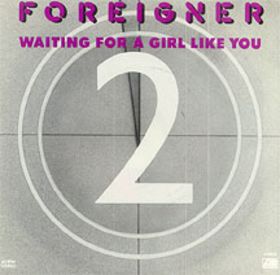
"Waiting for a Girl Like You" was written by Mick Jones and Lou Gramm for Foreigner's 1981 album 4, produced by Robert John "Mutt" Lange with Jones. The ambient synth introduction was played by a then unknown Thomas Dolby, whom Lange had flown in off a demo tape. Released as a single on 2 October 1981, it reached number two on the Hot 100 and stayed there for ten straight weeks, blocked first by Olivia Newton-John and then by Hall and Oates.
The chorus took days, and came from the wrong song
Lou Gramm has laid out the writing method in detail, in a "They're Playing My Song" interview with Bruce Pollock for Songfacts. It began with tape. "Basically, Mick would give me a cassette tape with both sides full of just 30 second guitar riffs or piano hooks and if I found one I liked, I could take it and he would elaborate on it and I would work on it with a lyric and a melody," Gramm said.
The verse arrived early and then the song stalled. "What he had was a couple of lines, including the line behind the verse. What we didn't have was the chorus, which turned out to be 'I've been waiting for a girl like you,'" Gramm said. "We worked on it for a number of days, as I recall. Our working pattern was that we would work on something until we just flat out had no more ideas, then we'd put it aside and work on something else. But the next time we got together we would always come back to it."
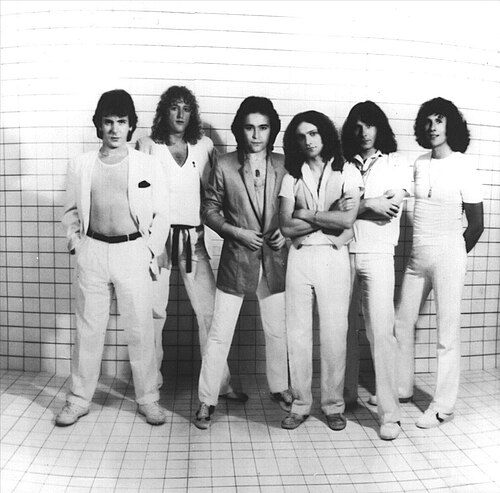
The fix came off a different cassette, and it was not meant for this song at all. "During that process Mick again gave me a cassette of musical riffs, and he had this thing that sounded oriental the way he was doing it. He was just hitting two notes at a time on a piano. It could have been the makings of another song. But we both stopped when we heard that again and we said, 'This has got to work,'" Gramm told Pollock. "So we hammered away at it and came up with the 'I've Been Waiting' lyric line and melody. And after that we were slapping each other on the back."
Mick Jones has described the writing as something that happened to him rather than something he did. "There's a song called 'Waiting For A Girl Like You,' which I literally had no control over, it just came out," he told Songfacts in 2009. "I had no idea what it meant, but it got to the point where I couldn't even be in the studio when we were recording it sometimes, it left such a deep impression on me... It's the kind of song that the pen does the writing, and you don't even know where it came from."
Gramm has been consistently more practical about it. "The part I liked was that it wasn't really that slow," he told the Canton Repository in 2016. "It had a semi-slow beat to it and had a lot of dynamics. I think that being the first ballad that got any attention, we saw it as a big plus."
The busker Mutt Lange sent for
The fifteen seconds that open the record came from a teenager with no track record at all. Thomas Dolby told Songfacts how it happened: "Well, it happened before anybody had really heard of me. I was 19, in Paris working as a busker in the Metro. I had recorded some songs on a cassette and sent them to a music publisher in London called Zomba. And one of the artists in Zomba was Mutt Lange, the producer. He really liked the keyboard playing on my demos, and he was getting ready to finish up Foreigner 4 in a studio in New York. So he sent for me, and I flew out."
He also had entirely the wrong idea about which Mick Jones wanted him. Dolby told Radio New Zealand in 2016: "I got a message from a mate in London saying, 'Mick Jones is trying to get hold of you to do a keyboard session in New York,' and I thought: 'This is fantastic. The Clash have finally given me the call.' It turned out to be not that Mick Jones at all. It was the British Mick Jones that had gone to America to form Foreigner."
What he found was a hard rock band that wanted to stop being one for four minutes. "It was great to work with a top band and a top producer," Dolby told Songfacts. "I was very inexperienced in the studio. And I associated Foreigner with solid hard rock and AOR radio and things like that, but they said that they had a couple of really great ballads and that they wanted to take a different approach to them." His own verdict on what he built: "So working with Mutt, I worked out that synth intro to 'Waiting For A Girl Like You,' which was, I think quite, daring for its time."
Wikipedia's account of the session describes the technique: a Minimoog, sustained single notes in a minor scale recorded one per track, then faded in and out by hand on the Electric Lady console like a mellotron and bounced down to two tracks. The same account has drummer Dennis Elliott calling the result "massage music." Jones liked it and it stayed.
Gramm's memory of the session puts Dolby on a longer leash and a shorter rope. "Thomas Dolby added the synthesizer part. I had a lot of respect for his musicality and his creativeness," he told Songfacts. "When we had him come in, we didn't sit him down and give him a bunch of ideas. We played the song and just let him play over the top of it and wherever else he thought felt good to him. Then he would leave and we would go through the things he played and move them around and pick the ones that sounded the best to us. You know, we wouldn't have it drenched in Thomas Dolby, just the one particular haunting line."
Dolby knew exactly what it did for him. "A journalist said, 'This is a radical approach for Foreigner, who's responsible for it?' They would see my name on the credits and go, 'Well, who is this guy?'" he told Songfacts. "So I think that it actually contributed in large part to there being a receptive atmosphere for when I came out with my solo stuff." He put the session fee into the record that became "She Blinded Me With Science."
The woman in the control room
The most repeated story about this song is about the vocal take, and it is also the one that has changed the most.
In his 2013 autobiography Jukebox Hero, written with Scott Pitoniak, Gramm wrote about a stranger who walked into the control room while he was singing: "This gorgeous, dark haired woman, an absolute knockout, walked into the control room and plopped herself down in the front row of theater seats near the glass that looks out into the studio where I was singing... I began serenading her as if she were the girl I'd been waiting for all my life."
She left when the take ended. "We never did track her down, and to this day I have no idea who she was," Gramm wrote. "All I know is that she inspired me to hit all the right notes for that ballad. I have never sung that song better than I did that day."
Mick Jones has told his own version of the same afternoon to the radio interviewer Redbeard: "A stunningly beautiful young woman had been in the control room just before he sang." Jones added: "I had never heard him sing that way before."
Then Gramm walked part of it back. Speaking to Bruce Pollock several months after the book came out, he acknowledged the story and conceded the prose had run ahead of the facts. "I mean, there's always a certain amount of truth in the lyrics and things you've lived, and then you embellish it with a little imagination," Gramm said. Asked whether he had in fact already found the girl he had been waiting for, his answer was flat: "Oh yeah. Absolutely."
Ten weeks at number two
The chart run is the part of this record that made the history books, and the Billboard weekly tables tell it exactly.
The single moved into the number two position on the Hot 100 dated 28 November 1981, in its eighth week on the chart, sitting directly behind Olivia Newton-John's "Physical." It was still at number two on 26 December, still there on 23 January 1982, and still there on 30 January, by which point Hall and Oates' "I Can't Go for That (No Can Do)" had reached number one in place of "Physical." That is ten consecutive weeks at number two, nine of them behind one record and the tenth behind another. On 6 February 1982 it finally slipped to number three. The record that held it down the longest has its own story over at Physical.
In Britain the single did far less: the Official Charts tables show a peak of number eight.
Gramm has never fully made peace with the near miss. "Being that close to #1 with such a strong song and not quite making it, leaves you with a little sour taste, I admit," he told Songfacts, "although our album was #1 on the Album Chart for 10 weeks, which was very satisfying."
Live, the song did something the chart could not measure. "Because we would rock right up to it and then we'd just shift gears and slow down into that ethereal keyboard swirl," Gramm said. "As soon as the audience would hear it, they would start cheering before we even played a note."
It also reset the band's direction, and Gramm has been blunt about the cost. "Having a hit with a ballad gave Mick the impetus to make sure that there was a very strong ballad on all of our albums from that point on," he told Songfacts. "For better or worse." The ballad that finally took Foreigner to number one arrived three years later, and that story is told in full at I Want to Know What Love Is.
How the telling has grown over the decades
Four people have told pieces of this song's origin, and they do not fully agree about who made the most recognisable part of it.
2009, Songfacts. Mick Jones gives the mystical account of the writing: no control over it, the pen doing the writing.
2011, Songfacts. Thomas Dolby's first-person account of being nineteen, broke and sent for by Mutt Lange, and of working out the synth intro with him. This is the telling that establishes Dolby's role in his own words rather than in a credit list.
2013, Jukebox Hero, and then Songfacts. Gramm publishes the mystery-woman story in his autobiography, then partly retracts it to Bruce Pollock in the same year, calling it truth embellished with a little imagination and confirming he had already met the woman he married. Both versions are on the record, and we have left both standing.
2016, Radio New Zealand and the Canton Repository. Dolby adds the Clash misunderstanding. Gramm, in the same year, talks about the tempo and the dynamics rather than any muse.
2017, DMME.net. The credit dispute surfaces. Ian McDonald, a founding member who had been out of the band since before the album came out, told interviewer Dmitry Epstein: "There's number of tunes that I probably would have liked to get a writing credit for: 'Double Vision,' perhaps, and also, later on, I wrote the opening motif for 'Waiting For A Girl Like You' and didn't get a writing credit."
So the opening of the song has three claimants of different kinds. McDonald says he wrote the opening motif and was not credited. Dolby says he worked out the synth intro with Lange in the studio. Gramm describes Mick Jones hitting two notes at a time on a piano on a cassette of spare riffs. Those claims are not necessarily in conflict, because a written motif, a performed arrangement of it and a piano sketch that fed the song are three different things, and none of the three men has ever publicly argued with either of the others about it. The published songwriting credit reads Jones and Gramm.
The honest bottom line
This is a rock band's calculated softening, produced by the man who would go on to do the same thing to Def Leppard, carried commercially by a synth part played by a teenager the band had never met and did not use again. It never reached number one, its most famous origin story was admitted by its own singer to be partly embellished, and its success talked Foreigner into putting a big ballad on everything they made afterward, which their own lead singer says cost them their rock audience. Forty years on it is still the record people play at their weddings, and the reason is the fifteen seconds of ambient drone at the front that nobody in the band would have thought to write.
FAQ
Who wrote "Waiting for a Girl Like You"? Mick Jones and Lou Gramm of Foreigner have the credit. Gramm has said the chorus came from a two note piano figure on one of Jones's cassettes that was meant for a different song. Founding member Ian McDonald said in a 2017 DMME.net interview that he wrote the opening motif and did not receive a writing credit.
Who played the synthesizer on "Waiting for a Girl Like You"? Thomas Dolby, two years before "She Blinded Me With Science." He was nineteen, busking in the Paris Metro, when producer Mutt Lange heard his demo tape through the publisher Zomba and flew him to New York.
Why did "Waiting for a Girl Like You" never reach number one? Timing. Billboard's weekly tables show it holding number two for ten consecutive weeks from 28 November 1981, blocked by Olivia Newton-John's "Physical" for the first nine and then by Hall and Oates' "I Can't Go for That (No Can Do)" on 30 January 1982. It fell to number three the following week.
Is the story about a mystery woman in the studio true? Partly. Gramm wrote in his 2013 autobiography that an unidentified woman walked into the control room and inspired the take, and Mick Jones has separately said a stunningly beautiful young woman was there before Gramm sang. Gramm later told Songfacts that "there's always a certain amount of truth in the lyrics and things you've lived, and then you embellish it with a little imagination," and confirmed he had already found the woman he was waiting for.
What album is "Waiting for a Girl Like You" on? Foreigner's fourth album, titled 4, released in 1981 and produced by Mutt Lange with Mick Jones. It was the album's second single, after "Urgent."
How high did "Waiting for a Girl Like You" get in the UK? Number eight, according to the Official Charts Company tables, well short of its American performance.
Sources
- Songfacts, "Lou Gramm - 'Waiting For A Girl Like You': They're Playing My Song", Bruce Pollock, including excerpts from Gramm's 2013 autobiography Jukebox Hero, written with Scott Pitoniak
- Songfacts, "Waiting For A Girl Like You by Foreigner", quoting Mick Jones's 2009 Songfacts interview
- Songfacts, Thomas Dolby interview
- Ultimate Classic Rock, "40 Years Ago: Foreigner Change Gears With 'Waiting for a Girl Like You'", Nick DeRiso, 1 October 2021, quoting Gramm to the Canton Repository (2016) and the Greensboro News and Record (2003), Dolby to Radio New Zealand (2016), and Jones to Redbeard
- DMME.net, "Interview with Ian McDonald", Dmitry M. Epstein, 19 December 2017
- Songwriter Universe, "Rock Legend Mick Jones Of The Band Foreigner Talks About Writing Their Hits", Dale Kawashima, 12 October 2016
- Wikipedia, "Waiting for a Girl Like You", Reception and History sections
- Billboard Hot 100 weekly charts, 28 November and 26 December 1981, and 23 January, 30 January and 6 February 1982
- Official Charts Company, UK Singles Chart weekly tables, 7 and 14 February 1982
Worth the wait: a telling done right.
Part of Stories Behind the Songs. See also I Want to Know What Love Is and Physical.