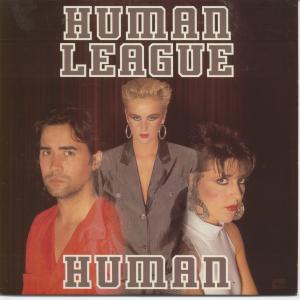
A British synth band flew to Minneapolis in 1986 to be rescued by two producers who had never worked with anybody like them. The song that came out of it was written to solve one specific problem: the singer sounded like a machine. Then the band tried to have that song pulled from the album, and the record company said no.
"Human" was written and produced by Jimmy Jam and Terry Lewis at Flyte Tyme in Minneapolis and recorded in February 1986 for the Human League's album Crash. Jam and Lewis wrote it deliberately to get an emotional vocal out of Philip Oakey, which is where the title comes from. It was the first Human League hit Oakey had no hand in writing. It reached number eight in the UK and number one on the Billboard Hot 100 on 22 November 1986.
Why a Sheffield band ended up in Minneapolis
By 1985 the Human League's fifth album was going badly and the band knew it. Virgin, watching its most profitable act stall, pushed them toward Jimmy Jam and Terry Lewis, who were coming off Janet Jackson's Control and were suddenly the most wanted production team in American pop. Classic Pop's 2022 interview with the pair credits the introduction to Janet Jackson's A&R man John McClain. The League flew to Minneapolis.
Terry Lewis, in Rolling Stone's "Our Life in 15 Songs" feature published 9 October 2015, put the meeting plainly: "Dealing with the Human League was total culture shock... At that point it gave us confidence that we could do just about anything."
Oakey, forty years on, described the two production styles he had lived through in a March 2026 interview with Stephen Pitalo of Music Video Time Machine, comparing Jam and Lewis with Giorgio Moroder, who produced his solo hit. "I don't think that two people could be more different," Oakey said. "Jimmy and Terry are so much about feeling and just making sure that everything's right." His summary of their method: "They were very hard on instrumentalists, but very easy on the singers."
The song was written to fix the singer
The idea did not start with a lyric. It started with a diagnosis. Jimmy Jam told Classic Pop in April 2022, in a piece by Will Lavin: "We wanted to do a song where Phil Oakey actually sounded human on it, because everything before was very robotic. There's nothing wrong with that, but we wanted to do something where he actually sang. That's the reason it's called Human."
Jam gave Rolling Stone the same account in 2015 from the other end: "Phil Oakey had a great, unique voice. Phil had never sang anything emotional. Everything was robotic at that point for them."
The lyric they built on that idea is a two sided confession. Oakey's verses apologise for being unfaithful while his partner was away. Then the record stops and Joanne Catherall speaks her own confession over the breakdown, and the excuse both of them reach for is the title. Songfacts credits the concept to Terry Lewis, thinking about how men who cheat tend to get caught or confess while women keep it to themselves.
The vocal that took a week, or a month
Getting the performance was the whole job, and this is where the two sides of the story stop matching.
Jam, in Rolling Stone in 2015: "It took a week to do that lead vocal. Phil killed it." In Classic Pop in 2022 he put the same figure on it: "Terry probably worked with Phil on the vocals for about a week."
Oakey has always said it took far longer. He told Mojo in 2003: "'Human' is probably the best vocal that I ever did, but it took a month to record." Asked directly in 2026 whether the vocal really took almost a month, he did not blink: "I think they took a month. Yeah."
What he remembers is the patience, not the clock. Oakey told Music Video Time Machine in 2026: "With Jimmy and Terry, if you sang it through a few times and they thought your voice wasn't right, they'd say 'Okay, look, you're not feeling it today. We'll come in tomorrow and do it.' They were very attentive to vocalists. They're wonderful producers, and I kick myself every day for not taking notes of what they did."
One note he particularly regrets losing: "I remember Jimmy Jam one day gave me a list of the things that you need to do to make a great single. I remember some...one was 'pretty tunes, driving bassline,' something like that, and I never wrote it down. I really wish I'd written it down."
The spoken monologue that carries the twist has a specific ancestor, and Oakey named it in the same Mojo interview: "A really big influence on doing those monologues was Gary Numan, particularly 'Are "Friends" Electric?', which has two different spoken bits, and he pulls it off."
The fight over the backing vocals
Then came the part that nearly killed the song. Jam and Lewis finished it the way they finished everything at Flyte Tyme, with their own house backing vocals. "Then, as we had always done with all our records at that time, we put background vocals on it," Jam told Classic Pop. "The backgrounds were always Terry and a girl named Lisa Keith."
The Human League had two female vocalists of its own. Jam's account of the reaction, to Rolling Stone in 2015: "There were two girls in the group, and one of the girls was Phil's girlfriend, and she says, 'Who's that other girl on the track?'" His version in Classic Pop is blunter: "When the girls in The Human League heard those backgrounds, they said they didn't like that other girl singing on the track. We were like, 'Whatever.'"
Lewis framed it as a band problem rather than a personal one, in Rolling Stone: "The relationship dynamic in the band got involved. The guys were cool. The girls just wanted to be more of a part, but there was no way to get the record right with them being that part."
The next day Oakey came back with the band's collective veto, and Jam and Lewis escalated over everyone's head. Jam's telling in Classic Pop: "We called the record company and said, 'Look, we got this song and we think it's pretty good, but here's the thing: they want us to take the backgrounds off, or the girl on it off. Put it like this, we're just gonna remove the song from the album entirely.'"
The label's answer settled it. "They were like, 'No, no, no. That's the single. Are you kidding me? No, you can't change that song.' So we came to an agreement that we would finish the songs Terry and I had written the way we wanted to finish them. The songs they had written they could finish the way they wanted to finish them."
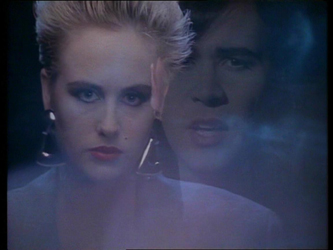
Songfacts reports the compromise that gave the band's own singers a piece of the record back: Lewis wrote the spoken-word part for Joanne Catherall to deliver, and Susan Ann Sulley mimes the backing vocal in the video.
Jam has not softened the disagreement in the retellings, and he has not pretended it was uglier than it was either. "To this day, I see articles where Phil says they felt they were puppets and we were the puppeteers," he told Rolling Stone. "It wasn't by any means acrimonious." Lewis put his own full stop on it: "At the end of the day, did you get the result? Did you get a hit record?"
What the charts did
They did. The Billboard Hot 100 tables show "Human" entering at number 71 on the chart dated 13 September 1986 and reaching number one on 22 November 1986, its eleventh week on the chart. It held the top spot for exactly one week: on the 29 November chart it sits at number two behind Bon Jovi's "You Give Love a Bad Name."
Britain was cooler on it. The Official Charts weekly tables put "Human" at its peak of number eight on the chart dated 31 August 1986, in its third week, and it was already sliding by mid September. Wikipedia's account adds the part that mattered most to the producers: Jam and Lewis's R&B based production carried the Human League into the American R&B top ten for the first time.
It was also the band's second American number one, five years after their first, and the first Human League hit their frontman did not write. The band's own story of that first one is a separate fight, told in full over at Don't You Want Me.
How the telling has grown over the decades
The core facts have been stable since 1986: Jam and Lewis wrote it, they wrote it to get Oakey to sing, and the band lost a fight over the backing vocals. The details around that core move depending on who is talking.
1986, Record Mirror. The contemporaneous coverage, in a Robin Smith piece dated 9 August 1986, catches the band at the moment of release, before anyone knew the record would go to number one in America.
2003, Mojo. Oakey, interviewed by David Buckley, gives the vocal a month and names Gary Numan's "Are 'Friends' Electric?" as the model for the spoken monologues. This is Oakey claiming craft ownership of a song he did not write, and it holds up.
2015, Rolling Stone. Jam and Lewis tell it together for the first time in a widely read place. Jam says they wrote four songs on the album. Wikipedia's account of Crash says three of the ten are theirs. Jam also puts the lead vocal at one week, not one month.
2022, Classic Pop. Jam's fullest version, and the one that adds the label ultimatum: pull the backgrounds and we pull the song. He ends it wanting to reconnect: "I would love to speak to him. I don't have a number for him, so if anyone has one, please pass it to us."
2026, Music Video Time Machine. Oakey, asked directly, confirms the month again and describes the Jam and Lewis method from the singer's side of the glass. Forty years on, the two camps still do not agree on how long the vocal took, and neither has any reason to lie about it. A week of tracking days can sit inside a month of studio time, which is the likeliest reading, and nobody involved has ever bothered to reconcile it.
The honest bottom line
"Human" is the sound of a band being fixed by outsiders. Two American producers wrote it, produced it, chose the backing singers, overruled the band with a call to the label, and handed a Sheffield synth group the biggest American hit of their career, at the cost of the League sounding like themselves. The band's own frontman had nothing to do with writing it and the band's own backing singers were replaced on it. It is still the best vocal Philip Oakey says he ever recorded, and the reason is right there in the brief: somebody finally wrote him a song that required a person instead of a machine.
FAQ
Who wrote "Human" by the Human League? Jimmy Jam and Terry Lewis, credited as James Harris III and Terry Lewis. They also produced it. It was the first Human League hit that Philip Oakey had no hand in writing.
What is "Human" by the Human League about? Infidelity on both sides. Oakey's verses are a man confessing that he was unfaithful while his partner was away, and Joanne Catherall's spoken section reveals that she was unfaithful too. The chorus is the excuse they both use: they are only human and born to make mistakes.
Why is the song called "Human"? Because that was the assignment. Jimmy Jam told Classic Pop in 2022 that they wanted a song where Philip Oakey "actually sounded human on it, because everything before was very robotic," and that this is the reason for the title.
Who is the woman speaking in "Human"? Joanne Catherall of the Human League. Terry Lewis wrote the spoken part for her after the band objected to session singer Lisa Keith appearing on the backing vocals.
Was "Human" a number one? Yes in America. Billboard's Hot 100 tables show it entering at 71 on 13 September 1986 and hitting number one on 22 November 1986 for a single week, before Bon Jovi's "You Give Love a Bad Name" took over. In the UK it peaked at number eight on the chart dated 31 August 1986.
How long did Philip Oakey take to record the vocal? The two sides disagree. Jimmy Jam has said a week, in Rolling Stone in 2015 and Classic Pop in 2022. Oakey has said a month, to Mojo in 2003 and again to Music Video Time Machine in 2026.
Sources
- Rolling Stone, "Jimmy Jam and Terry Lewis: Our Life in 15 Songs", 9 October 2015, Human League entry
- Classic Pop, "Jam & Lewis - Jam & Lewis Volume One interview", Will Lavin, April 2022
- Music Video Time Machine, "The Human League's Philip Oakey Reflects on...", Stephen Pitalo, 13 March 2026
- Wikipedia, "Human (The Human League song)", Background and composition, quoting Philip Oakey in Mojo, David Buckley, October 2003, and citing Record Mirror, Robin Smith, 9 August 1986
- Songfacts, "Human by The Human League"
- Billboard Hot 100 weekly charts, 13 September, 22 November and 29 November 1986
- Official Charts Company, UK Singles Chart weekly tables, 31 August, 7 September and 14 September 1986
We are only human, which is why we double-check.
Part of Stories Behind the Songs. See also Don't You Want Me and Blue Monday.