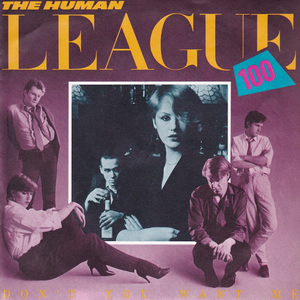
The best-selling British single of its entire year was buried by its own singer as the last track on side two, because he was sure it was the worst thing on the record. He fought his own label to keep it off the radio, convinced it would wreck the band. It was built from a story he read in a teenage girl's magazine and the plot of an old movie, and the female half of its famous duet was picked, in her words, by "luck of the draw." Phil Oakey has spent more than forty years being wrong about "Don't You Want Me," and he mostly admits it.
"Don't You Want Me" was written by Philip Oakey, Jo Callis, and Philip Adrian Wright for the Human League's 1981 album Dare. Oakey based the story on a photo-strip in a teen magazine and the film A Star Is Born, turning a male solo into a duet sung with Susan Ann Sulley. He hated the finished version, called it filler, and buried it as the album's last track. Virgin released it over his objections, and it became the Christmas number one in the UK and a number one on the US Billboard Hot 100 on July 3, 1982.
A story from a teen magazine and an old film
The lyric did not come from Oakey's life. It came from a magazine and a movie. He read a photo-story in a teen-girl's magazine and built the narrative of a man who lifts a waitress to stardom and then cannot keep her. The structure, the mentor eclipsed by the protege he created, came from A Star Is Born, and it is why Oakey turned what had been written as a male solo into a duet, so the woman could answer back.
Which version of the film inspired it is itself a small mystery. Wikipedia and older accounts say the 1976 remake with Barbra Streisand. Oakey himself, asked directly by Variety in 2026, gave a different answer. "Absolutely," he said, when asked if the film sparked the idea. "The James Mason version of 'A Star Is Born.'" That is the 1954 film with Judy Garland. "I really like old films," Oakey added. "So just that tension, but in Technicolor, that's my kind of thing." The tension he wanted was a couple pulling in opposite directions, and to get it he needed a second voice.
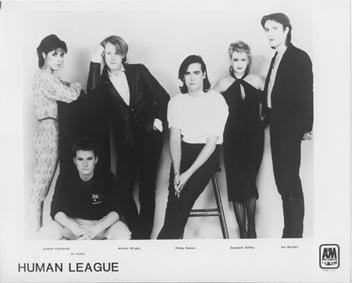
That voice belonged to Susan Ann Sulley, who until then had been a teenage backing singer and dancer, not a lead. She has always been honest that there was nothing fated about it. She got the part, she has said, purely by "luck of the draw," rather than any decision that she was the stronger singer of the band's two young women.
The song Oakey hated
Oakey's problem with the song was not the story. It was the sound. Jo Callis and Philip Adrian Wright had first built a much harsher synthesizer arrangement. The band's Virgin-appointed producer, Martin Rushent, was not happy with it, and he and Callis remixed the track into something softer, and in Oakey's word, "poppy." Oakey hated the new version. He decided it was the weakest track on Dare, which set off one of his notorious rows with Rushent, and he cared so little for it that he shoved it to the very last slot on side two of the album, the place you put a song you hope no one reaches.
The irony is that the detail everyone remembers was a mistake. The little synth figure that answers the chorus was not composed. It was an accident. "That came about because the computer screwed up and played the line a half-beat out of time," Rushent told NME. The moment they heard it, he said, he and Callis went "Wow, that's amazing!" Oakey, meanwhile, cut his lead vocal in the studio toilets, where the recording was interrupted by Callis reaching through a window to flush the toilet over and over.
The fight to keep it off the radio
With three hit singles already pulled from Dare, Virgin's chief executive Simon Draper wanted one more before the end of 1981. His choice was "Don't You Want Me." Oakey's reaction was a fight. He was convinced, as he put it, that "the public were now sick of hearing" the band, and that releasing what he considered a "poor quality filler track" would be a disaster that wrecked their new fame. The band felt it was "our sort of Des O'Connor song," meaning cheap and middle-of-the-road.
Virgin would not back down. Oakey finally agreed to the release on one condition: that a large color poster be included with the seven-inch single, because he felt fans would "feel ripped off" buying the "substandard" song on its own. So the single that became the biggest of the year went out into the world with a free poster, as an apology from the man who wrote it.
Number one anyway
Everyone was wrong except the label. Released in the UK on November 27, 1981, "Don't You Want Me" entered the chart at number nine and jumped to number one the following week, where it stayed for five weeks across the Christmas period. It was the Christmas number one, the biggest-selling UK single of 1981, and the first ever number one for Richard Branson's Virgin label.
America followed six months later, driven by heavy play on the brand-new MTV, where the song's cinematic, film-style video stood out. "Don't You Want Me" was the Human League's first US single. It entered the Billboard Hot 100 at number 86 on March 6, 1982, and reached number one on July 3, 1982. It held the top spot for three weeks, through July 17, before Survivor's "Eye of the Tiger" replaced it. Billboard credits the song to Callis, Oakey, and Wright, produced by Rushent. It also happened to be one of the first hit records built on the LM-1, the drum machine that would define the sound of the decade.
What it is actually about
For a song filed by most people under love songs, Oakey has always insisted it is nothing of the kind. He describes it as being about power politics between two people, the tug of war between someone who made a star and the star who no longer needs him. That refusal to be a simple romance is part of why it holds up. Oakey has also put his finger on why it works at all, which is that they quit fiddling with it in time. "The key to that song is that we didn't spoil it, I think," he told NME in 2012. "With most songs you think of a couple of nice tunes and some words and then you start working and you work until they're not very good. We happened to stop before, stop while it was still all right. So in a strange way, it sounds complicated but it's a pretty simple sort of song."
How the telling has grown over the decades
Oakey has been remarkably consistent about the one thing that matters, which is that he did not want this song out. He said it in 1981 while fighting Virgin, and he was still cool on it decades later. "'Don't You Want Me' might have shifted gazillions," he told Classic Pop in 2014, "but either I've heard it too many times or the rest of Dare! is just so far ahead that it puts it in the shade. Still, it made the band." That last line is the whole arc: he never learned to love the song, but he stopped pretending it did not save the group.
Two things have drifted in the retelling. One is which A Star Is Born he watched, the 1976 Streisand version named in older write-ups or the 1954 James Mason film he pointed to in 2026. The other is his own posture toward the record, which has softened from open hostility to a kind of rueful respect. In the Variety interview he even conceded the point he lost in 1981. "As usual, the radio people called it right," he said, admitting he and the band "took a while to realize" the song was the single. He added that Joanne and Susan "knew straight away. They're cleverer than me anyway."
The honest bottom line
Strip away the legacy and "Don't You Want Me" is a song its own creator tried to smother. He thought it was the weakest thing on the album, a poppy betrayal of the moodier band he wanted to be in, filler he demanded a free poster to excuse. He built it out of a magazine photo-story and an old movie, the signature hook was a computer error, and the co-lead was cast by luck of the draw. None of that stopped it from becoming the Christmas number one, the first chart-topper for Virgin, and the song that broke a Sheffield synth band in America. The most honest voice in the story is Oakey's own, and it says two things at once: he still does not rate it, and it made the band. Both are true. Four years later he would take the same voice to number one in America again with Human, a ballad Jam and Lewis wrote deliberately to make him sing, and the distance between the two records traces the arc of what synth pop became in the 1980s.
FAQ
Did Phil Oakey hate "Don't You Want Me"? Yes. Oakey thought it was the weakest track on the album Dare, disliked the softer "poppy" mix, and buried it as the last song on side two. He fought Virgin over releasing it as a single, convinced it would flop and damage the band, and agreed only if a free poster was included with it.
What is "Don't You Want Me" about? Phil Oakey has said it is not a love song but a song about power politics between two people. The lyric describes a man who turned a cocktail waitress into a star and now cannot accept that she is leaving him. Oakey based the situation partly on the film A Star Is Born.
Who wrote "Don't You Want Me"? Philip Oakey, Jo Callis, and Philip Adrian Wright of the Human League, produced by Martin Rushent. Oakey wrote the lyric and turned the song from a male solo into a duet with backing singer Susan Ann Sulley after being inspired by A Star Is Born.
Was "Don't You Want Me" inspired by A Star Is Born? Yes. Oakey has said the film's mentor-and-protege tension shaped the song and led him to make it a duet. Accounts differ on which version inspired him: older write-ups cite the 1976 Streisand film, while Oakey in a 2026 interview specifically named "the James Mason version," the 1954 film with Judy Garland.
When did "Don't You Want Me" reach number one? In the UK it hit number one in December 1981 and stayed for five weeks, becoming that year's Christmas number one and the biggest-selling UK single of 1981. In the US it reached number one on the Billboard Hot 100 on July 3, 1982, and held for three weeks.
Why was the female singer chosen for "Don't You Want Me"? Susan Ann Sulley, one of the band's two teenage backing vocalists, was given the lead. She has said she was picked simply by "luck of the draw," not because she was considered the better singer of the two.
Sources
- Variety, "Human League's Philip Oakey on Why He Didn't Think 'Don't You Want Me' Would Be a Hit," 2026
- Songfacts, "Don't You Want Me" song page, including Philip Oakey in NME (2012) and Classic Pop (2014), and producer Martin Rushent in NME
- Wikipedia, "Don't You Want Me," drawing on Smash Hits (December 1981), for the writing, the release dispute, and chart history
- Billboard Hot 100, weeks of July 3, 10, 17, and 24, 1982
You were working as a waitress, we were working the archives.
Part of Stories Behind the Songs. See also Eye of the Tiger and Every Breath You Take.