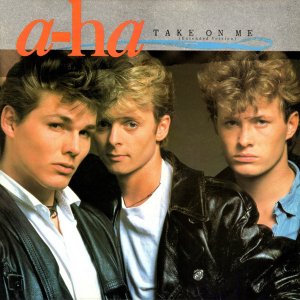
The riff was written by a fifteen year old who could not convince his own bandmate it was any good. The song was recorded, released, and flopped. Then it was recorded again with a different producer, released again, and flopped again. The version everybody on earth knows is the third one, cut in five days in a gap in another band's schedule, and when it finally went to number one in America the band celebrated with a hamburger.
"Take On Me" was built by Magne Furuholmen and Paul Waaktaar-Savoy over roughly five years and at least three complete rewrites, starting as a teenage Bridges song called "Miss Erie." Morten Harket joined, it became "Lesson One," then a Rendezvous Studios demo, then a 1984 Tony Mansfield single that bombed, then a 1985 re-recording with Alan Tarney. Billboard has it debuting at 91 on July 13, 1985 and reaching number one on October 19.
The pact, and the riff nobody agreed on
Two kids on the same street in Norway decided to leave it. "We had made a pact at 15 or 14 that we were gonna go to England and try to get a record deal," Paul Waaktaar-Savoy told Song Exploder in October 2025. The reason was simple arithmetic. "I mean, Norway back then was really, I think they played one hour of pop music a week on the radio. It was very limited exposure to anything." So the plan was to go. "Even though no one had done that before," he said. "And it was sort of like a laughable thing to say."
Their high school band was Bridges, and Paul is blunt about why it was never going to work: "We did two albums with Bridges. But Bridges was sort of very introverted. Lots of songs that everybody said, well, I have to hear it 20 times before I get it." Heading for England changed the brief. "So we were definitely feeling that, you know, we had to sort of, um, make it a little bit easier on people, on the poor listener."
The riff that solved that problem is the one thing in this story that never changed, and the two men who made it remember its birth differently. Paul's version puts the verse first: "The verse came to me on acoustic guitar, as I always wrote on. And then taking that to Magne, we sort of played it around just the two of us. He came up with the keyboard riff." Magne Furuholmen, talking to MusicRadar in September 2024, dates it earlier and remembers resistance. "I wrote that riff when I was 15. I had no idea at the time that it would be such a definitive statement [laughs]. I remember Paul trying to diss it and saying, 'Oh this sounds way too commercial, it sounds like an advertising jingle or something', because we were into the '60s and more flowery, psychedelic darker stuff at the time. And I was like, 'Yeah but it's kind of catchy though, isn't it?'"
The song around it, though, Paul hated. "And I had a sort of a throwaway chorus. I always hated it. It sort of went around itself in a four bar loop and you couldn't get out of it, and it's just sort of, like, annoying." That first version had a different title and a different lyric entirely, and the title was a teenage Bowie steal. "We were inspired by, like, Aladdin Sane, by Bowie, which is 'a lad insane'," Paul told Song Exploder. "So I wanted to do my 'misery,' 'Miss Erie,' you know, it's like one of those teenage over-reach..."
The singer who broke in on a ruined voice
Morten Harket first saw the band as an audience member. "Morten first heard us when we played a show in his school. And he was a fan, one of our, maybe the only fan we had," Paul said. "He just thought we needed a better vocalist, so not me, ... in other words."
The audition should have disqualified him. "The first time I heard him, when we sort of auditioned him, he was playing in a blues band and he just had a show the day before, so his voice was like, so raspy, like a Joe Cocker type of thing. He was like, completely busted. So I thought, like, well, that's cool. Let's go for this guy, you know." Then: "The next time I heard him, I was like, you know, he sang like an angel."
Harket's own memory of joining is that nobody had actually heard him sing. "The funny thing is, that when they asked me to join and become a band, they knew nothing about me musically. Isn't that fascinating?" he told The Big Issue in March 2023. He also remembers that the lead vocal was not on offer: "Pål saw himself as lead singer and that was fine with me."
What Harket changed was what Paul could write. "But he could do so much with his voice and that really changed my writing. Because before that, I would be writing to my own voice. So I had to be sort of limiting the octaves. But with Morten, it's like writing for a totally different instrument."
And Harket knew instantly which piece mattered. Paul: "And, just from the get go, he was such a fan of that song, especially the riff. He was just like, that was it." Magne remembers the same verdict in Harket's words: "And it was actually Morten that had heard us play live and when we roped him in he was like, 'This riff has got to go on our first record. It's a hit riff.'"
Version two: "Lesson One"
With Harket in and guitars swapped for synths, they cut a new version in Paul's parents' cabin outside Oslo on a borrowed four track. It was not called "Take On Me" either. "So, the first version we did with A-ha, with Morten, that was called 'Lesson One'," Paul said. "It was a totally new lyric and new approach."
He did not like that one either, and his reason is the most useful sentence in the whole story for anyone who writes songs. "It was like a sugar rush. It was too, kind of, bubbly." And: "It didn't really give you goosebumps. It was catchy, but it didn't really grab you, in the way that I like a song to do. It has to have a more like a, you gotta feel that sort of spine tingling." Asked whether this was October or November 1982, Paul said, "Yeah, I think so."
England, and four in the morning
They went with no return ticket. "We thought it would be a lot easier than it turned out to be, let's put it that way," Paul said. "We booked this sort of package tour. Is that what you do? Like, we didn't do the return flight, we just went to England. 'Cause that was the cheapest we could get." Then the plan ran out. "And then it was like, oh, okay, what do we do now? You know? So we knew nothing. We knew no one."
The cabin tape did not survive contact with London. "And it took us about two weeks to realize that demo sounded pretty thin and not really hip enough." They spent the last of their money on two or three days in a studio, cutting four other songs, not this one. That accident made their career: "And as luck had it, the owner of that studio loved the demo. John Ratcliff." Ratcliff's A&R contact Terry Slater had just quit EMI looking for a band to manage. The two of them took the job.
What the band got out of it was the graveyard shift. "For the next couple of years, we were able to use the downtime of that studio. From four in the morning till the new session came in at 10 the next day," Paul said. "So we'd be sitting around there like tired, ready to keel over waiting for that band to get finished and then hop in and use those hours to do a new song."
Magne's summary of that stretch is four words long: "And one rejection after another just made us more resilient."
Version three: the chorus, the falsetto, and the title people said was wrong
At Rendezvous Studios, on eight track, the track finally took its shape, except for the part that mattered. "The song is pretty much sketched out at that point. But the chorus was not happening."
The fix came from their manager's superstition. Terry Slater, who had worked with Queen among others, had a saying, and Paul quotes it twice the way you quote something you heard a hundred times: "Whenever you got a falsetto, you had a hit." "Falsetto, you had a hit." Paul's reaction: "And I thought like, well, hell, we got the best freaking falsetto singer right here."
He describes Harket's falsetto as a different species from everyone else's. "He can sing super low. He can sing super high. And where most people have, like, a sort of whispery, sort of weakish falsetto, he can't really do that. The, the way he does falsetto is like full on. It's like a trumpet."
But he refused to write the obvious version of it. "I don't really love when that sort of money note come in straight, 'Here comes the chorus,' and everybody goes up. And, you know, so I never really liked that kind of songwriting. So I thought, you know, Morten has a really nice register. So I thought like, okay, maybe we should start it with the lowest notes and then bring it up to the falsetto where you can guarantee to get a hit." That decision, low first and the leap held back, is the architecture of the most recognizable chorus of the decade.
The title took an argument too, and it was an argument about English. "We're Norwegian and like, people would tell me, you can't say 'Take On Me.' That's not real English. But it just felt like that song couldn't be called anything else. It just had to be. 'Take Me On'? No, I don't like that." His defense of it is a mission statement: "In a way we were trying to take on the world and we were just saying like, 'Well, take on us.' You know, 'get a load of this.'"
The first release, and the bomb
Producer Tony Mansfield got the album, and with him came the machine that ate the budget. "It was exciting, but it was also a little bit tricky because we were used to working very fast. But he had gotten a Fairlight, which he loved. And everything had to go through the Fairlight."
Magne remembers walking in outgunned. "We had been given a record deal based on our demos, which were 100% us without anyone else involved," he told MusicRadar. "And Tony came off a hot streak with a number one in America and he was kind of a big shot. We were sort of both reverential, but at the same time super scared that we would lose a bit of our soul with this guy coming in with tonnes of synths and Synclaviers and these machines that we had very little experience with..."
The arithmetic went bad. "Five guys staring at a computer screen, I mean, everything takes a long time. We would never use a computer before. So when we had 7 songs instead of 10, the money was spent." And they were not even legally settled: "And we were there on a tourist visa. So it was a lot of pressure on the whole thing."
Then there was the label problem, which Paul lays out plainly. The band signed to Warner in America, and Warner in England had wanted them. "So for years, we were sort of struggling a little bit with them not feeling like they needed to do so much for us, since we didn't sign with them." The launch was accordingly enthusiastic: "So when that first single came out, they threw out a few of the ugliest posters we've ever seen, just around where we lived. And that was it. There was nothing."
Magne's account of the aftermath: "It got played on Radio One a couple of times, and then just sort of dropped off the radar. And we were convinced that the record company would drop us and everything was over before it began."
Paul's is shorter. "So that is the first version that came out and bombed."
Five days with Alan Tarney
What kept the song alive was that nobody involved would take the hint. "That's the good thing about being young. You don't feel, ... you know, you just sort of, brush it off your shoulders, you know. We were a hundred percent confident. We were like, there's not a doubt in our minds."
Alan Tarney had nearly taken the job before Mansfield. Getting him took a fight over money already spent: "'Cause the, you know, they've spent this much money on the half-finished album. Are they gonna pour more money into it and risk losing more money? So, from Norway? Hey, no one comes from Norway and makes it." The window they got was a gap in Tarney's calendar. "But Alan Tarney had a little spot in between making a, this other album, so we could do five days."
It was obvious from hour one, and Tarney was not even in the room. "I remember the first day, he had a, some sort of meeting or a doctor's appointment and so Magne and I just put down a couple of parts to sort of sketch out the song." The two of them laid down synths before the producer arrived, and Paul heard it immediately: "And already then, it just sounded like, wow, this is so much cooler."
The single most consequential detail of the final record is a piece of missing gear. "He had a Linn Drum. But what he didn't have is, he didn't have a clap sound on that thing. He had two snares. So we ended up doing, um, a halftime feel on the second snare." That workaround is the groove. "For me, it gave the whole song what I'd been missing. That sort of, a little bit of a different swagger."
The rest of the session was scavenged the same way. The PPG Wave was a rental: "So I asked if we could possibly rent that in for the day. So that was a very cool synth. You know, they didn't make them too well, so they always break down." The acoustic guitar buried in the mix was bought under Norwegian shopping rules. "When we signed the deal with Warner Brothers, they took me to a guitar shop just to pick out a guitar, you know, and being Norwegian, it was literally, pick the cheapest one there." He is still annoyed about it: "I ended up with this kind of horrible thing." It worked anyway. "It had a very sort of high, treble-y sound. So whenever you kind of mix that in with all the drum fills, it became this sort of exciting thing."
The backing vocals are three people around one microphone, and one of them is the producer: "So, Tarney, Morten and myself. It's a three part harmony."
The lyric that Tarney's version finally carried was written under real fear of deportation. "Are we gonna be sent back to Norway? Are we gonna lose this deal because we didn't finish the album? I had met my, later, wife, she was American. I don't have a penny."
Paul knew during the mix. "I just remember walking around there while he was mixing, hearing it through like a half open door, or down the hall or whatever. And I'd just feel like, God, if this isn't the hit, I don't know what is."
Then it flopped a second time
Warner in England put it straight back out. "And then the English WEA, which is sort of Warner in England, released it very quickly again, and did the same kind of job as last time. There's no plan, there's no promotional thing. So it did the same business as the first time. You know, it just didn't do anything."
That second failure is what finally triggered a rescue, because the Americans pulled the song away from the British office. "And that's really when the people who signed us sort of stepped in, said, 'Okay, don't do anything more with this band. We want to launch it.'"
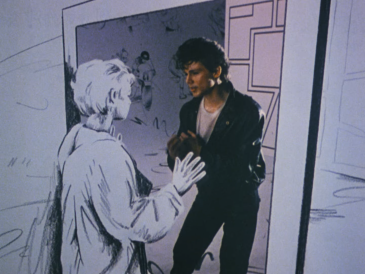
The launch was a video idea somebody had been carrying around waiting for a song. "And there was a new guy on the company, Jeff Ayeroff. He fell in love with the, the album and the song. And he had been keeping this one particular idea sort of in the back of his head. There was this art film called Commuter, with animation. So, he was the one who put together that with Steve Barron, who was the director."
The climb, and the hamburger
The Billboard record matches Paul's memory of it exactly. "Take On Me" entered the Hot 100 at number 91 on July 13, 1985, and did not reach the top until October 19, 1985, its fifteenth week on the chart. It held number one for a single week before Whitney Houston's "Saving All My Love For You" replaced it on October 26.
"It was very strange because it climbed so slow. It was like it started at the bottom. But of course nobody's heard about this two first attempts," Paul said. "And when it went into Top 100, we were ecstatic. When it went into Top 40, we couldn't believe it. When the top 20, it was like, this is just amazing. I mean, we were on a high, you know. But of course you didn't really expect it to go to number one. But then suddenly we got the call... I think we celebrated with a hamburger."
Harket, who had lived in London on nothing while this happened ("We had hardly any money but a lot of fun. We would often walk long distances, walking across London, back and forth, like a vagrant"), did not experience number one as an arrival at all. "When we hit number one in America, everybody celebrated us. We'd made it. But for us, I remember very distinctly it felt like we had just come to the starting point," he told The Big Issue.
Billboard credits the song to P. Waaktaar-Savoy, M. Furuholmen, and M. Harket. An all-80s radio stream from the Bubble is coming, and this is one of the records that made the fall of 1985 sound the way it did.
How the telling has grown over the decades
March 2023, The Big Issue (Adrian Lobb). Harket's side, which is mostly not about the song: the certainty ("It was more like knowledge than confidence. Not a dream. Not a hope"), the poverty in London, and his insistence that number one felt like a starting line rather than a finish.
September 2024, MusicRadar (Rob Laing). Magne and Paul interviewed separately for the Hunting High And Low boxset. This is where the riff gets a firm date and an owner ("I wrote that riff when I was 15") and where Paul's early skepticism is described from the outside. Magne also supplies the detail Paul does not mention: that Alan Tarney went back to the original demo. "Alan actually went back to the demo version and listened to it. He thought it had more charm and more buoyancy the way we had done it. And that's the version that everybody knows."
October 2025, Song Exploder episode 301. The deepest telling by a distance, because Paul walks through the actual multitrack tapes in order: "Miss Erie," "Lesson One," the Rendezvous demo, the Mansfield single, the Tarney recording. Nearly every specific in this article that is not a chart position comes from here.
Where the tellings drift. Three places, and none of them get smoothed here. First, the riff's origin: Paul frames it as a response to a verse he brought to Magne, while Magne says he wrote it at 15, before that, and had to talk Paul into it. They agree it is Magne's riff and disagree about the sequence. Second, the object of Paul's skepticism: Paul says what he hated was the throwaway chorus, while Magne remembers Paul dissing the riff itself as too commercial. Both can be true and neither is confirmed by the other. Third, how Alan Tarney arrived: Paul credits A&R man Andy Wickham going back to a producer who had almost said yes before Mansfield, while Magne describes the band convincing the label and Tarney being suggested. Even the teenage title is unstable, spelled "Miss Erie" as the misery pun Paul explains and "Miss Eerie" in the lyric line quoted in the same transcript. That is what forty years does to a story that four people lived through from different rooms.
The honest bottom line
Strip the affection away and this is a pop song that two record companies could not be bothered to promote, built on a riff its own co-writer initially thought was jingle-grade, released to public indifference twice before an American executive attached it to a video idea he had lying around. The song did not win on merit alone. It won on a rotoscope video, a label politics fight, and three Norwegians too stubborn to accept two clear answers. But the reason it survived long enough to get lucky is that the people who made it kept hearing something nobody else did. Paul's own summary is the least romantic and most accurate account of how hits actually happen: "It does help to be a little bit stubborn." That same year, Pet Shop Boys proved the same principle with West End Girls, another synth single that bombed on its first release and needed a different producer to find the sound it was missing.
FAQ
What is the story behind "Take On Me" by a-ha? Magne Furuholmen wrote the keyboard riff as a teenager, and it survived through at least three complete versions of the song: a Bridges-era track called "Miss Erie," an early a-ha version called "Lesson One," and a demo cut at Rendezvous Studios in London. A 1984 single produced by Tony Mansfield flopped, a re-recording with Alan Tarney flopped again in Britain, and the third release became a worldwide number one.
How many times was "Take On Me" recorded? Paul Waaktaar-Savoy walked through the versions on Song Exploder in 2025: the teenage "Miss Erie" four track, the "Lesson One" cabin recording from around late 1982, the eight track Rendezvous demo where the finished chorus and title arrived, the Tony Mansfield album version released in 1984, and the Alan Tarney recording made in five days that became the hit.
Who wrote "Take On Me"? Billboard credits P. Waaktaar-Savoy, M. Furuholmen, and M. Harket. Magne Furuholmen has said he wrote the riff at 15. Paul Waaktaar-Savoy wrote the verse on acoustic guitar and later built the finished chorus around Morten Harket's falsetto.
When did "Take On Me" hit number one? It reached number one on the Billboard Hot 100 for the week of October 19, 1985. It had debuted at number 91 on July 13, 1985, and took fifteen weeks to reach the top. It held the position for one week before Whitney Houston's "Saving All My Love For You" took over.
Did "Take On Me" really flop before it was a hit? Yes, twice, both times in Britain. The Tony Mansfield version got a few Radio One plays and vanished. The Alan Tarney re-recording was rushed out by Warner's British arm with no promotion and, in Paul Waaktaar-Savoy's words, "did the same business as the first time."
Why does the drum track on "Take On Me" sound like that? Because the LinnDrum in Alan Tarney's studio had no clap sound. It had two snares, so the band programmed a halftime feel on the second snare instead. Paul Waaktaar-Savoy has said that workaround gave the song "a little bit of a different swagger."
Sources
- Song Exploder, episode 301, "A-ha: Take On Me," interview by Hrishikesh Hirway with Paul Waaktaar-Savoy, October 15, 2025 (official episode transcript)
- MusicRadar, "I wrote that riff when I was 15: How A-ha's Take On Me beat the odds against them to become one of the biggest songs of all time," Rob Laing, September 9, 2024 (separate interviews with Magne Furuholmen and Paul Waaktaar-Savoy)
- The Big Issue, "We had hardly any money but a lot of fun: Morten Harket talks Take On Me and the early days of A-ha," Adrian Lobb, March 2, 2023
- Billboard Hot 100, week of October 19, 1985 (chart position, debut date, weeks on chart, songwriter credits)
- Billboard Hot 100, week of October 26, 1985 (succeeding number one)
We took on every claim in this one, frame by frame.
Part of Stories Behind the Songs. See also Take On Me and The Story Behind The Final Countdown.