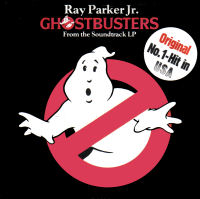
A songwriter who is genuinely afraid of ghosts gets handed a nearly finished blockbuster and told to write its theme in a couple of days. The one word that has to be in the song, "Ghostbusters," refuses to sound good when you sing it. The fix arrives from a drain-cleaner commercial at 4:30 in the morning. And the whole thing ends in a lawsuit that would outlive the movie. That is the true story of one of the most recognizable songs of the decade.
The "Ghostbusters" theme was written by Ray Parker Jr in 1984, on a deadline of only a couple of days, after Columbia Pictures spent a year failing to find a theme song. Struggling to fit the word "Ghostbusters" into a lyric, Parker got the "who you gonna call" hook from a late-night TV commercial. It hit number one for three weeks. Huey Lewis later sued, claiming it copied his "I Want a New Drug," and the two settled.
The call nobody else would take
By 1984, Ray Parker Jr was already a serious musician, a Detroit session guitarist who had backed Marvin Gaye, Barry White, and Stevie Wonder before scoring hits with his own group Raydio. So when the "Ghostbusters" job came, it was not obvious he wanted it. He has been candid that he was an odd fit. "I don't know nothing about this stuff!" he told Vertex Effects. "And by the way, I'm afraid of ghosts! I'm not the guy who's gonna do anything to a ghost."
The studio was desperate. Columbia Pictures had spent a long stretch and a lot of money hunting for a theme and come up empty, and an old friend, music executive Gary LeMel, called Parker as a last resort. As Parker recalled it, LeMel said "They had spent a year trying to find somebody to write their song." The pitch, in Parker's telling to Mix magazine, was blunt: "They've had all these different musicians writing songs and they spent a fortune, and they don't even have a song with the word 'Ghostbusters' in it! So will you take a look at this film and write a song?" Then came the catch. "Oh, and by the way, I need it in two days," LeMel said.
The word that would not sing
Parker liked the film and said yes, and then hit the real problem. The music came quickly. The lyric did not, because the title fought him. "I wrote the music pretty fast, but I was struggling with the words," he told Mix. The trouble was the one word the studio needed most.
The answer came in the last hours. About three hours before the song was due, around 4:30 in the morning, half-asleep, Parker saw a low-budget commercial come on, he thinks for a drain company, flashing a phone number on the screen. It reminded him of a scene in the movie where the Ghostbusters wear their packs and flash their own number, like an advertisement. "I came up with the idea of 'Who you gonna call?'" he said. And that solved the title too, by refusing to sing it. "There's no way you're going to sing 'Ghostbusters' in a song and make it sound good, so instead of singing it, I'd have a crowd answer me," he explained. The most famous word in the song is not sung by the singer at all.
Built like a quick demo in one room
There was no time to hire a band, so Parker made the record almost single-handed at his Ameraycan Studios, playing nearly every part and engineering it himself. He treated it as disposable. "I really put it together almost like you'd do a quick demo," he told Mix. "I laid down the guitar part first because that's still the instrument I play the best, and then I just kept adding things." The gear was whatever was on hand and affordable. "I used a Jupiter 6 on the bass line because I couldn't afford a Jupiter 8," he said.
The crowd shouting "Ghostbusters!" back at him was not a professional choir. Parker brought in a group of local high schoolers to yell the title on the record. "They were genuinely excited to be in there recording, and that was exactly what the track needed," he said. Rushed, cheap, and cut like a demo, the song did not feel like a hit to anyone who made it. Parker has said plainly that he did not think they had one.
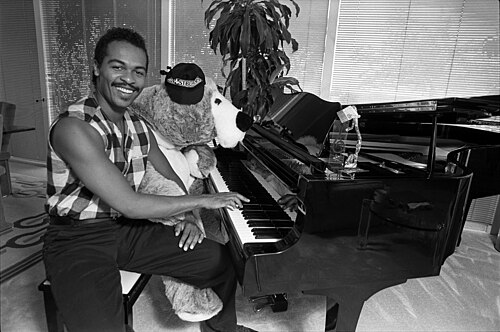
The lawsuit that outlasted the movie
Then came the part of the story that never really ended. Shortly after the film opened, Huey Lewis sued Parker for plagiarism, alleging the melody was lifted from his 1983 hit "I Want a New Drug." There was a reason the two sounded alike. In a 2004 Premiere article, the filmmakers admitted they had used "I Want a New Drug" as temporary background music while cutting the movie, and had even offered Huey Lewis and the News the chance to write the theme, which the band declined. They then handed Parker footage still scored to Lewis's song to guide him.
The case was settled out of court in 1985 for an undisclosed sum and a confidentiality agreement. Parker has pointed out that he was not the only target, saying that "when you sell that many records, I think everybody wants to say that they wrote the song." The story flared back up in 2001, when Lewis discussed the settlement on a VH1 Behind the Music episode, and Parker sued him in turn for breaching the confidentiality agreement. Parker's summary of that round was short: "I got a lot of money out of that." Lewis, in a later Dutch television interview, put the original settlement at at least $30,000.
How the telling has grown over the decades
The spine of the story has stayed fixed for forty years: a desperate studio, a scared-of-ghosts guitarist, an impossible deadline, and a commercial at dawn. The pieces that move are the small ones. The deadline itself drifts depending on the interview: in his Mix telling, LeMel asks for it "in two days," while in other retellings Parker remembers three. That is the kind of number that slides when you have told a story hundreds of times over four decades.
The lawsuit is where the honest complexity lives, and it is worth stating without picking a winner. The songs are genuinely similar, and the documented reason is not sinister: the filmmakers built the movie around Lewis's track as a placeholder, offered him the job first, and then gave Parker footage cut to that music. Lewis sued, they settled, and years later a television interview reopened it and Parker collected again. Both men have their version, both are on the record, and the paperwork that would settle it for good is sealed by the confidentiality deal that started the second fight.
The honest bottom line
Strip away the Halloween-playlist immortality and the "Ghostbusters" theme is a rush job: written against a two-day deadline nobody else would touch, built like a demo by one exhausted man, with its signature word shouted by teenagers because it could not be sung, and its melody close enough to another hit to trigger a lawsuit that dragged on for decades. None of that has dislodged it. Ray Parker Jr's only number one is now one of the most recognizable songs ever attached to a movie, proof that panic and a 4:30am drain commercial can outlast almost anything. That same year, Kenny Loggins pulled off a similar stunt with Footloose, another movie theme that became bigger than the film it served.
FAQ
Who wrote the Ghostbusters song? Ray Parker Jr wrote and recorded the "Ghostbusters" theme in 1984, after Columbia Pictures spent about a year failing to find a theme song. He played nearly all the instruments himself and engineered the track at his own studio.
How long did it take to write the Ghostbusters theme? Only a couple of days. In his Mix magazine telling, executive Gary LeMel asked Parker for the song "in two days"; in other interviews Parker has said three. Either way, he wrote the music fast and did not solve the lyric until hours before it was due.
Where did "who you gonna call" come from? From a late-night TV commercial. Around 4:30 in the morning, hours before deadline, Parker saw a low-budget ad, he thinks for a drain company, flash a phone number. It reminded him of the Ghostbusters flashing their number in the film, and the call-and-response hook clicked.
Why is the word "Ghostbusters" shouted and not sung? Because Parker could not make it sound good sung. He decided to have a crowd yell it back at him instead, and brought in a group of local high schoolers to shout the title on the record.
Did Huey Lewis sue over the Ghostbusters theme? Yes. Huey Lewis sued Ray Parker Jr, claiming the theme copied his 1983 song "I Want a New Drug," which the filmmakers had used as temporary music while editing the movie. They settled out of court in 1985. Parker later sued Lewis for discussing the sealed settlement on a 2001 VH1 special.
Was the Ghostbusters theme a number one hit? Yes. It reached number one on the Billboard Hot 100 on August 11, 1984, and stayed for three weeks. It was Ray Parker Jr's only number one and was nominated for the Academy Award for Best Original Song, losing to Stevie Wonder's "I Just Called to Say I Love You."
Sources
- Mix magazine, "Classic Tracks: Ray Parker Jr.'s Ghostbusters," quoting Parker on the deadline, the studio, and the writing
- MusicRadar, "Ray Parker Jr shares the story behind the Ghostbusters theme song," quoting Parker's Vertex Effects interview
- Wikipedia, "Ghostbusters (song)," for release and chart data and the Huey Lewis lawsuit timeline, including the 2004 Premiere account of the temp music
- Billboard Hot 100 weekly charts, 1984
Who we gonna call on a shaky claim? The record.
Part of Stories Behind the Songs. See also The Story Behind The Power of Love and The Story Behind Eye of the Tiger.