One of the three men behind this song says Jenny never existed. Another says he knows her, that it was her parents' phone number, and that he asked her a few years ago whether she wanted to be named. The third told a magazine in 1982 that he called her on a dare and dated her for a while, then said years later that the record label invented her and the band went along with it. All three are on the record. They cannot all be right.
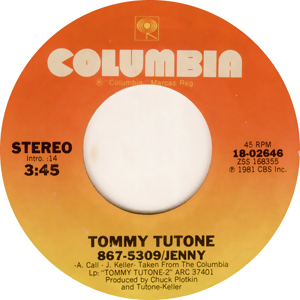
"867-5309/Jenny" was written by Alex Call and Jim Keller and recorded by Tommy Tutone. Call has said flatly that he made up the name and the number alone in his backyard in 1981 and that there was no Jenny. Singer Tommy Heath maintains she was real and gave him the number. Keller has told it both ways. Billboard shows the single peaking at number 4 on May 22, 1982.
Alex Call's version: a backyard and a four-chord song
The writer's own account is the least romantic one available, and he has been consistent about it.
"Despite all the mythology to the contrary, I actually just came up with the 'Jenny,' and the telephone number and the music and all that just sitting in my backyard," Call told Songfacts in 2004. "There was no Jenny. I don't know where the number came from, I was just trying to write a 4-chord rock song and it just kind of came out."
He had a name, a number and a guitar figure, and no idea what any of it was about. "This was back in 1981 when I wrote it, and I had at the time a little squirrel-powered 4-track in this industrial yard in California, and I went up there and made a tape of it. I had the guitar lick, I had the name and number, but I didn't know what the song was about."
The meaning arrived with his co-writer, in one sentence, that afternoon. "This buddy of mine, Jim Keller, who's the co-writer, was the lead guitar player in Tommy Tutone. He stopped by that afternoon and he said, 'Al, it's a girl's number on a bathroom wall,' and we had a good laugh. I said, 'That's exactly right, that's exactly what it is.'"
That single observation unlocked the entire lyric. "I had a blind spot in the creative process, I didn't realize it would be a girl's number on a bathroom wall. When Jim showed up, we wrote the verses in 15 or 20 minutes, they were just obvious. It was just a fun thing, we never thought it would get cut."
Call is also aware of what the alternative story does for the song, and he is dry about why it wins. Speaking of Tommy Heath's version, he said: "Tommy Tutone's been using the story for years that there was a Jenny and she ran a recording studio and so forth. It makes a better story but it's not true. That sounds a lot better than I made it up under a plum tree in my backyard."
Tommy Heath's version: she was real, and she does not want to be found
The singer has never given the story up, and his version has specifics in it.
"There is an actual Jenny," Heath told Rocker. "She does [know the song is about her] and that was her parents' phone number. But they changed it."
He told Classic Bands much the same thing, adding an encounter. "I actually know Jenny and that was her parent's phone number. ... I saw her about five years ago and asked her if she wanted anybody to know who she was and she said no."
By 2020 he was still holding the line while cheerfully acknowledging what his bandmates think of him. He told Forbes that the songwriters say he has "a tenuous hold on reality."
"But Jenny and I think she's real, and Jim and Alex say she's not," Heath said. "That's all I can say. She did give me that number, and I did write it on the bathroom wall instead of giving it to Jim. But they claim that never happened."
That last detail is worth pausing on, because it is the one claim that would reconcile everything. In Heath's telling, the number on the bathroom wall that Keller supposedly saw was put there by Heath himself, about a real girl. If true, both halves of the legend are true at once.
Jim Keller's version, which is two versions
The co-writer is the reason this story cannot be cleanly settled, because he has been quoted on both sides across nearly four decades.
In 1982, with the record climbing, Keller told People magazine: "Jenny is a regular girl, not a hooker. Friends of mine wrote her name and number on a men's room wall at a bar. I called her on a dare, and we dated for a while. I haven't talked with her since the song became a hit, but I hear she thinks I'm a real jerk for writing it."
Years later, talking to Guitar Player, Keller said the opposite and explained why the first version existed. "There was never a real Jenny, and none of us saw that number anywhere," he said. "Our label thought we should make up a good story about it, so we went with it. It took on a life of its own."
If Keller's later account is accurate, then the 1982 People interview was the label's invention being delivered on cue, and the myth this article is trying to untangle was manufactured deliberately by a record company forty-something years ago and has outlived everyone's ability to correct it.
The number that ruined some people's lives
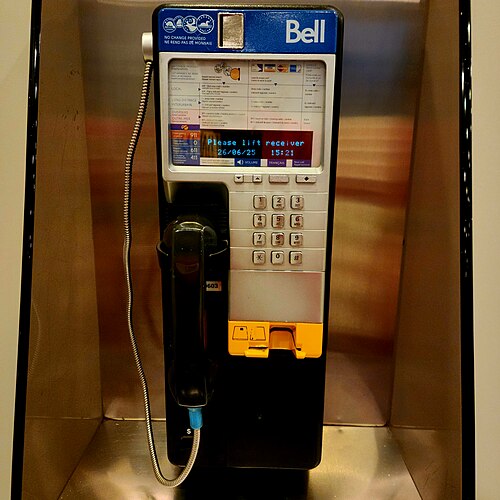
Whatever the truth about Jenny, the consequences of putting a dialable number in a chorus were entirely real, and Call has collected the stories.
"I have a lot of clippings in my old files," he told Songfacts. "I think a high school in Peduca or Louisville, or somewhere in Kentucky had the number, and they had 50,000 calls in a week - Is Jenny there? I've heard a lot of stories about people who've had the number over the years. The guy that got the 212 area code in Manhattan put it on eBay. It went to $200,000 in one day before Verizon said he couldn't sell it."
He has also heard from the other victims of the song, the ones who share the name. "I've met a few Jennys who have said, 'Oh, you're the guy who ruined my high school years.' But for the most part, Jennys are happy to have the song."
And he clearly enjoys the number's second career as a brush-off. "A lot of women have told me they use the name and number as a brush off, which I think is really great. A guy wakes up with a hangover, he's been obnoxious to some girl in a bar last night, he opens up a folded piece of paper and it's 'Jenny - 867-5309.'"
Call notes the song was not pushed, it was requested. "Even after Tommy Tutone made the record and '867-5309' got on the air, it really didn't have a lot of promotion to begin with, but it was one of those songs that got a lot of requests and stayed on the charts."
That is a radio story more than a record-company story, and it is why the song is still on the air. An all-80s radio stream from the Bubble is coming, and this is a request-line record in its bones.
What the chart actually says
"867-5309/Jenny" entered the Billboard Hot 100 at number 88 on January 23, 1982 and peaked at number 4 on May 22, 1982, in its eighteenth week on the chart. It had left the Hot 100 by the chart dated August 28, 1982. Billboard lists the producers as C. Plotkin, Tutone and Keller.
One correction, offered gently. Call told Songfacts the song "was on the charts for 40 weeks." The Billboard Hot 100 record does not support that figure: the song was at 18 weeks when it peaked in May and was gone before the end of August. Artists misremember chart runs constantly, and it does not make the rest of his account less credible. It is simply what the chart shows.
How the telling has grown over the decades
1982, People magazine (Jim Keller). The earliest telling, and the one that created the legend: a real girl, a real number on a men's room wall, a phone call on a dare, a brief relationship, and her supposed opinion of him afterward.
Rocker and Classic Bands (Tommy Heath). Heath's version, holding that Jenny exists, that the number belonged to her parents, and that he has spoken to her since and honored her wish to stay anonymous.
2004, Songfacts (Alex Call). The flat denial from the man who wrote the words, plus the only detailed account of the actual writing session: the backyard, the four-track, Keller's one-line contribution, the verses finished in fifteen or twenty minutes.
Guitar Player (Jim Keller). The reversal, and the explanation: no real Jenny, nobody saw a number anywhere, and the label asked them to invent a story.
2020, Forbes (Tommy Heath). Forty years on, unmoved, and good-humored about being outvoted. "Jenny and I think she's real, and Jim and Alex say she's not."
Where the tellings drift. Everywhere, and that is the story rather than a flaw in it. The central fact of this song, whether the girl existed, is disputed by the three men who made it, and one of them has argued both sides. This article does not adjudicate it, because there is no evidence that settles it: there is no Jenny on the record, no documentation, and no neutral witness. What can be said precisely is who claims what. Call says he invented her alone in a backyard. Heath says she was real, gave him the number, and that he wrote it on the bathroom wall himself. Keller said in 1982 that he dated her and said later that the label made her up. Notably, the two writers who share the songwriting credit now agree there was no Jenny, and the singer who does not have a writing credit is the one insisting she was real. Readers can weigh that however they like.
The honest bottom line
This is a song about a phone number that its own creators cannot agree on, promoting a girl who probably never existed, propelled to number 4 by request lines rather than promotion, and remembered mostly for the misery it inflicted on strangers who happened to own seven particular digits. The most likely reading, on the balance of who says what, is that Alex Call made the whole thing up in a backyard and a record label decided the truth was too boring to print. If that is right, the enduring myth of Jenny is not a piece of rock folklore at all. It is a forty-year-old marketing decision that worked far better than anyone intended, and the men who made the song have been arguing about it ever since.
FAQ
Was Jenny a real person in "867-5309/Jenny"? The people who made the song disagree. Songwriter Alex Call says no: "There was no Jenny." Singer Tommy Heath says yes, that she was real and it was her parents' number. Co-writer Jim Keller told People in 1982 that he dated her, then later told Guitar Player, "There was never a real Jenny, and none of us saw that number anywhere."
Who wrote "867-5309/Jenny"? Alex Call and Jim Keller. Call wrote the music, the name and the number alone; Keller, the lead guitarist in Tommy Tutone, supplied the idea that it was a number written on a bathroom wall, after which the pair finished the verses in about fifteen or twenty minutes.
Where did the number 867-5309 come from? According to Alex Call, nowhere in particular. "I don't know where the number came from, I was just trying to write a 4-chord rock song and it just kind of came out," he told Songfacts in 2004.
Did people really call 867-5309? Constantly, for decades. Call recalled a school in Kentucky that had the number receiving 50,000 calls in a week, and said a man who held the number in Manhattan's 212 area code listed it on eBay, where bidding reached $200,000 in a day before Verizon stopped the sale.
How high did "867-5309/Jenny" chart? It peaked at number 4 on the Billboard Hot 100 on May 22, 1982, having debuted at number 88 on January 23, 1982. It was off the chart by August 28, 1982.
Why do the band and the songwriters tell different stories? Jim Keller's later account offers the likeliest explanation. He told Guitar Player that the record label wanted a better story than the truth: "Our label thought we should make up a good story about it, so we went with it. It took on a life of its own." Tommy Heath, however, still maintains Jenny was real.
Sources
- Songfacts Songwriter Interviews, Alex Call, 2004 (the backyard account, Jim Keller's bathroom-wall line, the phone number aftermath)
- People magazine, Jim Keller, 1982, as quoted by Parade via Yahoo Entertainment
- Guitar Player, Jim Keller, as quoted by Parade via Yahoo Entertainment
- Rocker and Classic Bands, Tommy Heath interviews, as quoted by Parade via Yahoo Entertainment
- Forbes, Tommy Heath, 2020, as quoted by Parade via Yahoo Entertainment
- Parade, "Tommy Tutone's 1982 One-Hit Wonder Became a Phenomenon ... But the Story Behind It Is All Over the Place," via Yahoo Entertainment
- Billboard Hot 100, weeks of May 22 and August 28, 1982 (peak position, debut position and date, weeks on chart, producer credits)
This telling was run against the record, like all of them.
Part of Stories Behind the Songs. For the number itself, the real-world phone chaos, and the chart run, see our companion piece on 867-5309/Jenny. See also The Story Behind Mickey.