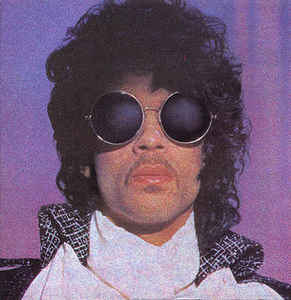
A director hands him a homework assignment: write a song, tonight, that fits one specific stretch of a movie. He comes back the next morning with two. Then, on the last night of mixing what would become his biggest hit, he does the one thing no dance record in 1984 would dare. He mutes the bass, smiles at his engineer, and tells her nobody is going to believe he did it. "When Doves Cry" is the sound of an artist deleting the one part everyone assumed a hit had to have.
"When Doves Cry" was written overnight by Prince in 1984, on assignment from Purple Rain director Albert Magnoli to match a scene in the film. Prince played every instrument himself, then made the radical choice to remove the song's bassline entirely, which his engineer Susan Rogers watched him do on the final night. The stark, bass-free record became Prince's first number one, holding the top spot for five weeks.
Written overnight, to order
"When Doves Cry" was a commission with a deadline. The Purple Rain film needed a song for a particular sequence, and director Albert Magnoli asked Prince to write something to match it, a montage that tied the main character's troubled relationship with his parents to his love affair. According to the film's DVD commentary, Prince came back the next morning with not one song but two, and one of them was "When Doves Cry."
It was also, by the accounts of the people who made Purple Rain, the last piece written for the album, added after every other track was done. And it was almost entirely a one-man record. Prince played all the instruments himself and sang every part, the way engineer Susan Rogers has described his whole working method: he would program the Linn LM-1 drum machine, play the parts in his head in real time, then send everyone out of the room to cut his vocals alone. The song that resulted sounds like nothing else partly because one person made every decision on it.
The bass that got pulled
The decision that made "When Doves Cry" famous among musicians was a subtraction. Prince had a bassline on the track, and then he took it off. Rogers, who was at the console, has told the story many times, and her telling captures how deliberate and how strange it felt in the room. She told the Red Bull Music Academy: "As the night went on, things started coming out... he kind of 'unproduced it', if you can possibly do that. And then the last thing he did was he punched that bass out and he smiled at me and he said 'ain't nobody gonna believe I'd do this'. And he did."
The bass was never erased. Years later, asked by an audience whether a version with the bassline exists, Rogers explained where it went. "The bass is on the multitrack tape, but it was muted in the final mix," she said. "It's interesting listening to this record again, and being reminded of how real genius knows when to show it off and when to just be simple." Prince gave his own reason for the cut in later accounts: he said the song originally had a bass line, but after a conversation with singer Jill Jones he decided it sounded too conventional with the bass in. However it started, the result was a hit dance single in 1984 with a hole where its low end should be.
What was left in its place
Removing the bass did not leave the song empty. It left room for everything else Prince had stacked up. The rhythm is the Linn LM-1, the drum machine Prince is more identified with than any other artist. Roger Linn, who built the machine, has marveled at what Prince did with it. Prince "didn't just select a stock beat and press play, but rather used [the LM-1] in unusual and creative ways," Linn said. The hook that opens the verses is a simple synth riff played on the Koto patch of a Yamaha DX7, and the song is bookended by guitar and synthesizer solos.
The most elaborate piece is the classical-sounding keyboard passage near the end. Keyboardist Matt Fink revealed in 2014 that Prince recorded that baroque solo at half speed and an octave lower against a slowed-down backing track, then sped the whole thing up, so the finished part plays faster and higher than human hands managed it. Fink then had to learn to play the sped-up version at full speed for the live shows. All of that detail is audible precisely because there is no bass covering it.
The number one nobody would have predicted
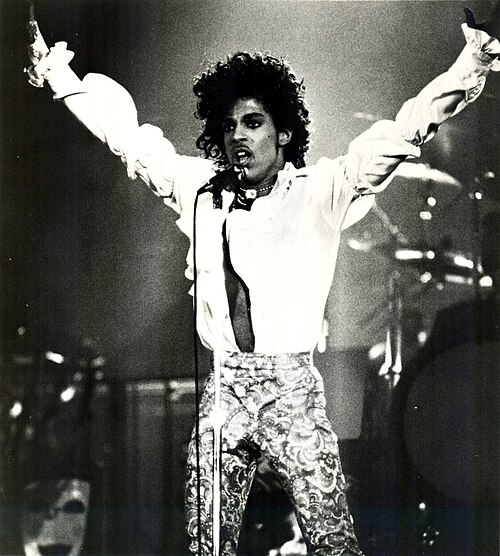
A dance record with no bass was supposed to be commercial suicide. Instead it became the biggest song of the year. "When Doves Cry" was Prince's first number one on the Billboard Hot 100, and it held there for five weeks, from July 7 to August 4, 1984, keeping Bruce Springsteen's "Dancing in the Dark" out of the top spot the whole time. Billboard ranked it the number one single of the entire year. The video, which Prince directed, opened with doves and a shot of him in a bathtub and rattled network executives who found it too explicit, and it ran on MTV all summer.
The song did the one thing the bass was supposed to guarantee, and did it without the bass. It moved people, and it sold more copies than any single of 1984, on the strength of a groove that dares you to notice what is missing.
How the telling has grown over the decades
Because "When Doves Cry" has two central storytellers, Prince and his engineer, the accounts complement more than they contradict, and the small differences are honest to sit with. Susan Rogers tells the studio version: the late night, the parts coming out one by one, Prince punching out the bass as the final move and grinning at her. Prince, in his own later telling, framed it as a realization prompted by a conversation with Jill Jones, that the song was too ordinary with the bass in. One is the moment it happened at the board, the other is the reason he gives for why. Both can be true.
There is one more wrinkle worth naming for anyone who has heard the song live. On the Purple Rain Tour, Prince's bass player Brown Mark added bass lines back into "When Doves Cry" on stage, along with other Prince songs that had none on record. So the definitive bass-free version is the studio recording specifically. The song that made its name by having no bass got some back the moment it left the studio.
The honest bottom line
Strip "When Doves Cry" down and the story is almost too neat: a song written overnight on assignment, cut in a couple of days, by one man playing everything, who then deleted the single element every hit of its kind was built on. It should not have worked. It became his first number one and the best-selling single of 1984 anyway, the payoff of a run that started when Little Red Corvette broke him on pop radio and would continue when he handed Manic Monday to the Bangles under a pseudonym, because the empty space where the bass used to be is the most memorable thing about it. Prince knew that when he muted it, and he was right that nobody would believe he had the nerve.
FAQ
Why is there no bass in "When Doves Cry"? Prince deliberately removed it. He had recorded a bassline, but on the final night of mixing he muted it out, telling his engineer Susan Rogers "ain't nobody gonna believe I'd do this." He later said a conversation with singer Jill Jones convinced him the song sounded too conventional with the bass in. The bass still exists on the multitrack tape; it is just silenced in the released mix.
What is the story behind "When Doves Cry"? Director Albert Magnoli asked Prince to write a song to fit a specific scene in the Purple Rain film, tying the main character's family troubles to his romance. Prince wrote it overnight, delivering two songs the next morning, played every instrument himself, and then stripped out the bassline before release.
Who wrote and played "When Doves Cry"? Prince wrote it and played every instrument on it, from the Linn LM-1 drum machine to the guitars and synthesizers, and sang all the vocals. It was one of the last songs written for the Purple Rain album.
Was "When Doves Cry" Prince's first number one? Yes. It was Prince's first number one on the Billboard Hot 100, staying at the top for five weeks in the summer of 1984 and finishing as Billboard's number one single of the entire year.
What instruments are on "When Doves Cry"? A Linn LM-1 drum machine, guitar, and synthesizers, including a Yamaha DX7 for the main hook. There is no bass. The baroque-sounding solo near the end was recorded by Prince at half speed and then sped up.
Sources
- MusicRadar, "What Prince said to his engineer when he unproduced When Doves Cry," quoting Susan Rogers to the Red Bull Music Academy and Roger Linn to Reverb
- Tape Op, "Susan Rogers: Prince's Engineer on Studio Psychology," on the muted bass and Prince's working method
- Wikipedia, "When Doves Cry," for the Albert Magnoli writing assignment, the Jill Jones bass account, the Matt Fink solo detail, and release and chart data
- Billboard Hot 100 weekly charts, 1984
This is what it sounds like when claims get verified.
Part of Stories Behind the Songs. See also The Story Behind In the Air Tonight and The Story Behind Billie Jean.