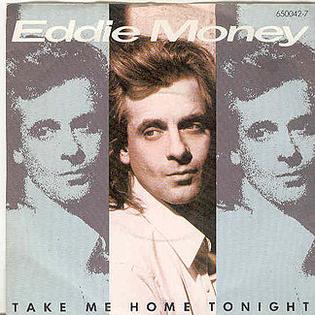
Eddie Money did not write it, did not like the demo, and was told the one thing that would fix it was impossible. The woman who could fix it was doing the dishes and had not been on the Hot 100 since 1971. And on the night they shot the video, the crew put another woman in her dress to make her come out of the shadows.
"Take Me Home Tonight" was written by Mick Leeson and Peter Vale and brought to Eddie Money by producer Richie Zito in 1986. Its chorus quotes the Ronettes' "Be My Baby," so Money pushed past the Martha Davis plan and phoned Ronnie Spector at home, who had not had a charting single since 1971. She sang the "Be my little baby" line herself. It peaked at number 4 on November 15, 1986, the biggest hit of his career.
A song he did not write and did not want
Money was six albums in and in trouble. His producer, Richie Zito, brought him an outside song by the British writers Mick Leeson and Peter Vale, and Money's first reaction was not enthusiasm. What caught him was one borrowed hook sitting in the middle of it: the chorus quotes the Ronettes' 1963 record "Be My Baby."
That is the moment the whole story turns on. Money's own account, told to Ultimate Classic Rock: "I knew 'Take Me Home Tonight' was gonna be huge, because it had two choruses: the 'Take me home tonight' part and then 'Be my little baby.'"
Having two choruses is a producer's argument. Money's idea was different and much more literal. If the song was going to quote Ronnie Spector, he wanted Ronnie Spector.
"They wanted me to use Martha Davis"
The plan on the table was a different singer entirely, and it was not a bad one. Martha Davis of the Motels was set to sing the "Be My Baby" section with him.
Money's version, in his own words to Ultimate Classic Rock: "They wanted me to use Martha Davis [of the Motels]. And I'm going, 'I love Martha,' 'cause her boyfriend was my guitar player back in the '70s, 'but let's try to get Ronnie Spector, for Chrissakes!' Why wouldn't you, y'know? Who else is gonna sing, 'Be my little baby'?"
By Ultimate Classic Rock's account, Davis agreed with him and encouraged him to go get Spector. That version of Davis's part reaches us secondhand, through Money and through the people who wrote the story up, rather than through an interview with Davis herself.
Davis had a strange year in 1986. A few months before this, Giorgio Moroder had her sing the first vocal on another song written for a movie, and the producers passed on it and went with somebody else. That song was "Take My Breath Away."
The dishes
Getting Spector was supposed to be impossible. She had been out of the business for years, living a domestic life, with a Top 40 history that stopped with the Ronettes in the 1960s and a marriage to Phil Spector behind her.
Money called her at home, and both surviving versions of what she said start in the same place: with the sound of housework.
"When I called her up, I heard a bunch of clinkin' and clankin' in the background," Money told Ultimate Classic Rock. "I said, 'What are you doin'?' She said, 'I'm doing the dishes.' I said, 'What?!' She said, 'I got a couple kids. I don't sing anymore.' I told her, 'Honey, it's time to sing again.'"
In the version American Songwriter carried in 2024, the same call runs longer and darker: "I could hear clinking and clanking in the background. She said 'I'm doing the dishes, and I gotta change the kids' bedding. I'm not really in the business anymore, Eddie. Phil Spector and all that, it was a nightmare.' I said 'Ronnie, I got this song that's truly amazing and it's a tribute to you. It would be so great if you did it with me.'"
Spector's own telling of the call is shorter and matches the shape of his. "[Money] called me and said, 'Ronnie, I need your help with this. It needs you to be on it,'" she told Ultimate Classic Rock. "I said, 'Baby, I don't do that anymore,' but he was insistent."
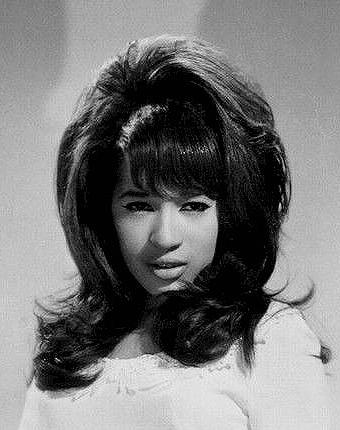
The lyric that changed her mind
What actually turned her was not the phone call. It was reading the words. The song does not just quote her old record, it names her in the third person, and she has said that was the moment she said yes.
"When they said that, I was sold," Spector told Entertainment Weekly, quoted by Songfacts, of the line that puts her name in the lyric.
Money said she arrived without the past attached to it. "When she got there, she didn't even remember it. She had a mental block against [Phil] Spector. But then she came out and did the song," he said in the account American Songwriter published.
Her memory of him in the studio is the warmest thing in the whole story. "He was a crazy person, freaking out in the studio, going, 'I've got the real Ronnie Spector singing 'Be My Baby' on my record!,'" she said, as quoted by Songfacts.
The body double in the video
The video is the reason a generation knows what Ronnie Spector looks like, and she nearly was not in it. Director Nick Morris, who also made the video for Europe's "The Final Countdown," told Songfacts that a payment dispute stalled the shoot: Spector's boyfriend and manager told her not to be filmed until money he felt was owed had arrived.
Morris called the bluff by casting his own producer in her place. "We put Fiona in the dress that Ronnie was going to wear, we put a wig on her, and we started doing a camera test where Ronnie and her manager could see it," he told Songfacts. "Her manager was going, 'They're just bluffing, Ronnie, they're not going to do it. They're not really going to do it, Ronnie.' And Ronnie was like, 'They are going to do it and I'm not going to be in the video!' In the end, she saw sense, and she performed it. The whole crew applauded."
Morris is candid about what kind of maneuver that was. "But that was a wild and wacky thing to do, and maybe a bit cruel to do, but we were English in Los Angeles making our third or fourth music video, and if we'd come away having paid Ronnie extra money, that would have crashed our budget."
Most of her shots were built for shadow anyway, which is why the swap was viable in the first place, and why her entrance plays the way it does.
What it did on the chart
The single entered the Billboard Hot 100 at number 92 on the chart dated August 16, 1986. It peaked at number 4 on the chart dated November 15, its fourteenth week, in a week when "Amanda" by Boston held number 1, and slipped to number 5 the following week. It was the highest-charting single of Money's career.
Two details sit in the Billboard credits and say more than the chart position does. The record is billed to Eddie Money alone, with no artist credit for the woman singing the second chorus. And the writer credits list five names: M. Leeson, P.B. Vale, P. Spector, E. Greenwich and J. Barry. Because the song quotes "Be My Baby," the writers of "Be My Baby" are credited, which means Phil Spector is a credited writer on the record that brought Ronnie Spector back. The producer credits read R. Zito and Eddie Money.
How the telling has grown over the decades
This is a story told mostly by people who are gone. Eddie Money died in 2019. Ronnie Spector died in January 2022 at 78. What survives is what they each said while they were here, and the two accounts fit together better than most.
Ultimate Classic Rock's January 2022 piece, published on Spector's death, is the closest thing to a joint telling: Money's archived quotes about the Martha Davis plan and the phone call sit next to Spector's own recollection of taking that call, from a separate interview the same writer did with her. American Songwriter's 2024 piece carries a longer version of Money's phone-call quote and his memory of her walking into the session. Songfacts holds Spector's Entertainment Weekly quote about the lyric, and Nick Morris's interview about the video, which is the only part of this story told by someone who is still around to be asked.
The drift is small and it is all in the phone call. In Money's Ultimate Classic Rock telling, Spector says she has a couple of kids and does not sing anymore, and he answers, "Honey, it's time to sing again." In the American Songwriter version she names Phil Spector and calls the whole era a nightmare, and Money answers by pitching the song as a tribute to her. Same call, same kitchen, two different lengths of memory. Her own version keeps only the essential exchange: he asked, she said she did not do that anymore, he kept asking.
The honest bottom line
Strip the affection away and this is a comeback built out of borrowed parts: a song its own singer did not write and did not initially like, a hook lifted from a 1963 record, a guest vocalist who was uncredited on the label and nearly replaced by a body double in her own video, on a track whose writing credits pay her ex-husband. And it worked completely. Money got the biggest hit of his career, Spector got a second act that ran the rest of her life, and the reason it lands is that he was right about the one thing everybody told him was impossible. Nobody else was ever going to sing that line. That same year, Robert Palmer scored a similar triumph of borrowed parts with Addicted to Love, another hit where the record the public heard was not the record that was made in the room, and together the two songs prove that the best 1986 pop was assembled from pieces its own makers did not expect to fit.
FAQ
What is the story behind "Take Me Home Tonight"? Producer Richie Zito brought Eddie Money an outside song by Mick Leeson and Peter Vale whose chorus quotes the Ronettes' "Be My Baby." Money pushed to get Ronnie Spector herself, phoned her at home, and talked her out of retirement to sing the line.
How did Eddie Money get Ronnie Spector to sing on it? He called her at home while she was doing the dishes. She told him she was not in the business anymore. He kept pushing, and she agreed after reading the lyric that names her.
Who wrote "Take Me Home Tonight"? Mick Leeson and Peter Vale wrote it. Because the chorus quotes "Be My Baby," Billboard's credits also list Phil Spector, Ellie Greenwich and Jeff Barry, the writers of that 1963 Ronettes hit.
Was Martha Davis supposed to sing on "Take Me Home Tonight"? Yes. Money said the plan was for Martha Davis of the Motels to sing the part, and that he pushed for Ronnie Spector instead. He knew Davis well: her boyfriend had been his guitar player in the 1970s.
Is Ronnie Spector really in the video? Yes, though she almost was not. Director Nick Morris told Songfacts that a payment dispute stalled her appearance, so the crew put another woman in her dress and wig for a camera test until she agreed to shoot it.
How high did "Take Me Home Tonight" go on the charts? Number 4 on the Billboard Hot 100 dated November 15, 1986, its fourteenth week on the chart. It was the highest-charting single of Eddie Money's career.
Sources
- Ultimate Classic Rock, "How Ronnie Spector Helped Eddie Money Score His Biggest Hit," January 2022, carrying archived Eddie Money quotes and the writer's own interview with Ronnie Spector
- American Songwriter, "Take Me Home Tonight: The 1986 Comeback for Ronnie Spector and Eddie Money," March 2024
- Songfacts, "Take Me Home Tonight by Eddie Money," including its interview with video director Nick Morris and Ronnie Spector's Entertainment Weekly quotes
- 107.3 The Eagle, "The Time Ronnie Spector Took Eddie Money's Call While Doing Dishes," March 2025
- Billboard Hot 100 charts dated August 16, November 8, November 15 and November 22, 1986
Take this telling home, it passed inspection.
Part of Stories Behind the Songs. See also Take My Breath Away and The Final Countdown.