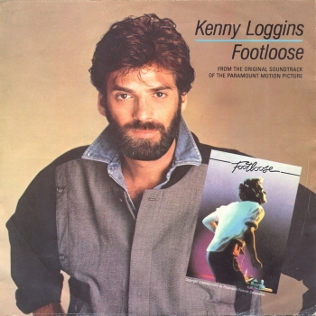
A first-time screenwriter bet an entire movie on nine songs that did not exist yet, then nearly lost the whole thing when his star singer fell off a dark stage and broke his ribs. The only window to write the title track was a few days in a Tahoe hotel room, where one man showed up taped up in gauze and on painkillers and the other secretly ran a 101-degree fever and sprayed his throat with Chloraseptic so his collaborator would not bolt. Both Dean Pitchford and Kenny Loggins have told the story of "Footloose" for four decades, and it is a small comedy of two sick men refusing to admit how sick they were.
"Footloose" was written by lyricist and screenwriter Dean Pitchford with singer Kenny Loggins for Pitchford's 1984 film, which Pitchford also wrote. Paramount needed Loggins locked in, but Loggins had cracked his ribs falling off a stage, so the pair wrote most of the song over a few days in a Tahoe hotel room while both were ill and medicated. Released ahead of the movie, it hit number 1 on the Billboard Hot 100 on March 31, 1984, the only number 1 of Loggins' career.
A movie built on songs that did not exist
Dean Pitchford had never written a screenplay. He came out of performing and lyric writing, having won acclaim for "Fame," and "Footloose" was his attempt to prove he could do more. The premise came from a real place: a 1979 newspaper story about Elmore City, Oklahoma, a town that had banned public dancing since the 1800s until its high school seniors pushed to overturn the law for a prom. "I read that this town in Oklahoma, Elmore City, had just lifted an 88 year-old ban on public dancing," Pitchford told the Library of Congress. He visited to research the script, staying in a nearby town because Elmore City was too small to have a motel.
The gamble was structural. Pitchford wanted to sell a movie carried by nine original songs, an unusual and risky idea at the time, and the voices on the soundtrack, he decided, had to stand in for the characters. That made the title singer critical. He needed a star, and he wanted Kenny Loggins, whom he already knew, having co-written Loggins' 1982 hit "Don't Fight It."
The title that sold itself
Before there was a song, there was the problem of what to call the film. Pitchford had been using a placeholder title, "Cheek to Cheek," that he deliberately kept bad so nobody would grow attached to it. When studios showed interest, he had to find the real one. "I did what I do with lyric writing: I took a yellow legal tablet, and any ideas that I had, I did not edit," he told Songfacts in 2012. "I filled page after page after page with variations and ideas that I had for it. About Day 2, I wrote down 'footloose and fancy free,' and then I wrote down 'footloose,' and then separately 'fancy free.'"
He staged the reveal. Pitchford typed up hypothetical title pages, buried his favorite at the bottom of a stack of four, and walked them into a producers' meeting. They flipped past the first three with a flat "Okay," then hit the last one. "They flipped over the last one, which was 'Footloose by Dean Pitchford,' and they lit up like a Christmas tree," he told Songfacts. "It was just such an interesting looking word and it didn't mean anything, but it did. And all those 'O's' gave it a visual kind of punch."
The broken rib that almost killed the movie
Paramount insisted Pitchford and Loggins write the title song early, so a demo could play back during filming. Then Loggins got hurt. "Just before we were slated to get together to write, he fell off a stage in the dark, landed on a packing crate and broke several ribs," Pitchford told the Library of Congress. The recovery ate the writing window, and the studio's patience thinned. "Paramount was chomping at the bit," Pitchford told Songfacts. "They wanted to know that Kenny Loggins was going to be doing the title song, and if he wasn't then we had to move on and get somebody else."
The only slot left was a Loggins engagement in Lake Tahoe before a trip to Asia. Pitchford flew up in January 1983, and he flew up sick. It got worse. "I had strep throat, as it turned out, but I could not let on to Kenny," Pitchford told Songfacts, "because I didn't want him going, 'Ooo, I can't come to your room, we can't be doing that.'" So they worked in Pitchford's room, Loggins' own being full of his wife and three young children, and each man hid his condition from the other. "I was running a fever, like 101, but I wasn't going to let on to him, because I didn't want him running out of my hotel room."
Two men on painkillers
The picture Pitchford paints of the actual sessions is almost slapstick. "Each day he would come to my room with a guitar and he was still taped up, with gauze and tape around his midriff while his rib was healing," Pitchford told Songfacts. "He would show up with a guitar and he would ease himself into a chair, and it was obvious that sitting down was painful." Meanwhile Pitchford was dosing himself in secret: "I was spraying my throat full of Chloraseptic to kill the pain and taking decongestants so it didn't sound like I had a cold."
They got the bones down anyway. "I think it was two or three days we kept up this charade with him showing up on his painkillers and me on my painkillers, and us getting the gist of the song," Pitchford told Songfacts. "We wrote the verses and the chorus melodies, we wrote the first verse, and we knew what we were going to do for the chorus. Then he went off and he left me with the melody for 'I'm Free,' which is his other contribution to the movie. While he was gone, I wrote the rest of the lyric to 'Footloose,' except the bridge." They finished the bridge later at Loggins' house once he was back from Asia, adding the "First we got to turn you around" section that completes the record.
Milo, Marie, and the names in the chorus
One of the song's signatures is the run of names shouted through the chorus: Louise, Jack, Marie, Milo. They came from both writers and from real life. Marie was Pitchford's mother. Milo was Loggins' pick, chosen purely for how it sounded. "Once we had the idea of using names throughout the chorus and calling out, 'Jack, get back, come on before we crack,' once that had been set up as a convention, he threw out Milo because he liked the way that the words felt in his mouth," Pitchford told Songfacts. It was, he said, Loggins' habit as a collaborator, handing over a word or the end of a line "like somebody stepping up to a canvas and putting a couple of strokes of paint on and saying, 'Okay, now go finish the painting.'"
Loggins built the track from records he loved. He has said the drum groove was modeled on David Bowie's "Modern Love," the chorus melody drew from Mitch Ryder's "Devil With a Blue Dress On," and Nathan East's bassline nodded to Little Richard. "Basically he took 'Lucille' out to the next level," Loggins told Professor of Rock. Writing to a script instead of finished footage suited him. "This was the only time I wrote to a screenplay," he said. "I love writing to the screenplay because then you're not held down."
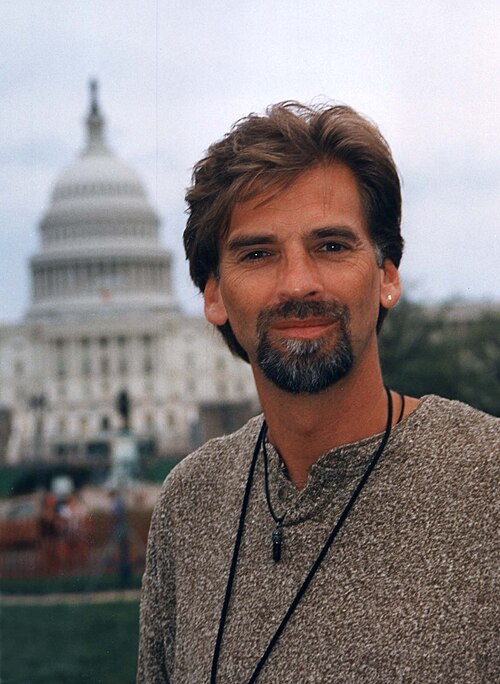
The story Pitchford did not know he was telling
There is a quieter piece to this story that Pitchford only recognized years later, when a film-festival intern driving him from the airport asked whether the movie was really about him. Pitchford had grown up in Honolulu and been uprooted as a teenager to Kansas City, a fish out of water. "He asked me whether my choosing to write a story about a boy who was transplanted to a small Midwest town had anything to do with my having been transplanted myself," Pitchford told Songfacts. "And I was stunned, because in the entire time that I had been writing that movie, making that movie, promoting that movie, I had never made that connection." The most personal thing about "Footloose" was invisible to the man who wrote it.
How the telling has grown over the decades
The core of this story has held for forty years because two people lived it and both keep telling it. Pitchford's fullest accounts, his 2012 Songfacts interview and his Library of Congress interview, supply the studio pressure, the title-page reveal, and the Tahoe sickroom in vivid detail. Loggins has told his half repeatedly too, crediting the screenplay method, naming the records he borrowed from, and calling it, in 2007, the soundtrack hit he most likes to play: "It's such a lighthearted tune. It's like doing a Chuck Berry song every night."
The tellings agree on nearly everything, with one small wobble worth noting. In his Library of Congress account Pitchford says Loggins broke "several ribs" landing on a packing crate; the Songfacts telling describes it as a single rib. The injury, the darkened stage, and the fall are constant across every version. The exact rib count is the kind of detail that softens or sharpens depending on the year and the room, which is what four decades of retelling does to any true story.
The honest bottom line
Strip away the affection and "Footloose" is a piece of commissioned soundtrack pop, written to order under a studio deadline, assembled from the drum feel of one oldie and the melody of another, by two men too sick to be working. Critics have called the movie slight and the song a confection, and Kevin Bacon has told Conan O'Brien he tips wedding DJs to not play it. None of that has dented it. It went to number 1, earned an Oscar nomination, and remains the biggest hit of Kenny Loggins' life. He would do it again two years later with Danger Zone for Top Gun, cementing a second career as Hollywood's go-to voice for a movie that needed a song to sell it. Both were genuinely joyful records born out of pressure and deadlines, and both outlasted the films they were written for.
FAQ
Who wrote "Footloose"? Dean Pitchford, who also wrote the film's screenplay, wrote the lyrics, and Kenny Loggins co-wrote the music and sang it. They wrote most of it together over a few days in a Lake Tahoe hotel room in early 1983.
Why did "Footloose" almost not get written? Paramount needed Kenny Loggins committed to the title song early, but Loggins fell off a stage in the dark and broke his ribs, wiping out the scheduled writing time. The only remaining window was a Tahoe engagement, where Pitchford and Loggins wrote the song while both were ill and on painkillers.
Is the movie Footloose based on a true story? The premise was inspired by Elmore City, Oklahoma, a town that had banned public dancing for decades until its high school students pushed to overturn the law for a prom. Pitchford read about it in a 1979 news article and visited the town to research his screenplay.
Who are Louise, Jack, Marie, and Milo in the song? They are the names shouted through the chorus. Marie was Dean Pitchford's mother, and Milo was Kenny Loggins' suggestion, chosen simply because he liked how the word felt to sing.
How did "Footloose" do on the charts and at the Oscars? It reached number 1 on the Billboard Hot 100 on March 31, 1984, and held the top spot for three weeks, the only number 1 single of Kenny Loggins' career. It was nominated for the Academy Award for Best Original Song but lost to Stevie Wonder's "I Just Called to Say I Love You."
Sources
- Songfacts, "Footloose by Kenny Loggins" and the Dean Pitchford Songwriter Interview, April 2012 (Pitchford's Tahoe and title-page tellings)
- Library of Congress, Dean Pitchford interview, National Recording Preservation Board (Elmore City, the broken ribs, the Tahoe sessions)
- Professor of Rock, Kenny Loggins interview (drum groove, melody influences, writing to the screenplay), as quoted by Songfacts
- Billboard Hot 100 weekly charts, March to April 1984 (chart peak)
- Wikipedia, "Footloose (song)" (chart run and Academy Award nomination)
Kick off the Sunday shoes, keep the facts on.
Part of Stories Behind the Songs. See also Eye of the Tiger and the Ghostbusters theme.