
The song that made Whitesnake famous in America is not the song they first wrote. They recorded "Here I Go Again" in 1982, watched it do almost nothing outside Britain, and moved on. Five years later a record executive made them do it over, against the singer's own instincts and to the open displeasure of his guitarist. In the redo they quietly changed one word of the most famous line, swapping "hobo" for "drifter," and to this day the reason for that switch is a small argument between the myth everyone repeats and the plainer story the writers tell. The second version went to number one. The first is a footnote.
"Here I Go Again" was written by David Coverdale and Bernie Marsden late in the sessions for Whitesnake's 1982 album Saints & Sinners. It flopped outside the UK. In 1987, at David Geffen's insistence and over Coverdale's reluctance, the band re-recorded it, changing the opening line from "like a hobo" to "like a drifter." The 1987 version reached number one on the Billboard Hot 100 on October 10, 1987, Whitesnake's only American chart-topper.
Written last, almost as an afterthought
The song that would define the band was one of the last things they put on the 1982 record. Bernie Marsden, who wrote it with Coverdale, kept the account simple whenever he told it. "The song was written quite late on when we were doing Saints and Sinners, I think it was the last thing we recorded, actually," he said in a 2020 radio interview. It did not come from agony. It came from a demo Marsden already had. "The song came together fairly quickly. I had a finished demo, which I then told David about, and then we worked on it together and we changed a few things here and there," he recalled. "It didn't take long to come together. And we went to the studio and presented it." Marsden knew what they had. "I knew that we had something good and I knew that it was a very decent song," he said. "I was pretty impressed with it, to be honest with you. It was great."
Then it mostly sat there. The 1982 original reached number 34 in Britain and made no dent in America. As a piece of writing it was finished and strong. As a hit, it had not happened yet.
The redo nobody in the band asked for
By 1987 Coverdale had rebuilt Whitesnake around a new sound and a new guitarist, John Sykes, and the last thing he wanted to do was look backward. The push to re-record "Here I Go Again" came from the top of the label, not from the band. Coverdale has been candid that it was not his idea. "But I've never been one for re-recording," he told Blabbermouth in 2022. "And John and I had written enough for an album of original material." The instruction came down from David Geffen, and it landed badly with Sykes, who had co-written a record full of new songs only to be told to redo an old one. Coverdale does not pretend everyone was happy. "John was not pleased, but history speaks for itself," he said. The reluctance is the whole irony of the story: the song they were pressured into revisiting became the biggest hit any of them ever had.
The one word that changed
The rewrite was tiny and it has become the song's favorite piece of trivia. In 1982 Coverdale sang, "Like a hobo, I was born to walk alone." In the 1987 version he sang, "Like a drifter, I was born to walk alone." One word, and a small mystery about why.
The story that has trailed the song for decades is that "hobo" was swapped out because too many listeners heard it as "homo." That version gets repeated everywhere, but it is a listener's theory more than a songwriter's confession, and Coverdale has given a plainer account of the word itself. By his telling, he had wanted "drifter" from the start, thought the word was overused in other songs of the era, settled on "hobo" for the original, and simply restored his first choice when he got a second crack at it. Marsden, the co-writer, sat right on the line between the two explanations and refused to settle it. Asked whether he pushed for the reason behind the change, he laughed it off. "No, I was told why, but I didn't ask. I was told the reason for it. And it made me laugh," he said. He confirmed there was a reason and that it was funny, and left the rest hanging, which is the most honest anyone involved has ever been about it.
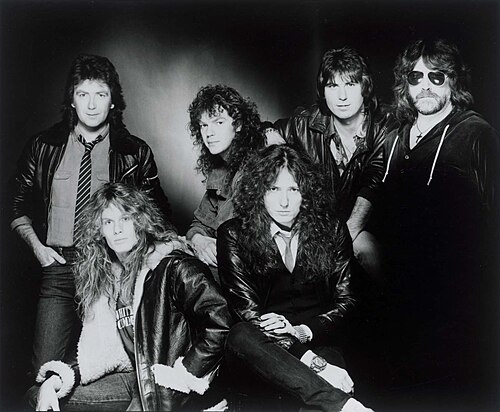
What it became
The 1987 re-recording, in the radio remix that got the heaviest push, reached number one on the Billboard Hot 100 on October 10, 1987, and held the top for a week. It was Whitesnake's only number one in the United States, and it turned a five-year-old British album cut into one of the defining rock singles of the decade, helped along by an MTV video that made its co-star as famous as the song. The version almost nobody heard in 1982 and the version everybody knows are the same song with one word and five years between them.
How the telling has grown over the decades
The facts of this story have stayed unusually firm because the two writers told compatible versions for years. Bernie Marsden's accounts, including his 2020 radio interview, always placed the writing at the tail end of the Saints & Sinners sessions and always credited a demo he brought to Coverdale. Coverdale's tellings, including his 2022 Blabbermouth interview, consistently put the 1987 redo on David Geffen rather than on himself and never hid that John Sykes resented it. The only genuine dispute is the smallest one: why "hobo" became "drifter." There the popular mishearing theory and Coverdale's songwriting explanation have never been reconciled, and Marsden, who could have settled it, chose to laugh instead. That single unresolved word is the only thing about this song that has not hardened into agreed history.
The honest bottom line
Stripped down, "Here I Go Again" is a five-year-old album track that a record executive forced a reluctant band to record a second time, over a guitarist's objection, with a cosmetic lyric tweak nobody will fully explain. It should be a story about a band running out of new ideas. It is not, because the song was genuinely great the first time and the people who made it say so plainly, because the writers never inflated their own myth, and because the one thing they cannot agree on is a single word rather than the whole truth. The redo they did not want became the song they are remembered for, and they have been refreshingly honest that it was mostly not their doing. REO Speedwagon's Kevin Cronin had walked a similar path years earlier with Keep On Loving You, a piano ballad his own hard-rock band fought to bury, and the parallel says something about how many of the decade's biggest power ballads were made by bands who did not want them.
FAQ
Is it "hobo" or "drifter" in "Here I Go Again"? Both, in different versions. The 1982 original has "like a hobo, I was born to walk alone." The 1987 re-recording, the hit version, changed it to "like a drifter, I was born to walk alone."
Why did Whitesnake change "hobo" to "drifter"? The popular explanation is that "hobo" was too easily misheard as "homo," but that is a listener theory rather than a confirmed statement from the band. David Coverdale has said he preferred "drifter" originally and simply restored the word when he re-recorded the song.
Who wrote "Here I Go Again"? David Coverdale and Bernie Marsden wrote it late in the sessions for Whitesnake's 1982 album Saints & Sinners. Marsden brought a finished demo and the two developed it together.
Why did Whitesnake re-record "Here I Go Again"? David Geffen wanted a re-recorded version for the band's 1987 self-titled album. Coverdale has said it was not his idea and that guitarist John Sykes was unhappy about redoing an old song, but the re-recording became a number one hit.
Did "Here I Go Again" reach number one? Yes. The 1987 re-recorded version reached number one on the Billboard Hot 100 on October 10, 1987, for one week. It was Whitesnake's only United States number one. The 1982 original had only reached number 34 in the UK.
Sources
- Blabbermouth.net interview with David Coverdale, 2022 (the re-record was Geffen's idea, John Sykes unhappy)
- Bernie Marsden interview, Beasley Media Group "100 Years of Radio" podcast, 2020 (writing the song, and his reaction to the lyric change)
- Songfacts, "Here I Go Again by Whitesnake" (songwriters, producers, versions, and the hobo/drifter change)
- Billboard Hot 100 weekly charts (number one, October 10, 1987; debut number 80, July 4, 1987)
Here we go again, checking everything twice.
Part of Stories Behind the Songs. See also Don't Stop Believin' and Eye of the Tiger.