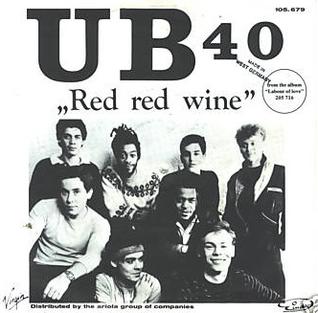
A reggae band from Birmingham recorded a song they were sure had always been reggae. They saw a writing credit on the old vinyl that read "N Diamond" and figured it was a Jamaican artist named Negus Diamond. Only after the record was finished did anyone realize they had just covered Neil Diamond, whose own version of the song had flopped in 1967. Five years after it topped the British charts, an American radio station dug it back out and pushed it to number one in the United States. The writer, by every UB40 account, has never once said thank you.
UB40 recorded "Red Red Wine" in 1983 believing it was a reggae song by Tony Tribe, who had cut a version in 1969. It was actually written by Neil Diamond in 1967. The band saw "N Diamond" on the label and guessed it was a Jamaican artist, learning the truth only after recording. Their reggae version hit number one in the UK in 1983 and number one on the Billboard Hot 100 on October 15, 1988.
They thought it was reggae all along
The whole story turns on a mistake nobody caught until it was too late to matter. UB40 built their 1983 covers album Labour of Love out of the reggae and lovers-rock singles they had grown up with, and to them "Red Red Wine" was one of those records. "The funny thing about the song is we only knew it as a reggae song," Ali Campbell said in the reference book 1000 UK #1 Hits. "We had no idea that Neil Diamond wrote it." The version in their heads was not Diamond's at all. "To me, it was always a Tony Tribe song. He sang it," Ali Campbell told Billboard. Tony Tribe, a Jamaican singer, had released a reggae cover of "Red Red Wine" in 1969, and that was the record UB40 was actually copying.
The Negus Diamond mix-up
The band did look at the label. They just could not decode it. Guitarist and singer Robin Campbell has told the story with the vinyl practically in his hands. "Absolutely no idea," he told Smooth Radio in 2023 when asked whether they knew it was Neil Diamond. "We were concerned it was a Tony Tribe song. I think it was. I've still got the vinyl somewhere. And it actually said when I looked on the record, it actually said 'N Diamond' in brackets." The credit was right there, and it still did not land. "And I had no idea, that it still didn't connect, that we thought it was Negus Diamond or somebody. We had no idea until after we recorded it."
His bandmate, the late Terence "Astro" Wilson, told Songfacts the same thing from his own memory: "Even when we saw the writing credit which said N. Diamond, we thought it was a Jamaican artist called Negus Diamond or something." Two members, two separate interviews, the same wrong guess. The confusion was real, and it was unanimous. "Nobody was as shocked as we were to find out that Neil Diamond wrote 'Red Red Wine,'" Ali Campbell told Billboard.
The song Neil Diamond could not give away
Part of why UB40 never suspected Diamond is that Diamond's own "Red Red Wine" had barely registered. He wrote it in 1967 and put it on his album Just for You, and it stalled at number 62 on the Billboard Hot 100. It was a slow, mournful ballad about drinking to forget, and Ali Campbell heard that sadness clearly even through the reggae bounce. "It's actually a very sad song. It's all about a bloke drinking his sorrows away," he said. UB40 kept the sorrow and changed everything else, slowing the sway, adding the toasting section, and turning a failed 1967 pop ballad into a reggae standard. Robin Campbell has put the reversal bluntly. The cover, he told Smooth Radio, "gave a new lease of life to his song, which completely flopped when he recorded it!"
Number one twice, five years apart
"Red Red Wine" was a number one in Britain in 1983, and that should have been the end of the chart story. It was not. In 1988, an American radio station pulled the five-year-old track back into rotation, other stations followed, and the song climbed all over again in a country that had ignored it the first time. It reached number one on the Billboard Hot 100 on October 15, 1988, half a decade after the band had moved on from it. A song a reggae group recorded by accident, written by a man they had never heard of, became a number one hit on two continents in two different halves of the decade.
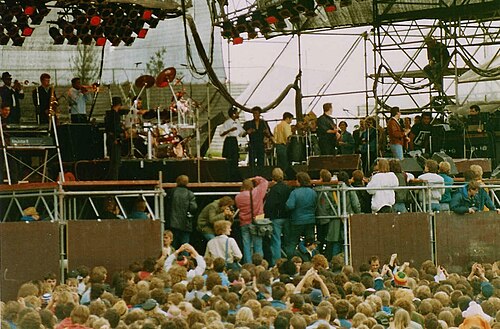
The thank-you that never came
Every telling of this story lands on the same punchline: the band made the song a global hit and, by their own account, the man who wrote it has never once acknowledged them for it. Rather than leave that as an impression, listen to the two brothers say it themselves. Robin Campbell, asked directly by Smooth Radio in 2023 whether Diamond ever thanked them: "He never did, actually! Which peeved me no end." Ali Campbell, years earlier, to Billboard: "I'm sure it annoys Neil no end that people think it's our song. He's never sent us a card saying thanks or anything like that." The grievance is affectionate, and it has hardened into one of the band's favorite stories, but the fact under it does not move: the group that made the song famous and the man who wrote it have never squared up.
How the telling has grown over the decades
The core of this story has been stable for forty years because the people who lived it keep confirming each other. The earliest tellings, collected in the 1000 UK #1 Hits book and Ali Campbell's Billboard interviews, established the two load-bearing facts: they thought it was a Tony Tribe reggae song, and they were stunned to learn Diamond wrote it. Astro's Songfacts telling locked in the "Negus Diamond" misreading of the label. The 2023 Smooth Radio interview is the fullest version, with Robin Campbell narrating the vinyl in his hands, still owning a copy, and adding the sharpest line about Diamond's original flopping. Across every version the details reinforce rather than contradict, which is rarer than it sounds for a story this old. The only thing that grows is the comic timing on the missing thank-you.
The honest bottom line
There is nothing heroic about how this record got made. UB40 did not discover a hidden gem or pay tribute to a songwriter they admired. They copied a reggae single, misread the label, and got a global smash out of a song whose author they could not identify. It is a monument to a happy accident. But the version they built is genuinely better known and better loved than the original, it revived a song its own writer had buried, and the band tells the whole embarrassing chain of events with more honesty than most artists give their triumphs. They stumbled into a classic, and they have never pretended otherwise. Two years earlier, Soft Cell had pulled off a similar accident with Tainted Love, another cover of a failed 1960s single remade in a style its original writers never imagined, and together the two records prove that the decade's most durable hits were often songs somebody else had given up on.
FAQ
Who actually wrote "Red Red Wine"? Neil Diamond wrote "Red Red Wine" in 1967 and recorded it first on his album Just for You. His original peaked at number 62 on the Billboard Hot 100. UB40 covered it in 1983.
Did UB40 know Neil Diamond wrote "Red Red Wine"? No. The band thought it was a reggae song by Tony Tribe, who recorded a version in 1969. They saw "N Diamond" on the label and guessed a Jamaican artist called Negus Diamond, and only learned it was Neil Diamond after they had recorded it.
Is UB40's "Red Red Wine" a cover? Yes, twice over. Neil Diamond wrote and first recorded it in 1967. Tony Tribe made a reggae version in 1969. UB40 based their 1983 recording on the Tony Tribe reggae arrangement, not on Diamond's original ballad.
Did "Red Red Wine" reach number one? Yes. UB40's version was number one in the UK in 1983 and reached number one on the Billboard Hot 100 on October 15, 1988, revived by American radio five years after its first release.
Did Neil Diamond ever thank UB40? According to the band, no. Robin Campbell has said Diamond never thanked them, which "peeved me no end," and Ali Campbell has joked that Diamond has never sent so much as a card despite the royalties the cover generated.
Sources
- Songfacts, "Red Red Wine by UB40," quoting Ali Campbell (via 1000 UK #1 Hits), Terence "Astro" Wilson, and Billboard
- Smooth Radio, "UB40 interview: Reggae legends celebrate 45 years," May 26, 2023 (Robin Campbell)
- Ultimate Classic Rock, "How Nelson Mandela Helped UB40 to No. 1 With a Neil Diamond Song," quoting Ali Campbell via Billboard
- Billboard Hot 100 weekly charts (Neil Diamond original number 62, 1967; UB40 number one, October 15, 1988)
This telling aged well because it was stored properly.
Part of Stories Behind the Songs. See also I Love Rock 'n' Roll and Girls Just Want to Have Fun.