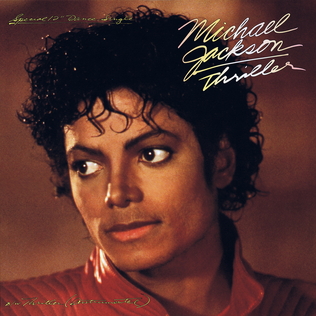
The biggest-selling album in history has a title track that spent most of its life called something else. The man who wrote it thought the word "Thriller" sounded terrible to sing. The most famous spoken-word passage in pop was written in the back of a taxi and photocopied by a studio secretary minutes before Vincent Price walked in. And the writer who did all of this spent the rest of his life turning down interviews because he assumed nobody would be interested.
"Thriller" was written by Rod Temperton, who had already given Michael Jackson "Rock With You" and "Off the Wall." It was one of about 40 ideas he brought to America, and its working title was "Starlight." Temperton rewrote it around a single word that came to him one morning, and wrote Vincent Price's closing verses in a taxi on the way to the session. Billboard shows the single peaking at number 4 on March 3, 1984.
The brief: write something theatrical
Temperton was not an obvious candidate to define Michael Jackson's career. He was a songwriter and keyboard player from Cleethorpes who had come up through the 70s funk band Heatwave, and Quincy Jones hired him off the back of that for the Off the Wall sessions. "Rock With You," "Burn This Disco Out" and the title track came out of that collaboration, so when the follow-up album came around he was asked back.
His approach to the new record started with the artist rather than a tune. "I got to know Michael," Temperton told M magazine, the PRS for Music publication. "He loves movies, so I came up with the idea that I should write something really theatrical. I'd been really impressed with Michael's participation in the rhythm section when recording Don't Stop 'Til You Get Enough, so I wanted to write something with the same power, but a really dramatic melody structure."
That idea became one of roughly 40 he carried to America. The song that would become "Thriller" was an immediate favorite, and it arrived with a working title: "Starlight."
The word that would not come
Temperton wrote music first and words much later, which is the key to understanding why the title mattered so much and took so long.
"In my writing I hear all the musical parts before I ever get to the lyrics," he said. "This was clearly such a production number that it had to be the title track - but there were no lyrics and Starlight just wasn't good enough. It had to be mysterious to match Michael's evolving persona."
So he went hunting, night after night. "I'd go back to my hotel every night and start writing titles. One night I came up with Midnight Man. Quincy said I was going in the right direction, but it still wasn't right."
Then the answer arrived, and his own reaction to it is the least romantic account of a great title anyone has given. "The next morning it came to me - but it was a really crap word to sing: Thriller. It sounded terrible! However, we got Michael to spit it into the microphone a few times and it worked."
Jed Pitman, the radio producer who interviewed Temperton for a BBC audio documentary in 2006, has described the method behind the hunt, and it is stranger than it looks. Temperton, Pitman says, treated lyrics as rhythm rather than meaning. "He said about writing lyrics that the meaning of them didn't necessarily matter, the lyrics to him would disappear into the melody of the song. The lyrics themselves were all about how many syllables they were for each word to fit lyrically and melodically with the song structure. He's effectively using the words as another musical instrument rather than sending a message."
By Pitman's account, the moment of recognition was instant and commercial. "He wrote about 300 words down and then he wrote the word 'Thriller' and that was it, he stopped and went 'wow, I can see it on top of the Billboard charts, I can see the merchandising, I can see everything ... Thriller by Michael Jackson.'"
The rap written in a taxi
Temperton had always known the song needed a spoken section, and had no idea what to put there. "I had always envisioned a talking section at the end but I didn't really know what to do with it," he said in an interview included with the Thriller album.
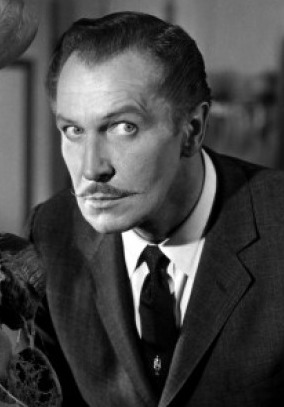
Vincent Price came into it through a domestic connection: Quincy Jones's wife at the time, Peggy Lipton, knew Price. Getting him was the easy part. Giving him something to say was not.
The original plan was loose. In Temperton's telling, the idea "was that he would just talk some horror talk like he would deliver in his famous roles." Then Quincy got cold feet. "The night before the session, Quincy called and said, 'I'm a bit scared. Perhaps you better write something for him.'"
What followed is the detail everyone remembers. Temperton wrote the verses on the way to the studio, finishing as Price's car arrived. "Time was short and so the two extra verses were written in the taxi from the hotel to the studio," M magazine records. "They were finished just as the Hollywood icon's limo pulled up outside."
Temperton's own account of the last ninety seconds is almost slapstick. "I told the driver to drive round the back of the studio and I raced in, told the secretary to photocopy what I'd written and was able to walk into the studio and calmly hand a copy to Vincent, who recorded it in two takes. He was just fantastic."
Quincy Jones's summary of the same session is shorter and more admiring: "Rod wrote this brilliant, Edgar Allan Poe spiel. And Vincent really understood it. ... Vincent did it in two takes."
What Michael wanted from it
Jackson's own contribution to the record's afterlife was the film that came with it, and his ambition for it was explicit. "I wanted something that would glue you to the set, something you'd want to watch over and over," he wrote in his 1988 memoir Moonwalk. "I wanted to be a pioneer in this relatively new medium and make the best short music movies we could make."
What it did
"Thriller" entered the Billboard Hot 100 at number 20 on February 11, 1984 and peaked at number 4 on March 3, 1984. Billboard credits the song to R. Temperton, produced by Q. Jones II. In Britain it reached number 10.
It is worth sitting with the fact that the title track of the best-selling album ever made was, as a single, a number 4 record. The album is what it is because of everything around it, and because a 14-minute film turned a song into an event.
An all-80s radio stream from the Bubble is coming, and this is the record that still empties chairs and fills dance floors every October.
How the telling has grown over the decades
This is a shorter timeline than most songs of this size, for a specific reason: the man who wrote it almost never spoke.
The Thriller album interview. The earliest first-person Temperton account in this article, where he explains that he always knew there had to be a talking section and did not know what to put in it.
2006, BBC audio documentary (Jed Pitman). The rare one. Pitman spent years trying to find Temperton, eventually tracked him down through a music publisher, and after a four-hour meeting in a London cafe persuaded him to talk. Quincy Jones, George Benson, Patti Austin and Herbie Hancock all contributed to the resulting portrait. This is the source of the 300-words account and of the explanation that Temperton used lyrics as rhythm rather than message.
M magazine (PRS for Music), issue 31. The fullest published first-person account of the writing itself: the theatrical brief, the 40 ideas, "Starlight," "Midnight Man," the morning the word arrived, and the taxi.
Why the record is thin. Temperton turned down interview requests for decades, and Pitman's explanation is that he genuinely could not see the appeal: "He looked at me and said 'Why would anyone want a book on me? No one would read it, no one cares'." Pitman adds, "That's why I think he turned down requests for interviews all the time; he didn't think anyone cared." When he died of cancer at 66, the announcement was a press release issued only after his funeral. So most of what circulates about this song traces back to a small number of tellings, repeated, rather than to decades of retelling.
Where the tellings drift. Three places. First, the taxi. M magazine's version has two extra verses written in the taxi between hotel and studio. Smooth Radio's account has one verse written while he was waiting for the taxi and two more written during the journey. The difference is small and the picture is the same, but the count moves. Second, where the horror idea originated. Temperton in M magazine describes it as his own decision to write "something really theatrical" after getting to know Jackson's love of movies. Smooth Radio frames it as Temperton discovering Jackson's love of horror films and shifting the lyrics to suit. Third, who drove the retitling. Temperton's own telling has him hunting titles nightly with Quincy rejecting them until the right one arrived. Pitman's account has Jones asking Temperton for new lyrics to fit the tougher theme emerging from the other tracks on the record. Those are compatible, but one puts the writer in charge of the change and the other puts the producer there.
The honest bottom line
The title track of Thriller is a piece of assembled craft, not a lightning strike. It was written to a brief, retitled by trial and error over multiple nights, given its most quoted passage in a taxi under deadline, and finished by an actor in two takes. The writer thought the title word sounded terrible and used lyrics as rhythm rather than meaning, which is to say the most famous horror song in pop is not really about anything. Billie Jean had already made the album a phenomenon before this single arrived, and five years later Man in the Mirror would prove Jackson could hand that voice to a writer he had never met. Michael Jackson's life and legacy carry serious and unresolved controversies that this page does not attempt to settle. What can be settled is the credit: the song belongs to a shy man from Cleethorpes who wrote it, took almost no public credit for it, and died having convinced himself nobody would want to hear the story.
FAQ
What was "Thriller" originally called? "Starlight." Rod Temperton wrote the music first and the working title stuck until the lyrics were written. He rejected it himself, saying "Starlight just wasn't good enough. It had to be mysterious to match Michael's evolving persona."
Who wrote "Thriller"? Rod Temperton, the British songwriter who also wrote "Rock With You," "Off the Wall" and "Burn This Disco Out" for Michael Jackson, plus "Baby Be Mine" and "The Lady in My Life" on the same album. Billboard credits the song to R. Temperton, produced by Quincy Jones.
Where did the title "Thriller" come from? It arrived one morning after Temperton had spent several nights writing candidate titles in his hotel, including "Midnight Man," which Quincy Jones said was close but not right. Temperton's own verdict on the winner: "it was a really crap word to sing: Thriller. It sounded terrible!"
Who wrote the Vincent Price rap in "Thriller"? Rod Temperton, in a taxi on the way to the recording session, after Quincy Jones called him the night before and said, "I'm a bit scared. Perhaps you better write something for him." Temperton had a secretary photocopy the pages and handed them to Price, who recorded them in two takes.
How high did the "Thriller" single chart? It peaked at number 4 on the Billboard Hot 100 on March 3, 1984, having debuted at number 20 on February 11, 1984. It reached number 10 in the UK.
Why is there so little from Rod Temperton about "Thriller"? Because he almost never gave interviews. Radio producer Jed Pitman, who secured a rare interview for a BBC documentary in 2006, said Temperton's response to the idea of a book about him was: "Why would anyone want a book on me? No one would read it, no one cares."
Sources
- M magazine (PRS for Music), "Revealed: the story behind Jacko's Thriller," issue 31, first-person Rod Temperton interview, retrieved via the Internet Archive
- The Yorkshire Post, books interview with Jed Pitman on his Rod Temperton biography The Invisible Man (Pitman's account of his 2006 BBC audio documentary interview with Temperton, the 300-words account, and Temperton's refusal of publicity)
- Smooth Radio, "The Story of... 'Thriller' by Michael Jackson" (Temperton's interview on the Thriller album, the Quincy Jones phone call, Quincy Jones on the Price session)
- Michael Jackson, Moonwalk, 1988, as quoted by Smooth Radio
- Billboard Hot 100, week of March 3, 1984 (peak position, debut position and date, writer and producer credits)
No thriller like a claim that survives checking.
Part of Stories Behind the Songs. See also The Story Behind Billie Jean and The Story Behind Man in the Mirror.