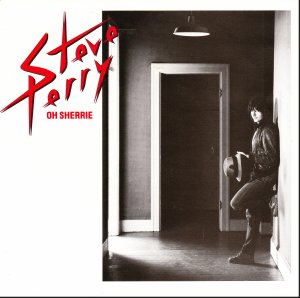
The biggest solo hit by the biggest rock singer of the early 80s has a chorus that was found on a bathroom break, an intro that came from watching a movie in Laurel Canyon, a lyric written by a Nashville ballad man who barely knew the couple he was writing about, and a guitar solo that exists only because the guitarist overruled a saxophone. The woman it was named for was real, was in the video, and then left public life entirely.
"Oh Sherrie" was written by Steve Perry, Craig Krampf, Bill Cuomo and Randy Goodrum for Perry's 1984 solo album Street Talk, about Perry's then girlfriend Sherrie Swafford. Krampf came up with the chorus hook during a break in the first writing session at Perry's house. Goodrum wrote the lyrics after Perry decided he did not like his own. It debuted on the Billboard Hot 100 at number 47 on April 7, 1984 and peaked at number 3 on June 9, 1984.
The night the chorus showed up
The first session was at Perry's home, with drummer Craig Krampf and keyboard player Bill Cuomo. It was the first time Perry and Cuomo had met, and Krampf had introduced them. Krampf told Robyn Flans for Mix magazine's Classic Tracks in March 2025 what happened next.
"We set up a drum machine that played an upbeat backbeat," Krampf said. "Steve and Bill were working on a verse and I had nothing much to contribute. I said, 'I'm not really offering anything.'"
Then he left the room. "After a while, I went to the bathroom, and I came out and said, 'Guys, I've got the chorus!'"
He sang the "Oh Sherrie" hook to them on the spot, and it stayed. It also became a permanent joke in the room that if the session stalled, Krampf should go pee.
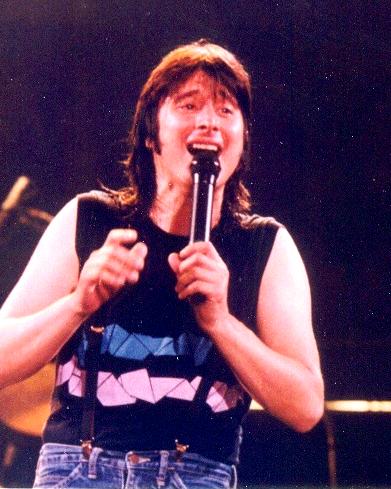
The lyric Perry did not want to write
Perry had the track and did not have words he liked. Randy Goodrum, a Nashville songwriter with "You Needed Me" and "Bluer Than Blue" behind him, had already been writing with Perry for the album and got handed the problem.
Goodrum told Songfacts how he approached it. "I'd gotten to know him and Sherrie, not really well, but I had a general idea of what they were like as people," he said. "I sensed a certain amount of drama in their relationship, to put it mildly."
His method was to write to a situation rather than to a hook. "I like to find a premise and go with that, rather than a hook. And as long as I know what the point of the song, or the mission of the song is, then the lyrics usually just fall into place. So I focused in on that, it was me saying, 'Here is a relationship the way I perceive it between two people.'"
What Perry handed him was a vocal with no words in it. "And when Steve gave me a scratch tape that had him singing what I call a 'la-la' track, which is when the singer just sort of sings nonsense, and non-words, I listened to his vocals, and listened to some of the vowels that sounded good on high notes, and some of the ones that sounded good in the middle," Goodrum said. "That's another little trade secret that I do when I get a scratch vocal. And I fashioned the lyrics around their relationship. And then, of course, I took it back to Steve, and showed him what I'd done. We made changes and tweaks here and there, and it ended up being the basic lyrics for 'Oh Sherrie.'"
Asked when the song acquired its title, Goodrum's answer was flat: "Oh, from the minute I brought in the lyrics."
Goodrum told the same story to SongwriterUniverse in June 2020, with the sequence sharpened. "'Oh Sherrie' came at the end," he said. "What happened was, Steve had written this new song, but he said he didn't like the lyrics and he asked me for help. He gave me the track without the lyrics, so I wrote and participated in the lyrics. It was the last song that was written for the album."
So the most personal-sounding song of Perry's career, addressed by name to the woman he was living with, has a lyric largely written by a visiting songwriter who had met her a handful of times.
The intro came from a movie
The keyboard figure that opens and closes the record is Bill Cuomo playing, but the idea was Krampf's, and he can date it. He was driving through Laurel Canyon with his wife Susie after seeing The Right Stuff when the film's music reminded him of a synth part Cuomo had played on Kim Carnes' "More Love," which Krampf and Cuomo had recorded together. He called Perry from home and suggested Cuomo build an intro out of that idea. Perry agreed, and Cuomo wrote an intro that tied into the outro.
Goodrum's understanding of the same part is purely technical, and he flags his own uncertainty: "Bill Cuomo did that. The way I understand it, he sequenced that on a multi-tumbrel sequencer, plugged it into the console and recorded it. And there it was. It was programmed and used as the intro and the ending."
The saxophone that got vetoed
Perry cut the album at Record One in Los Angeles with engineer Niko Bolas, who Krampf had also introduced him to. For "Oh Sherrie" the band was Larrie Londin on drums, Bob Glaub on bass, Goodrum on Rhodes, Mike Landau on rhythm guitar and Waddy Wachtel on the solo.
The solo was not the plan. "I think originally Steve thought about having a sax play the solo, and Waddy said, 'No, I'm gonna play a guitar,'" Bolas told Mix. "And Steve, of course, went nuts."
Wachtel's own explanation, given to Guitar Player, is shorter. He thought of "Oh Sherrie" as a rock song, rock songs get guitar solos, and the alternative was absurd: "A saxophone? Are you joking?"
Bassist Bob Glaub was called in to replace the bass player originally hired, and he still is not sure why. "I think after living with the track for a week or so, they decided to try me on it," Glaub told Mix. "I remember sitting in the control room at Record One next to Steve and Niko and Bruce Botnick, and they played me the track and I said, 'That sounds really good, what do you want me to do?'"
He is also responsible for something most listeners hear as a guitar. "There's a little part that I think most people think is a guitar part on the B part of the song," Glaub said. "The B-section has a little single note kind of telegraph a part that you've heard on Supremes songs or Motown songs, and that's me playing this part I came up with as an overdub, with a pick on the bass to have that section move along."
The percussive slap on the chorus is not a clap. Krampf overdubbed it with two pieces of wood joined by a piano hinge, played four times slightly out of phase. "He would do four tracks and I would tell him what pass he was on, and he would make one a little later than the other," Bolas said. "We got that delayed clacky sound but it actually wasn't a delay; it was how he played it."
The reverb ran down a phone line to Hollywood
The single most identifiable thing about the record, according to the man who mixed it, is the space around Perry's voice, and getting it required rewiring two buildings.
"Perry had always wanted to use Capitol [Studio's] chambers, so Record One chief tech Denny Densmore got Class-A phone lines set up from Record One to Hollywood and right into Capitol chamber five," Bolas told Mix. "So when we mixed, one knob went to Hollywood to chamber five, and came back. That's the reverb on his voice. That's the biggest thing about the intro, it had this beautiful, huge Frank Sinatra chamber. That was another idea of Steve's."
Bolas also describes a singer who arrives with the record finished in his head. "He heard the finished product the day we went in to cut it," he said. "When he sings, he sings to the reverb he wants."
The video, and the woman
The clip that fixed the song in memory was directed by Jack Cole and produced by Paul Flattery, who described the process in the 2024 band biography Journey: Worlds Apart. Perry did not want a standard 1984 rock video. "He didn't want, you know, the girls and tights and the flashing lights and leather and all that kind of stuff," Flattery said. "He wanted something a bit more classy, something that reflected his song."
The solution was a story within a story: Perry walking off an absurd high-concept shoot in order to sing the song plainly. The absurd shoot was originally Egyptian. "But we couldn't find anywhere in L.A. to shoot it," Flattery said. "So we changed it from being an Egyptian motif to being a kind of Shakespearean one." They filmed at the Plaza Hotel in Los Angeles, now the MacArthur, using stagehands and local people as extras. "I like to think of it as 'Richard III' with Steve's hair."
The first cut did not work at all. "When we first cut the video, it didn't work, because, you know, you just saw Steve blowing up saying, 'I can't do this,'" Flattery said. An editor brought in from film named the problem: "Look, it doesn't work because you have no sympathy for this guy. You just see him as a spoiled rock star." The fix was to show Perry patiently enduring several ridiculous takes before he snaps. "That's what made it brilliant."
Sherrie Swafford appears in it, and then largely disappeared from public view. Perry, speaking to the Tampa Bay Times years later, said they were "crazy in love" and that the timing was the enemy: "it was a very tough time because the band was peaking. ... The truth is that it's hard to navigate a relationship when you're in the midst of such a ride." Swafford gave a statement to Marc Tyler Nobleman in 2013 confirming she had become an esthetician and yoga instructor, had never married and had no children, and valued "my friends, including Steve, and my privacy." Her summary of the whole thing was six words: "It was just love, nothing else!"
What it did
"Oh, Sherrie" entered the Billboard Hot 100 at number 47 on April 7, 1984 and peaked at number 3 on June 9, 1984, in its tenth week. It was the lead single from Street Talk, which went double platinum, and it remains the biggest solo hit by any member of Journey.
How the telling has grown over the decades
Songfacts, Randy Goodrum songwriter interview. The lyric origin arrives first and stays the most detailed account of how the words happened: the la-la scratch vocal, the vowel selection, the relationship read from the outside, the title arriving with the lyric sheet.
June 2020, SongwriterUniverse. Goodrum retells it with the order clarified. "Oh Sherrie" was the last song written for the album, and the reason he was handed it was that Perry did not like his own lyrics.
2024, Journey: Worlds Apart. Video producer Paul Flattery supplies the making of the clip: the abandoned Egyptian concept, the Shakespearean substitute, and the re-edit that made Perry sympathetic rather than spoiled.
March 2025, Mix Classic Tracks, by Robyn Flans. The oldest part of the story finally gets told by the people in the room the night it started. Krampf's chorus on a bathroom break, the intro idea born after The Right Stuff, the piano-hinge clap, Wachtel vetoing the saxophone, Glaub's Motown bass overdub, and the Capitol chamber piped down a phone line.
Where the tellings drift: the intro has two fathers. Goodrum says Cuomo did it and hedges his own account with "the way I understand it," while Bolas and Krampf both place the idea with Krampf and the execution with Cuomo. The authorship of the song's emotional core is genuinely split too. It carries Perry's name and his girlfriend's name, but the lyric was written by Goodrum and the hook was found by Krampf. Nobody involved has ever disputed that, and Perry himself has never given a detailed public account of writing it. What he has talked about is the relationship, not the session.
The honest bottom line
"Oh Sherrie" sounds like the most naked thing Steve Perry ever recorded and it is, by the accounts of the people who made it, a committee record. The hook came from the drummer on a break, the words came from a Nashville ballad writer working from observation, the intro came from a keyboard player executing somebody else's idea after a movie, and the guitar solo happened because the guitarist refused to let a saxophone near it. None of that makes it dishonest. It made the woman's name a permanent part of American radio, which is a strange thing to do to a private person, and she got out and stayed out. The song is still magnificent, and it is fair to notice that the most personal-sounding record of 1984 was built by five people who mostly were not in that relationship. The man who sang it had just finished an album with Journey whose Faithfully was a road-crew ache written on a napkin and whose Don't Stop Believin' would need a decade to become the anthem everybody treats it as now.
FAQ
What is the story behind "Oh Sherrie"? Steve Perry, Craig Krampf and Bill Cuomo started it at Perry's house with a drum machine. Krampf came up with the "Oh Sherrie" chorus during a bathroom break. Perry disliked the lyrics he had, so Randy Goodrum wrote them, basing them on what he had observed of Perry's relationship with Sherrie Swafford.
Who is Sherrie in "Oh Sherrie"? Sherrie Swafford, Perry's girlfriend at the time, who also appears in the video. She later left public life. In a 2013 statement she said she had become an esthetician and yoga instructor, never married and had no children, and valued her privacy.
Who wrote "Oh Sherrie"? Steve Perry, Randy Goodrum, Craig Krampf and Bill Cuomo. Goodrum wrote most of the lyric and Krampf originated the chorus hook.
Who plays the guitar solo on "Oh Sherrie"? Waddy Wachtel. Engineer Niko Bolas told Mix that Perry had originally considered a saxophone solo and that Wachtel simply said, "No, I'm gonna play a guitar." Wachtel told Guitar Player his reasoning was that it was a rock song: "A saxophone? Are you joking?"
How high did "Oh Sherrie" chart? It peaked at number 3 on the Billboard Hot 100 dated June 9, 1984, after debuting at number 47 on April 7, 1984. It was the lead single from Street Talk, Perry's first solo album.
Why does "Oh Sherrie" sound so big? The reverb on Perry's vocal came from an echo chamber at Capitol Studios in Hollywood, patched into Record One in Los Angeles over dedicated phone lines so the mix engineer could reach it with one knob.
Sources
- Mix, "Classic Tracks: Steve Perry's 'Oh Sherrie'" by Robyn Flans, published March 12, 2025, with Craig Krampf, Niko Bolas and Bob Glaub
- Songfacts, Randy Goodrum songwriter interview by Carl Wiser
- SongwriterUniverse, Randy Goodrum interview by Dale Kawashima, June 22, 2020
- Ultimate Classic Rock, "40 Years Ago: How Steve Perry Pieced Together 'Oh Sherrie'," citing Journey: Worlds Apart (2024) for Paul Flattery, Guitar Player for Waddy Wachtel, and the Tampa Bay Times for Steve Perry
- Songfacts, "Oh Sherrie by Steve Perry"
- Sherrie Swafford's 2013 statement to Marc Tyler Nobleman, as quoted by Ultimate Classic Rock
- Billboard Hot 100 weekly charts, June 2, June 9 and June 16, 1984
Oh Sherrie, our love of sourcing holds on.
Part of Stories Behind the Songs. See also Faithfully and Don't Stop Believin'.