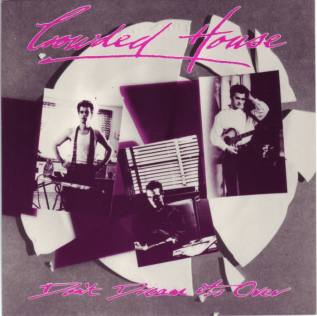
A man in a bad mood walked away from a house full of visitors, sat down at his brother's piano, and wrote a line about people coming to build a wall between him and someone else. He finished the song the same afternoon and demoed it that night on a four-track with a matchbox for a snare drum. The next day he played it to his band and, in his words, it sounded like a bag of shit.
Neil Finn wrote "Don't Dream It's Over" in a single day in Los Angeles on his brother Tim Finn's piano, in a mood he has described as antisocial, while drummer Paul Hester had guests over. Crowded House recorded it for their 1986 debut after producer Mitchell Froom rebuilt the arrangement around an R&B bass line and a Hammond organ. It peaked at number 2 on the Billboard Hot 100 on April 25, 1987.
The bad afternoon
Finn has told the writing story more than once, and the fullest version he has given is to Bill Kopp of Spin magazine in May 2024.
"I wrote 'Don't Dream It's Over' on my brother's piano," Finn said. "I was feeling a little bit antisocial that day; I wasn't having a great day. For some reason, Tim wasn't there. Paul Hester was living there at the time, and he invited a few people over, but I just wasn't in the mood to socialize."
The most famous line in the song may simply be about the guests in the next room. "I just remember going to the piano; I don't know whether I was writing about them obliquely: 'They come to build a wall between us,'" Finn said. "That seems like a harsh commentary on a bunch of visitors! But songs are often like that; you get a line that pops out for a seemingly innocent reason. And it takes on greater significance in the context of the song because of what's around it."
He is clear about what the song was reaching for underneath the mood. "I was contemplating the end of things: relationships and the challenges that you face," Finn told Spin. "It's an exhortation to myself, and to anyone who's going through that, to not think it's the end, to keep on pushing, keep on believing. It's a song of hope, I think."
Written and demoed in a day
Finn does not claim it was hard work. "But sometimes songs come out fully formed. It's a good sign when you get one straightaway," he told Spin. "And 'Don't Dream It's Over' was pretty much written in a day; I did a demo of it the same day I wrote it."
The demo turned the piano song into a guitar song. Speaking to BBC Sounds for Song Exploder in June 2024, Finn described the four-track session that night: "It became a guitar song. I had a delay, a Roland Space Echo in my room, so I just put everything through it, including the guitar ... I created a little snare track by tapping a matchbox with my finger."
The day the band killed it
Whatever Finn heard in it alone did not survive contact with the group. He gave the bluntest version of this to Uncut.
"The day I did it, I knew I had something quite special," Finn said. "Then the next day we played it with the band and it sounded like a bag of s--t."
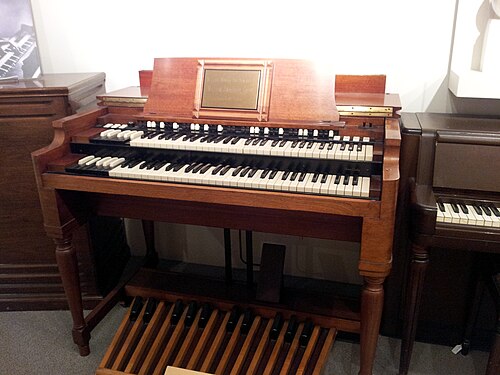
What rescued it was producer Mitchell Froom, who worked on the first three Crowded House albums and who is now a member of the band. "It was only when Mitchell suggested the bassline, which Nick [Seymour] elaborated on, that it really found its groove," Finn told Uncut. "I was wavering away doing demos, and Mitchell made some quite profound suggestions. Like an R&B bassline might be better than a rock or pop approach, or a Hammond organ could sound nice. These were not textures I was used to. He filled in quite a few areas that we weren't covering, but maybe it made our individual sound less distinctive."
Finn told Spin the same story with the credit sharpened and a joke attached: "The Hammond organ was not a texture that we had ever used before. We were coming from a more English sensibility prior to that with Split Enz. And there was an R&B mentality that Mitchell was exploring with bass lines. And in particular, for 'Don't Dream It's Over,' he came up with the bass line on that song, which is directly from an R&B template. And hopefully I won't be sued by the estate of Marvin Gaye because I've said that now!"
That is the whole record in one sentence: a New Zealand guitar band that grew out of Split Enz, playing a soul bass line under a Hammond organ, without anybody in the room thinking of it as a soul record.
Nobody thought it was a single
Crowded House got their name from the cramped rented house in Los Angeles the band shared while making the debut album. Capitol Records did not push them hard at first, and inside the band the idea of leading with a ballad was close to a joke. Finn quoted the objection back to Spin as "You can't put a ballad out, you know!"
"It was a notable song on the record, but nobody knows when there's a hit," Finn said. "You only know something's a hit once it's a hit."
The record moved from the bottom up. "We'd been told it was performing well at the 'B' [market] stations around the country. 'Don't Dream It's Over' sort of became a bit of an outlier track. Then it got picked up by a few bigger stations, and then all of a sudden we had a chart position."
The moment the news landed is dated in his memory. "I was shocked and also really delighted. We'd done a New Year's Eve show at Selina's in Sydney, and it had got filmed by the ABC," he told Spin. "And we watched it back after that, and then we got the news that we're in the charts, and so at the beginning of 1987 we were suddenly on a roll."
What the charts actually did
"Don't Dream It's Over" debuted on the Billboard Hot 100 at number 85 on January 17, 1987. It climbed for fifteen weeks and peaked at number 2 on April 25, 1987, held off the top by Aretha Franklin and George Michael's "I Knew You Were Waiting (For Me)." It went to number one in Canada and New Zealand. The follow-up single, "Something So Strong," reached number 7 in America, and Crowded House never had another US top 40 hit, while the rest of the world kept buying their records for a decade.
The song then had the strangest second life of any 1986 record. Paul Young sang it at the 1988 Nelson Mandela tribute concert at Wembley in front of a global broadcast audience. Miley Cyrus and Ariana Grande sang it at One Love Manchester in 2017. U2 played it in honor of Alexei Navalny and his wife. Finn dedicated it to the victims of the Christchurch mosque shootings while playing with Fleetwood Mac in Hartford, Connecticut on March 15, 2019. Its 2024 use in the Netflix series Monsters sent it back onto charts in the UK and Australia, and Dua Lipa pulled Finn onstage in Auckland on April 4, 2025 to sing it with her.
Finn's own attitude to being defined by one song is settled. "I couldn't be more thrilled with the life it's had. 'Don't Dream It's Over' is just unstoppable," he told Spin. "I think a lot of our other songs are worthy, but everybody who knows us knows that we have a fairly fulsome repertoire. So I'm not too bothered; I accept it and I'm grateful for it."
How the telling has grown over the decades
Goldmine, undated interview quoted by Songfacts. The earliest version on record is vague and modest. "I wrote that on my brother's piano," Finn said. "I'm not sure if I remember what the context was, exactly, but it was just about on the one hand feeling kind of lost, and on the other hand sort of urging myself on: Don't dream it's over. That one actually fell out literally, without me thinking about it too much."
Uncut. The band-hated-it beat enters the story, along with the full Mitchell Froom rescue: the R&B bass line, Nick Seymour's elaboration, the Hammond organ, and Finn's honest reservation that the new textures may have made the band sound less distinctive.
2016, ABC. Asked about still playing it, Finn frames it as a point of pride rather than a burden: "I really enjoy singing it every time I do it, and I'm super pleased and proud that the song that is almost the most identifiable for us is, I think, one of my best songs."
May 2024, Spin, interviewed by Bill Kopp. The detailed version arrives nearly forty years after the fact: Tim's absence, Paul Hester's visitors, the antisocial mood, the possibility that the wall line was about the guests, the day-long writing, the same-day demo, the B-market radio climb.
June 2024, BBC Sounds Song Exploder. The demo mechanics: a Roland Space Echo on everything and a snare track made by tapping a matchbox.
Where the tellings drift: the earliest account has Finn unable to recall the context at all and the song simply falling out, while the 2024 accounts supply a specific afternoon with specific people in the house. Finn also hedges the "wall between us" reading himself, offering it as a guess about his own lyric rather than a fact. The single's position in the release order moves too. Spin calls it the fourth Crowded House single, other accounts have it as the second, released in October 1986. And Kopp's own two publications of the interview spell the Sydney venue two different ways.
The honest bottom line
This is a song about hope written by a man who was in a mood and did not want to talk to anybody, and the line everyone quotes may have been a passive-aggressive comment about houseguests. The band's first reaction was that it was terrible. The thing that made it a hit was a producer importing a soul bass line and a Hammond organ into a New Zealand guitar band, a move Finn still half-suspects sanded off some of their identity. All of that is true and none of it matters at the chorus. Forty years of benefit concerts, tributes and funerals have decided what the song is, and Finn long ago stopped arguing. The same year, U2's With or Without You was rescued from the bin by a friend the band trusted more than themselves, another song about holding on that three of its four makers were ready to throw away.
FAQ
What is the story behind "Don't Dream It's Over"? Neil Finn wrote it in one day at his brother Tim Finn's piano in Los Angeles while drummer Paul Hester had visitors over and Finn was in an antisocial mood. He demoed it the same night on a four-track. The band disliked it at first, and producer Mitchell Froom rebuilt the arrangement around an R&B bass line and a Hammond organ.
What is "Don't Dream It's Over" about? Finn has described it as being about "contemplating the end of things: relationships and the challenges that you face," and as "an exhortation to myself, and to anyone who's going through that, to not think it's the end." He calls it a song of hope.
Who is "they" in "they come to build a wall between us"? Finn does not know for certain. He has said he may have been writing "obliquely" about the guests in the house that afternoon, and called that "a harsh commentary on a bunch of visitors!"
Did Crowded House like the song at first? No. Finn told Uncut that he knew he had something special the day he wrote it, and that when the band played it the next day "it sounded like a bag of s--t." It only worked once Mitchell Froom suggested the bass line that Nick Seymour developed.
How high did "Don't Dream It's Over" chart in America? It peaked at number 2 on the Billboard Hot 100 dated April 25, 1987, blocked from the top by Aretha Franklin and George Michael's "I Knew You Were Waiting (For Me)." It debuted at number 85 on January 17, 1987.
Who wrote "Don't Dream It's Over"? Neil Finn, alone. He had already written most of Split Enz's biggest songs, including "I Got You," before forming Crowded House with Paul Hester and Nick Seymour.
Sources
- Spin, "Neil Finn on the Beautiful Melancholy of 1986's 'Unstoppable' Hit 'Don't Dream It's Over'" by Bill Kopp, May 2024
- Musoscribe blog, Bill Kopp's Crowded House interview, part 2, June 18, 2024
- MusicRadar, Neil Finn feature by Neil Crossley, citing BBC Sounds Song Exploder, June 2024, and Uncut
- Uncut, Neil Finn interview, as quoted by Songfacts
- Goldmine, Neil Finn interview, as quoted by Songfacts
- ABC, Neil Finn interview, 2016, as quoted by Songfacts
- Songfacts, "Don't Dream It's Over by Crowded House"
- Billboard Hot 100 weekly charts, April 4, April 11 and April 25, 1987
Hey now, hey now, the sourcing rules are here.
Part of Stories Behind the Songs. See also With or Without You and Everybody Wants to Rule the World.